- Reed fencing panels (2 rolls): approximately $85
- Large structural bamboo poles (6): approximately $120
- Heavy-duty bamboo stakes for framing: approximately $28
- Outsunny freestanding privacy screen: approximately $140
- Reed fencing panels (2 rolls): approximately $85
- Large structural bamboo poles (6): approximately $120
- Heavy-duty bamboo stakes for framing: approximately $28
- Outsunny freestanding privacy screen: approximately $140
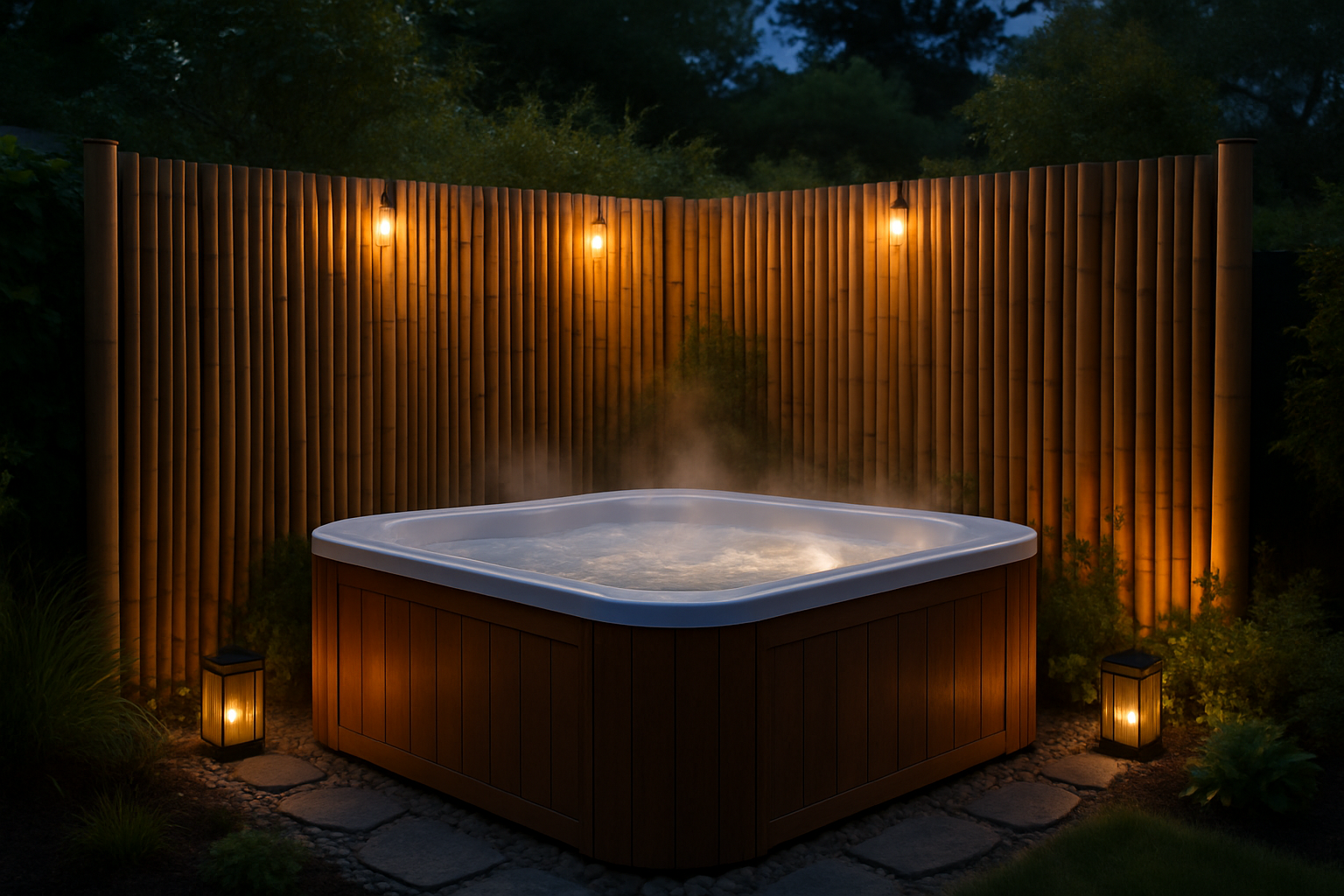
Last summer, I nearly lost my marriage over a hot tub. Not because of anything scandalous — but because I spent $4,200 on a spa installation without telling my husband, and then discovered our backyard had zero privacy. Our neighbors could see everything from their deck. We used the tub exactly once before the awkward wave-and-nod from next door convinced us to cover it with a tarp and pretend it didn’t exist. For three months, that $4,200 investment sat underneath a blue plastic sheet while tension quietly built in our house. What saved us — and honestly, what saved our sanity — was stumbling onto the idea of a bamboo privacy screen hot tub DIY project that I could actually pull off myself on a tight budget.
This post contains affiliate links. As an Amazon Associate, I earn from qualifying purchases. This means I may earn a small commission if you buy through my links, at no extra cost to you. I only recommend products I’ve personally used or thoroughly researched.
Why I Chose Bamboo (And Why You Probably Should Too)
When I started pricing out privacy solutions, I nearly had a second financial heart attack. Wooden privacy fences quoted at $800 to $1,500 for the section I needed. Vinyl panels weren’t much better. And landscaping with fast-growing shrubs meant waiting two or three years before we’d actually have any privacy.
Bamboo kept coming up as an alternative, and the more I researched it, the more it made sense. Bamboo is naturally weather-resistant, especially when treated or sealed. It handles humidity beautifully — which matters a lot when you’re installing something right next to a hot tub that’s constantly producing steam. It’s also genuinely beautiful in a way that feels organic and intentional, not like you slapped up a cheap screen to hide something.
The other thing I loved? Bamboo works in layers. You can combine roll fencing, structural poles, and potted bamboo accents to build something that looks designed, even if you’re a total DIY beginner. Which I absolutely was.
Planning Your Bamboo Privacy Screen Hot Tub DIY Project
Before you buy a single thing, spend an afternoon sitting in your hot tub (or just standing near it) and figuring out exactly where you need coverage. I made the mistake of assuming I needed to screen the entire perimeter. In reality, I only needed to block two sightlines: the neighbors’ elevated deck to the northeast, and the side yard along our fence line.
Measure Twice, Order Once
Walk the area and mark out your coverage zones with stakes and string. Note the height you need — for most hot tub situations, you want at least 5 to 6 feet of solid screening. Also think about whether you need a freestanding structure or something you can attach to an existing fence or wall. That decision changes everything about your materials list.
Think About Airflow and Moisture
Hot tubs produce a lot of steam, and steam accelerates rot in untreated wood. Bamboo handles moisture better than most woods, but you still want some airflow through your screen rather than a completely sealed wall. Reed-style bamboo fencing is ideal here because the natural gaps allow air circulation while still blocking sightlines effectively.
The Products That Made My Build Work
I want to be honest about what I used so you can replicate this without the trial and error I went through. Here’s exactly what I’d recommend for a hot tub bamboo screen project:
For the Main Privacy Wall
The backbone of my screen was a natural reed fencing roll. I used the Bamboo Fence Reed Fencing 4 Feet High Bamboo Privacy Screen (4x16FT panels), which gave me enough coverage to run along my longest sightline with material left over. The natural reed look blended with my existing landscaping immediately — no painting, no staining, just unroll and attach.
For Structural Support and Framing
You need something to attach your reed fencing to, and this is where a lot of DIYers cut corners and regret it. I used Natural Bamboo Poles in 4″–4.5″ diameter at 6-foot lengths as my main vertical posts. These are cured and structural-grade, which means they’re strong enough to anchor the fencing without bowing or cracking in wet conditions. I set them in ground stakes and lashed the reed panels to them with natural jute twine. Simple, sturdy, and it looks intentional.
For secondary framing and horizontal cross-support, I added COLOtime 8FT Bamboo Stakes, 1-inch diameter. These are heavy-duty enough to act as rails along the top and middle of the panel, keeping everything taut and preventing the reed fencing from sagging over time.
For the Corner Accent Area
The northeast corner — the one facing my neighbor’s deck — needed a slightly different solution because I couldn’t set posts in that spot without hitting a utility line. This is where I fell in love with the Outsunny Metal Outdoor Privacy Screen in Bamboo Brown. It’s freestanding, which meant no digging, no posts, and no stress about that utility line. The 78-inch height gave me more than enough coverage, and the climbing plant trellis design meant I could weave in some jasmine over time to soften the look even further.
For a Lush, Finished Look
Here’s my favorite trick: I placed several units of the Artificial Bamboo Tree 6Ft Privacy Fence Screen with real bamboo poles and UV-resistant faux leaves in large planters at the open ends of my screen. They look remarkably real, they require zero maintenance, and they tie the whole bamboo aesthetic together. Anyone who visits assumes I’ve been growing bamboo for years. I haven’t told them otherwise.
My Real Cost Breakdown
I know you want the numbers, so here they are with no fluff: