- Start seeds indoors: Germinate bamboo seeds in trays with a quality seed-starting mix, keeping them warm and consistently moist. Many varieties germinate within one to three weeks under the right conditions.
- Transplant carefully: Bamboo seedlings don’t love having their roots disturbed. Move them to individual pots once they’re a few inches tall, then let them establish before transplanting outdoors.
- Plant in a line: For a windbreak, space your bamboo plants three to five feet apart along your intended barrier line. They’ll fill in over time.
- Cold hardiness matters: Some bamboo varieties are hardy down to 0°F or below, while others are strictly tropical. Know your USDA hardiness zone before ordering seeds or plants.
- Height goals: For a serious windbreak, you want varieties that will realistically reach 15 to 40+ feet. Giant bamboo species are well-suited to this purpose.
- Running vs. clumping: Running bamboo spreads aggressively and needs a rhizome barrier. Clumping bamboo stays tidy and is generally better for smaller yards.
- Dense canopy: Look for varieties with dense foliage that will actually intercept wind and sound, not just look tall and sparse.
- Growth rate: One of bamboo’s greatest assets is how fast it grows. Many giant varieties will reach significant height within just a few seasons from established plants.
- Start seeds indoors: Germinate bamboo seeds in trays with a quality seed-starting mix, keeping them warm and consistently moist. Many varieties germinate within one to three weeks under the right conditions.
- Transplant carefully: Bamboo seedlings don’t love having their roots disturbed. Move them to individual pots once they’re a few inches tall, then let them establish before transplanting outdoors.
- Plant in a line: For a windbreak, space your bamboo plants three to five feet apart along your intended barrier line. They’ll fill in over time.
I want to tell you about the day I accidentally ordered what I can only describe as “an alarming quantity of bamboo seeds” while half-asleep at 11 p.m., convinced I was being practical. My neighbor Larry — bless his heart — runs a leaf blower every Saturday morning at 7 a.m. like he’s personally declared war on silence. I’d read one article about using a bamboo windbreak to block noise and wind, typed something into Amazon with the confidence of a man who absolutely knows what he’s doing, and woke up the next morning to a confirmation email for not one, not two, but three separate seed orders totaling over 800 seeds. For a backyard that is, generously, a quarter acre.
This post contains affiliate links. As an Amazon Associate, I earn from qualifying purchases.
My wife looked at the email over my shoulder, looked at me, looked back at the email, and said nothing. That silence was somehow louder than Larry’s leaf blower. But here’s the thing — a year and a half later, I have a thriving bamboo grove along my back fence, I can barely hear Larry anymore, and I genuinely consider it one of the best gardening decisions I’ve ever stumbled into. Let me tell you what I learned so you can skip the “800 seeds” phase and go straight to the peaceful backyard part.
Why Bamboo Makes Such an Effective Windbreak
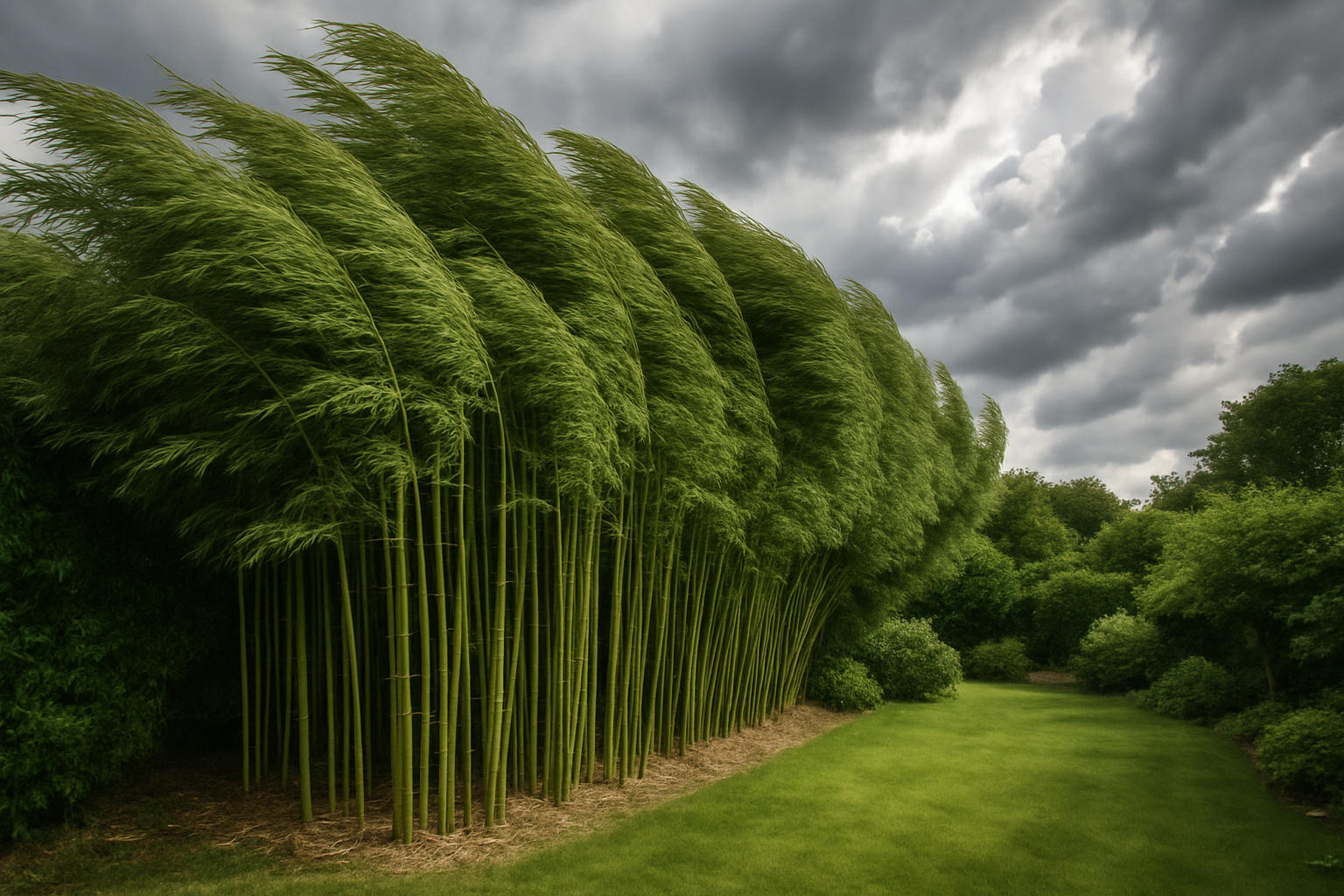
A bamboo windbreak works differently than a solid fence or a brick wall, and that’s actually what makes it so effective. Hard surfaces deflect wind sharply, which can create turbulence and noise on the other side. A dense bamboo grove, on the other hand, acts more like a filter — the canes and leaves absorb and redirect wind energy rather than bouncing it around. The result is a significantly calmer microclimate on the protected side, which also means noticeably reduced noise transmission.
For maximum effectiveness, you’ll want a windbreak that’s at least 1.5 to 2 times taller than whatever you’re trying to protect. Running bamboo varieties (which spread via underground rhizomes) can get extremely tall very quickly, but they require a rhizome barrier to keep them from taking over your lawn — and your neighbor’s lawn, and possibly the street. Clumping bamboo varieties grow in contained, expanding clumps and are much easier to manage for most home gardeners. Both can serve beautifully as a windbreak depending on your goals, space, and patience level.
Bamboo also provides a visual privacy screen, a habitat for birds, and an aesthetic that turns a plain fence line into something genuinely beautiful. It’s one of the most hardworking plants you can put in the ground.
Choosing the Right Bamboo for Your Windbreak
Not all bamboo is created equal when it comes to windbreaks, and your climate will play a big role in your decision. Here are some general guidelines to help you pick the right variety:
Growing from seed takes patience — it’s slower than planting divisions or nursery plants — but it’s also more affordable and honestly more rewarding. There’s something deeply satisfying about watching a plant you germinated from a tiny seed eventually tower over your fence line.
Tools I Use and Recommend
Whether you’re starting from seed or supporting young canes as they establish, a few good tools will make the process a lot smoother. Here’s what I actually use and what I recommend for anyone building a bamboo windbreak from the ground up.
Bamboo Seeds
For giant varieties with dramatic visual impact, I love the 420 Giant Bamboo Seeds for Planting — these are marketed specifically as a privacy screen and windbreak option, and the striking dark stems give your grove a really distinctive look. If you want something with a lush, tropical aesthetic and rapid height gain, the 300+ Giant Bamboo Seeds for Planting are another excellent fast-growing option for creating a serious windbreak or privacy screen. And for something genuinely eye-catching, the 100+ Black Bamboo Seeds for Planting are a rare and exotic variety that produces those gorgeous dark canes — stunning along a fence line.
Plant Stakes for Young Canes
Young bamboo canes can be a little wobbly in their first season, especially if you’re in a windy area (which, if you’re planting a windbreak, you probably are). I use these Mininfa Natural Bamboo Stakes — a 25-pack of eco-friendly three-foot stakes that are perfect for supporting young plants as they establish. There’s also something poetic about using bamboo stakes to support your bamboo. For heavier or taller young canes that need more serious anchoring, these Metal Bamboo Stakes are a sturdy four-pack option that can anchor into the ground securely even in windy conditions.
Tips for Planting Your Bamboo Windbreak Successfully
Here’s what I wish I’d known before I panic-ordered 800 seeds into the void of a Tuesday night: