- Mowing or trimming: Once or twice a year in early spring, cut the entire planting back to about three inches. This encourages dense, fresh growth and keeps the height uniform. A simple string trimmer works perfectly.
- Watering: Water regularly during the first year while roots establish. After that, most dwarf varieties are surprisingly drought-tolerant and only need supplemental watering during extended dry spells.
- Fertilizing: A balanced slow-release fertilizer in spring gives your bamboo a nice boost. Nitrogen-rich formulas are especially helpful for lush, green foliage.
- Barrier checks: Once a year, walk the perimeter and check that no rhizomes are escaping under or over your barrier. Clip any escapees right away — they’re easy to manage when caught early.
- Staking young starts: If you’re growing taller accent clumps nearby, these
Why I Finally Gave Up on Grass (And Why You Should Too)
My lawn and I had a complicated relationship. I fed it, I watered it, I rented equipment I didn’t know how to operate. One summer I accidentally scalped an entire section trying to use a dethatching machine I’d watched exactly one YouTube video about. The bald patch lasted two full years. My neighbor Dave would glance at it every time he walked his dog, and I swear that man aged me five years with his sympathetic looks.
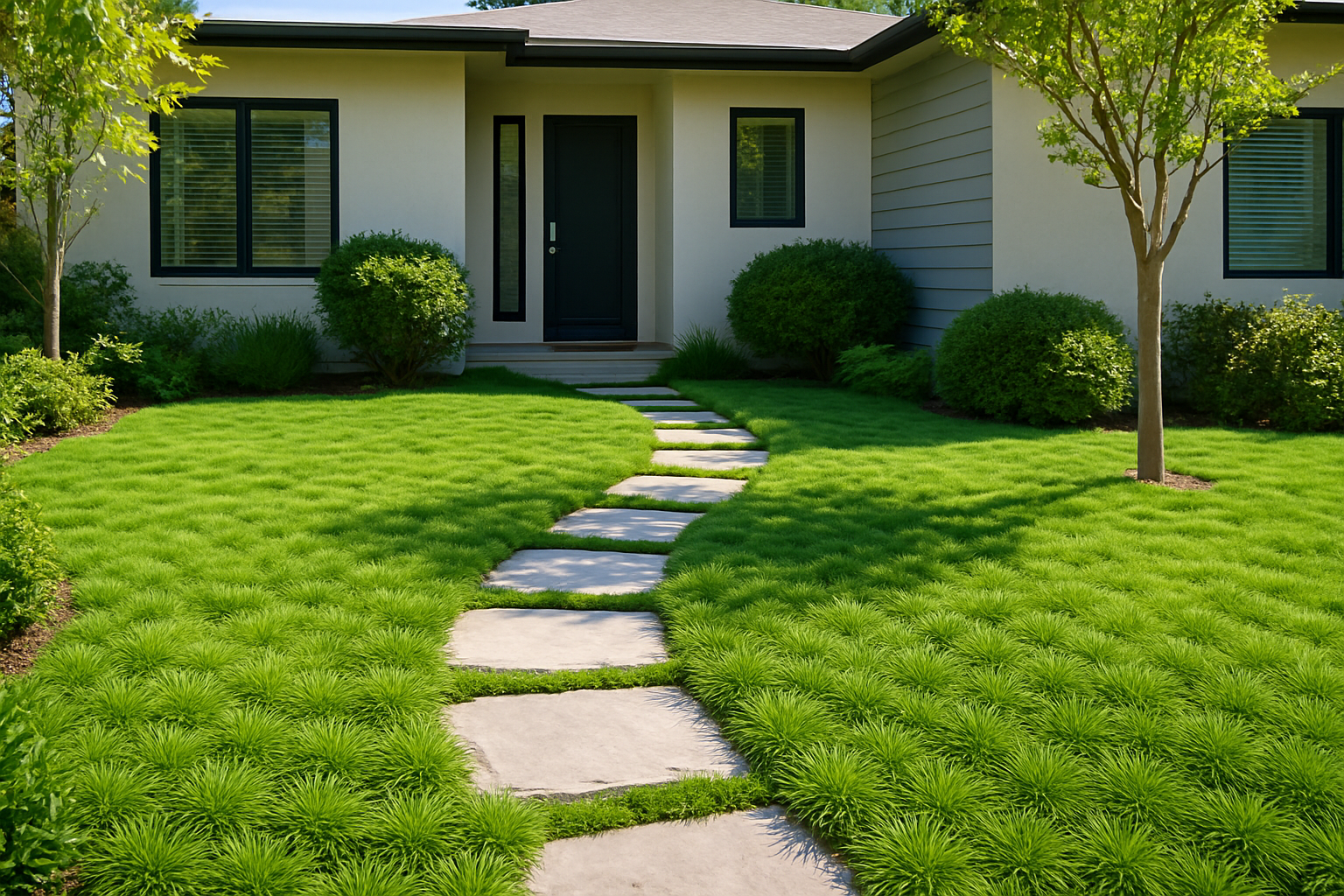
When I started researching alternatives, dwarf bamboo kept coming up. And I kept dismissing it, because I had the very common but very wrong assumption that all bamboo is the invasive, take-over-your-yard, break-through-your-foundation kind. Spoiler: it’s not. Dwarf bamboo varieties — particularly clumping types and low-growing running types managed with barriers — are genuinely excellent, well-behaved ground covers that most homeowners can handle with confidence.
Here’s what finally sold me: dwarf bamboo is evergreen in many climates, grows dense enough to choke out weeds on its own, requires almost no mowing once established, and gives your yard a lush, textured look that plain grass simply can’t match. It handles foot traffic reasonably well, tolerates both sun and partial shade, and once it’s settled in, it’s remarkably drought-tolerant compared to turf grass.
Choosing and Planting Your Dwarf Bamboo Ground Cover
Before you start, a little planning goes a long way. Trust me — I skipped the planning phase and ended up with a butter knife situation. Learn from my mistakes.
Pick the Right Variety for Your Space
For true ground cover use, you want varieties that stay under two feet tall. Pleioblastus pygmaeus (pygmy bamboo) and Sasa veitchii are popular choices. If you’re starting from seed and want to experiment, these two seed packs are great options to have on hand:
- Mixrug Dwarf Green Bamboo Seeds for Planting, 490+ pcs — A generous pack of non-GMO heirloom dwarf bamboo seeds, great for both indoor starts and direct outdoor sowing.
- Bamboo Seeds for Planting, 500+ Dwarf Rare Bamboo Seeds — Another solid option if you want to start a larger coverage area or try a slightly different variety mix.
Keep in mind that growing bamboo from seed is a slower process than planting divisions or rhizome starts, but it’s deeply satisfying and much more affordable for larger areas. Start seeds indoors about 8–10 weeks before your last frost, keep them consistently moist, and be patient — germination can take two to four weeks.
Prepare the Ground Properly (Please, Not With a Butter Knife)
After my initial, embarrassing attempt at sod removal, I rented a proper sod cutter. It took about 90 minutes to do what I had spent an entire afternoon failing at with cutlery. Remove the existing grass, loosen the soil to about six inches, and amend with compost if your soil is compacted or nutrient-poor. Dwarf bamboo isn’t fussy, but it establishes much faster in well-draining, slightly acidic soil.
If you’re planting a running variety — which spreads via underground rhizomes — install a rhizome barrier before you plant. This is non-negotiable. A 24–30 inch deep HDPE barrier around the perimeter of your planting zone will keep things exactly where you want them.
Define Your Borders and Mix In Companion Plantings
One thing I wish I had done from day one is define my lawn edges cleanly. Natural wood edging gives a finished, intentional look that makes the whole project feel designed rather than accidental. These Forever Bamboo Natural Eucalyptus Log Borders are beautiful and eco-friendly — I used them along my front walkway and they’ve held up incredibly well through two winters.
For areas near stepping stones or pathways where bamboo might be too aggressive, consider mixing in a low ground cover like Irish moss. These Outsidepride Irish Moss Ground Cover Seeds are perfect for filling gaps between pavers, and the soft green texture plays really nicely alongside dwarf bamboo’s slender leaves.
Tools, Tips, and Keeping Things Tidy
Once your dwarf bamboo is established — usually by the end of its second growing season — maintenance drops dramatically. Here’s what ongoing care actually looks like:
- Mowing or trimming: Once or twice a year in early spring, cut the entire planting back to about three inches. This encourages dense, fresh growth and keeps the height uniform. A simple string trimmer works perfectly.
- Watering: Water regularly during the first year while roots establish. After that, most dwarf varieties are surprisingly drought-tolerant and only need supplemental watering during extended dry spells.
- Fertilizing: A balanced slow-release fertilizer in spring gives your bamboo a nice boost. Nitrogen-rich formulas are especially helpful for lush, green foliage.
- Barrier checks: Once a year, walk the perimeter and check that no rhizomes are escaping under or over your barrier. Clip any escapees right away — they’re easy to manage when caught early.
- Staking young starts: If you’re growing taller accent clumps nearby, these
Tag: ground cover bamboo
-
Replacing My Lawn With Dwarf Bamboo: The Best Decision I Almost Didn’t Make