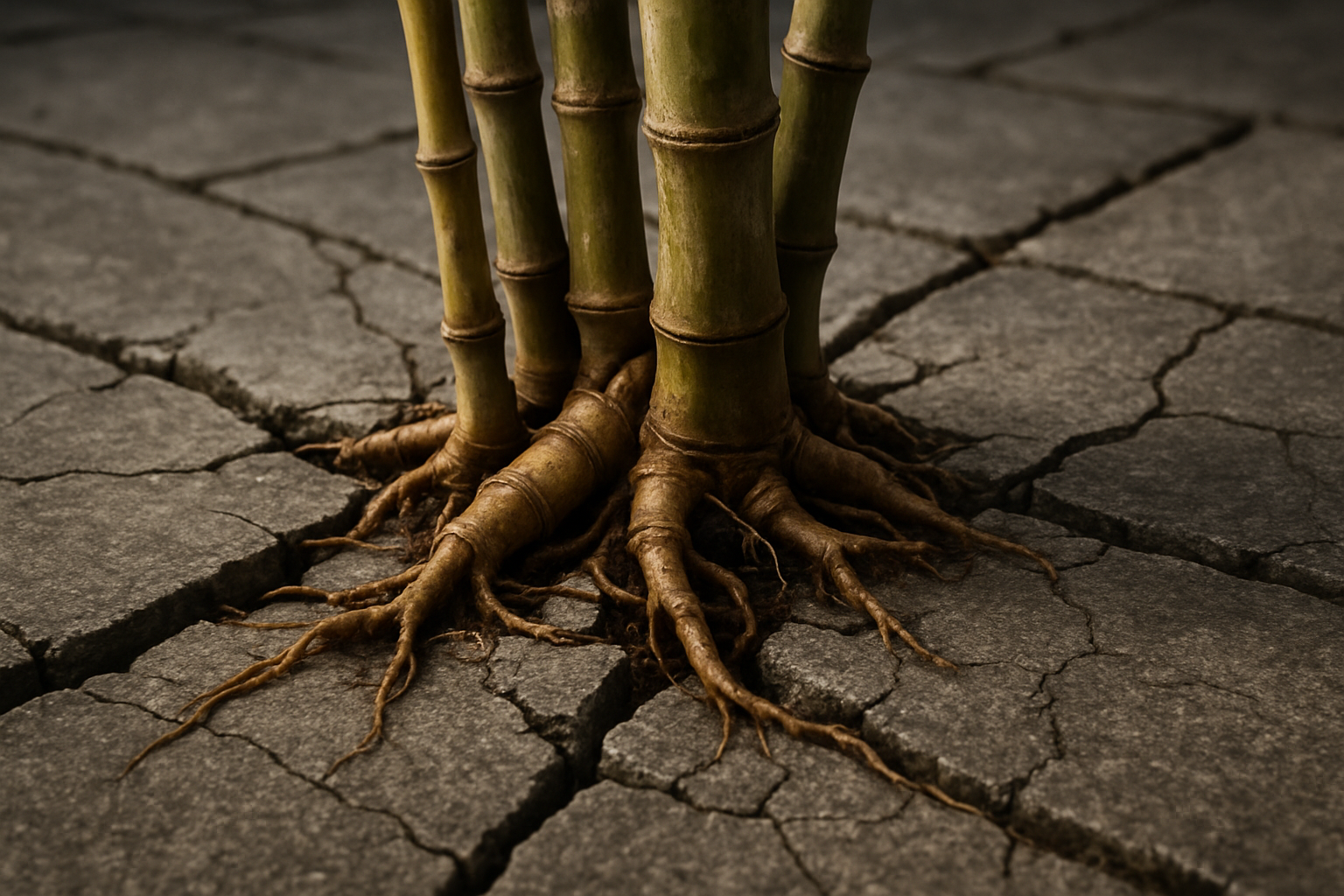
I still remember the sound — a low, muffled crack coming from the back patio on a Tuesday morning in late April. I thought maybe a branch had fallen overnight. What I found instead was a two-inch fissure splitting my concrete patio nearly in half, and a tangle of pale bamboo rhizomes snaking right through the middle of it like they owned the place. That single moment kicked off three weeks of contractor calls, a $3,000 repair bill, and one very tense conversation with my husband about the “charming bamboo grove” I had planted four years earlier. Bamboo roots concrete damage is real, it is aggressive, and I learned about it the hard way so you don’t have to.
This post contains affiliate links. As an Amazon Associate, I earn from qualifying purchases. If you click a link and make a purchase, I may earn a small commission at no extra cost to you. I only recommend products I genuinely believe in.
How a “Low-Maintenance” Plant Became a Very Expensive Problem
Back in 2019, I planted a beautiful stand of golden bamboo along our back fence line. The nursery called it “easy,” “elegant,” and “fast-growing.” I heard those words and pictured a lush, private screen between us and the neighbors. What they neglected to mention — or what I neglected to ask — was that golden bamboo is a running species. Unlike clumping bamboo, running bamboo sends out long horizontal rhizomes that travel underground, sometimes five to ten feet in a single growing season, searching for water and nutrients.
Our concrete patio sat about six feet from where I planted the bamboo. Six feet sounds like plenty of breathing room. It is not. By year two, I noticed a few new shoots popping up closer to the house than I expected. I thought it was charming. By year three, those shoots were appearing in the cracks between patio pavers. I pulled them and forgot about them. Year four brought that terrible Tuesday morning crack — and a contractor who looked at the damage, looked at my bamboo, and said with zero drama, “Yeah, this is a bamboo problem.”
Understanding Bamboo Roots Concrete Damage: What’s Actually Happening Underground
Here is the thing about bamboo that most people don’t visualize: the damage is rarely from one dramatic root punching through solid concrete like something out of a movie. What actually happens is more patient and arguably more destructive. Bamboo rhizomes are opportunistic. They find existing micro-cracks in concrete — hairline fractures from normal settling, freeze-thaw cycles, or age — and they push into them. As the rhizome grows and thickens, it acts like a slow wedge, expanding the crack from the inside. Water gets in, the crack widens further, and before long you have a structural problem that a simple crack filler won’t solve.
The root system can also undermine the soil base beneath a concrete slab, creating voids that cause the slab to sink and crack under its own weight. In my case, the contractor found both issues — active rhizomes in two cracks and a soft, disturbed soil base under one corner of the patio. That combination is what pushed the repair cost so high.
Running vs. Clumping Bamboo: Know Before You Plant
If you are considering planting bamboo near any hardscape, the single most important thing you can do is confirm whether your species is a runner or a clumper. Running bamboo (genera like Phyllostachys and Pleioblastus) spread aggressively via rhizomes and require either serious containment or significant distance from structures. Clumping bamboo (genera like Fargesia) grows in a tight, expanding circle and is far less likely to cause this kind of damage. I had planted Phyllostachys aurea — one of the most vigorous runners on the planet. Lesson learned.
What I Should Have Done: Root Barriers and Proper Installation
After the repair was done, I spent a lot of time reading everything I could find about bamboo containment. The answer that kept coming up — from horticulturalists, landscapers, and bamboo enthusiasts alike — was the same: install a proper root barrier before you plant, not after the damage is done. A high-quality HDPE (high-density polyethylene) barrier, installed at the right depth and with the right thickness, creates a physical wall that rhizomes cannot penetrate.
The key details matter enormously. The barrier needs to be at least 24 inches deep, and ideally 30 to 36 inches for vigorous running species. It needs to be thick enough — at least 60 mil, with 100 mil being the gold standard for aggressive runners. And critically, it needs to be installed with the top edge angled outward and sitting about two inches above the soil surface, so rhizomes that try to escape are redirected upward where you can see and cut them. A barrier that is too shallow or installed flat will just be bypassed.
Tools I Use and Recommend
These are the products I now recommend to anyone planting running bamboo near a home, patio, fence, or garden bed. I wish I had known about them four years ago.
- Bamboo Shield – 40 ft x 24 inch x 60 mil Root Barrier — A solid entry-level option for smaller bamboo plantings or less aggressive species. The 60 mil thickness handles moderate rhizome pressure well, and 40 feet is enough to enclose a modest grove.
- Bamboo Shield – 40 ft x 36 inch x 100 mil Root Barrier — This is the one I now have installed around my replanted bamboo. The 36-inch depth and 100 mil thickness are exactly what you want for vigorous running varieties like Phyllostachys. The extra depth gives you real peace of mind.
- Bamboo Shield – 50 ft x 36 inch x 100 mil Root Barrier — If you have a longer fence line or a larger grove to contain, this extended-length version of the same heavy-duty barrier is the way to go. More coverage without compromising on quality.
- RadonSeal Complete DIY Foundation Crack Repair Kit — If you have existing hairline cracks in your patio or foundation — whether from bamboo or simple age — seal them before bamboo roots find them. This low-viscosity urethane injection system is genuinely impressive for DIY crack repair and stops water infiltration cold.
- Hydra Stop 300 Fast Set Concrete Foundation Crack Repair Kit — Another excellent crack repair option, this one with a polyurethane injection system that sets quickly and creates a tough, waterproof seal. Great for basement walls or any concrete surface where water infiltration is a concern alongside structural cracks.