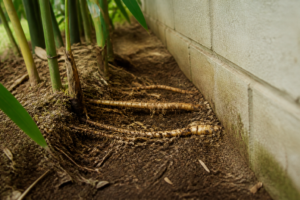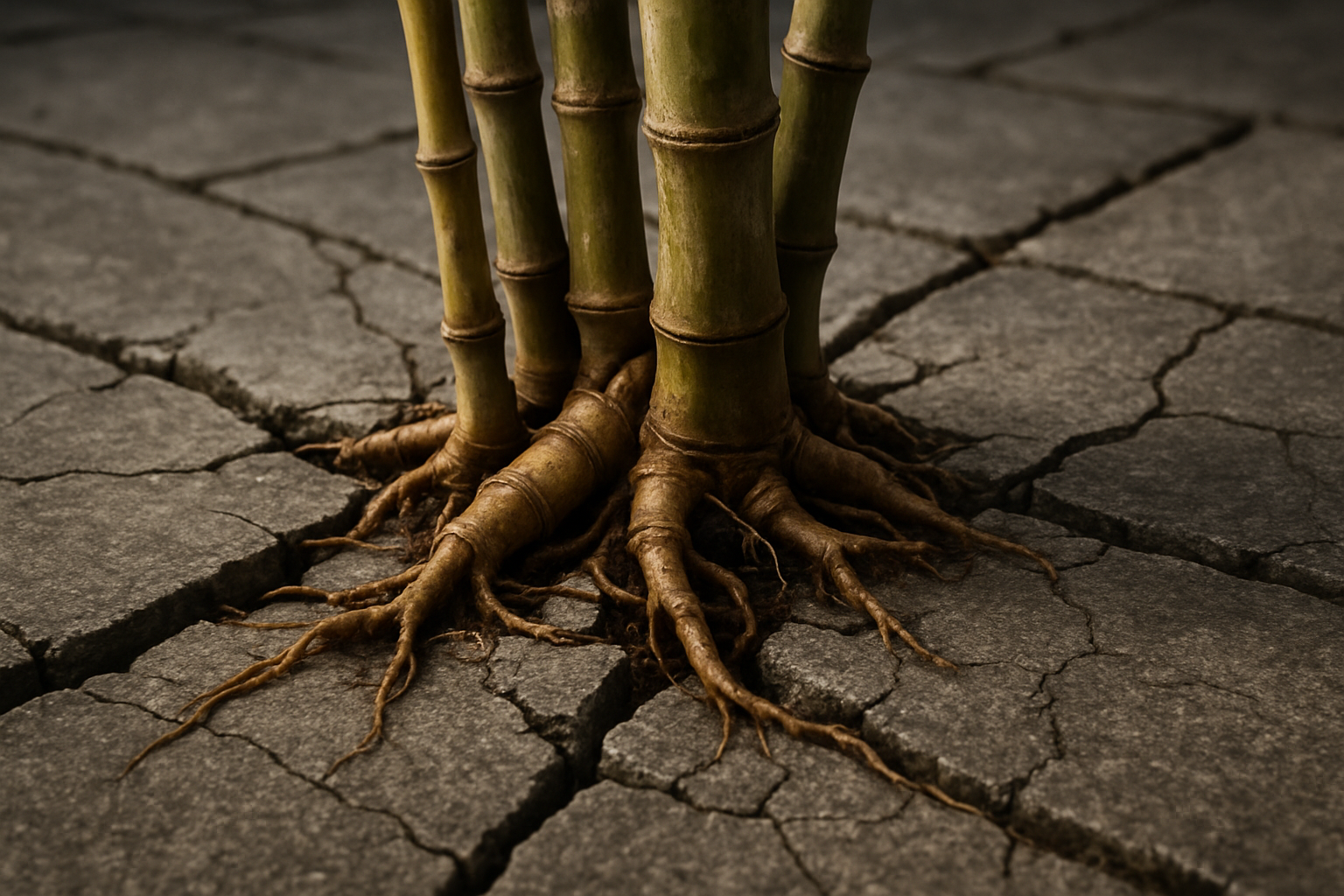
I still remember the sound — a low, muffled crack coming from the back patio on a Tuesday morning in late April. I thought maybe a branch had fallen overnight. What I found instead was a two-inch fissure splitting my concrete patio nearly in half, and a tangle of pale bamboo rhizomes snaking right through the middle of it like they owned the place. That single moment kicked off three weeks of contractor calls, a $3,000 repair bill, and one very tense conversation with my neighbor about the “charming bamboo grove” I had planted four years earlier. Bamboo roots concrete damage is real, it is aggressive, and I learned about it the hard way so you don’t have to.
How a “Low-Maintenance” Plant Became a Very Expensive Problem
Back in 2019, I planted a beautiful stand of golden bamboo along our back fence line. The nursery called it “easy,” “elegant,” and “fast-growing.” I heard those words and pictured a lush, private screen between us and the neighbors. What they neglected to mention — or what I neglected to ask — was that golden bamboo is a running species. Unlike clumping bamboo, running bamboo sends out long horizontal rhizomes that travel underground, sometimes five to ten feet in a single growing season, searching for water and nutrients.
Our concrete patio sat about six feet from where I planted the bamboo. Six feet sounds like plenty of breathing room. It is not. By year two, I noticed a few new shoots popping up closer to the house than I expected. I thought it was charming. By year three, those shoots were appearing in the cracks between patio pavers. I pulled them and forgot about them. Year four brought that terrible Tuesday morning crack — and a contractor who looked at the damage, looked at my bamboo, and said with zero drama, “Yeah, this is a bamboo problem.”
Understanding Bamboo Roots Concrete Damage: What’s Actually Happening Underground
Here is the thing about bamboo that most people don’t visualize: the damage is rarely from one dramatic root punching through solid concrete like something out of a movie. What actually happens is more patient and arguably more destructive. Bamboo rhizomes are opportunistic. They find existing micro-cracks in concrete — hairline fractures from normal settling, freeze-thaw cycles, or age — and they push into them. As the rhizome grows and thickens, it acts like a slow wedge, expanding the crack from the inside. Water gets in, the crack widens further, and before long you have a structural problem that a simple crack filler won’t solve.
The root system can also undermine the soil base beneath a concrete slab, creating voids that cause the slab to sink and crack under its own weight. In my case, the contractor found both issues — active rhizomes in two cracks and a soft, disturbed soil base under one corner of the patio. That combination is what pushed the repair cost so high.
Running vs. Clumping Bamboo: Know Before You Plant
If you are considering planting bamboo near any hardscape, the single most important thing you can do is confirm whether your species is a runner or a clumper. Running bamboo (genera like Phyllostachys and Pleioblastus) spread aggressively via rhizomes and require either serious containment or significant distance from structures. Clumping bamboo (genera like Fargesia) grows in a tight, expanding circle and is far less likely to cause this kind of damage. I had planted Phyllostachys aurea — one of the most vigorous runners on the planet. Lesson learned.
What I Should Have Done: Root Barriers and Proper Installation
After the repair was done, I spent a lot of time reading everything I could find about bamboo containment. The answer that kept coming up — from horticulturalists, landscapers, and bamboo enthusiasts alike — was the same: install a proper root barrier before you plant, not after the damage is done. A high-quality HDPE (high-density polyethylene) barrier, installed at the right depth and with the right thickness, creates a physical wall that rhizomes cannot penetrate.
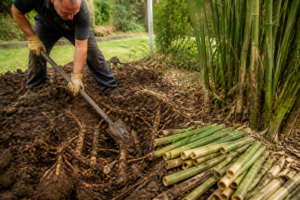
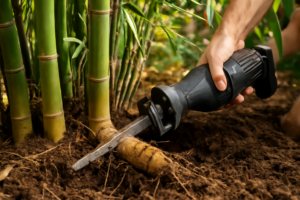
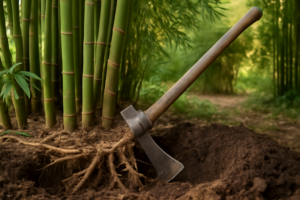
The key details matter enormously. The barrier needs to be at least 24 inches deep, and ideally 30 to 36 inches for vigorous running species. It needs to be thick enough — at least 60 mil, with 100 mil being the gold standard for aggressive runners. And critically, it needs to be installed with the top edge angled outward and sitting about two inches above the soil surface, so rhizomes that try to escape are redirected upward where you can see and cut them. A barrier that is too shallow or installed flat will just be bypassed.
The Root Barrier I Should Have Installed Before My Patio Cracked
Running-bamboo rhizomes don’t respect concrete, pavers, or property lines—they spread laterally just below the soil surface and will exploit any weakness they find. A proper HDPE root barrier installed at planting or around existing clumps is the only thing that actually stops them from reaching your hardscape.
What works
- The 36-inch depth gives you real protection against mature rhizome systems that tunnel deeper than you’d expect—mine were found 14 inches down, and this barrier goes well beyond that safety margin.
- The 100 mil thickness actually resists puncture from aggressive rhizome tips; thinner barriers (60 mil) can fail under sustained pressure from fast-growing varieties like Phyllostachys.
- You can install it vertically around existing plantings or lay it horizontally before planting, and it stays intact through freeze-thaw cycles—I’ve had mine in place for four seasons with no degradation.
What doesn’t
- Installation is labor-intensive and physically demanding—digging a 36-inch trench around an established clump takes a full weekend, and you have to be meticulous about overlap and sealing at the top edge or rhizomes will still escape.
- It doesn’t stop vertical escape if bamboo culms grow outside the barrier perimeter; you still need to monitor and cut back shoots that emerge beyond your containment zone.
I nearly convinced myself that 24-inch barriers would be “good enough” to save on cost and digging time—right up until my contractor showed me those rhizomes threading through my patio. The extra depth and mil thickness cost more upfront, but it’s the difference between real containment and an expensive false sense of security. Get the Bamboo Shield – 40 ft x 36 inch x 100 mil Root Barrier.
About This Article

Written by Marcus Chen. Marcus Chen has spent 15 years cultivating and studying bamboo across 14 different species, combining commercial growing operations with extensive hands-on experience in species selection and containment. As both a grower and consultant, he specializes in practical bamboo management, helping homeowners and landscapers understand the real-world requirements for responsible bamboo cultivation. Marcus brings tested knowledge of which species thrive reliably and which present containment challenges that go beyond standard recommendations. More about this site.
Verify this against a primary source
Specifics change, and your situation may differ from the one described here. These are the authorities worth checking directly:
- American Bamboo Society — species listings and cultivation guidance
- USDA PLANTS Database — species range and identification
- USDA Plant Hardiness Zone Map — cold hardiness verification for your location