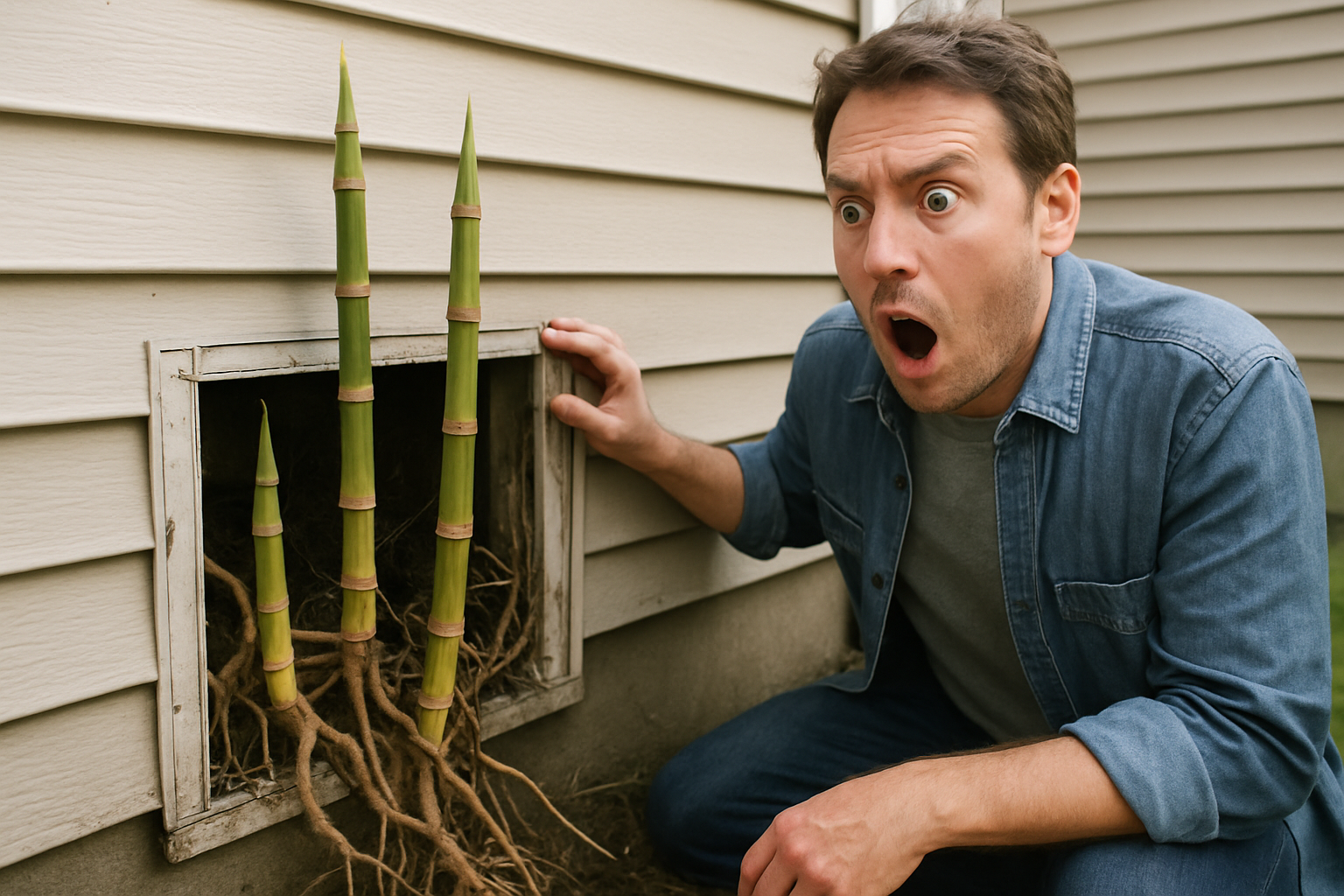
I still remember the morning I walked into my spare bedroom and noticed a thin green shoot poking up through a crack in the baseboard. At first I thought it was a weed that had somehow snuck in. Then it hit me — bamboo growing into house, my house, through the foundation wall. My stomach dropped. That little shoot was the beginning of a very expensive, very stressful few months that nearly cost me my friendship with the neighbor who had gifted me the “beautiful, fast-growing” bamboo plant three years earlier.
If you’re here because you’re googling bamboo problems at midnight in a mild panic, first — breathe. Second — you’re not alone, and there is a way through this. I want to share what happened to me, what I learned the hard way, and the practical steps and tools that finally gave me my yard (and my sanity) back.
How a “Low-Maintenance” Plant Became a Full-Time Problem
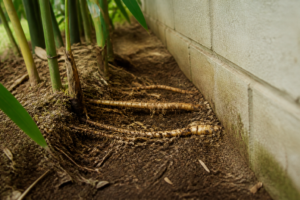
My neighbor Diane meant well. She had a gorgeous stand of golden bamboo along her fence line and offered me a division for free. “It grows fast, it’s beautiful, and deer won’t touch it,” she said. All true. What she didn’t mention — probably because she didn’t know — was that running bamboo spreads through underground rhizomes that can travel 10 to 15 feet or more in a single season. Quietly. Invisibly. Until one day they’re not invisible anymore.
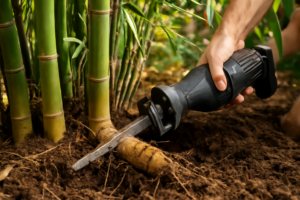
Within two years I had a lovely privacy screen. By year three, bamboo shoots were coming up through my lawn 20 feet from the original planting. And then came that morning in the spare bedroom. A contractor friend came over to take a look and confirmed my worst fear: a rhizome had followed the soil line along my foundation, found a small gap, and exploited it. The remediation cost me over $1,400 — demolition, patching, landscaping repair, and professional rhizome removal. Diane and I didn’t speak much that summer. It wasn’t her fault, but the tension was real.
Why Bamboo Growing Into Your House Is More Common Than You Think
Here’s the thing nobody tells you at the garden center: not all bamboo behaves the same way. There are two main types — clumping bamboo and running bamboo. Clumping varieties spread slowly outward from a central crown and are generally well-behaved neighbors. Running bamboo, on the other hand, sends out horizontal rhizomes that actively seek out new territory. Species like Phyllostachys aureosulcata (yellow groove bamboo) or the common golden bamboo (Phyllostachys aurea) are notorious runners.
Rhizomes don’t respect foundations, sidewalks, or driveways. They follow the path of least resistance through the soil, and when they encounter a crack — even a hairline fracture in a concrete footing — they will find it. Bamboo growing into house foundations is a documented problem, not a freak occurrence. And because the rhizomes travel underground, you often don’t know it’s happening until there’s already damage.
A few warning signs to watch for:
- New bamboo shoots appearing far from the original plant, especially near the house
- Shoots emerging through mulch beds directly adjacent to your foundation
- Cracks in concrete paths or patios near an established bamboo grove
- A spongy or uneven feeling under lawn areas between the bamboo and your home
What Actually Stops Bamboo Rhizomes (And What Doesn’t)
After my expensive lesson, I did a deep dive into bamboo containment. Here’s the honest truth: the only reliable long-term solution for running bamboo near structures is a physical root barrier installed correctly in the ground. Edging products, landscaping fabric, and repeated mowing will slow things down but will not stop determined rhizomes.
Effective root barriers need to be at least 24 inches deep (rhizomes rarely go deeper than 18 inches, but you want that margin), made of heavy-duty HDPE material at least 60 mil thick, and installed at a slight outward angle to redirect rhizomes upward where you can see and cut them. The barrier should also overlap at the seam by at least 6 inches and be sealed with the manufacturer’s recommended tape or connector.
The Root Barrier That Should Have Gone In Before My First Bamboo Ever Left the Pot
Running bamboo rhizomes don’t respect property lines, foundation walls, or the fact that you inherited them from a well-meaning neighbor. A 60-mil HDPE root barrier installed at planting time—or retrofitted around existing clumps—is the only thing that actually stops the spread before it becomes a legal and structural nightmare.
What works
- The 60-mil thickness actually resists puncture from aggressive rhizomes over years, unlike thinner barriers that get breached within a season or two.
- At 50 feet long, you can contain a mature clump with enough overlap at the seams to prevent sneaky rhizomes from escaping through gaps—something I learned the hard way with undersized barriers.
- The 24-inch depth catches most running bamboo before it goes deep, though you’ll still need to monitor the soil surface where new shoots sometimes emerge at the barrier edge.
What doesn’t
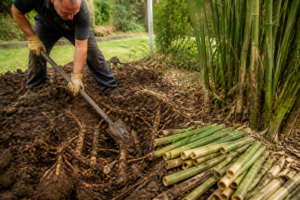
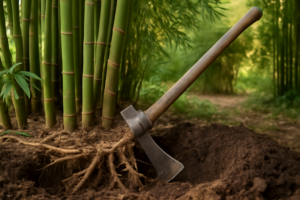
- Installation takes real labor and isn’t a five-minute job—you’re digging trenches, fitting the barrier to your exact plot shape, and making sure it overlaps properly, or rhizomes will simply go around it.
- It only works if you actually install it before the bamboo is established; retrofitting around a sprawling mature clump is exponentially harder and more expensive than preventing spread from the start.
I questioned whether 50 feet would be enough for my plot, ordered too small the first time, and watched new shoots pop up exactly where I’d run out of barrier—a mistake that cost me months of extra digging. Don’t repeat it: get the Bamboo Shield – 50 feet x 24 inch x 60 mil and measure your containment perimeter twice.
About This Article

Written by Marcus Chen. Marcus Chen has spent 15 years cultivating and studying bamboo across 14 different species, combining commercial growing operations with extensive hands-on experience in species selection and containment. As both a grower and consultant, he specializes in practical bamboo management, helping homeowners and landscapers understand the real-world requirements for responsible bamboo cultivation. Marcus brings tested knowledge of which species thrive reliably and which present containment challenges that go beyond standard recommendations. More about this site.
Verify this against a primary source
Specifics change, and your situation may differ from the one described here. These are the authorities worth checking directly:
- American Bamboo Society — species listings and cultivation guidance
- USDA PLANTS Database — species range and identification
- USDA Plant Hardiness Zone Map — cold hardiness verification for your location