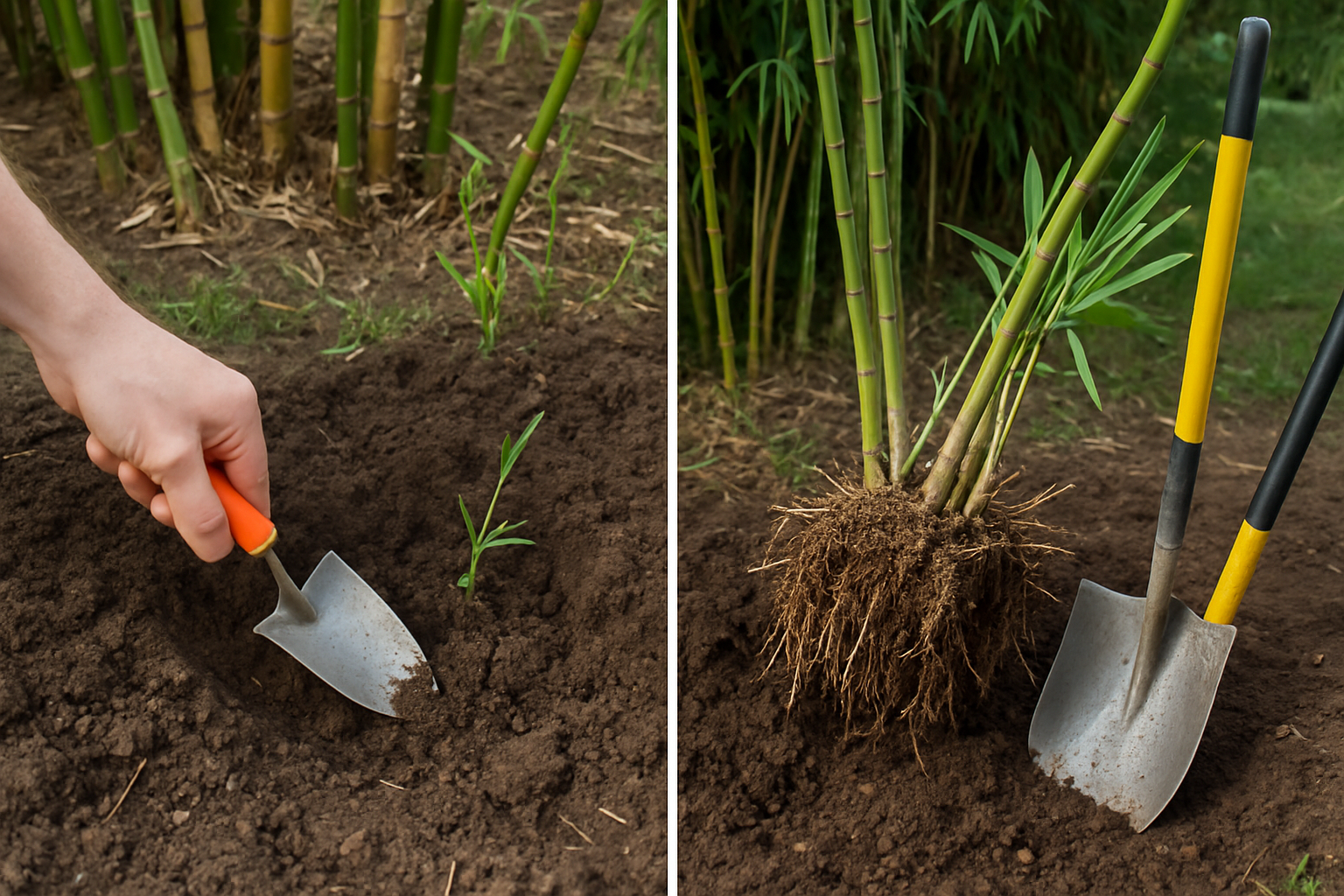
I want to tell you about the afternoon I decided to dig out bamboo roots by hand using nothing but a standard garden trowel, a misplaced sense of confidence, and apparently zero understanding of what bamboo roots actually look like underground. Spoiler: the trowel snapped in half. My pride did not survive either.
It started innocently enough. The previous owners of our house had planted a running bamboo along the back fence — the kind that, if given half a chance, will colonize your neighbor’s yard, your neighbor’s neighbor’s yard, and possibly a small country. By the time we moved in, it had spread about eight feet beyond the fence line and was cheerfully sprouting through the lawn. I figured I’d spend a Saturday afternoon sorting it out. One Saturday afternoon. I genuinely believed that.
Why Bamboo Roots Laugh at Your Optimism
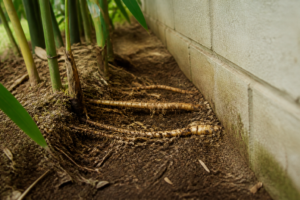
Here’s what I didn’t know about bamboo before that fateful Saturday: running bamboo spreads through underground stems called rhizomes, and those things are basically the subway system of the plant world — dense, interconnected, and going in directions you absolutely did not expect. They can run horizontally two to three feet deep, and they branch constantly. When I drove my little trowel into the soil and hit the first woody rhizome, I thought I’d found the main root. Reader, I had found approximately one percent of the main root.
I dug. I pulled. The trowel flexed in a way metal should not flex. Then, with a sound I can only describe as a disappointed crack, the handle snapped clean off and I sat down hard in the dirt. My dog watched me from the porch with an expression that I’m pretty sure was pity.
The good news? That embarrassing afternoon sent me down a research rabbit hole, and I eventually figured out what actually works. Let me save you the broken tools and the wounded dignity.
How to Actually Dig Out Bamboo Roots By Hand (The Real Method)
The key insight that changed everything for me is this: you are not digging up roots so much as you are systematically severing and extracting a network. Think of it less like pulling a weed and more like dismantling plumbing. You need to expose sections, cut them cleanly, and work your way through methodically rather than just yanking at whatever you can grab.
Step 1: Cut Down All the Canes First
Before you touch the soil, cut every cane down to ground level. This removes the top growth, makes the area manageable, and honestly makes the whole project feel less overwhelming. A reciprocating saw with the right blade makes short work of even thick canes — more on that in the tools section below.
Step 2: Define Your Work Zone
Don’t try to tackle the whole area at once. Mark out a section about three feet wide and work from one edge inward. This lets you actually see what you’re pulling out and prevents you from stepping on and snapping rhizomes you haven’t dug up yet — which just encourages them to reshoot from the broken end. Fun fact I also learned the hard way.
Step 3: Loosen, Don’t Just Dig
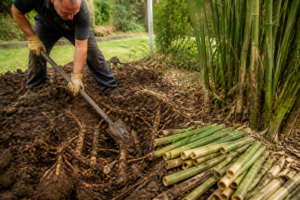
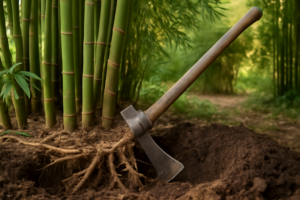
Use a heavy-duty spade to loosen the soil around and beneath the rhizomes before you try to pull anything out. Work the blade down alongside the rhizome, lever gently, and let the soil break apart around it. Once it’s loose, you can trace it in both directions and cut it free from the network. Trying to muscle out a rhizome that’s still locked in compacted soil is exactly how trowels die.
Step 4: Collect Every Piece
Bamboo rhizomes can regenerate from surprisingly small sections. As you pull pieces out, drop them straight into a wheelbarrow or bin — don’t leave them sitting on the soil surface. Even a fist-sized chunk left behind can sprout again given enough time and moisture.
Step 5: Repeat for Several Seasons
I know. I know. But it’s the truth. After your initial dig-out, monitor the area and remove any new shoots the moment they appear. Each time a shoot is removed before it matures, the root system loses stored energy. After one to two growing seasons of consistent shoot removal, most bamboo stands will exhaust themselves and stop resprouting.
Tools That Actually Help You Dig Out Bamboo Roots By Hand
If my snapped trowel taught me anything, it’s that bamboo removal is a tool investment situation. Here are the tools I actually use now, all of which have held up considerably better than that trowel.
The Reciprocating Saw That Finally Cut Through Bamboo Rhizomes Without Breaking
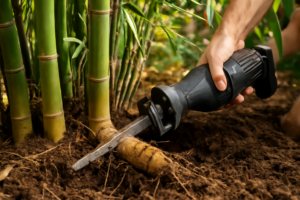
Hand tools won’t cut it when you’re dealing with mature bamboo rhizomes—they’re woody, dense, and designed by nature to survive almost anything you throw at them. A reciprocating saw with the right blade changes the entire removal game, turning what would be hours of futile digging into something that actually feels like progress.
What works
- Japanese-tooth blades slice through rhizomes cleanly without the chattering and binding you get with standard reciprocating blades, which means you can actually see what you’re cutting and control the depth.
- You can reach rhizomes deep in the soil without excavating massive holes—just clear the topsoil, position the blade, and cut horizontally along the rhizome network, which saves your back and your sanity.
- The blade stays sharp long enough to handle multiple rhizomes in one afternoon, unlike my experience with band saws and hacksaws that dulled after two or three cuts.
What doesn’t
- You still have to find and expose the rhizomes first—the saw won’t magically tell you where the running network is underground, so expect to do some exploratory digging to map out the root system.
- If you have clay soil or compacted earth, the saw blade can bounce and skip on impact, which means you need to work slowly and methodically rather than just powering through like you might with softer soil.
The first time I hit a rhizome at an angle and the blade skipped sideways, I thought I’d have to abandon the whole approach, but I adjusted the angle and discovered that letting the tool do the work instead of forcing it was the actual secret. Grab the EZARC Japanese Teeth Reciprocating Saw Blades and save yourself weeks of futile hand-digging.
About This Article

Written by Marcus Chen. Marcus Chen has spent 15 years cultivating and studying bamboo across 14 different species, combining commercial growing operations with extensive hands-on experience in species selection and containment. As both a grower and consultant, he specializes in practical bamboo management, helping homeowners and landscapers understand the real-world requirements for responsible bamboo cultivation. Marcus brings tested knowledge of which species thrive reliably and which present containment challenges that go beyond standard recommendations. More about this site.
Verify this against a primary source
Specifics change, and your situation may differ from the one described here. These are the authorities worth checking directly:
- American Bamboo Society — species listings and cultivation guidance
- USDA PLANTS Database — species range and identification
- USDA Plant Hardiness Zone Map — cold hardiness verification for your location