- Best for serious clay renovation: Biochar by Lewis Bamboo – Natural Soil Additive (1.25 Gallon Bag) — This one comes from a bamboo-specific producer, which I love. It’s a smaller bag so it’s great for targeted planting holes or spot treatments around struggling plants.
- Best for large-scale projects: The Andersons HumiChar Organic Soil Amendment with Humic Acid and Biochar (12 lb, covers 12,000 sq ft) — This is the product I wish I’d known about before my original planting. The humic acid component is a bonus — it chelates nutrients and makes them more bioavailable to roots. Perfect for treating a large privacy screen bed.
- Best OMRI-certified option (large volume): Char Bliss Organic Biochar for Plants – 24 Qts, OMRI-Listed — If you garden organically or want certified inputs, this is your pick. OMRI listing means it’s been verified for organic production. The 24-quart size is generous and the particle size works beautifully when mixed into clay.
- Best mid-size option: Char Bliss Organic Biochar for Plants – 8 Qts, OMRI-Listed — Same trusted formula as the 24-qt version, just right for smaller beds or container plant
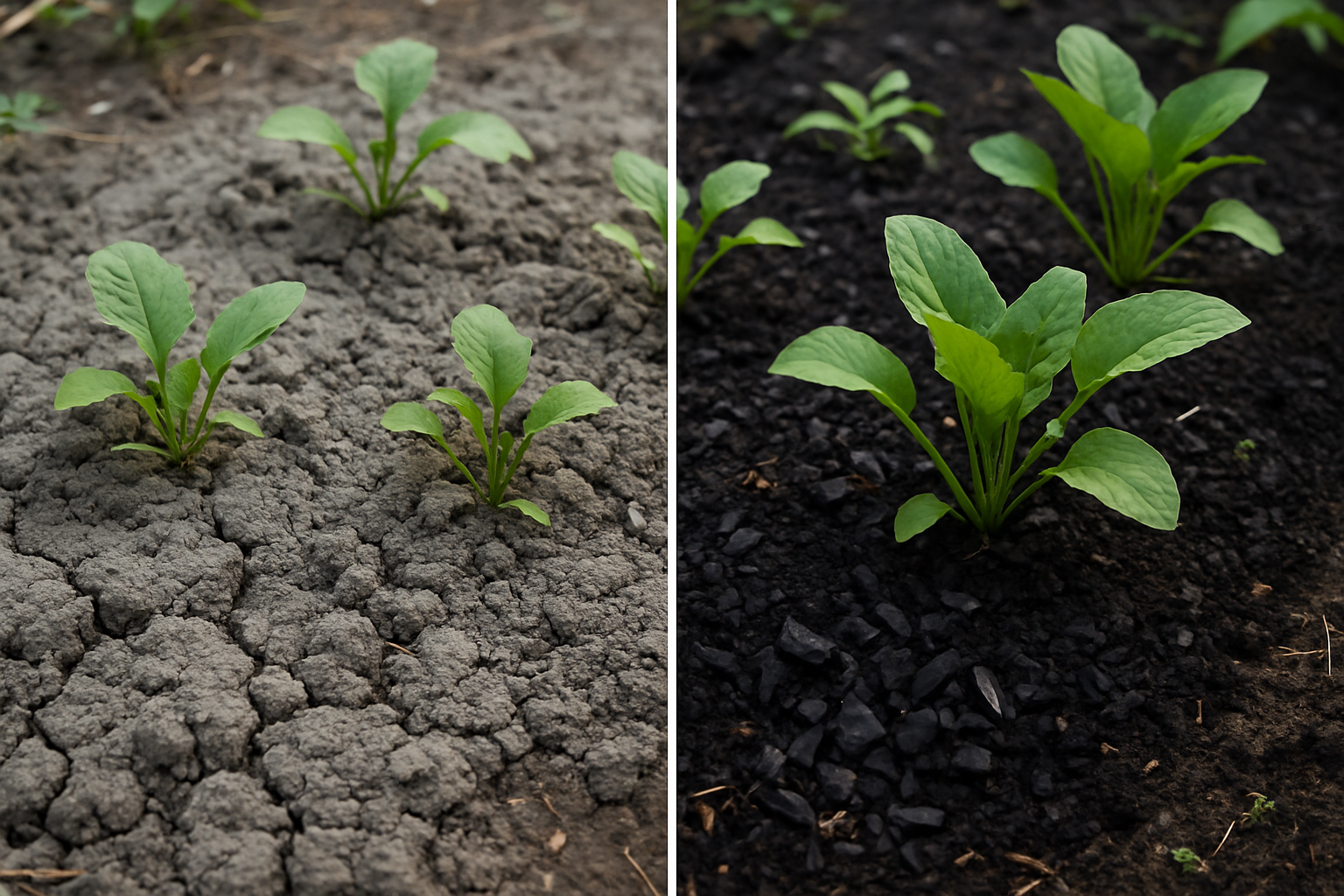
I almost cried in my backyard. Not a little misty-eyed moment — I mean full-on, hands-on-knees, what-have-I-done despair. I had just spent $600 on bare-root bamboo plants, dug out a 40-foot privacy screen planting bed by hand over three weekends, and watched every single one of those plants sit there, sulk, and slowly yellow into nothing. The culprit? My soil. My absolute nightmare of compacted, waterlogged, oxygen-starved clay soil. It was the kind of dirt that forms a perfect handprint when wet and cracks into pottery shards when dry. I had tried compost, grit, raised beds — nothing worked at scale. Then a neighbor mentioned bamboo charcoal soil amendment, and honestly? I rolled my eyes. But I was also desperate enough to try anything.
This post contains affiliate links. As an Amazon Associate, I earn from qualifying purchases. If you click a product link and make a purchase, I may earn a small commission at no extra cost to you. I only recommend products I’ve personally researched and believe in.
Why Clay Soil Is Such a Problem for Bamboo
Bamboo gets a reputation for being indestructible, and in many ways it earns that reputation. But there’s one thing that will stop even the toughest running bamboo dead in its tracks: poor drainage. Bamboo roots need oxygen. When clay soil compacts — and it always does — it squeezes out the air pockets roots depend on. Water pools around the rhizomes instead of draining through, and what looks like underwatering is actually root suffocation. That’s exactly what was happening to my plants. They weren’t thirsty. They were drowning in slow motion.
I had done everything “right” by conventional wisdom. I amended with compost before planting. I top-dressed with bark mulch. I even bought a soil test kit and balanced my pH. None of it solved the structural problem. Clay particles are microscopically flat and they stack together like sheets of paper, leaving almost no room for air or drainage. What I needed wasn’t more nutrients — I needed to physically change the architecture of my soil.
How Bamboo Charcoal Soil Amendment Actually Works
Here’s the science, simplified, because I had to look this up myself before I believed any of it. Biochar — which is what bamboo charcoal soil amendment products are technically selling you — is wood or plant material that’s been heated at high temperatures with very little oxygen. The result is a highly porous, stable carbon material that looks like fine black gravel. And that porosity is the whole point.
When you work biochar into clay soil, it does a few things at once. First, it physically interrupts those flat clay particles and creates tiny air channels, improving drainage and aeration immediately. Second, its sponge-like structure holds water and nutrients in a way that makes them available to roots rather than washing away. Third — and this one surprised me — it creates an incredible habitat for beneficial soil microbes. Those microbes colonize the biochar’s pores and start breaking down organic matter more efficiently. Over time, you’re not just patching a problem. You’re building living soil.
Unlike compost, biochar doesn’t decompose. It can remain stable in your soil for hundreds of years. That means one good application has long-lasting effects, which matters a lot when you’re talking about a permanent bamboo grove.
What I Did (And What I’d Do Differently)
After my bamboo disaster, I dug up the survivors — mercifully, about half the plants were still hanging on — and started over with a proper soil renovation. Here’s the process I followed, adjusted from what I learned the hard way.
Step 1: Excavate and Assess
I dug out my planting trench about 18 inches deep and set the clay aside. If your clay is truly severe, don’t try to amend in place — remove it and work with it separately in a wheelbarrow where you can really mix things through.
Step 2: Mix Your Amendment Ratio
For heavy clay, I used roughly a 20% biochar to 80% native soil ratio by volume, plus a generous addition of compost. Don’t go overboard with charcoal — more isn’t always better, and at very high concentrations it can actually tie up nitrogen temporarily as soil microbes adjust.
Step 3: Pre-charge the Biochar
This is the step most beginners skip and really shouldn’t. Fresh biochar straight from the bag is essentially sterile — it has all that beautiful pore space but nothing living in it yet. Before you add it to your soil, mix it with compost or compost tea and let it sit for a week. This “charges” the biochar so it’s already teeming with beneficial microbes when it goes in the ground.
Step 4: Backfill and Plant
Backfill with your amended mix, water it in thoroughly, and mulch the surface heavily. Bamboo loves a thick organic mulch layer — it moderates temperature, feeds the soil slowly, and mimics the forest floor conditions where bamboo thrives naturally.
Products I Recommend for Bamboo Growers
I’ve tested several biochar products over the past two years and these are the ones worth your money. They vary by volume and application type, so I’ve noted what each one works best for.
- Best for serious clay renovation: Biochar by Lewis Bamboo – Natural Soil Additive (1.25 Gallon Bag) — This one comes from a bamboo-specific producer, which I love. It’s a smaller bag so it’s great for targeted planting holes or spot treatments around struggling plants.
- Best for large-scale projects: The Andersons HumiChar Organic Soil Amendment with Humic Acid and Biochar (12 lb, covers 12,000 sq ft) — This is the product I wish I’d known about before my original planting. The humic acid component is a bonus — it chelates nutrients and makes them more bioavailable to roots. Perfect for treating a large privacy screen bed.
- Best OMRI-certified option (large volume): Char Bliss Organic Biochar for Plants – 24 Qts, OMRI-Listed — If you garden organically or want certified inputs, this is your pick. OMRI listing means it’s been verified for organic production. The 24-quart size is generous and the particle size works beautifully when mixed into clay.
- Best mid-size option: Char Bliss Organic Biochar for Plants – 8 Qts, OMRI-Listed — Same trusted formula as the 24-qt version, just right for smaller beds or container plant
Tag: soil amendment
-
Bamboo Charcoal Fixed My Terrible Clay Soil: A Skeptic’s Before and After