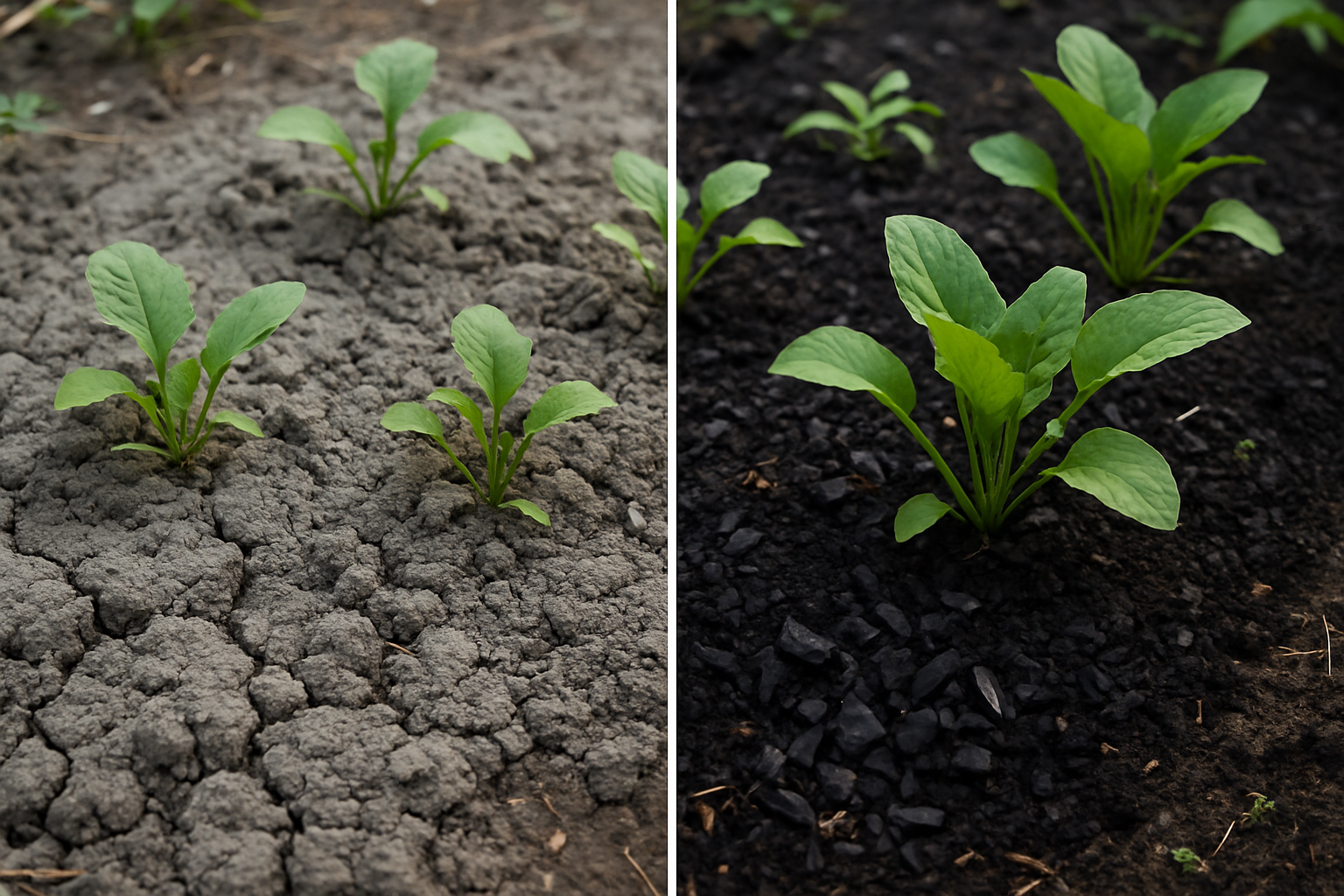
I almost cried in my backyard. Not a little misty-eyed moment — I mean full-on, hands-on-knees, what-have-I-done despair. I had just spent $600 on bare-root bamboo plants, dug out a 40-foot privacy screen planting bed by hand over three weekends, and watched every single one of those plants sit there, sulk, and slowly yellow into nothing. The culprit? My soil. My absolute nightmare of compacted, waterlogged, oxygen-starved clay soil. It was the kind of dirt that forms a perfect handprint when wet and cracks into pottery shards when dry. I had tried compost, grit, raised beds — nothing worked at scale. Then a neighbor mentioned bamboo charcoal soil amendment, and honestly? I rolled my eyes. But I was also desperate enough to try anything.
Why Clay Soil Is Such a Problem for Bamboo
Bamboo gets a reputation for being indestructible, and in many ways it earns that reputation. But there’s one thing that will stop even the toughest running bamboo dead in its tracks: poor drainage. Bamboo roots need oxygen. When clay soil compacts — and it always does — it squeezes out the air pockets roots depend on. Water pools around the rhizomes instead of draining through, and what looks like underwatering is actually root suffocation. That’s exactly what was happening to my plants. They weren’t thirsty. They were drowning in slow motion.
I had done everything “right” by conventional wisdom. I amended with compost before planting. I top-dressed with bark mulch. I even bought a soil test kit and balanced my pH. None of it solved the structural problem. Clay particles are microscopically flat and they stack together like sheets of paper, leaving almost no room for air or drainage. What I needed wasn’t more nutrients — I needed to physically change the architecture of my soil.
How Bamboo Charcoal Soil Amendment Actually Works
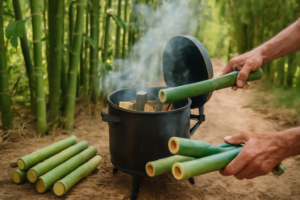
Here’s the science, simplified, because I had to look this up myself before I believed any of it. Biochar — which is what bamboo charcoal soil amendment products are technically selling you — is wood or plant material that’s been heated at high temperatures with very little oxygen. The result is a highly porous, stable carbon material that looks like fine black gravel. And that porosity is the whole point.
When you work biochar into clay soil, it does a few things at once. First, it physically interrupts those flat clay particles and creates tiny air channels, improving drainage and aeration immediately. Second, its sponge-like structure holds water and nutrients in a way that makes them available to roots rather than washing away. Third — and this one surprised me — it creates an incredible habitat for beneficial soil microbes. Those microbes colonize the biochar’s pores and start breaking down organic matter more efficiently. Over time, you’re not just patching a problem. You’re building living soil.
Unlike compost, biochar doesn’t decompose. It can remain stable in your soil for hundreds of years. That means one good application has long-lasting effects, which matters a lot when you’re talking about a permanent bamboo grove.
What I Did (And What I’d Do Differently)
After my bamboo disaster, I dug up the survivors — mercifully, about half the plants were still hanging on — and started over with a proper soil renovation. Here’s the process I followed, adjusted from what I learned the hard way.
Step 1: Excavate and Assess
I dug out my planting trench about 18 inches deep and set the clay aside. If your clay is truly severe, don’t try to amend in place — remove it and work with it separately in a wheelbarrow where you can really mix things through.
Step 2: Mix Your Amendment Ratio
For heavy clay, I used roughly a 20% biochar to 80% native soil ratio by volume, plus a generous addition of compost. Don’t go overboard with charcoal — more isn’t always better, and at very high concentrations it can actually tie up nitrogen temporarily as soil microbes adjust.
Step 3: Pre-charge the Biochar
This is the step most beginners skip and really shouldn’t. Fresh biochar straight from the bag is essentially sterile — it has all that beautiful pore space but nothing living in it yet. Before you add it to your soil, mix it with compost or compost tea and let it sit for a week. This “charges” the biochar so it’s already teeming with beneficial microbes when it goes in the ground.
Step 4: Backfill and Plant
Backfill with your amended mix, water it in thoroughly, and mulch the surface heavily. Bamboo loves a thick organic mulch layer — it moderates temperature, feeds the soil slowly, and mimics the forest floor conditions where bamboo thrives naturally.
Biochar for Spot Treatments: The Fast Fix When One Plant Is Strangling in Clay
When a single bamboo specimen is struggling in heavy clay while the rest of your grove thrives, you don’t need to amend your entire bed—you need to dig in around that one plant and fix the immediate root environment. Biochar works fastest in targeted planting holes because it starts improving drainage and nutrient availability right where the roots are gasping.
What works
- The 1.25-gallon bag size is perfect for digging out a planting hole, mixing biochar directly into the native clay, and backfilling without buying ten times what you need—I’ve done this around three struggling running bamboo plants in a single afternoon.
- It arrives as finished, stable biochar, not raw charcoal dust, so it doesn’t wash away or blow around when you’re working it into the soil around active canes.
- Coming from a bamboo-specific producer means the particle size is actually sized for bamboo root systems rather than generic vegetable gardens, and I noticed new shoot vigor within two growing seasons on previously stunted plants.
What doesn’t
- At $30–40 per 1.25-gallon bag, it’s expensive for large-scale clay renovation—if you’re amending more than a few planting holes, the math breaks and you should jump to a bulk product instead.
- Biochar alone won’t fix clay compaction; you still have to physically break up the soil and create air pockets, or the biochar just sits there as an expensive additive without doing much.
I was skeptical the first time I used it—one small bag seemed almost pointless next to my acres of dead-weight clay—but six months later the canes I’d treated were outpacing everything else by a full month. Biochar by Lewis Bamboo – Natural Soil Additive (1.25 Gallon Bag)
About This Article

Written by Marcus Chen. Marcus Chen has spent 15 years cultivating and studying bamboo across 14 different species, combining commercial growing operations with extensive hands-on experience in species selection and containment. As both a grower and consultant, he specializes in practical bamboo management, helping homeowners and landscapers understand the real-world requirements for responsible bamboo cultivation. Marcus brings tested knowledge of which species thrive reliably and which present containment challenges that go beyond standard recommendations. More about this site.
Verify this against a primary source
Specifics change, and your situation may differ from the one described here. These are the authorities worth checking directly:
- American Bamboo Society — species listings and cultivation guidance
- USDA PLANTS Database — species range and identification
- USDA Plant Hardiness Zone Map — cold hardiness verification for your location