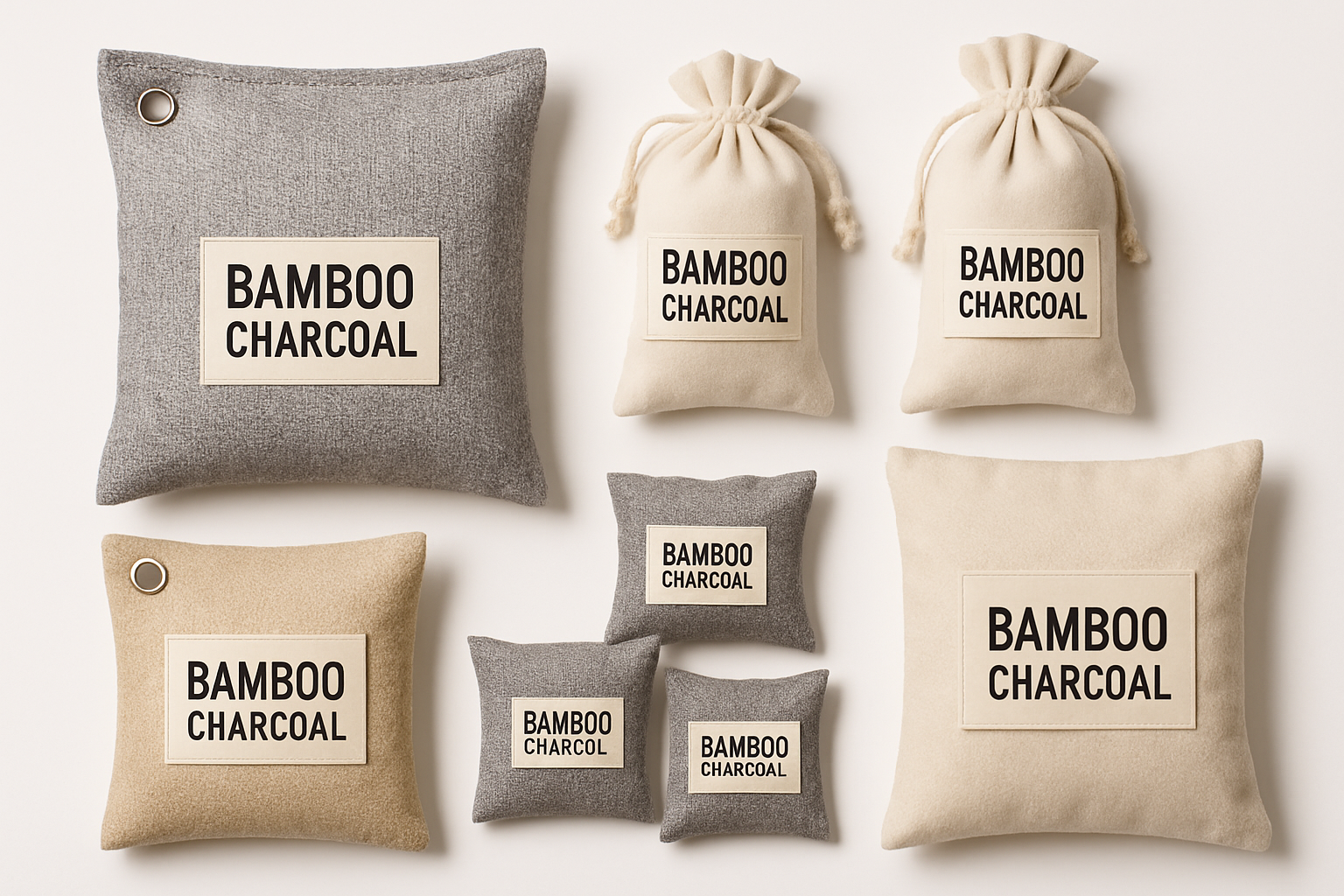
I once put a bamboo charcoal air purifying bag in my car to deal with a mysterious smell — and then completely forgot about it for three weeks. When I finally found it, it had migrated under the seat, split open slightly, and left a fine dusting of black charcoal across my beige floor mat. My car smelled amazing. It looked like a crime scene.
That was six months ago, and it kicked off what I can only describe as a full-blown obsession. I bought a stack of bamboo charcoal air purifying bags, tested placement and sizing across six different problem spots in my house, and kept notes like the extremely normal person I am. Here’s everything I learned about what actually makes these things work.
Why I Got Obsessed With Bamboo Charcoal Air Purifying Bags
My house has what I lovingly call “character.” It also has a basement that smells like a wet dog read too many old paperbacks, two actual dogs, a gym corner in the garage, and a mudroom that I’m pretty sure has its own microclimate. I’d tried plug-in air fresheners, baking soda, sprays — all of it. They either masked the smell with something worse (why does “ocean breeze” smell like a public restroom?) or did nothing at all.
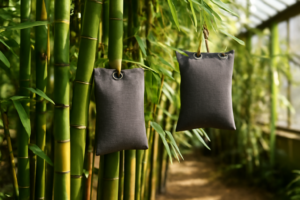
Then a friend mentioned bamboo charcoal bags. The concept is beautifully simple: activated charcoal made from bamboo is incredibly porous, which gives it a massive surface area that traps odor molecules, excess moisture, and even some allergens. No fragrance, no chemicals, no electricity. You just set them out, let them work, and refresh them monthly by putting them in direct sunlight for a couple of hours. They last up to two years. I was skeptical but intrigued.
So I went a little overboard and ordered a dozen bags. Because apparently that’s who I am now.
How I Tested Them (And What I Was Looking For)
I placed bags in six problem spots: the basement, the mudroom, my gym corner, two closets, and yes, the car. I kept each spot consistently ventilated (or not ventilated) the same way throughout the test. Every two to three weeks, I did a completely scientific evaluation method — I walked in, closed my eyes, and sniffed. I also tracked moisture levels in the basement with a cheap hygrometer, because the smell down there was largely damp-related.
Here’s what I discovered mattered most:
- Bag size versus room size. Smaller bags in larger rooms did almost nothing. The general guideline — about 200g per 90 square feet — is real. Don’t underestimate this.
- Placement matters. Charcoal bags work best in enclosed or semi-enclosed spaces. A bag sitting on an open shelf in a big room is fighting a losing battle.
- Sunlight recharging actually works. Bags I forgot to sun-refresh started losing effectiveness around week six. The ones I recharged monthly stayed consistent the whole time.
- They won’t fix an active problem. If you have mold, a plumbing issue, or a very determined pet, charcoal bags help maintain freshness — they don’t solve the root cause.
The One Bag That Earned a Permanent Spot: Keeping Bamboo Dust Out of My Indoor Grow Space
After six months of testing across six problem spots in the house, one bag earned a permanent spot — and not for the reason I originally bought it. My propagation shelf and cane storage in the garage generate their own dust problem, and this is the bag that handles it.
If you’re propagating bamboo cuttings indoors or storing harvested canes in a garage or shed, airborne dust and particulates from dried leaves, split nodes, and processing can accumulate fast. I needed something that would actually pull those fine particles out without adding moisture or taking up valuable shelf space.
What works
- Genuinely absorbs the fine black dust that comes off dried bamboo cane — I noticed a visible reduction in particulates settling on my propagation trays within the first week.
- Stays put when you secure it properly; no migration under seats or into crevices if you actually use the included ties instead of just tossing it loose.
- The 200g bag size is substantial enough to handle a small to medium storage area without needing replacement every month.
What doesn’t
- The bag material itself is thin and will rupture if you squeeze it hard or if sharp bamboo fragments puncture it from nearby storage — I learned this the mess way.
- Doesn’t replace actual ventilation; if your workspace has poor air circulation, the charcoal can only do so much before saturation sets in.
I almost ditched these after the first week when the smell didn’t completely vanish, but I realized I hadn’t actually sealed up the room or secured the bag properly — operator error, not product failure. Grab a CLEVAST Bamboo Charcoal Air Purifying Bags if you’re serious about keeping your propagation and storage areas clean.
About This Article

Written by Marcus Chen. Marcus Chen has spent 15 years cultivating and studying bamboo across 14 different species, combining commercial growing operations with extensive hands-on experience in species selection and containment. As both a grower and consultant, he specializes in practical bamboo management, helping homeowners and landscapers understand the real-world requirements for responsible bamboo cultivation. Marcus brings tested knowledge of which species thrive reliably and which present containment challenges that go beyond standard recommendations. More about this site.
Verify this against a primary source
Specifics change, and your situation may differ from the one described here. These are the authorities worth checking directly:
- American Bamboo Society — species listings and cultivation guidance
- USDA PLANTS Database — species range and identification
- USDA Plant Hardiness Zone Map — cold hardiness verification for your location