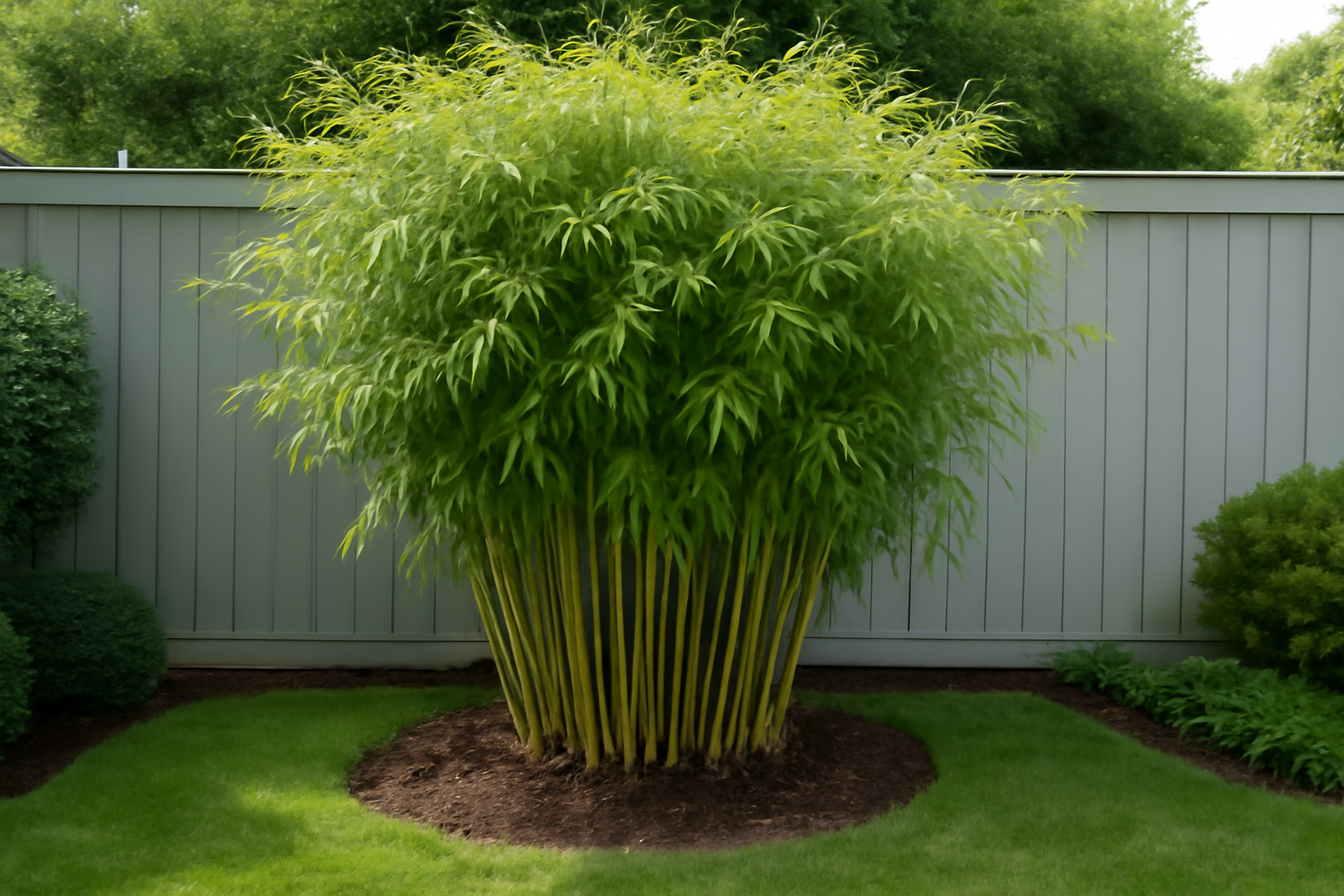
If you’re searching for non invasive bamboo, you’re likely hoping to enjoy the beauty and privacy bamboo offers without the headache of aggressive spreading. That’s a completely reasonable concern — running bamboo varieties can escape garden boundaries and become a serious problem for homeowners and their neighbors. The good news is that clumping bamboo species are non-invasive by nature, meaning their root systems expand slowly outward in a tight clump rather than sending out long underground runners that pop up unpredictably across your yard.
Non-invasive bamboo is an ideal choice for residential landscapes, privacy screens, and garden borders where you want structure and greenery without constant maintenance or containment worries. Whether you’re working with a small urban garden or a sprawling backyard, non spreading bamboo gives you the flexibility to plant with confidence. These well-behaved varieties deliver the same lush, tropical aesthetic as their invasive counterparts — just without the long-term regret.
In this guide, we’ll walk you through some of the best non invasive bamboo options available, organized by climate suitability and size. You’ll find cold-hardy varieties that can handle freezing winters, tropical species that thrive in warm and humid conditions, and compact dwarf options perfect for smaller spaces or container gardening. Whatever your growing zone or design goal, there’s a clumping bamboo that fits the bill.
Non-spreading bamboo — also called non-invasive bamboo — refers to clumping varieties that grow from pachymorph rhizomes, which expand outward only a few inches per year rather than sending underground runners across your yard. If you want bamboo without the horror stories, clumping varieties are the answer.
What Makes Clumping Bamboo Non-Spreading: The Rhizome Difference
All bamboo spreads via underground stems called rhizomes, but the type of rhizome determines whether you’ll be fighting bamboo in your neighbor’s yard five years from now or not.
Running bamboo uses leptomorph rhizomes — long, horizontal, fast-moving underground stems that can shoot 10 to 15 feet away from the parent plant in a single growing season. These are the varieties that give bamboo its invasive reputation. Species like Phyllostachys aurea (golden bamboo) fall into this category.
Clumping bamboo uses pachymorph rhizomes — short, curved, self-contained rhizomes that turn upward quickly to form new culms close to the mother plant. The rhizome doesn’t travel; it essentially loops back on itself. This is a fundamental structural difference, not just a behavioral one. No root barrier is needed. No annual digging. The clump simply gets wider over time at a pace you can manage.
Most clumping bamboos originate from tropical or subtropical climates (genus Bambusa, Dendrocalamus) or from cooler mountain regions of Asia and South America (genera Fargesia, Chusquea, Borinda). This matters for cold hardiness.
How Much Does Clumping Bamboo Actually Spread?
Let’s be direct about this: clumping bamboo is not static. It does expand — just slowly and predictably. Most clumping species spread outward at roughly 2 to 6 inches per year once established. A clump planted at 2 feet wide might reach 5 to 6 feet in diameter after a decade. That’s completely manageable with an occasional edge cut, and it will never send a runner under your fence.
The first two or three years, expect very little expansion as the plant establishes its root system. Years four through seven are when you’ll see the most active outward growth. After that, the clump tends to stabilize in diameter while continuing to push up new culms each spring.
If you want to keep a clump contained to a specific footprint, simply cut any new shoots that emerge outside your intended boundary line in spring, before they harden. It takes five minutes.
Best Non-Spreading Bamboo Varieties: Comparison Table
The following species represent the most reliable, widely available clumping bamboos for home gardens. Cold hardiness zones are USDA zones.
| Species | Common Name | Height | Cold Hardiness | Best Use | Notes |
|---|---|---|---|---|---|
| Fargesia murielae | Umbrella Bamboo | 10–14 ft | Zone 4 | Shade hedges, northern gardens | One of the hardiest clumping bamboos available; handles deep shade well |
| Fargesia robusta ‘Campbell’ | Clumping Bamboo ‘Campbell’ | 14–18 ft | Zone 6 | Tall privacy screens | More sun tolerant than F. murielae; strong upright culms |
| Fargesia nitida | Fountain Bamboo | 10–12 ft | Zone 4 | Containers, small gardens | Graceful arching habit; excellent in large pots; slow to establish |
| Bambusa multiplex ‘Alphonse Karr’ | Alphonse Karr Bamboo | 15–35 ft | Zone 8–10 | Tropical privacy screens, accent planting | Striking yellow culms with green stripes; very ornamental |
| Bambusa textilis ‘Gracilis’ | Slender Weavers Bamboo | 20–30 ft | Zone 8+ | Tall narrow privacy hedge | Tight clumping habit; ideal for narrow spaces between structures |
| Chusquea culeou | Chilean Bamboo | 15–20 ft | Zone 7 | Specimen planting, focal points | South American species with solid culms and a distinctly different texture |
| Borinda papyrifera | Blue Bamboo | 15–20 ft | Zone 7 | Ornamental specimen | Distinctive blue-gray culm color when new; highly decorative |
Growing Clumping Bamboo in Containers
Clumping bamboo is one of the few plants that genuinely thrives long-term in containers, and it’s a reliable choice for patios, rooftop gardens, and any situation where in-ground planting isn’t practical.
For best results, use containers of at least 25 gallons. Smaller pots will restrict growth and require constant watering. Species like Fargesia nitida and Fargesia murielae are particularly well-suited to container culture — their naturally compact growth habit and moderate water needs make them forgiving in pots.
Running bamboo, by contrast, will escape containers. Leptomorph rhizomes are strong enough to crack plastic pots and will find any drainage hole or gap. If you’ve ever seen bamboo growing out the bottom of a nursery container, that’s why. Clumping bamboo’s pachymorph rhizomes simply don’t have that drive to escape — the clump builds on itself rather than sending explorers outward.
Plan to divide container-grown clumping bamboo every four to six years as the root mass fills the pot. This also gives you divisions to plant elsewhere or share.
When Running Bamboo (With a Root Barrier) Still Makes Sense
Clumping bamboo is the right choice for most residential gardens, but there are situations where running bamboo with a proper root barrier is worth considering:
- You need extreme height quickly. Running bamboos like Phyllostachys vivax can reach 40–70 feet and fill in a large screen much faster than any clumping option.
- Budget is a primary concern. Running bamboo species are generally less expensive to purchase and establish faster per square foot of coverage.
- You have a large, open property where containment to a general area — rather than a precise footprint — is acceptable.
- Cold hardiness is critical. In zones 4 and 5, the running species Phyllostachys can handle colder winters than many clumping options. Fargesia murielae and F. nitida are the main exceptions that bridge this gap.
A 60-mil HDPE root barrier installed to a depth of 24–30 inches will contain running bamboo effectively when installed correctly. It’s an extra cost and step, but it is a proven solution for the right application.
For the majority of home gardeners working with defined beds, neighbors nearby, and no desire for ongoing maintenance battles, non-spreading clumping bamboo eliminates the risk entirely. Choose your species based on your hardiness zone first, available sunlight second, and desired height third — and you’ll have a plant that rewards you for decades without becoming a problem.
🛒 Recommended Products
Miracle-Gro All Purpose Plant Food — feed clumping bamboo in spring to encourage dense, lush growth within its natural footprint
View on Amazon →Espoma Bio-tone Starter Plus — mycorrhizal inoculant to help non-spreading clumping bamboo establish faster in its permanent spot
View on Amazon →Soil Moisture Meter — clumping bamboo roots dry out faster than running types; use this to water at the right time, not on a schedule
View on Amazon →As an Amazon Associate I earn from qualifying purchases.
The Root Barrier That Finally Stopped My Golden Bamboo from Crossing the Property Line
Even clumping varieties can surprise you with lateral spread if you’re not vigilant, and a quality root barrier is the only insurance policy that actually works. I learned this the hard way after a neighbor’s complaint forced me to dig up half my garden.
What works
- Rigid HDPE construction holds firm against even aggressive rhizome pressure—I’ve watched it stop lateral creep that would’ve breached my boundary in two seasons.
- Deep installation (24–30 inches) catches rhizomes before they get creative and tunnel underneath, which I’ve seen happen with shallow barriers.
- Creates a visible containment zone so you know exactly where your clump ends and your neighbor’s property begins—no guessing, no regrets.
What doesn’t
- Installation is labor-intensive and messy—you’re digging a trench, positioning the barrier, and backfilling, which takes a full weekend for even a modest planting area.
- The top edge needs to be slightly exposed or clearly marked, or you’ll forget it’s there and catch it with a shovel every spring cleanup.
I nearly gave up halfway through installation when I hit a rock layer and questioned whether the barrier was worth the sweat, but watching my bamboo respect that boundary for five seasons straight proved it absolutely was. View on Amazon →
This post contains affiliate links. As an Amazon Associate, I earn from qualifying purchases at no extra cost to you.