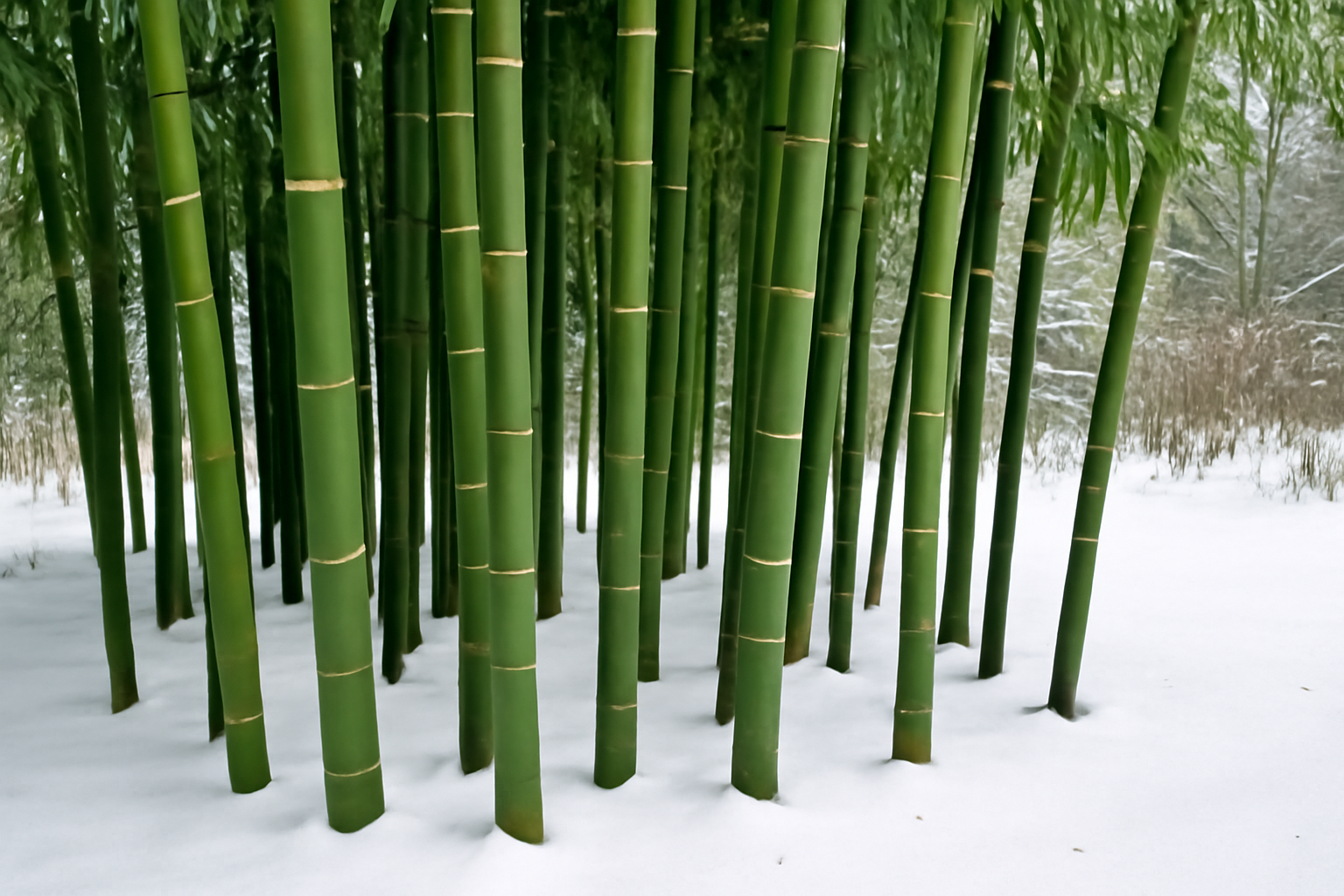
Several bamboo species survive zone 5 winters reliably — but you need to choose the right ones and give them proper protection. Zone 5 means air temperatures dropping to -10°F to -20°F (-23°C to -29°C), which eliminates most bamboo on the market, but a select group of cold-hardy species handle those lows and come back stronger each spring.
Understanding What “Cold-Hardy” Really Means in Zone 5
Before you select a species, it’s worth understanding exactly what cold hardiness means for bamboo — because it doesn’t always mean what gardeners expect. In a harsh zone 5 winter, the above-ground culms (the canes) may brown out completely and die back to the ground. New growers often see this and assume the plant is dead. It isn’t.
What matters is the rhizome system underground. In a true cold-hardy bamboo, the rhizomes survive the freeze and push up fresh culms in spring. This die-back and regrowth pattern is completely normal in zone 5, especially for younger plantings. After two or three growing seasons, the rhizome mass builds up enough energy reserves that culm survival through winter improves significantly. The grove gets stronger every year.
The key takeaway: don’t judge a zone 5 bamboo planting by what you see in March. Judge it by what emerges in May.
Best Bamboo Species for Zone 5
The species below have demonstrated reliable performance in zone 5 conditions. Most are Phyllostachys (running bamboo) or Fargesia (clumping bamboo). The entire Bambusa genus — the tropical and subtropical bamboos you’ll see at garden centers in warmer states — is not suitable for zone 5 and will not survive.
| Species | Common Name | Cold Hardiness | Height in Zone 5 | Running or Clumping | Notes |
|---|---|---|---|---|---|
| Phyllostachys nuda | Nude Sheath Bamboo | Zone 5 (-15°F) | 20–35 ft | Running | One of the most reliable zone 5 performers; excellent culm survival |
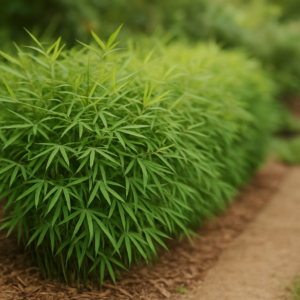
| Phyllostachys bissetii | Bisset’s Bamboo | Zone 4–5 (-20°F) | 18–30 ft | Running | Outstanding cold hardiness; dense, evergreen foliage; spreads vigorously |
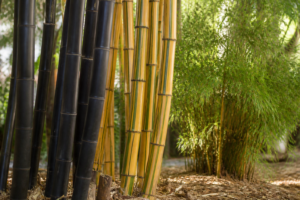
| Phyllostachys aureosulcata | Yellow Groove Bamboo | Zone 5 (-10°F) | 20–35 ft | Running | Distinctive yellow-grooved culms; reliable in zone 5 with good site selection |
| Phyllostachys rubromarginata | Red Margin Bamboo | Zone 5 (-10°F) | 30–45 ft | Running | One of the tallest cold-hardy options; performs best with wind protection |
| Phyllostachys angusta | Stone Bamboo | Zone 5–6 (-5°F to -10°F) | 20–30 ft | Running | Solid, dense culms; slightly less cold-tolerant — prioritize sheltered sites |
| Fargesia murielae | Umbrella Bamboo | Zone 4 (-25°F) | 8–12 ft | Clumping | Non-invasive; shade tolerant; ideal for smaller spaces and no-barrier situations |
| Fargesia nitida | Fountain Bamboo | Zone 4 (-20°F) | 8–15 ft | Clumping | Elegant arching form; prefers afternoon shade; excellent in zone 5 with no special care |
For most zone 5 gardeners wanting a privacy screen or windbreak, Phyllostachys bissetii and Phyllostachys nuda are the two safest starting points. For a non-invasive option in a smaller yard, the Fargesia species are hard to beat — and they require almost no winter intervention.
Site Selection: Half a Zone Makes a Big Difference
Where you plant bamboo in zone 5 matters as much as which species you choose. A well-chosen microclimate can extend effective hardiness by half a zone — turning a marginal planting into a thriving one.
- South or southeast-facing walls reflect and retain heat, moderating overnight lows near the planting.
- Wind protection is critical. Desiccating winter winds cause more damage to bamboo foliage and culms than raw cold alone. A fence, building, or existing hedge on the north and northwest sides dramatically improves survival rates.
- Avoid low-lying frost pockets where cold air settles. A planting on a slight rise or slope performs better than one at the bottom of a depression.
- Well-drained soil prevents root zone freezing from waterlogged ground, which compounds cold damage.
Even Phyllostachys angusta, which sits at the warmer edge of zone 5 tolerance, becomes significantly more reliable when planted against a south-facing masonry wall with a fence blocking northwest winds.
Critical Winter Care for Zone 5 Bamboo
Even the hardiest zone 5 species benefit from consistent winter preparation. Follow this sequence each fall:
- Water deeply in October. Bamboo going into a freeze with dry soil is far more vulnerable. Give the rhizome zone a deep soak before the ground hardens.
- Apply heavy mulch in late October. Spread 6 to 8 inches of wood chips, straw, or shredded leaves over the entire rhizome zone — typically extending 2 to 3 feet beyond the outer culms. This is the single most effective thing you can do for zone 5 bamboo.
- Apply anti-desiccant spray in late November. Products like Wilt-Pruf coat the foliage and reduce moisture loss through the leaves during dry, windy winters. Apply when temperatures are above 40°F and the foliage is dry.
- Leave dead culms standing until April. This runs counter to instinct, but dead culms provide insulation to the rhizome zone below and act as a wind buffer for the living portion of the grove. Cut them down only after you can confirm new shoots are emerging.
Running vs. Clumping: What Zone 5 Growers Should Know
Most of the top-performing zone 5 bamboos are Phyllostachys — running bamboo. Running bamboo spreads via aggressive underground rhizomes and must be managed with a physical root barrier (60 mil HDPE, buried 28 to 30 inches deep) or annual rhizome pruning. Don’t skip this step, especially as the grove matures and gets more vigorous.
Fargesia species are clumping — they expand slowly from a central root mass and pose no spreading risk. They’re ideal for gardeners who want cold hardiness without containment work, or for plantings near property lines and structures. The trade-off is size: most Fargesia top out at 8 to 15 feet, compared to 20 to 40 feet for mature Phyllostachys in zone 5.
If your primary goal is a tall privacy screen, lean toward Phyllostachys with a proper barrier system. If you want a low-maintenance ornamental planting with no containment, Fargesia murielae or Fargesia nitida are the practical choice.
Growing bamboo in zone 5 is absolutely achievable — it just requires matching the right species to your site, doing the fall prep work consistently, and giving new plantings two to three seasons to establish before drawing conclusions about their hardiness. Start with Phyllostachys bissetii or Phyllostachys nuda for running types, or either Fargesia if you need a clumper, mulch heavily each October, and let the rhizomes do their work. By year three, you’ll have a grove that handles zone 5 winters with minimal intervention.
The Root Barrier That Finally Stopped My Fargesia from Breaking Through Winter Frost Heave
Zone 5 cold-hardy bamboo like Fargesia robusta can survive the freeze, but frost heave pushes shallow rhizomes right up through soil — and once exposed to -15°F air, even cold-hardy species take damage. A quality root barrier installed at the right depth keeps rhizomes anchored and protected through the thaw-freeze cycles that kill more zone 5 bamboo than the cold itself.
What works
- The rigid HDPE thickness stops frost heave pressure — I’ve watched my Fargesia stay rooted in place through March freeze-thaws that used to expose 3–4 inches of rhizome.
- Installation at 24–30 inches deep actually contains the lateral spread without daily vigilance, which matters when you’re managing multiple cold-hardy clumps across a zone 5 bed.
- The material doesn’t degrade in frozen soil the way cheaper plastic does — after three winters, mine still has zero cracks or brittle spots.
What doesn’t
- Installation in already-frozen ground is nearly impossible — you have to dig and install in fall or early spring, which I learned the hard way trying to retrofit it in January.
- The cost adds up fast if you’re containing multiple clumps, and some zone 5 growers find the upfront expense hard to justify before they’ve seen their first rhizome escape.
I nearly ditched this barrier approach after a brutal 2019 winter when frost still pushed a rhizome tip above the rim — but I realized I’d only buried it 18 inches instead of 24, which was my mistake, not the product’s.
About This Article

Written by Marcus Chen. Marcus Chen has spent 15 years cultivating and studying bamboo across 14 different species, combining commercial growing operations with extensive hands-on experience in species selection and containment. As both a grower and consultant, he specializes in practical bamboo management, helping homeowners and landscapers understand the real-world requirements for responsible bamboo cultivation. Marcus brings tested knowledge of which species thrive reliably and which present containment challenges that go beyond standard recommendations. More about this site.
Verify this against a primary source
Specifics change, and your situation may differ from the one described here. These are the authorities worth checking directly:
- American Bamboo Society — species listings and cultivation guidance
- USDA PLANTS Database — species range and identification
- USDA Plant Hardiness Zone Map — cold hardiness verification for your location