How to Kill Bamboo Permanently: A Complete Removal Guide
Here at TerraBamboo, we spend most of our time celebrating bamboo — its beauty, its versatility, and its remarkable growth. But we’re also realists. Sometimes bamboo ends up exactly where you don’t want it. Maybe you inherited a property with an aggressive running bamboo that’s swallowing the yard. Maybe a well-intentioned planting from years ago has gotten completely out of hand. Whatever the reason, knowing how to kill bamboo effectively is just as important as knowing how to grow it well.
The honest truth? Bamboo removal is not a weekend project. It requires persistence, the right strategy, and realistic expectations. This guide walks you through every proven method so you can choose the best approach for your situation — and actually finish the job for good.
Why Bamboo Is So Hard to Kill
Before you pick up a shovel or reach for herbicide, it helps to understand exactly what you’re dealing with. Bamboo’s reputation for being nearly indestructible isn’t exaggeration — it’s biology.
Beneath the ground, bamboo maintains an extensive network of rhizomes — horizontal root-like stems that spread outward from the plant and store enormous amounts of energy. This underground system is the real plant. The culms (the canes you see above ground) are essentially just the visible expression of a much larger organism living beneath your feet.
- Rhizomes store energy reserves. Even after you cut every culm to the ground, the rhizome network still holds enough energy to send up new growth repeatedly. The plant isn’t dead — it’s just waiting.
- Small fragments regrow. Rhizome pieces as short as two inches can establish themselves and begin producing new culms. This makes digging particularly tricky — any fragment you miss becomes next year’s problem.
- Running bamboo spreads far. Species like Phyllostachys can send rhizomes 15 feet or more from the nearest visible culm. If you only treat what you can see, you’ll be fighting regrowth from rhizomes well outside the original planting zone for years to come.
Understanding this is the foundation of any successful bamboo removal strategy. You’re not just removing plants — you’re exhausting or eliminating an underground network that has one goal: survival.
Method 1: Cut and Starve (Best for Most Situations)
This is the method I recommend most often, especially for larger bamboo stands where digging everything out isn’t practical. It’s labor-intensive over time, but it’s the most environmentally friendly approach and it works reliably when done correctly.
How It Works
The principle is simple: cut the plant, then refuse to let it photosynthesize. Without leaves to capture sunlight and produce energy, the rhizomes will eventually exhaust their stored reserves and die.
- Cut all culms to ground level. Use loppers, a pruning saw, or a brush cutter for large stands. Get every cane as close to the soil surface as possible.
- Monitor weekly during the growing season. New shoots will emerge — sometimes within days. Cut every single one the moment it appears. Do not let any new growth reach leaf stage.
- Stay consistent through spring and summer. This is when bamboo pushes hardest. Missing even a few weeks gives the rhizomes a chance to recharge.
- Continue into the second growing season. Full bamboo removal using this method typically takes one to two complete growing seasons. Stopping early is the most common mistake people make.
The cut-and-starve method won’t win on speed, but it will win. Stay consistent, and you’ll kill bamboo permanently without chemicals or heavy equipment.
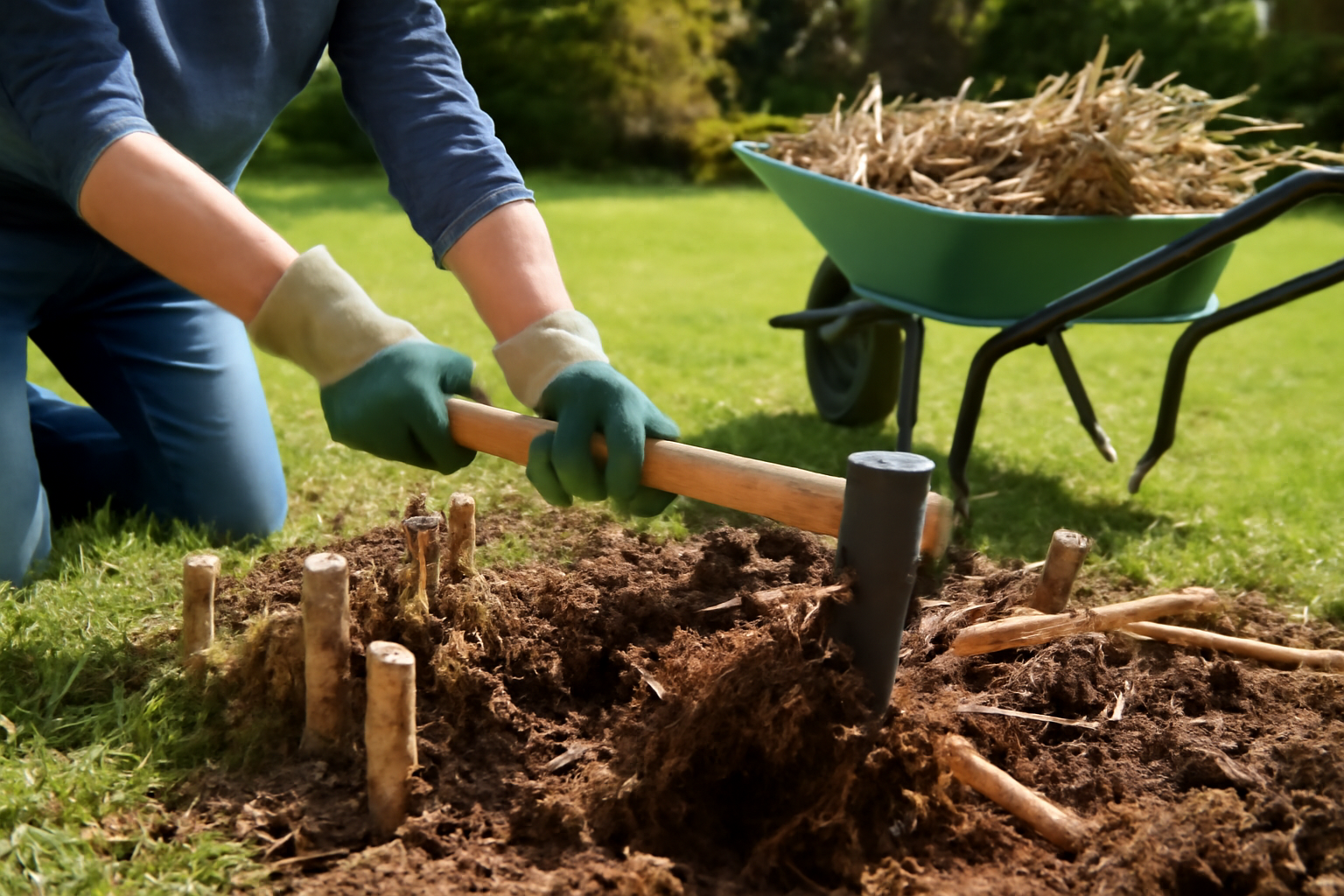
Method 2: Dig Out the Rhizomes
If you’re dealing with a smaller bamboo patch — roughly under 100 square feet — physical removal of the rhizome network is a viable option. Done thoroughly, it can produce faster results than the cut-and-starve method.
What You’ll Need
- Sharp spade or mattock
- Garden fork
- Wheelbarrow for debris removal
- Heavy-duty gloves
Steps for Rhizome Removal
- Cut all culms first. Remove canes at ground level to make digging easier and safer.
- Dig 18 to 24 inches deep. Most bamboo rhizomes run in the top 12 inches of soil, but going deeper ensures you’re not leaving anything behind.
- Work outward from the original planting. Extend your excavation well beyond where you think the rhizomes end — at least 3 to 4 feet past the outer culms.
- Sift the soil carefully. Use a garden fork to pull apart loosened soil and remove every rhizome fragment you find. Remember: pieces as small as two inches can regenerate.
- Dispose of rhizomes properly. Don’t compost them — bamboo rhizomes can survive in compost piles. Bag them for disposal or let them dry completely in the sun before discarding.
For larger bamboo stands, this method may require renting a mini excavator or hiring a landscaping crew with heavy equipment. The upfront effort is significant, but thorough excavation is one of the most reliable paths to complete bamboo removal.
Method 3: Herbicide Application
Herbicides can be effective when used correctly, but they’re rarely a one-and-done solution for bamboo. Think of them as part of a broader strategy rather than a standalone fix.
Two Approaches That Work
Cut-stump treatment: Cut culms to ground level and immediately apply concentrated glyphosate (such as Roundup concentrate) directly to the fresh-cut surface. The plant draws the herbicide down into the rhizome system. Timing is critical — application must happen within minutes of cutting for maximum uptake.
Foliar spray: Allow new growth to emerge after cutting and wait until the leaves are between 12 and 18 inches tall. At this stage, the plant is actively pulling nutrients downward, which means it will also pull herbicide into the rhizome network. Spray thoroughly until leaves are well-coated.
Important Considerations
- Multiple applications will be necessary — typically three or more over a growing season.
- Glyphosate is non-selective. It will kill or damage any plant it contacts, including desirable plants nearby. Apply with care and avoid windy days.
- Always follow label directions for dilution rates, safety precautions, and application timing.
- Herbicide use near waterways may be restricted in your area. Check local regulations before applying.
Herbicide treatment is most effective when combined with the cut-and-starve method. Used together, you significantly reduce the number of growing seasons needed to kill bamboo permanently.
Method 4: Smothering
Smothering works on the same principle as cut-and-starve — deny the plant access to sunlight — but it does the work passively. This method is best used as a supplement to cutting rather than a standalone approach.
- Cut all culms to ground level first. Removing the top growth makes the covering more effective and easier to install.
- Cover the entire area with heavy black plastic sheeting or commercial-grade landscape fabric. Thin materials won’t hold up — use the heaviest gauge available.
- Extend the covering at least 4 to 5 feet beyond the visible bamboo in every direction to account for rhizomes that have already spread outward.
- Secure the edges thoroughly with soil, rocks, or landscaping staples. Any gap will be found and exploited.
- Leave the covering in place for 6 to 12 months minimum. Bamboo can push hard against barriers. Check periodically for any shoots that have managed to find an edge or gap.
Smothering alone rarely achieves complete bamboo removal on the first attempt, but it significantly weakens the rhizome network and reduces regrowth pressure when combined with other methods.
Preventing Bamboo From Coming Back
Finishing an active removal effort is a major milestone — but it’s not quite the finish line. Ongoing monitoring is essential to make sure the job stays done.
- Watch the area for at least two full years. Scattered rhizome fragments can remain dormant and then surprise you with a new shoot well after you’ve declared victory. Cut any new growth immediately.
- Check monthly during spring and summer. These are the peak growth months when any remaining rhizome energy will be used to send up new culms.
- Install a rhizome barrier if your neighbor has bamboo. Running bamboo doesn’t respect property lines. A high-density polyethylene root barrier installed 24 to 30 inches deep along the property line will intercept rhizomes before they reach your yard.
- Be especially alert at the removal perimeter. Rhizomes that were just outside your treatment area may still be alive and growing toward the cleared zone.
Final Thoughts
Learning how to kill bamboo effectively comes down to one thing: patience paired with persistence. Bamboo didn’t build that underground network overnight, and it won’t surrender it quickly either. But with the right method — or combination of methods — and a commitment to follow-through, complete removal is absolutely achievable.
Whether you choose to cut and starve, dig, apply herbicide, or smother, the principles are the same: deny the rhizome network the energy it needs to survive, and don’t stop until the job is finished. Use this guide as your roadmap, stay consistent through the growing season, and you’ll get there.
And once that space is cleared? We’d be happy to help you figure out what to plant next — including, perhaps, a well-contained bamboo variety that stays exactly where you put it.