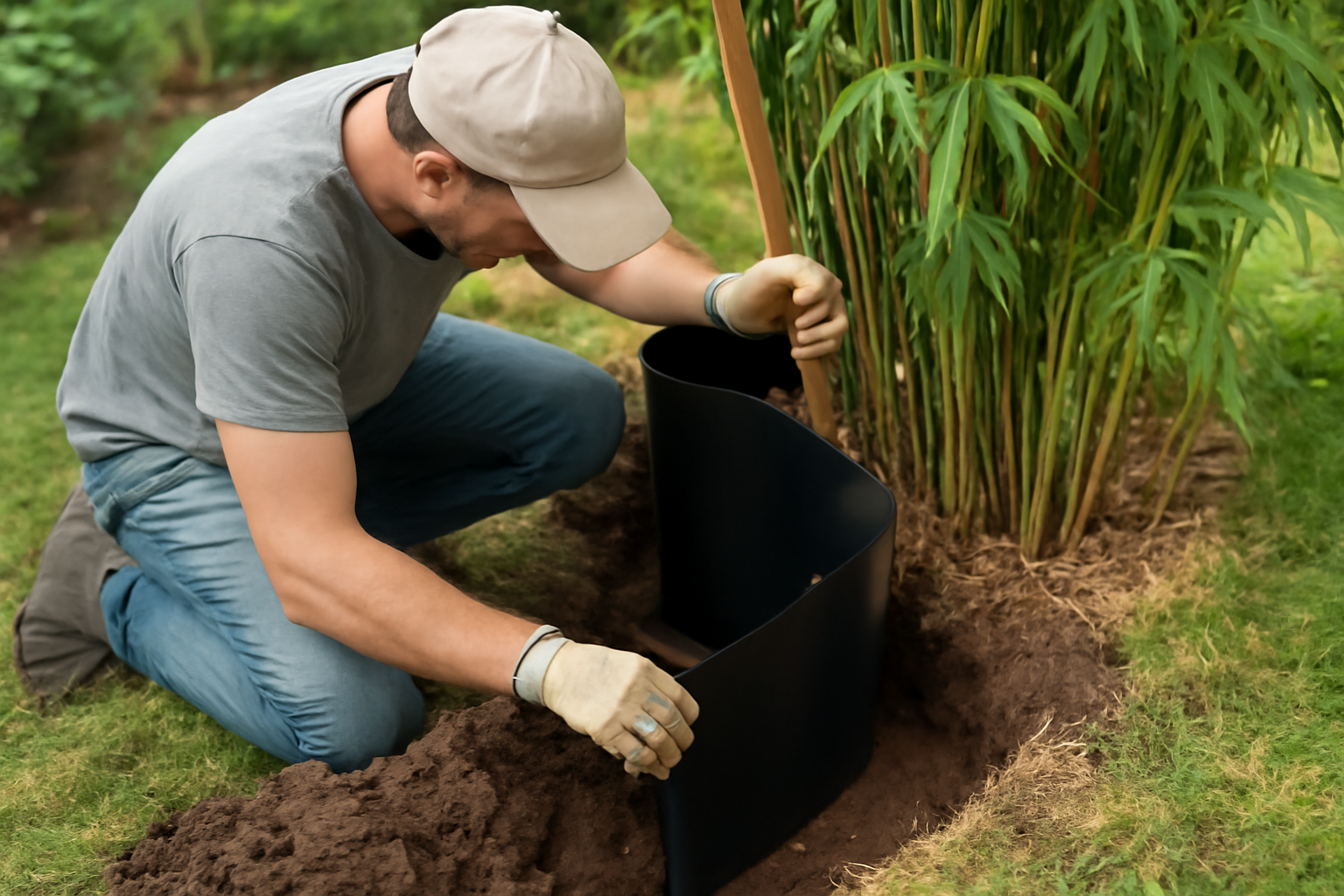
Installing a bamboo root barrier correctly the first time will save you years of frustration and potentially thousands of dollars in damage. After watching my own running bamboo escape three separate times — once into a neighbor’s yard, once under a patio, and once directly toward my home’s foundation — I finally got the installation right, and I want to share exactly what I learned so you don’t repeat my mistakes.
Why Running Bamboo Demands a Root Barrier
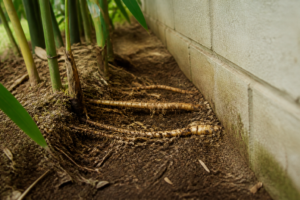
Not all bamboo behaves the same way underground. Clumping bamboo species, like Fargesia murielae or Bambusa oldhamii, spread slowly and stay relatively contained on their own. Running bamboo is an entirely different matter. Species like Phyllostachys aurea (golden bamboo), Phyllostachys nigra (black bamboo), and Phyllostachys bambusoides (giant timber bamboo) send out horizontal underground stems called rhizomes that can travel 15 feet or more in a single growing season. These rhizomes don’t care about property lines, concrete walkways, or your neighbor’s patience.
If you’re growing any running bamboo species, a root barrier isn’t optional — it’s essential infrastructure. I learned the hard way that planting without one is essentially giving the plant permission to colonize your entire yard on its own schedule.
Choosing the Right Barrier Material and Depth
The material you choose matters enormously. After trying a thinner product on my first attempt, I can tell you that anything below 60 mil HDPE (high-density polyethylene) is not worth your time or money. Rhizomes are surprisingly forceful and will punch right through flimsy sheeting. The industry standard for serious bamboo root barrier installation is 60 mil HDPE minimum, and for aggressive species like Phyllostachys edulis (Moso bamboo), I’d recommend stepping up to 80 mil.
Depth is equally critical. Here’s a general rule I follow now:
- 18 inches deep — minimum depth for smaller running species like Phyllostachys aureosulcata or Pleioblastus viridistriatus
- 24 inches deep — required for moderate to aggressive species like Phyllostachys aurea or Phyllostachys nigra
- 30 inches deep — recommended for the largest and most aggressive species, including Phyllostachys edulis (Moso), which can reach 70 feet tall in ideal conditions
The barrier must also extend 2 inches above the soil surface. This is non-negotiable. Rhizomes are opportunistic — they will arch up and over a barrier that sits flush with or below ground level. That extra 2 inches above grade is your last line of defense.
| Bamboo Species | Type | Recommended Barrier Depth | Recommended Barrier Thickness |
|---|---|---|---|
| Phyllostachys aurea (Golden Bamboo) | Running | 24 inches | 60 mil HDPE |
| Phyllostachys nigra (Black Bamboo) | Running | 24 inches | 60 mil HDPE |
| Phyllostachys edulis (Moso Bamboo) | Running | 30 inches | 80 mil HDPE |
| Phyllostachys bambusoides (Giant Timber) | Running | 28–30 inches | 80 mil HDPE |
| Fargesia murielae (Umbrella Bamboo) | Clumping | Not typically required | N/A |
| Bambusa oldhamii (Giant Timber Clumper) | Clumping | Not typically required | N/A |
Step-by-Step Bamboo Root Barrier Installation
Here is the exact process I now follow. Take your time on each step — rushing is what caused two of my three failures.
- Mark the containment area. Use marking paint, garden hose, or stakes and string to define exactly where you want the barrier to run. Think carefully about the full footprint you want the bamboo to occupy — not just where it is now, but where it might reasonably grow over 10 years. Leave yourself generous margins near structures, property lines, and underground utilities. Call 811 before you dig.
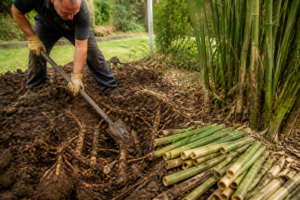
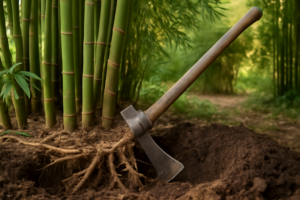
- Dig the trench. Using a spade, trenching shovel, or a rented trenching machine for longer runs, dig to the appropriate depth for your species (see table above). Keep the trench walls as vertical as possible. The trench should be about 4–6 inches wide — enough to work in but not so wide that backfilling becomes difficult. A trench 40 feet long at 24 inches deep is hard work; I won’t pretend otherwise. Rent equipment if you need to.
- Install the barrier with a 10% overlap at joins. Unroll your HDPE barrier into the trench, pressing it firmly against the outer wall. When two panels need to be joined, overlap them by at least 6 inches — I aim for 10%, which on standard 24-inch-wide barrier stock means overlapping 2.4 inches minimum, but more is better. Seal every seam with waterproof butyl tape or HDPE seam tape rated for ground contact. This is where I failed on my second attempt — I used ordinary duct tape on a seam, it degraded within a year, and a rhizome found the gap within 18 months. Use proper tape. Every. Single. Seam.
- Position the top edge correctly. Before backfilling, confirm that the barrier rises exactly 2 inches above the finished soil grade around its entire perimeter. Use a level and tape measure. Adjust as needed. This is tedious but critical.
- Backfill the trench. Replace the excavated soil in layers, tamping lightly as you go to remove air pockets. Avoid pressing the barrier inward as you work — have a helper hold it vertical if you can. Restore your ground level evenly on both sides of the barrier lip.
- Mark your calendar for annual inspection. Set a recurring reminder every March or April — just as rhizomes become active in spring — to walk the perimeter of your barrier and check for escapes (more on this below).
The Three Mistakes That Cost Me the Most
Mistake #1: Insufficient depth. My first barrier was only 12 inches deep. I found a Phyllostachys aurea rhizome poking up 8 feet outside the containment zone the following spring. Rhizomes at that depth had simply traveled beneath the barrier’s bottom edge. The lesson: never underestimate how deep a running species will send its rhizomes, especially in loose, well-amended garden soil where they encounter less resistance.
Mistake #2: Gaps at joins. As described above, improper seam sealing on my second installation let a rhizome find its way through within two growing seasons. Bamboo rhizomes are not forceful enough to penetrate a continuous 60 mil HDPE sheet, but they will exploit any gap, overlap without tape, or loosely butted joint. Treat every seam like a pipe fitting that must not leak.
Mistake #3: Forgetting the annual inspection. Even a perfectly installed barrier requires management. Rhizomes will sometimes grow upward and attempt to arch over the exposed 2-inch lip. If you don’t check and cut them back each spring, they will eventually make it over. I skipped one year of inspection and came back to find two rhizomes that had crested the barrier and traveled 3 feet into my lawn before I caught them.
How to Detect and Manage Rhizome Escapes Each Spring
Every spring, usually in March through May depending on your climate zone, walk the outer perimeter of your bamboo barrier slowly and deliberately. You’re looking for several things:
- New shoots emerging outside the barrier zone — often thin, pale, and pointed, pushing up through the soil several feet from the bamboo planting
- Soil disturbance or cracking along the barrier line, which may indicate rhizome pressure building against the barrier wall
- The barrier lip itself — check that it still protrudes 2 inches above grade (frost heave and soil settlement can push it down over time)
- Any rhizomes arching over the lip — these will appear as pale, segmented stems curling over the barrier edge toward the outside
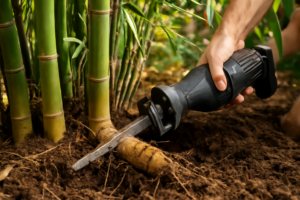
When you find an escaped rhizome, trace it back to where it crosses the barrier and cut it cleanly with a sharp spade or bypass loppers. Remove the entire escaped section — don’t leave segments in the soil, as they can sometimes re-root. If you find a new shoot that has already leafed out outside the barrier, dig down and sever its rhizome connection rather than simply pulling the shoot.
Proper bamboo root barrier installation takes a day of real physical work and demands attention every spring, but it’s a manageable responsibility — far more manageable than trying to remove an established running bamboo that has spread under your patio or into a neighbor’s flower beds. Get the depth right, seal every seam, keep that 2-inch lip above grade, and inspect every spring without fail. That combination is what separates a bamboo garden you control from one that controls you.
The Root Barrier That Finally Stopped My Running Bamboo from Crossing the Property Line
Running bamboo rhizomes don’t respect property lines or good intentions — they seek soft soil and will exploit any gap in your containment. After my neighbor’s angry phone call about shoots appearing under his fence, I realized I needed a barrier that could actually handle the force of an expanding rhizome network, not just sit there looking official.
What works
- The thickness (60 mil HDPE) is rigid enough to resist rhizome pressure without cracking or crumpling when you’re backfilling soil — I’ve had it in place for two seasons without any punctures or thinning.
- Installation is straightforward: it goes down smoothly without kinking, and the edges stay vertical during the dig if you keep them supported while working, making the 18-inch depth actually achievable instead of frustrating.
- Rhizomes can’t push through it or find weak seams the way they do with thinner plastic or fabric — I’ve watched the growth line stop dead at the barrier edge rather than probe for a way around.
What doesn’t
- The cost adds up fast for longer barriers — at this thickness, you’re spending significantly more per linear foot than the flimsy alternatives, which is why I cut corners on my second barrier installation and paid for it with escape shoots.
- You have to overlap seams by at least 6 inches and secure them, or rhizomes will slip through the joint — it’s not a cut-it-and-forget-it product, and sloppy edge work will undermine the whole installation.
I almost talked myself into cheaper plastic after the initial sticker shock, thinking “it just needs to last a few years,” but that’s the exact thinking that led to my first two escapes.
Cutting Heicofer Root Barrier: What Actually Works
I’ve installed root barrier on enough bamboo projects to know that cutting Heicofer isn’t like cutting standard landscape fabric or thin plastic sheeting. The first time I grabbed a utility knife and expected to score through an 80-mil HDPE roll in one smooth pass, I learned fast: the blade dulls almost immediately, and forcing it makes the cut wander. Now I swap fresh blades every few linear feet, snapping off a new edge constantly, and the difference is night and day. A straight edge or chalk line is non-negotiable too, since HDPE has this annoying habit of pulling away from a dragging blade, and suddenly you’re cutting at an angle instead of straight down. For longer runs or the thickest gauge material, I’ve switched to a cordless angle grinder with a fine-tooth blade, which cuts faster and leaves a cleaner edge without all the blade-swapping frustration.
The biggest mistake I see, and one I made myself early on, is treating Heicofer seams the same way as overlap-and-backfill barriers. HDPE doesn’t bond to adhesive or tape the way you’d hope, so just overlapping two edges or trying to glue them together is asking for trouble—rhizomes will find that seam and exploit it. Heicofer is designed to be joined using a dedicated aluminum U-channel connector strip at the overlap, which is what actually locks the barrier together and stops roots from creeping through. Skip the connector and you’re leaving a highway open. It took a failed containment for me to go back and install the proper connectors, and now they’re the first thing I budget for on every Heicofer project.
About This Article

Written by Marcus Chen. Marcus Chen has spent 15 years cultivating and studying bamboo across 14 different species, combining commercial growing operations with extensive hands-on experience in species selection and containment. As both a grower and consultant, he specializes in practical bamboo management, helping homeowners and landscapers understand the real-world requirements for responsible bamboo cultivation. Marcus brings tested knowledge of which species thrive reliably and which present containment challenges that go beyond standard recommendations. More about this site.
Verify this against a primary source
Specifics change, and your situation may differ from the one described here. These are the authorities worth checking directly:
- American Bamboo Society — species listings and cultivation guidance
- USDA PLANTS Database — species range and identification
- USDA Plant Hardiness Zone Map — cold hardiness verification for your location