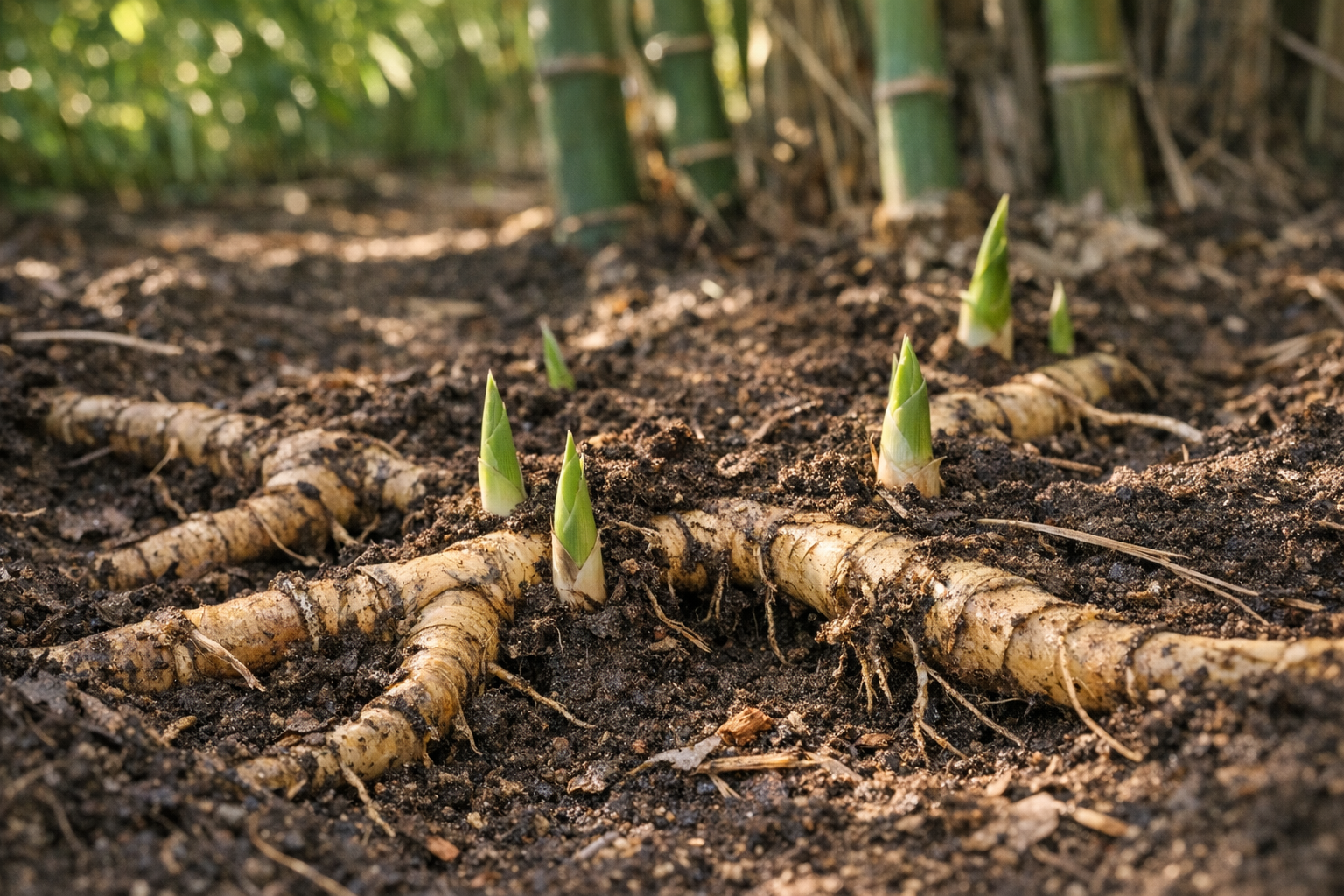
Bamboo presents unique challenges for homeowners who want to remove it from their property. Source This fast-growing plant spreads through underground rhizomes that can extend several feet in all directions. Moreover, these rhizomes store energy reserves that allow bamboo to regenerate even after repeated cutting.
If you’re tackling bamboo removal, having the right equipment makes this challenging task significantly more manageable and efficient. Start by investing in a quality tree root removal tool that features a sliding gravity hammer mechanism specifically designed to extract stubborn rhizomes from the ground without excessive digging. Once you’ve cut the bamboo culms down to stumps, applying an effective herbicide concentrate directly to the freshly cut surfaces will help prevent regrowth by killing the underground rhizome network. For cutting through thick bamboo canes and branches, a pair of heavy-duty loppers for tree trimming with rust-resistant blades can handle stems up to 1.5 inches in diameter with minimal effort. When dealing with particularly dense bamboo groves, a powerful air saw with multiple blade options provides the cutting power needed to slice through multiple culms quickly and efficiently. For smaller trimming tasks and precision work around garden beds, a lightweight mini chainsaw offers cordless convenience and excellent maneuverability in tight spaces where larger tools won’t fit. Applying herbicide treatments accurately requires a reliable pump spray bottle with adjustable nozzles that allow you to target cut stumps without contaminating surrounding plants you want to keep. Protecting your hands during this intensive physical work is essential, so quality gardening gloves with rubber coating provide the grip and durability needed when handling sharp tools and rough bamboo material. If you’re removing bamboo near property lines or valuable landscaping, installing a root barrier prevents future rhizome invasion and protects adjacent areas from underground spread that could damage foundations or driveways. For clearing large areas of bamboo undergrowth and maintaining control after initial removal, a versatile brush cutter blade kit with multiple tooth configurations handles everything from fine trimming to heavy-duty clearing with professional results. Finally, keep a durable soil knife in your toolkit for digging around rhizomes, cutting through roots, and performing detailed excavation work that larger tools simply cannot accomplish effectively.
The plant’s resilience comes from its biological structure. Each culm, or cane, connects to an extensive underground network. Therefore, removing visible growth above ground rarely solves the problem. The rhizomes continue to produce new shoots season after season, making bamboo one of the most persistent plants to eliminate.
Two main types of bamboo create different removal challenges. Running bamboo spreads aggressively through long rhizomes, while clumping bamboo grows in tight clusters. However, both types require thorough removal strategies to prevent regrowth. Understanding which type you have helps you plan your removal approach.
The Cut Stump Method for Maximum Effectiveness
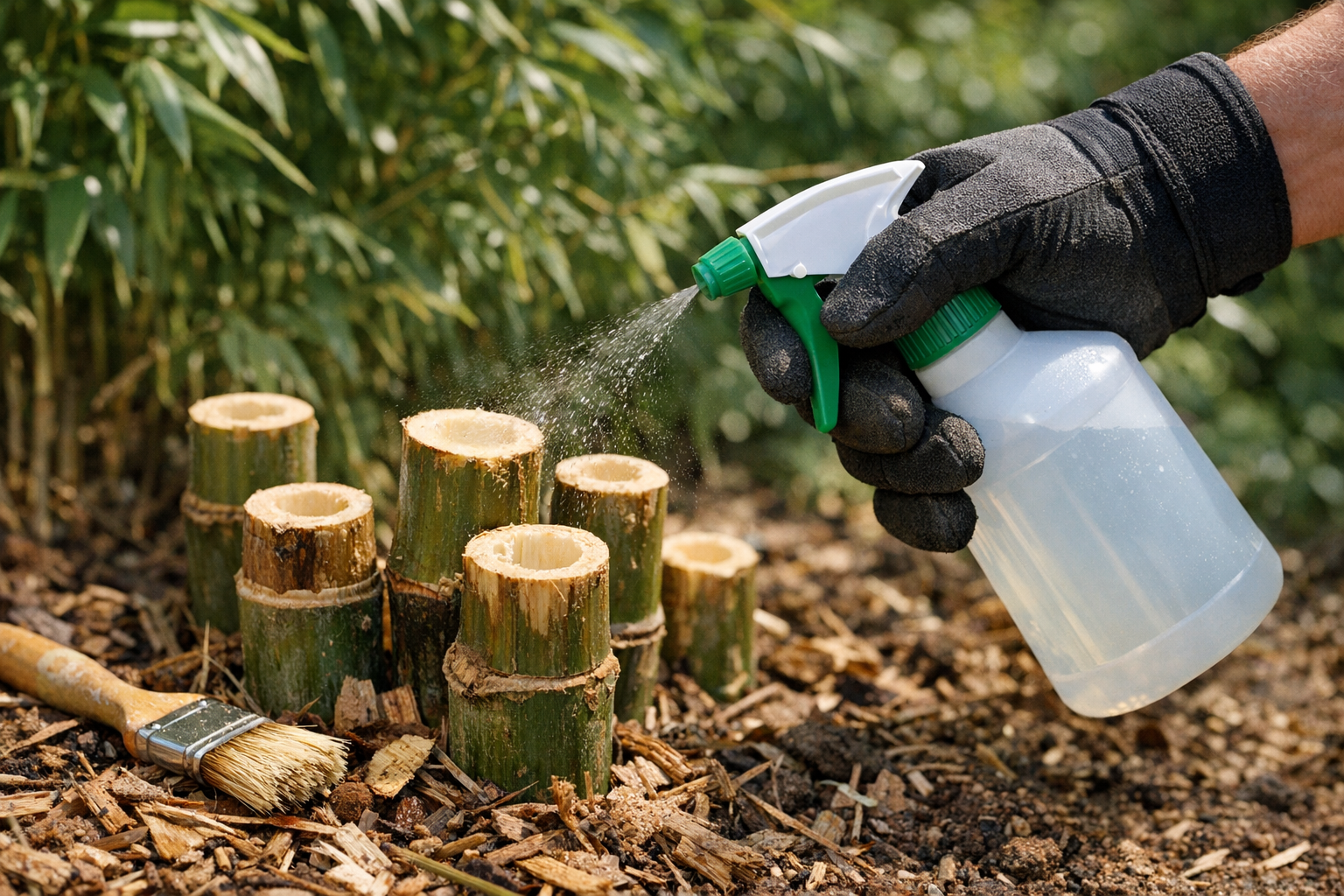
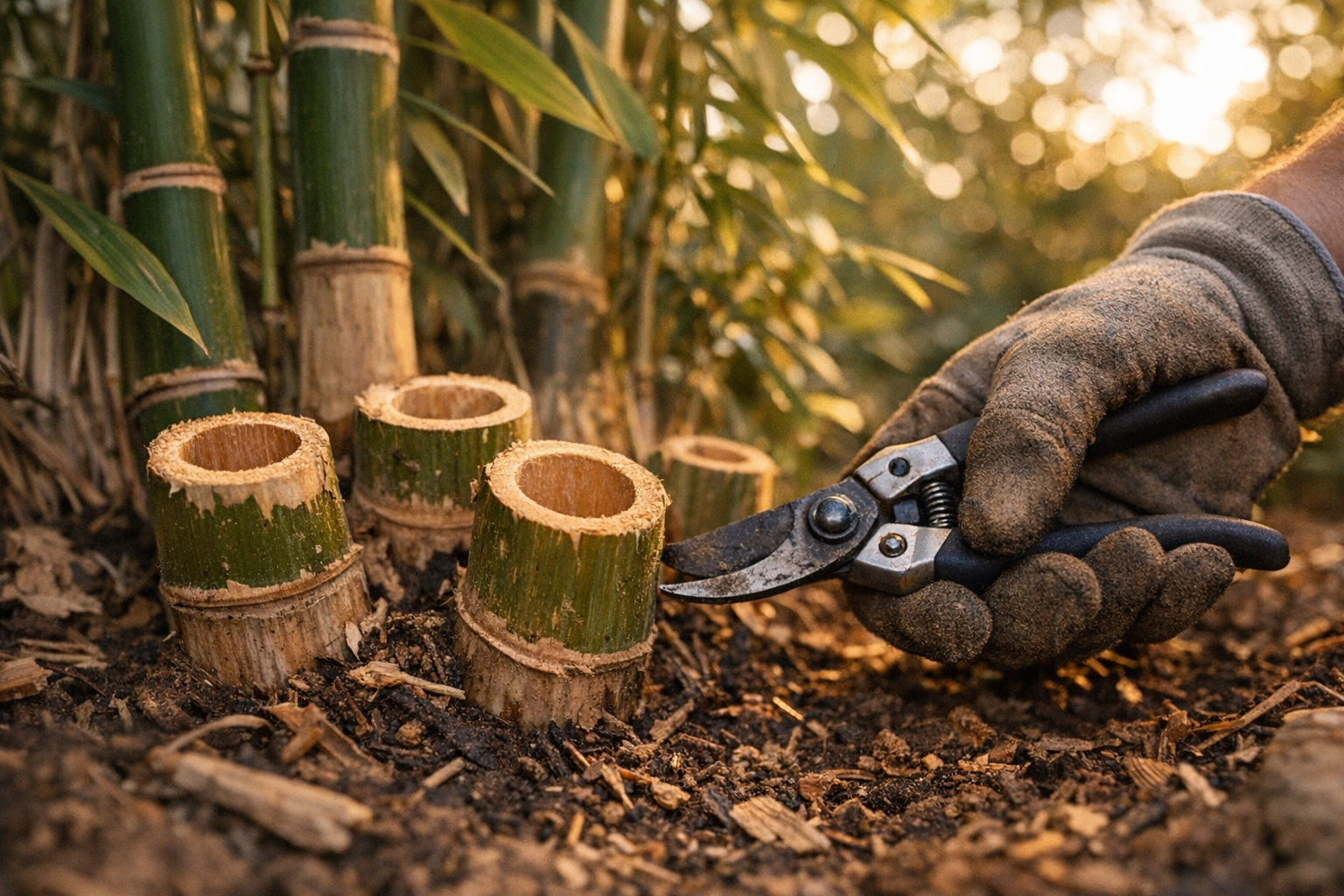
The cut stump technique delivers herbicide directly to the plant’s vascular system. You cut each bamboo cane as close to ground level as possible. Immediately afterward, you apply concentrated herbicide to the fresh cut surface. This timing proves critical for success.
Fresh cuts expose the plant’s internal transport system. Consequently, herbicide absorbs directly into the rhizomes below ground. You must apply the treatment within minutes of cutting. Waiting even 30 minutes significantly reduces effectiveness because the cut surface begins to seal.
Concentrated glyphosate-based herbicides work best for this application. Mix the product at full strength rather than diluting it. Additionally, choose products specifically labeled for woody plant control. Apply the herbicide using a paintbrush or spray bottle to cover the entire cut surface.
Proper Cutting Techniques
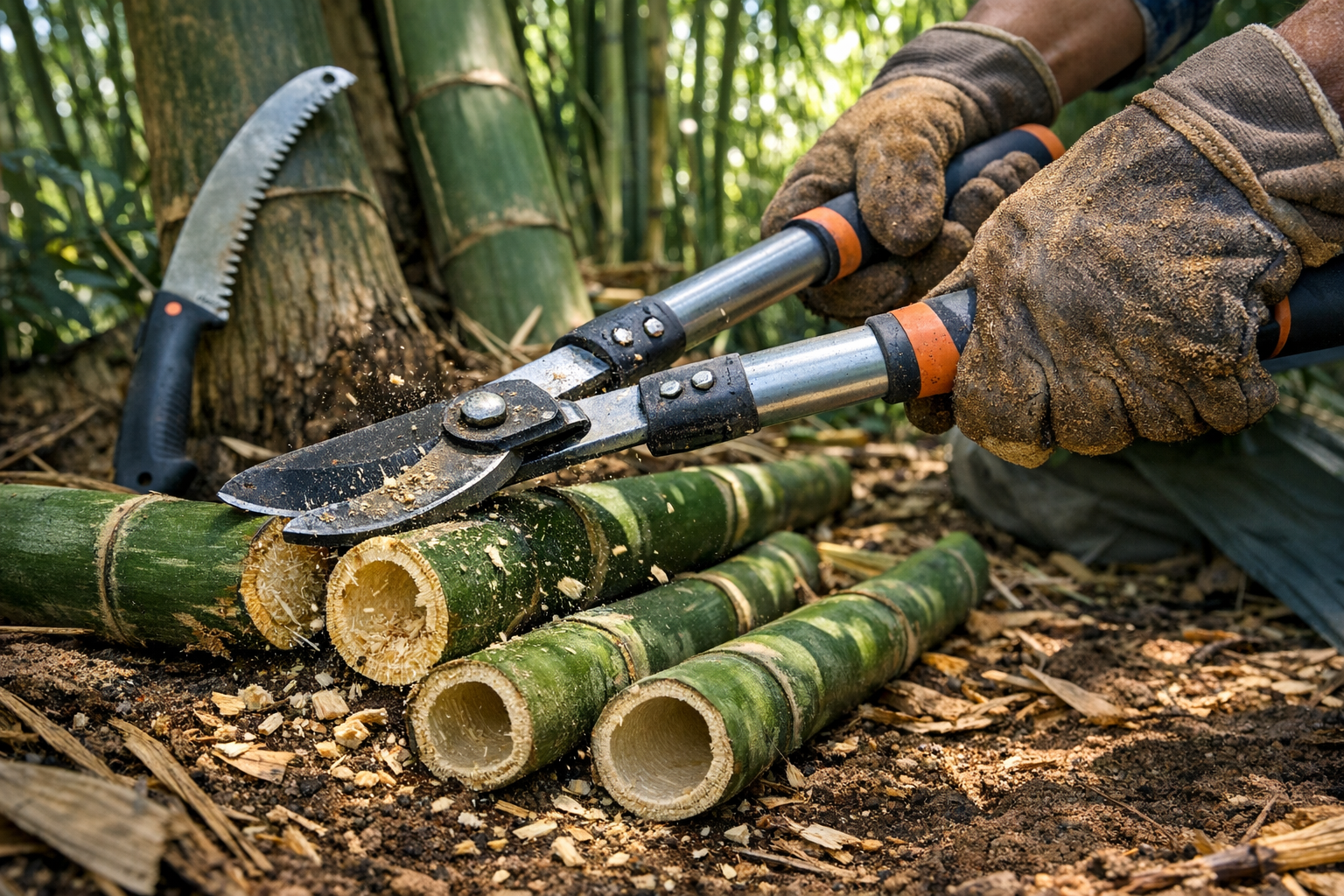
Sharp tools make clean cuts that absorb herbicide better. Use loppers for canes up to two inches in diameter. For larger canes, switch to a pruning saw or reciprocating saw. Clean cuts create more surface area for herbicide absorption.
Cut each cane individually rather than in batches. This approach ensures you can treat each cut immediately. Furthermore, it prevents the cut surfaces from drying out before treatment. Work systematically through your bamboo grove, cutting and treating as you go.
Optimal Timing for Bamboo Removal
Late summer and early fall offer the best window for bamboo elimination. Source During this period, plants actively transport nutrients from leaves to roots for winter storage. Therefore, herbicide applied to cut stumps travels efficiently to the rhizome network.
Spring applications prove less effective because energy flows upward to support new growth. However, if you missed the fall window, early spring before new shoots emerge provides a secondary option. Avoid treating during active shoot emergence when the plant focuses energy on upward growth.
Weather conditions matter significantly during application. Choose a dry day with no rain forecasted for at least 24 hours. Rain can wash away herbicide before it absorbs into the plant. Additionally, avoid extremely hot days above 85°F when herbicide may evaporate too quickly.
Follow-Up Treatments for Complete Eradication
Single applications rarely eliminate bamboo completely. Plan for multiple treatment cycles over 12-18 months. New shoots will emerge from untreated rhizome sections. Nevertheless, each treatment cycle weakens the overall system.
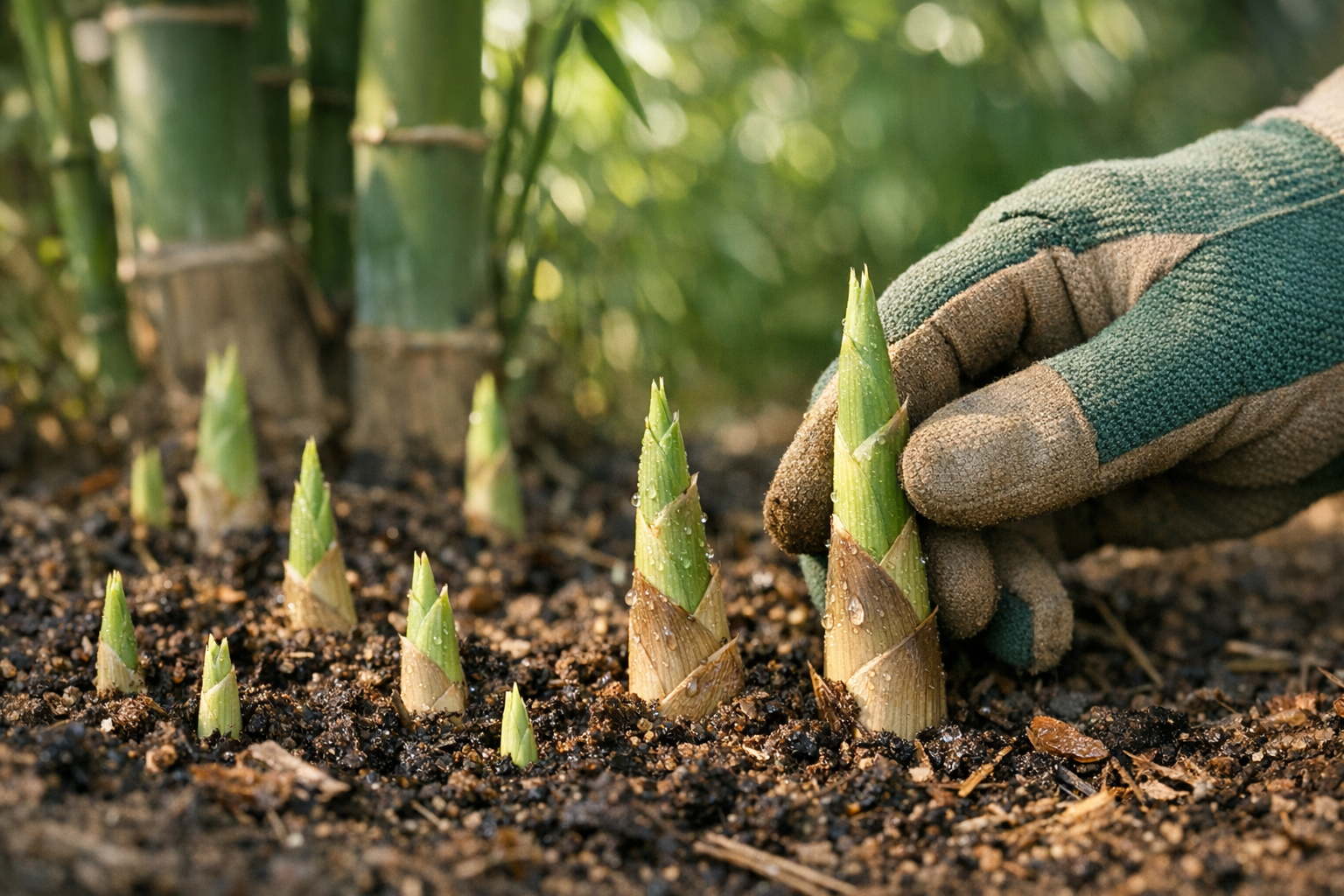
Monitor your treatment area weekly during growing season. Mark new shoots as they appear and treat them promptly. Small shoots are easier to cut and treat than mature canes. Moreover, catching them early prevents them from strengthening the rhizome network.
Document your progress with photos and notes. Record treatment dates, products used, and weather conditions. This information helps you identify patterns in regrowth. Furthermore, it guides your timing for subsequent applications.
Dealing with Persistent Regrowth
Some rhizome sections prove exceptionally resilient. These areas may require direct excavation after repeated herbicide treatments. Dig carefully to expose the rhizome network. Cut through connecting rhizomes and remove entire sections.
Combine excavation with herbicide treatment for stubborn areas. Treat any cut rhizomes with concentrated herbicide before removing them. This prevents regrowth from fragments left in the soil. Additionally, sift through removed soil to extract small rhizome pieces.
Physical Removal Strategies
Mechanical removal works best for small bamboo patches or as a complement to herbicide treatment. You need to excavate rhizomes at least 12-18 inches deep. Running bamboo rhizomes typically grow 6-12 inches below the surface, but some extend deeper.
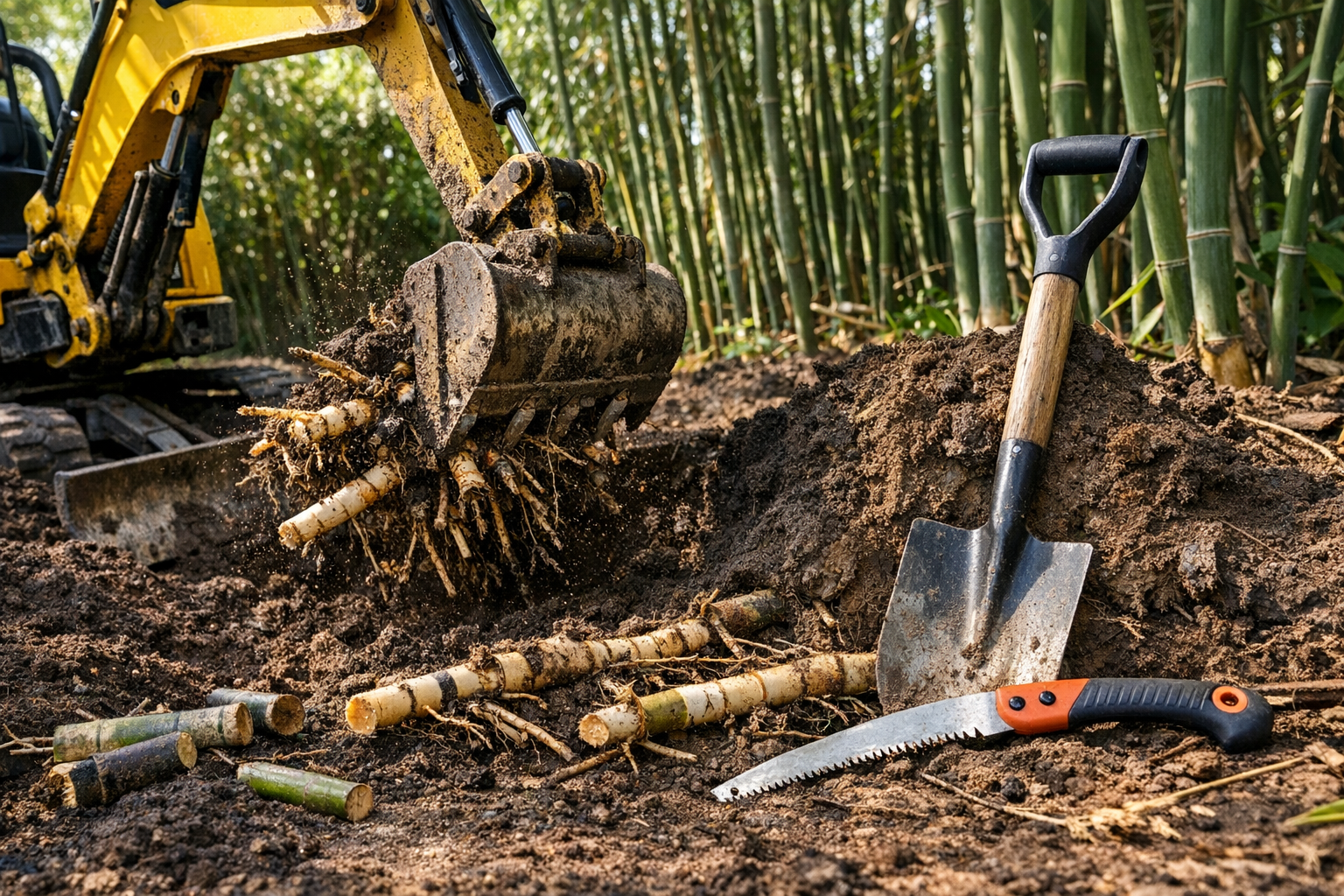
Rent a mini excavator for large infestations. These machines allow you to dig systematically through the affected area. Work in a grid pattern to ensure complete coverage. Consequently, you reduce the chance of missing rhizome sections.
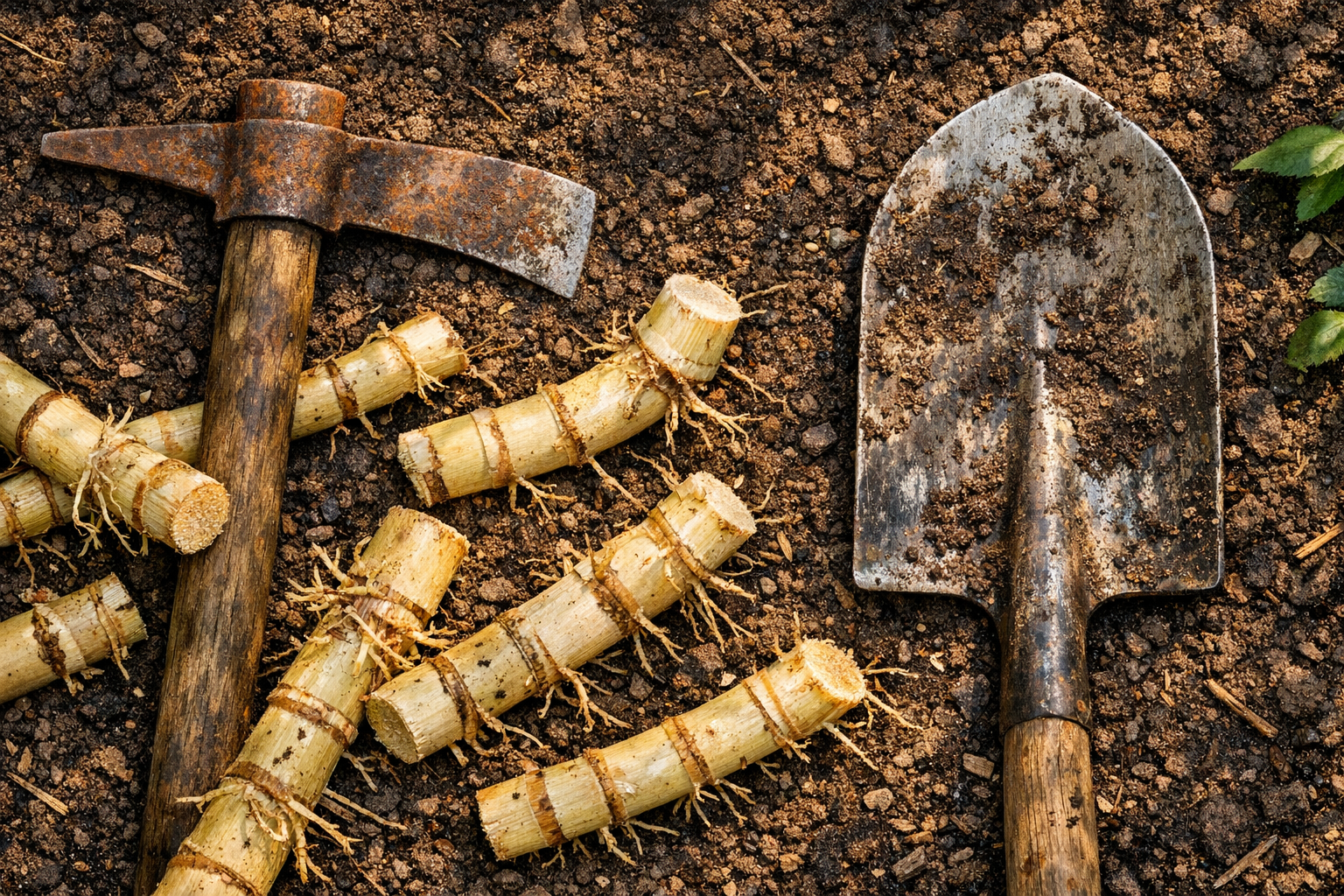
Manual digging works for smaller areas. Use a sharp spade or mattock to cut through rhizomes. Follow each rhizome to its end, removing the entire length. This labor-intensive process takes time but provides immediate results.
Root Barrier Installation
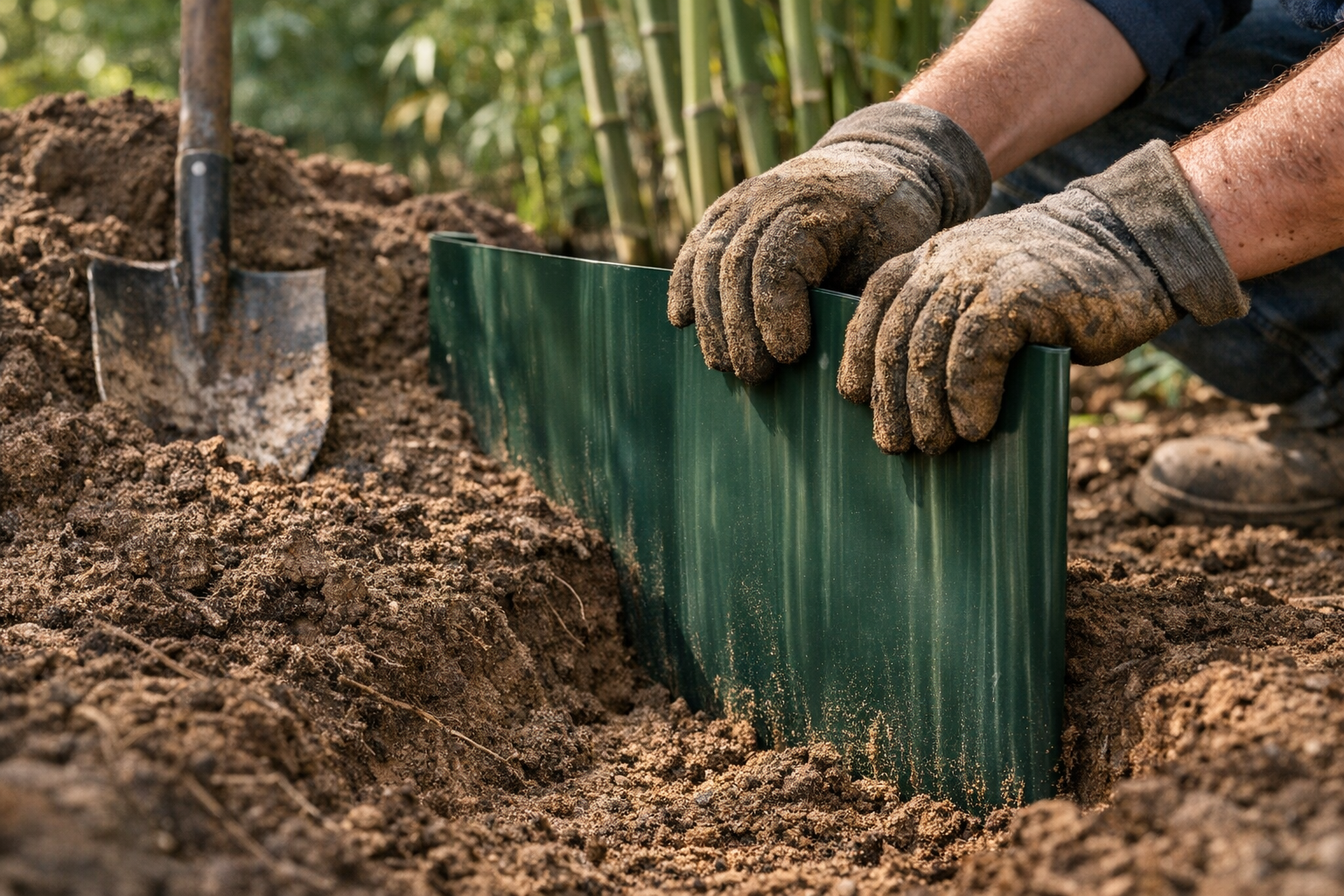
Install root barriers around remaining bamboo if you want to contain rather than eliminate it. These barriers must extend at least 30 inches deep. HDPE plastic barriers work best because they resist rhizome penetration.
Dig a trench around the bamboo area. Insert the barrier vertically with 2-3 inches protruding above ground. Overlap barrier sections by at least 6 inches and seal seams with waterproof tape. Backfill the trench and compact soil firmly.
Alternative Control Methods
Repeated mowing weakens bamboo over time but requires consistent effort. Mow new shoots as soon as they appear, ideally when they reach 12 inches tall. This prevents them from photosynthesizing and replenishing root reserves. However, you must maintain this schedule for at least two growing seasons.
Covering bamboo with heavy tarps blocks sunlight and eventually starves the plants. Use thick, UV-resistant tarps that won’t deteriorate quickly. Overlap tarps by several feet and secure edges with landscape staples. Leave tarps in place for at least one full year.
Boiling water applications kill individual shoots but don’t affect deep rhizomes. Pour boiling water directly on emerging shoots. Repeat this process for every new shoot that appears. Nevertheless, this method works best for very small infestations or as a supplement to other techniques.
Organic Herbicide Options
Vinegar-based herbicides offer a less toxic alternative. Use horticultural vinegar with 20% acetic acid concentration. Apply it to cut stumps or spray it on young shoots. However, organic options typically require more frequent applications than synthetic herbicides.
Citric acid products also show effectiveness against bamboo. Mix concentrated citric acid solutions and apply to fresh cuts. These products work through desiccation rather than systemic action. Therefore, they require more precise application and timing.
Safety Precautions and Environmental Considerations
Wear protective equipment when applying herbicides. Use chemical-resistant gloves, safety glasses, and long sleeves. Prevent herbicide drift to nearby plants by applying directly to cut surfaces. Wind can carry spray to unintended areas.
Dispose of bamboo material properly after removal. Don’t compost bamboo canes or rhizomes because they may regenerate. Bag material for municipal yard waste collection or burn it where permitted. Additionally, check local regulations regarding bamboo disposal.
Protect nearby water sources from herbicide runoff. Maintain buffer zones around streams, ponds, and wetlands. Choose herbicides labeled as safe for aquatic environments if working near water. Furthermore, avoid treating before heavy rain events.
Preventing Future Bamboo Problems
Inspect your property regularly for bamboo shoots from neighboring yards. Bamboo rhizomes can travel under fences and property lines. Treat new shoots immediately before they establish. Early intervention prevents major infestations.
Communicate with neighbors who have bamboo on their property. Coordinate removal efforts to prevent continuous reinfestation. Shared root barriers benefit both properties. Moreover, joint efforts often prove more cost-effective.
Choose alternative plants carefully when replanting cleared areas. Select species with less aggressive growth habits. Native ornamental grasses provide similar visual appeal without invasive tendencies. Research plants thoroughly before installation.
Cost Considerations and Professional Help
DIY bamboo removal costs vary based on infestation size. Herbicide expenses range from $30-100 for most residential projects. Tool rental adds $100-300 if you need excavation equipment. However, these costs remain significantly lower than professional services.
Professional removal services charge $500-3,000 depending on bamboo coverage. They provide expertise and specialized equipment. Furthermore, many companies offer warranties on their work. Consider professional help for large infestations or if DIY attempts fail.
Factor in time investment when planning removal. Complete eradication typically requires 12-24 months of monitoring and treatment. Budget time for weekly inspections during growing season. Consequently, patience and persistence determine success more than any single factor.
Conclusion: Your Path to a Bamboo-Free Yard
Eliminating bamboo demands commitment and strategic action. The cut stump method combined with proper timing delivers the most reliable results. Apply concentrated herbicide to fresh cuts during late summer or early fall for maximum effectiveness.
Plan for multiple treatment cycles over at least one year. Monitor treated areas consistently and address regrowth promptly. Combine herbicide applications with physical removal for stubborn infestations. Additionally, maintain vigilance even after apparent success to catch any remaining shoots.
Success requires understanding bamboo’s biology and exploiting its vulnerabilities. Target the underground rhizome network rather than just visible growth. With persistent effort and appropriate techniques, you can reclaim your yard from bamboo invasion permanently.
If you’re tackling bamboo removal, having the right equipment makes this challenging task significantly more manageable and efficient. Start by investing in a quality tree root removal tool that features a sliding gravity hammer mechanism specifically designed to extract stubborn rhizomes from the ground without excessive digging. Once you’ve cut the bamboo culms down to stumps, applying an effective herbicide concentrate directly to the freshly cut surfaces will help prevent regrowth by killing the underground rhizome network. For cutting through thick bamboo canes and branches, a pair of heavy-duty loppers for tree trimming with rust-resistant blades can handle stems up to 1.5 inches in diameter with minimal effort. When dealing with particularly dense bamboo groves, a powerful air saw with multiple blade options provides the cutting power needed to slice through multiple culms quickly and efficiently. For smaller trimming tasks and precision work around garden beds, a lightweight mini chainsaw offers cordless convenience and excellent maneuverability in tight spaces where larger tools won’t fit. Applying herbicide treatments accurately requires a reliable pump spray bottle with adjustable nozzles that allow you to target cut stumps without contaminating surrounding plants you want to keep. Protecting your hands during this intensive physical work is essential, so quality gardening gloves with rubber coating provide the grip and durability needed when handling sharp tools and rough bamboo material. If you’re removing bamboo near property lines or valuable landscaping, installing a root barrier prevents future rhizome invasion and protects adjacent areas from underground spread that could damage foundations or driveways. For clearing large areas of bamboo undergrowth and maintaining control after initial removal, a versatile brush cutter blade kit with multiple tooth configurations handles everything from fine trimming to heavy-duty clearing with professional results. Finally, keep a durable soil knife in your toolkit for digging around rhizomes, cutting through roots, and performing detailed excavation work that larger tools simply cannot accomplish effectively.
*As an Amazon Associate, I earn from qualifying purchases.
Bamboo can transform from an attractive garden feature into an invasive nightmare. This aggressive plant spreads rapidly and takes over yards within months. Homeowners often struggle to control its relentless growth patterns.
When dealing with bamboo’s persistent underground growth, having the right tools and materials makes all the difference in achieving successful removal and prevention. Installing a tree root barrier around your property line can prevent running bamboo from spreading into your yard from neighboring properties or contain existing plants you want to keep controlled. For the initial excavation work, a comprehensive gardening tools kit with trowel, transplanter, and cultivator helps you dig around and expose the rhizomes that need to be removed completely. When you encounter tough, stubborn roots that resist regular tools, a specialized soil knife can slice through bamboo rhizomes with precision and make the extraction process much more manageable. For homeowners who prefer chemical-free solutions or have pets and children playing in the yard, an organic vinegar weed killer offers a safer alternative for treating new bamboo shoots as they emerge throughout the growing season. Cutting down tall bamboo stalks before excavation becomes easier with a telescoping pole saw that can reach up to twenty-six feet without requiring a ladder or dangerous climbing. Regular maintenance pruning of any regrowth requires reliable bypass pruning shears that stay sharp and cut cleanly through bamboo canes to prevent splintering and disease. After successfully removing bamboo from an area, laying down weed barrier fabric helps prevent any remaining rhizome fragments from sending up new shoots while you establish desirable plants in that space. For breaking through compacted soil and prying out large rhizome masses that have been growing for years, a heavy-duty chisel digging bar provides the leverage and penetrating power that standard shovels simply cannot match. Protecting your hands during this intensive work is essential, so investing in quality gardening gloves with rubber coating keeps your grip secure while preventing blisters and cuts from sharp bamboo edges. For persistent infestations where organic methods have failed and you need a more aggressive solution, a professional-grade glyphosate herbicide concentrate can be applied carefully to cut bamboo stalks to kill the entire root system over time.
The Challenge of Underground Growth
Bamboo is notorious for its aggressive nature and resilience. Consequently, many homeowners feel overwhelmed when facing a full-blown infestation. The plant spreads rapidly underground, making surface-level cutting largely ineffective. Therefore, simple pruning rarely solves the problem permanently.
The secret to successful removal lies in targeting the root system. Specifically, you must destroy the rhizomes. These underground stems store energy and allow the plant to regenerate quickly. If you leave even a small piece behind, the bamboo will likely return. Thus, surface treatments often fail without deep excavation or targeted herbicide application.
Identifying Your Bamboo Type
Additionally, identifying your specific bamboo variety is crucial for success. Knowing the difference helps you choose the right tools and strategies. Generally, there are two main categories to consider:
Running Bamboo: This variety spreads aggressively through long, horizontal rhizomes. It is highly invasive.
Clumping Bamboo: This type grows in tight clusters. However, it can still be difficult to dig out.
For instance, running bamboo usually requires more aggressive containment strategies than clumping varieties. You must trace the roots far beyond the visible stalks. Conversely, clumping bamboo is localized but creates a dense, heavy root ball.
Strategic Removal Options
Successful eradication usually involves a multi-faceted approach. You cannot simply cut it down once and walk away. Instead, you might need a combination of physical removal and chemical treatments. Furthermore, timing is essential for these methods to work effectively.
Alternatively, some gardeners prefer the starvation method. This involves repeatedly cutting new shoots to exhaust the plant’s energy reserves. Eventually, the rhizomes die from a lack of nutrients. However, this organic approach requires extreme discipline over a long period.
Regardless of the method, consistency is key. You must remain vigilant for several seasons. In fact, total eradication can take two to three years of monitoring. Ultimately, with persistence and the right plan, you can reclaim your landscape.
Understanding Bamboo’s Growth Patterns
Bamboo spreads through underground stems called rhizomes. Source These rhizomes extend horizontally beneath the soil surface, sending up new shoots constantly. The root system stores massive amounts of energy, making simple cutting ineffective.
Understanding Bamboo Varieties
Bamboo species fall into two distinct categories that behave very differently. Running bamboo sends out underground rhizomes that can travel up to 15 feet per season. These aggressive spreaders create extensive root networks beneath your yard. In contrast, clumping bamboo grows in tight, circular formations. The roots expand outward slowly, typically just a few inches each year.
Why Running Bamboo Is Harder to Eliminate
Running varieties present the most significant removal challenge for homeowners. Therefore, they require more intensive eradication methods and longer treatment periods. The rhizomes tunnel underground, often crossing property lines into neighboring yards. Furthermore, these roots can penetrate concrete foundations and damage infrastructure. Popular running species include Golden Bamboo and Black Bamboo, which dominate many landscapes.
Clumping Bamboo Removal Challenges
Meanwhile, clumping varieties seem less threatening but still demand serious effort. Their compact growth pattern makes them easier to locate and target. However, the dense root mass creates its own difficulties during extraction. Additionally, clumping bamboo can still spread 2-5 feet over several years. Common clumping types include Bambusa and Fargesia species found in many gardens.
Identifying Your Bamboo Type
Proper identification determines your entire removal strategy and timeline. Moreover, knowing your bamboo type helps you select appropriate herbicides and tools. Running bamboo shows new shoots appearing far from the parent plant. Conversely, clumping bamboo produces shoots within the existing plant circle. As a result, visual inspection of growth patterns reveals which type you’re facing.
The plant’s resilience comes from its extensive underground network. Moreover, bamboo can regenerate from tiny rhizome fragments left in the soil. This survival mechanism explains why partial removal attempts often fail.
The Physical Removal Approach
Why Physical Removal Works for Bamboo Control
Physical removal stands as the most environmentally friendly approach to bamboo eradication. Moreover, this technique eliminates concerns about chemical runoff affecting nearby plants or groundwater. Unlike herbicides, physical methods pose no risk to pets or children playing in your yard. Therefore, many homeowners prefer this natural strategy despite the increased labor involved.
The success of physical removal depends entirely on your persistence and thoroughness. Consequently, you must commit to regular maintenance over several months or even years. Bamboo’s rhizome system can extend surprisingly far underground, sometimes reaching 15 to 20 feet from visible shoots. Additionally, these underground stems store substantial energy reserves that fuel regrowth attempts.
Essential Tools for the Job
Before starting your removal project, gather the appropriate equipment to make the work manageable:
Sharp spade or shovel with a reinforced blade edge
Mattock or pickaxe for breaking through tough rhizome networks
Pruning saw or loppers for cutting thick culms at ground level
Heavy-duty gloves to protect hands from sharp bamboo edges
Wheelbarrow for hauling removed material
Root saw or reciprocating saw for severing stubborn underground rhizomes
Furthermore, investing in quality tools prevents frustration and speeds up the entire process. A dull shovel will make the job exponentially harder.
Setting Realistic Timeline Expectations
Physical bamboo removal rarely happens overnight. In fact, most homeowners need six months to two years for complete eradication. The timeline varies based on several critical factors.
First, consider the bamboo species you’re fighting. Running bamboo varieties spread aggressively and require more intensive effort. In contrast, clumping bamboo concentrates its growth in tighter areas. Additionally, the size of your bamboo grove directly impacts removal duration. A small patch might disappear in weeks, while established groves demand sustained campaigns.
Essential Tools for Manual Removal
A sharp mattock becomes your primary weapon against bamboo rhizomes. This tool combines a horizontal blade with a vertical pick, perfect for chopping through tough underground stems. Additionally, a sturdy spade helps dig around the root mass.
Heavy-duty loppers cut through thick bamboo culms efficiently. Pruning saws handle the largest stalks that loppers can’t manage. Furthermore, protective gloves prevent blisters during extended digging sessions.
Consider renting a mini excavator for large infestations. This equipment dramatically reduces physical labor and speeds up the removal process. However, smaller patches remain manageable with hand tools alone.
Step-by-Step Physical Extraction
Start by cutting all visible bamboo stalks down to ground level. Remove these canes from your property to prevent regrowth. Next, begin digging around the perimeter of the bamboo patch.
Excavate soil to expose the rhizome network completely. These underground stems typically grow 6-12 inches below the surface. Use your mattock to chop through the rhizomes systematically, working from the outside inward.
Immediately extract each rhizome segment as soon as you cut it away from the main clump. This prevents confusion about which pieces you’ve already processed. Additionally, working systematically helps ensure nothing gets left behind in the soil. Use your hands or a garden fork to lift each section completely free.
Place removed rhizomes directly into a sturdy bucket or wheelbarrow. Therefore, you’ll avoid accidentally dropping fragments that could take root. Furthermore, keeping extracted pieces contained prevents them from contaminating other garden areas. Never leave severed rhizomes lying on the ground, even temporarily.
Thorough Inspection of Each Fragment
Examine every single piece with meticulous attention before disposing of it. Look for any tiny offshoots or nodes along the rhizome length. These nodes contain dormant buds that can sprout new growth. Moreover, check for hair-like roots extending from the main rhizome body.
Hold each section up to better lighting if needed. Consequently, you’ll spot fragments that might otherwise go unnoticed. Even pieces smaller than your fingernail possess regenerative capabilities. For example, a rhizome fragment just one inch long can establish an entirely new bamboo colony within months.
Understanding Bamboo’s Regenerative Power
Bamboo rhizomes demonstrate remarkable survival abilities that make thorough removal essential. Each node along the rhizome contains meristematic tissue capable of producing shoots. Additionally, these underground stems store substantial energy reserves. Therefore, even damaged fragments retain enough resources to regenerate.
Research shows that rhizome pieces as small as half an inch can successfully sprout. Furthermore, buried fragments may remain dormant for weeks before showing growth. This delayed regeneration often tricks gardeners into thinking they’ve succeeded in eradication.
Sift through the excavated soil to catch any missed rhizome fragments. This tedious step prevents future regrowth from overlooked pieces. Dispose of all bamboo material properly, never composting it.
The Starvation Method Explained
Understanding the Biology
To master this method, you must first understand how bamboo functions. The plant relies heavily on photosynthesis to generate energy. Consequently, it stores this fuel deep within its underground root system, known as rhizomes. By removing the green leafy stalks, you effectively cut off the food supply. Therefore, the plant is forced to consume its stored energy to produce new shoots. Eventually, if you persist, these underground reserves will run completely dry.
Executing the Cut
Start by cutting the entire grove down to ground level. You can use heavy-duty loppers or a hand saw for thick, woody canes. Afterwards, the maintenance phase begins immediately. Specifically, you should treat the bamboo patch exactly like a lawn. Because new shoots appear rapidly, weekly mowing is often necessary. This constant removal prevents any leaves from soaking up sunlight. Even a few days of sun exposure can recharge the roots.
The Timeline for Success
Unfortunately, this technique is not a quick fix. In fact, full eradication often takes two to three years of diligent work. The rhizomes are incredibly resilient and stubborn. Thus, you must remain vigilant throughout the entire growing season. As a result, skipping just a few weeks of cutting can undo months of progress. However, the benefit is that this method is entirely chemical-free and eco-friendly.
Tips to Accelerate Decay
Surprisingly, watering and fertilizing the area can actually speed up the process. Water encourages the bamboo to send up new shoots aggressively. Then, you can immediately cut them down to drain energy faster. Additionally, applying a high-nitrogen fertilizer can trigger rapid growth spikes. However, only do this if you are ready to mow immediately. Otherwise, you might accidentally strengthen the plant.
Key Tools for the Starvation Method:
Loppers: For initial clearing of thick stalks.
Lawnmower: For maintaining low growth on flat ground.
String Trimmer: For uneven terrain or rocky areas.
Spade: To chop off stubborn shoots below the soil line.
How Energy Depletion Works
Understanding the Rhizome Battery
To successfully eliminate bamboo, you must first understand its unique biology. Unlike standard trees, bamboo relies heavily on an underground network called rhizomes. These root-like structures act exactly like a rechargeable battery pack. Furthermore, they store massive amounts of carbohydrates and nutrients. Consequently, this stored fuel allows the plant to grow with explosive speed during the spring.
The plant’s leaves serve as the solar panels that recharge this battery. As long as green leaves exist, they generate energy through photosynthesis. This energy travels down to the roots, keeping the colony alive and expanding. Therefore, your primary goal is to disconnect the solar panels while constantly draining the battery.
The Mechanics of Starvation
The strategy of depletion requires you to interrupt the plant’s energy cycle aggressively. When a new shoot emerges, the rhizome expends significant energy to push it upward. However, if you cut that shoot immediately, that energy is wasted forever. Specifically, you must remove the stalk before any leaves unfurl.
Once leaves open, they begin photosynthesis and immediately start recharging the rhizomes. As a result, even a few days of leaf growth can undo weeks of hard work. By cutting the shoot early, you force the bamboo to use more reserves to try again. Eventually, the plant enters a state of caloric deficit. It spends more energy trying to grow than it can generate.
Execution and Timeline
Be aware that this process is a test of endurance, not speed. In fact, fully depleting a mature bamboo grove can take two to three growing seasons. You must remain vigilant throughout the spring and summer months.
Follow these rules for effective depletion:
Cut Low: Slice shoots at ground level to prevent regrowth from the same stalk.
Mow Often: For large areas, a lawnmower is an effective tool. Alternatively, use loppers for precision work.
Stay Consistent: Check the area weekly. If you skip a week, the plant will recover strength.
Ultimately, the rhizomes will run out of fuel completely. Without energy to produce new shoots, the underground network will wither and rot. This method is labor-intensive, but it is chemically safe and permanently effective.
This process typically takes 2-4 years of consistent cutting. The timeline varies based on your bamboo’s initial size and health. Nevertheless, regular maintenance gradually weakens even the most established stands.
Implementing a Cutting Schedule
Mow down all bamboo shoots weekly during the growing season. Cut every single shoot as close to ground level as possible. Missing even one shoot allows the plant to photosynthesize and replenish energy stores.
Use a lawn mower for small shoots under 6 inches tall. Larger shoots require loppers or a brush cutter for efficient removal. Furthermore, mark your calendar to maintain a strict cutting schedule.
Maximizing Impact During Peak Growth
You must maintain a strict schedule during the warmer months. Bamboo enters its most aggressive growth phase in the spring. Consequently, this is when the plant is most vulnerable to resource depletion. You should cut down new shoots immediately. Ideally, do this as soon as they emerge from the soil.
Furthermore, regular cutting forces the plant to use stored energy. It tries to rebuild quickly, but you must stop it. Therefore, stay vigilant from late March through August. A weekly inspection is usually necessary during this window. If you skip a week, the bamboo gains a foothold.
The Science of Starvation
The ultimate goal is total root starvation. Bamboo relies on photosynthesis to feed its massive underground root system. However, cutting the stalks removes the leaves needed for this process. Without leaves, the plant cannot generate new energy.
As a result, it must draw from its finite reserves to survive. Eventually, these reserves will run dry if you remain persistent. Conversely, missing a single session allows the plant to refuel. Just a few days of sunlight on new leaves can undo weeks of work. Thus, total defoliation is the key to success.
Winter Dormancy and Maintenance
The battle shifts tactics as the weather cools. Although visible growth slows down, the underground network remains active. You cannot assume the plant is dead just because it looks dormant. In fact, rhizomes often store energy for the next season during autumn.
Thus, you must inspect the area periodically. If you spot any green movement, remove it instantly. Otherwise, the bamboo will recharge its batteries for a spring invasion. Consistency remains critical even in the snow.
Essential Tips for Success
Use the right tools: For small shoots, a lawnmower works perfectly. Simply run over the area during regular lawn maintenance.
Dispose properly:Do not compost fresh bamboo cuttings. Unfortunately, they can re-root and spread elsewhere. Instead, bag them for trash collection.
Stay patient: This process takes time. Typically, it requires two to three years of diligence to fully kill an established grove.
Chemical Control Options
Herbicides offer faster bamboo elimination than physical methods alone. These products work by poisoning the entire plant system, including underground rhizomes. However, proper application techniques ensure maximum effectiveness.
Choosing the Right Herbicide
Choosing the Right Glyphosate Product
Glyphosate herbicides remain among the most powerful weapons against invasive bamboo. However, not all formulations deliver equal results. For instance, standard lawn-and-garden varieties often lack the potency needed for bamboo’s resilient structure. Therefore, you should seek concentrated commercial-grade formulas specifically labeled for woody plants and brush control.
These products typically contain 41% to 53.8% glyphosate concentration. In contrast, consumer-grade options may offer only 18% to 25% active ingredient. Moreover, professional formulations include surfactants that help the chemical penetrate bamboo’s waxy leaf surface. Consequently, the herbicide reaches the plant’s vascular system more efficiently.
How Systemic Herbicides Attack Bamboo
The key advantage of glyphosate lies in its systemic action. Unlike contact herbicides that only burn surface foliage, systemic chemicals absorb through leaves and stems. Additionally, they travel downward through the plant’s circulatory system. This movement carries the poison directly into underground rhizomes and root networks.
Furthermore, the herbicide disrupts an enzyme pathway essential for plant growth. As a result, bamboo cannot produce proteins necessary for survival. The entire colony gradually starves from within. This process typically takes two to four weeks to show visible effects.
Meanwhile, the rhizome network continues absorbing the chemical. Even dormant buds receive a lethal dose. Therefore, new shoots cannot emerge after treatment. This comprehensive kill pattern makes glyphosate far superior to mechanical removal alone.
Triclopyr provides another option for bamboo control. This chemical specifically targets woody vegetation while being safer around grass. Additionally, some products combine multiple active ingredients for enhanced effectiveness.
Always read product labels carefully before purchasing. Ensure the herbicide lists bamboo or woody plants on its approved uses. Furthermore, follow all safety precautions during mixing and application.
Application Techniques for Maximum Impact
Cut bamboo stalks 2-3 feet above ground level initially. Allow new shoots to grow until leaves reach full size. This waiting period ensures maximum herbicide absorption.
Mastering the Timing
Timing is absolutely critical for success. Specifically, you must wait until the bamboo shoots are fully mature. This usually occurs in late summer or early autumn. During this specific window, the plant moves carbohydrates down to the roots. Consequently, the herbicide rides this flow straight into the rhizome system.
If you spray too early in the spring, the sap is flowing upward. As a result, the poison stays in the leaves and stems. It never reaches the root network effectively. Therefore, patience is your best tool for permanent removal.
The Foliar Spray Technique
For large, dense patches, foliar spraying is the most efficient method. You should use a non-selective herbicide like glyphosate or triclopyr. Ensure you cover the leaves evenly. However, do not spray so heavily that the chemical drips off.
Runoff can damage the soil or surrounding plants. Furthermore, always check the weather before starting. Wind can carry the mist to your prized flowers or vegetables. Thus, choose a calm, dry day for application.
The Cut-Stump Method
In contrast, the cut-and-paint method offers superior control. This technique is ideal when bamboo grows near desirable vegetation. First, cut the cane as close to the ground as possible. Use a sharp saw or loppers for a clean cut.
Follow these steps for the best results:
Cut the stalk: Leave only one or two inches above the soil.
Act quickly: The plant’s vascular system seals rapidly.
Apply herbicide: Paint the stump within 15 seconds of cutting.
Use concentrate: Do not dilute the chemical for this method.
Additionally, use a small foam brush or a sponge applicator. This ensures the poison goes exactly where intended. Finally, monitor the area next spring for any regrowth.
The cut-and-paint technique involves cutting stalks and immediately brushing herbicide on the fresh cuts. This method delivers chemicals directly into the plant’s vascular system. Consequently, it minimizes environmental impact while maximizing effectiveness.
Repeat applications may be necessary for complete elimination. Monitor the area and treat any new growth that emerges. Persistence ensures you kill all rhizome sections.
Creating Effective Barriers
Barriers prevent bamboo from spreading into unwanted areas. Installing proper containment protects your yard from neighboring bamboo invasions. These structures also confine bamboo you choose to keep.
Barrier Installation Guidelines
Rhizome barriers must extend at least 30 inches deep to be effective. Source High-density polyethylene provides the most durable barrier material.
Creating an Effective Barrier Trench
The first step involves excavating a proper trench around your bamboo containment zone. Therefore, you’ll need to dig down approximately 28 to 30 inches deep. Additionally, make the trench about 2 to 4 inches wide. This width accommodates most barrier materials comfortably. For example, a narrow trenching shovel works perfectly for this task. Meanwhile, ensure the trench follows a completely straight line along property boundaries. Curved or angled trenches can create weak points where rhizomes escape.
Installing the Vertical Barrier
Once your trench is ready, position the barrier material vertically within it. Consequently, the barrier should reach nearly to the bottom of your excavation. However, leave those crucial 2 to 3 inches extending above ground level. This visible portion serves as your primary defense mechanism. Moreover, it acts as an early warning system for escaping rhizomes.
The above-ground section is absolutely essential for containment success. Furthermore, bamboo rhizomes typically grow horizontally just below the soil surface. As a result, they will attempt to spread outward seeking new territory. Without that raised barrier edge, the rhizomes simply climb over the top. In contrast, the exposed barrier forces them to surface where you can spot them. Additionally, you can then cut them away before they establish new growth areas.
Backfill the trench carefully after installation. Therefore, pack soil firmly against both sides of the barrier. This prevents gaps that rhizomes might exploit.
Overlap barrier sections by at least 6 inches and seal seams completely. Any gap provides an escape route for determined rhizomes. Moreover, angle the barrier slightly outward to redirect rhizomes upward.
Barrier Maintenance Requirements
Inspect barriers annually for any rhizomes attempting to escape. Walk the perimeter and check for shoots emerging near the barrier line. Remove any escapees immediately before they establish new colonies.
Trim vegetation along the barrier’s above-ground edge regularly. This maintenance allows you to spot rhizomes trying to cross over. Additionally, it prevents soil buildup that could cover the barrier top.
Soil Solarization Technique
Understanding the Science of Solarization
Solarization acts as a passive thermal treatment for your soil. It essentially creates a localized greenhouse effect directly over the bamboo’s root system. By trapping high-intensity UV rays, the temperature underneath the plastic rises drastically. Consequently, the heat pasteurizes the soil and cooks the stubborn rhizomes alive.
This process targets the plant’s energy reserves deep underground. Because bamboo relies on these reserves to regrow, destroying them is vital. Furthermore, this method eliminates the need for toxic herbicides like glyphosate. It is a completely organic solution for persistent infestations. However, it requires specific conditions to function correctly.
Step-by-Step Application
To begin, cut all bamboo stalks down to ground level. Remove any sharp debris that might puncture the plastic sheeting. Next, you must water the area thoroughly. Moist soil conducts heat much better than dry soil does. Therefore, deep saturation is a critical step for success.
Once the ground is wet, cover the entire area with plastic. Specifically, use clear, UV-resistant polyethylene plastic rather than black plastic. Clear plastic allows sunlight to pass through and heat the soil directly. In contrast, black plastic absorbs heat on the surface and may not heat the roots sufficiently.
Secure the perimeter tightly to trap the hot air. You can dig a trench around the edges and bury the plastic. Alternatively, place heavy rocks or bricks along the border to create an airtight seal. Finally, leave the cover undisturbed for the duration of the treatment.
Critical Success Factors
Patience is the most important tool for this method. The plastic covering must remain in place for at least four to six weeks. If you live in a cooler region, you might need to wait eight weeks. Additionally, you must choose the right time of year.
The peak of summer offers the most intense solar radiation. For example, July and August are usually ideal months for starting this process. Do not attempt this during cloudy or rainy seasons. Moreover, monitor the plastic periodically for any tears or holes.
If the seal breaks, the accumulated heat will escape rapidly. As a result, the rhizomes might survive the treatment. Patch any damage immediately with clear packing tape. Ultimately, consistent heat is the key to permanently destroying the bamboo colony.
Setting Up Solar Treatment
Cut all bamboo stalks to ground level before beginning. Clear the area of all debris and rake the soil smooth. Water the soil thoroughly to improve heat conduction.
Preparing the Site
Before applying any covering, you must prepare the ground thoroughly. First, cut all bamboo stalks down as close to the soil as possible. Mowing or using a brush cutter is effective for this step. Next, remove any sharp stems or debris that might puncture the sheeting. A smooth surface ensures the plastic remains airtight.
Additionally, water the area deeply before laying the plastic. Moist soil conducts heat much better than dry soil. Therefore, the thermal energy will penetrate deeper into the root system. This preparation makes the solarization process significantly more lethal to the plant.
Selecting the Right Plastic
Choosing the correct type of plastic is critical for success. Specifically, you must use clear, UV-resistant polyethylene. Do not use black plastic or opaque tarps for this method. Clear plastic allows sunlight to pass through and traps the heat underneath. In contrast, black plastic absorbs heat and blocks the sun’s rays.
Furthermore, durability is non-negotiable when dealing with bamboo. The material should be at least 4 to 6 mils thick. Bamboo rhizomes are sharp and aggressive. Consequently, thin painter’s plastic will tear almost immediately. investing in industrial-grade sheeting prevents the need for frequent replacements.
Installation and Sealing
Lay the heavy-duty plastic over the entire infested area. Moreover, extend the sheeting at least three to four feet beyond the visible growth. This extra coverage ensures that underground runners are also trapped. If the bamboo escapes the edges, the treatment will fail.
Once positioned, you must create an airtight seal around the perimeter. Use heavy weights such as sandbags, cinder blocks, or large rocks. Alternatively, dig a small trench and bury the edges of the plastic. This prevents heat from escaping and keeps the wind from lifting the sheet. Finally, leave the cover in place for at least six to eight weeks during the hottest summer months.
Leave the plastic in place for 6-8 weeks during the hottest part of summer. The trapped solar heat raises soil temperatures high enough to kill rhizomes. However, this method works best when combined with other techniques.
Preventing Future Bamboo Problems
Prevention saves enormous effort compared to removal. Understanding how bamboo spreads helps you avoid future infestations. These strategies protect your property from bamboo invasions.
Smart Landscaping Choices
Research any bamboo variety thoroughly before planting. Choose clumping species instead of running types for easier management. Better yet, consider alternative plants that provide similar aesthetics without invasive tendencies.
Strategic Bamboo Placement to Prevent Future Problems
Property boundaries require careful consideration before any bamboo planting occurs. Bamboo rhizomes can travel 15 to 20 feet horizontally in a single growing season. Therefore, your neighbor’s yard becomes vulnerable to invasion. Legal disputes frequently arise when bamboo crosses property lines. Moreover, removal costs can reach thousands of dollars when bamboo establishes itself in unwanted areas.
Understanding the Risks to Structures and Infrastructure
Foundations face serious threats from bamboo’s underground network. The rhizomes exert tremendous pressure as they expand and multiply. Consequently, they can crack concrete slabs and compromise structural integrity. Driveways develop unsightly bumps and eventually require replacement. Furthermore, bamboo shoots possess surprising strength when emerging from the ground.
Underground utilities present another critical concern for homeowners. Bamboo roots can penetrate:
Water lines and cause costly leaks
Sewer pipes leading to blockages
Electrical conduits creating safety hazards
Irrigation systems resulting in malfunction
Additionally, repair crews may struggle to access damaged utilities through dense bamboo growth.
Optimal Locations for Bamboo Cultivation
Isolated areas provide the safest environment for bamboo cultivation. However, isolation means different things depending on your property size. For example, a corner lot away from all structures works well. Meanwhile, properties with natural barriers like large ponds offer built-in containment.
Consider these ideal placement strategies:
Island beds surrounded by regularly mowed lawn
Raised planters with reinforced barriers
Areas beyond 30 feet from any structure
Spaces with existing concrete boundaries on multiple sides
In contrast, avoid planting near septic systems or wells. These locations create maintenance nightmares if bamboo takes hold.
Install barriers before planting if you decide bamboo suits your landscape. Proactive containment prevents future removal headaches. This upfront investment saves countless hours of labor later.
Monitoring and Early Intervention
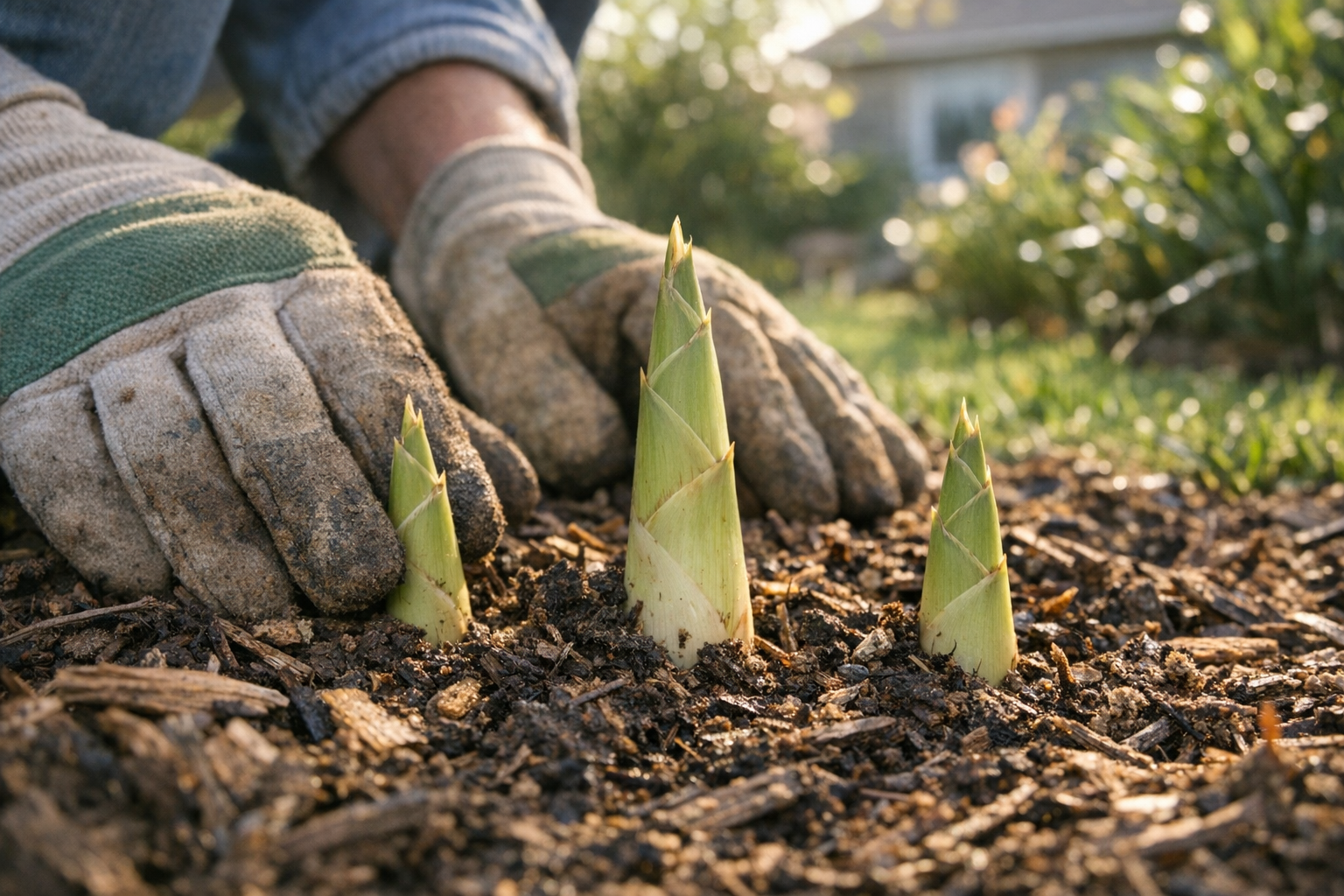
Inspect your property regularly for unwanted bamboo shoots. Early detection makes removal significantly easier than waiting until establishment. Pull or dig new shoots immediately upon discovery.
Initiating the Conversation
Open communication is the first line of defense against invasive bamboo. However, approaching a neighbor requires tact and patience. Start a friendly conversation instead of making demands immediately. For instance, invite them over to see the encroaching rhizomes firsthand. Consequently, they may not even realize the extent of the underground spread. Visual evidence often makes the issue undeniable.
Once you establish common ground, propose specific, actionable solutions. Rhizome barriers are the most effective method for long-term containment. Therefore, suggest installing high-density polyethylene sheeting along the property line. This heavy-duty material physically stops roots from crossing borders. Furthermore, emphasize that this measure protects their lawn as much as yours.
Collaborative Containment Strategies
Bamboo removal is notoriously labor-intensive and expensive. Thus, offering assistance can significantly sweeten the deal. You might volunteer to help dig the necessary trenches yourself. Alternatively, propose splitting the cost of a professional landscaper. This collaborative approach fosters goodwill between households. Ultimately, a shared investment ensures the job gets done correctly.
Consider creating a written agreement for ongoing maintenance. For example, agree on a schedule for root pruning twice a year. This prevents new shoots from jumping over barriers. Additionally, keep the tone cooperative rather than accusatory. Your goal is a bamboo-free yard, not a neighborhood feud.
When Diplomacy Fails
Sometimes, a neighbor might refuse to cooperate despite your best efforts. In this scenario, research your local ordinances regarding invasive species. Many municipalities classify running bamboo as a legal nuisance. As a result, the law may require them to control the plant. However, mention these regulations gently before filing formal complaints. Legal action should always remain the absolute last resort.
Stay vigilant even after successful removal. Bamboo can regenerate from tiny rhizome fragments years later. Therefore, treat any new shoots immediately to prevent re-establishment.
Combining Methods for Best Results
Multiple removal methods used together produce faster, more reliable results. This integrated approach attacks bamboo through different mechanisms simultaneously. Consequently, you reduce the overall elimination timeline.
Aggressive Physical Excavation
Begin the eradication process by physically removing as much of the plant as possible. This step requires significant effort but is essential. Digging out the root ball weakens the bamboo immediately. Specifically, you must target the rhizomes, which are underground stems.
These rhizomes store the plant’s energy reserves. Therefore, removing them limits the bamboo’s ability to regenerate. Use heavy-duty tools like a mattock, spade, or reciprocating saw. Additionally, sift through the soil carefully to find hidden roots. Even a small fragment of a rhizome can sprout a new plant. Consequently, thoroughness during this stage saves time later.
Chemical Treatment Strategy
After excavation, you must address the inevitable regrowth with chemicals. Physical removal rarely gets everything on the first try. Thus, herbicides act as a necessary cleanup crew. Wait for new, leafy shoots to emerge before spraying.
Glyphosate and triclopyr are the most effective active ingredients for this task. However, simply spraying the leaves might not be enough. For better results, use the “cut-stump” method.
First, cut the stalk close to the ground.
Immediately after, paint the fresh cut with concentrated herbicide.
Ensure the chemical covers the entire surface of the cut.
As a result, the poison absorbs directly into the vascular system. This transports the toxin down to the surviving roots.
Starvation Through Maintenance
The final component of this strategy involves depleting the plant’s energy. You must prevent the bamboo from performing photosynthesis. If the plant cannot produce food, the root system eventually dies. Therefore, maintain a strict and unforgiving cutting schedule.
Mow or clip any new shoots the moment they appear. Do not let them grow taller than a few inches. Furthermore, consistency is vital for this exhaustion method. If you skip a week, the plant recharges its energy stores. Consequently, the starvation process resets. Be prepared for this battle to last several years.
Cover treated areas with heavy mulch or landscape fabric after removal. This barrier suppresses any remaining shoots while the rhizomes die. Furthermore, it makes monitoring for new growth easier.
Conclusion
Eliminating bamboo from your yard requires dedication and the right strategy. Physical removal offers immediate results but demands significant labor. The starvation method works with minimal tools but requires years of consistent effort.
Maximizing Chemical Control Effectiveness
Chemical herbicides offer the fastest path to bamboo elimination when used properly. However, timing matters significantly for optimal results. Apply systemic herbicides during late summer or early fall when bamboo transports nutrients downward. This ensures the chemical reaches the entire root system effectively.
Furthermore, glyphosate-based products work best on actively growing bamboo. Cut the canes first, then immediately treat the fresh cuts. The herbicide absorbs directly into the vascular system this way. Additionally, painting concentrated herbicide on cut stems prevents dilution from rain or irrigation.
For example, a 25% glyphosate solution applied to fresh cuts kills rhizomes within weeks. Meanwhile, foliar sprays require multiple applications over several months. Consequently, the cut-and-paint method saves both time and herbicide volume.
The Power of Combined Strategies
Integrating multiple removal techniques dramatically increases your success rate against bamboo. Chemical treatment alone may miss dormant rhizomes that later regenerate. Therefore, pairing herbicides with physical barriers creates a comprehensive defense system.
Moreover, combining mowing with chemical applications weakens the plant’s energy reserves faster. Each mowing session forces bamboo to deplete stored nutrients for regrowth. Subsequently applying herbicide to stressed plants amplifies the chemical’s effectiveness.
In contrast, relying on a single method often leads to disappointing results. Physical removal might miss underground rhizomes spreading laterally. As a result, new shoots emerge months after you thought the problem was solved.
Essential Persistence Requirements
Complete bamboo eradication demands unwavering commitment over extended periods. Most infestations require 12 to 24 months of consistent effort. New shoots will continue emerging from surviving rhizome fragments during this timeframe.
Therefore, monitor your treatment area weekly during growing season. Additionally, retreat any new growth within 48 hours of appearance. This prevents photosynthesis from replenishing the root system’s energy stores.
Furthermore, maintain detailed records of treatment dates and locations. Document which areas show regrowth patterns requiring additional attention. Consequently, you’ll identify persistent rhizome zones needing more aggressive intervention.
Patience proves equally critical throughout this process. Bamboo’s extensive underground network won’t surrender quickly. However, systematic treatment eventually exhausts even the most resilient stands completely.
Start your removal project during the growing season for maximum effectiveness. Monitor treated areas regularly and address any regrowth immediately. With consistent effort, you can permanently reclaim your yard from invasive bamboo.
When dealing with bamboo’s persistent underground growth, having the right tools and materials makes all the difference in achieving successful removal and prevention. Installing a tree root barrier around your property line can prevent running bamboo from spreading into your yard from neighboring properties or contain existing plants you want to keep controlled. For the initial excavation work, a comprehensive gardening tools kit with trowel, transplanter, and cultivator helps you dig around and expose the rhizomes that need to be removed completely. When you encounter tough, stubborn roots that resist regular tools, a specialized soil knife can slice through bamboo rhizomes with precision and make the extraction process much more manageable. For homeowners who prefer chemical-free solutions or have pets and children playing in the yard, an organic vinegar weed killer offers a safer alternative for treating new bamboo shoots as they emerge throughout the growing season. Cutting down tall bamboo stalks before excavation becomes easier with a telescoping pole saw that can reach up to twenty-six feet without requiring a ladder or dangerous climbing. Regular maintenance pruning of any regrowth requires reliable bypass pruning shears that stay sharp and cut cleanly through bamboo canes to prevent splintering and disease. After successfully removing bamboo from an area, laying down weed barrier fabric helps prevent any remaining rhizome fragments from sending up new shoots while you establish desirable plants in that space. For breaking through compacted soil and prying out large rhizome masses that have been growing for years, a heavy-duty chisel digging bar provides the leverage and penetrating power that standard shovels simply cannot match. Protecting your hands during this intensive work is essential, so investing in quality gardening gloves with rubber coating keeps your grip secure while preventing blisters and cuts from sharp bamboo edges. For persistent infestations where organic methods have failed and you need a more aggressive solution, a professional-grade glyphosate herbicide concentrate can be applied carefully to cut bamboo stalks to kill the entire root system over time.
*As an Amazon Associate, I earn from qualifying purchases.