I killed my first running bamboo grove in 2019, and I’ll be honest: I thought six weeks of herbicide spraying would do it. I was wrong. That mistake taught me something crucial that most bamboo removal guides gloss over—how long to kill bamboo isn’t measured in weeks. It’s measured in seasons, sometimes years, and understanding the realistic timeline is the difference between success and spending another season watching shoots emerge from what you thought was dead ground.
Here’s what I’m sharing in this post: the actual season-by-season progression of killing bamboo with three common methods, what “dead” really means at each stage, and how to know whether you’re winning or about to start over.
Why Bamboo Takes So Long to Die: The Underground Reality
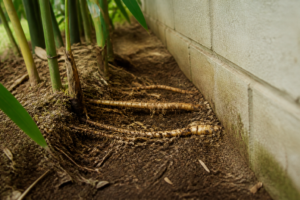
Bamboo—whether it’s the aggressive Phyllostachys genus (running bamboo) or the clumping Fargesia types—stores massive energy in its rhizome system. That network of underground stems can spread 10 to 15 feet laterally in running species, and a single rhizome can be 2 inches thick and weigh several pounds. Above ground, you see a shoot die back in days. Below ground, that rhizome is still viable, still capable of sprouting, sometimes for 2 to 3 full growing seasons after you’ve removed every visible culm (stem).
This is why quick fixes fail. You’re not just killing foliage—you’re trying to exhaust an entire underground storage system. That takes time.
Method 1: Herbicide Application—The Timeline
Weeks 1-3 (Initial Response)
When you spray glyphosate (like RoundUp) or triclopyr-based herbicides directly on fresh bamboo foliage, you’ll see visible damage within 3 to 5 days. Leaves yellow, curl, and the shoot stops growing. By week 2, the culm looks clearly dead. This is where many people think the job is done. It isn’t.
Weeks 4-8 (The Trap)
During this period, new shoots start emerging—sometimes dozens of them—from nodes along the dead culm or directly from the rhizome. This is the critical phase where most people either give up or spray again. Both instincts are understandable, but here’s what’s actually happening: each new shoot is smaller and weaker than the original because the rhizome is being depleted. This is progress. Keep spraying these new shoots as they emerge.
Months 2-4 (The Depletion Phase)
New shoots continue emerging, but they’re visibly smaller—3 feet tall instead of 8. The spacing between shoots increases. You’re watching the rhizome’s energy reserves drain. This is where herbicide actually works, but it requires patience and multiple follow-up applications. Expect to spray every 2 to 3 weeks as new growth appears.
Months 4-12 (The Slowdown)
By mid-season (around month 6 for spring-killed bamboo), new shoots become sparse and stunted—1 to 2 feet tall, sometimes just a few per month. This is the sign that the rhizome is genuinely weakening. But it’s not dead. Continue spraying. Many people stop here because it looks like nothing’s growing. That’s the mistake.
Months 12-24 (The Final Push)
No new shoots for weeks, then suddenly a weak one emerges in a different location. Spray it. This can continue through a second full growing season. For most temperate climates, permanent death by herbicide alone takes 18 to 24 months of consistent follow-up applications.
Method 2: Smothering—The Slowest Path
Months 1-3 (What You See vs. Reality)
Cover the entire grove area with heavy black plastic, landscape fabric, or cardboard—at least 4 to 6 mil thickness, overlapped to prevent light penetration. For the first month, nothing visible happens. The existing culms remain standing. This is normal. The bamboo is just deprived of light but not yet forcing the rhizome to metabolize its reserves.
Months 3-6 (Slow Decline)
By month 3, culms start to brown and weaken. Any shoots attempting to push through the cover become etiolated (pale and stretched) trying to find light. You’ll find them breaking through seams or at the edges. This is success, but it’s subtle. The rhizome is still dormant or very slowly draining reserves.
Months 6-18 (The Real Work Happens)
Between months 6 and 12, the rhizome system genuinely starts depleting because it can’t photosynthesize. New shoots emerge sporadically, and you must pull or kill anything that breaks through. This is the critical maintenance period. Skip it, and regrowth accelerates. By month 12, shoots should be very sparse.
Months 18-24+ (Full Death)
Complete die-off by smothering typically takes 18 to 24 months, sometimes 30 months for thick, established groves. This is the slowest method but requires the least active labor once the cover is in place.
Method 3: Excavation and Root Removal—The Fast Track (With Caveats)
Week 1 (Culm Removal)
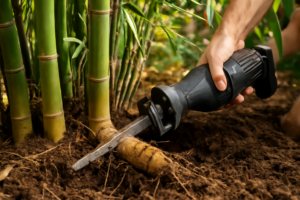
Cut all culms at ground level. This is straightforward and takes a day or two for a small to medium grove.
Weeks 1-8 (Rhizome Extraction)
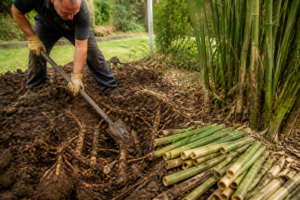
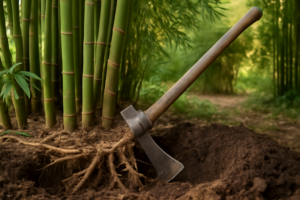
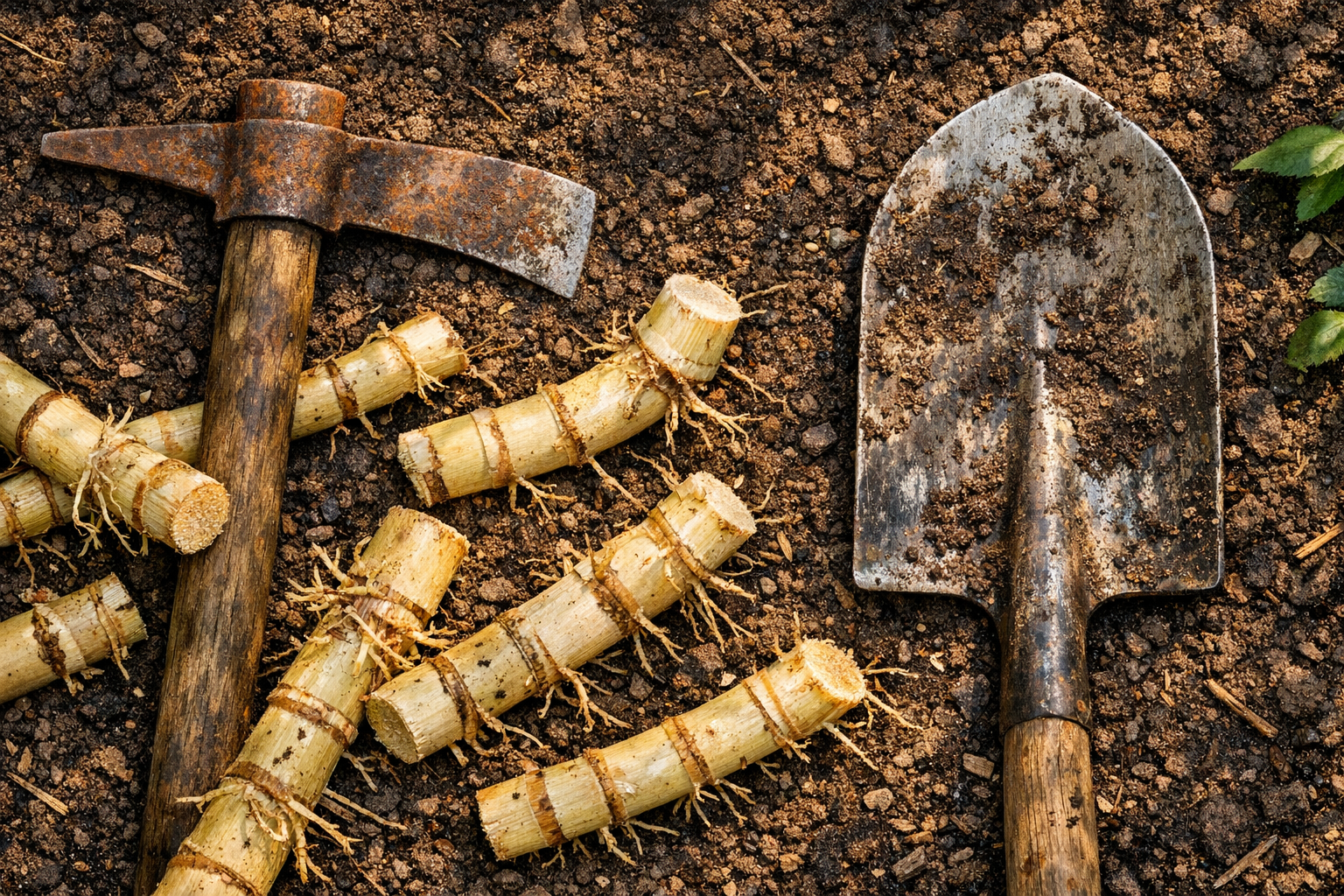
Now comes the real work. You need to dig out the rhizome network. A standard shovel won’t cut it—you need leverage. A chisel digging bar is invaluable here. Thrust it under the rhizomes at an angle to pry them up and break them apart. For every 4 feet of grove perimeter, budget 2 to 4 hours of digging with proper tools. You’re looking for that 2-inch-thick lateral rhizome network spreading outward.
The critical detail: you must remove approximately 90 percent of the visible rhizome to prevent regrowth. A 10-foot-by-10-foot grove might contain 30 to 50 pounds of rhizome material. Missing even one intact 12-inch segment can restart the whole problem.
Months 2-6 (The Verification Phase)
Even after thorough excavation, small shoots may emerge from rhizome fragments you missed or couldn’t access (under patios, in compacted soil). Remove them immediately by hand or with herbicide. If no new shoots appear after 4 months, you’ve likely succeeded. If they appear after 6 months, fragments are still viable, and you need a second excavation push or herbicide follow-up.
Excavation is the fastest route to true eradication—sometimes 3 to 6 months—but only if you’re thorough upfront.
How to Know What Stage You’re Actually In
Progress Indicators
- Week 2-6: If using herbicide or smothering, new growth should be visible but smaller each cycle. This is progress, not failure.
- Month 2-4: Growth spacing should increase (shoots appear less frequently). Shoot height should noticeably decrease.
- Month 6+: Weeks should pass between new shoots. A healthy rhizome produces shoots every 2 to 3 weeks; a depleted one, every 3 to 6 weeks or longer.
- Month 12+: Shoots should be sparse and stunted (less than 3 feet tall), weeks apart. This is the final decline phase.
False Endings
The most dangerous moment is around month 6 to 9, when growth slows dramatically and it looks “done.” Resist this conclusion. Document the number and size of shoots monthly. If you see a genuine trend of decreasing frequency and size, keep going. If new shoots suddenly appear in previously unaffected areas or start growing vigorously again, the main rhizome is still viable—usually because it wasn’t fully treated in the initial phase.
Combining Methods for Faster Results
Here’s what I learned from my 2019 failure and subsequent successes: mixing methods cuts the timeline. Start with excavation to remove 80 to 90 percent of visible rhizome, then herbicide-spray any emerging shoots for the following 6 to 9 months. This hybrid approach typically takes 9 to 12 months versus 24 months for herbicide alone.
Alternatively, smothering plus herbicide spot-spraying breakthrough shoots reduces the timeline from 24 months to 12 to 18 months, with less physical labor than excavation.
The Bottom Line: Be Realistic About Time
Bamboo removal is not a quick project. A truly dead bamboo grove—one where you can stop monitoring and know with certainty it won’t return—typically requires 12 to 24 months of consistent effort or one intensive excavation followed by 6 to 9 months of monitoring. Species matters slightly; Phyllostachys (running bamboo) is more persistent than Fargesia (clumping bamboo). Soil conditions matter; sandy, loose soil allows easier excavation and rhizome depletion. Climate matters; longer growing seasons mean longer depletion cycles.
But the single factor that determines success is consistency. Check monthly. Spray new shoots. Dig when the rhizome is exposed. Keep records. Most people don’t fail because they chose the wrong method—they fail because they stopped too early, convinced that month 6 meant permanent death. It doesn’t. Month 18 to 24, with no new growth for at least 3 to 4 consecutive months, does.
Plan for the long game, and you’ll actually win it.
About This Article

Written by Marcus Chen. Marcus Chen has spent 15 years cultivating and studying bamboo across 14 different species, combining commercial growing operations with extensive hands-on experience in species selection and containment. As both a grower and consultant, he specializes in practical bamboo management, helping homeowners and landscapers understand the real-world requirements for responsible bamboo cultivation. Marcus brings tested knowledge of which species thrive reliably and which present containment challenges that go beyond standard recommendations. More about this site.
Verify this against a primary source
Specifics change, and your situation may differ from the one described here. These are the authorities worth checking directly:
- American Bamboo Society — species listings and cultivation guidance
- USDA PLANTS Database — species range and identification
- USDA Plant Hardiness Zone Map — cold hardiness verification for your location