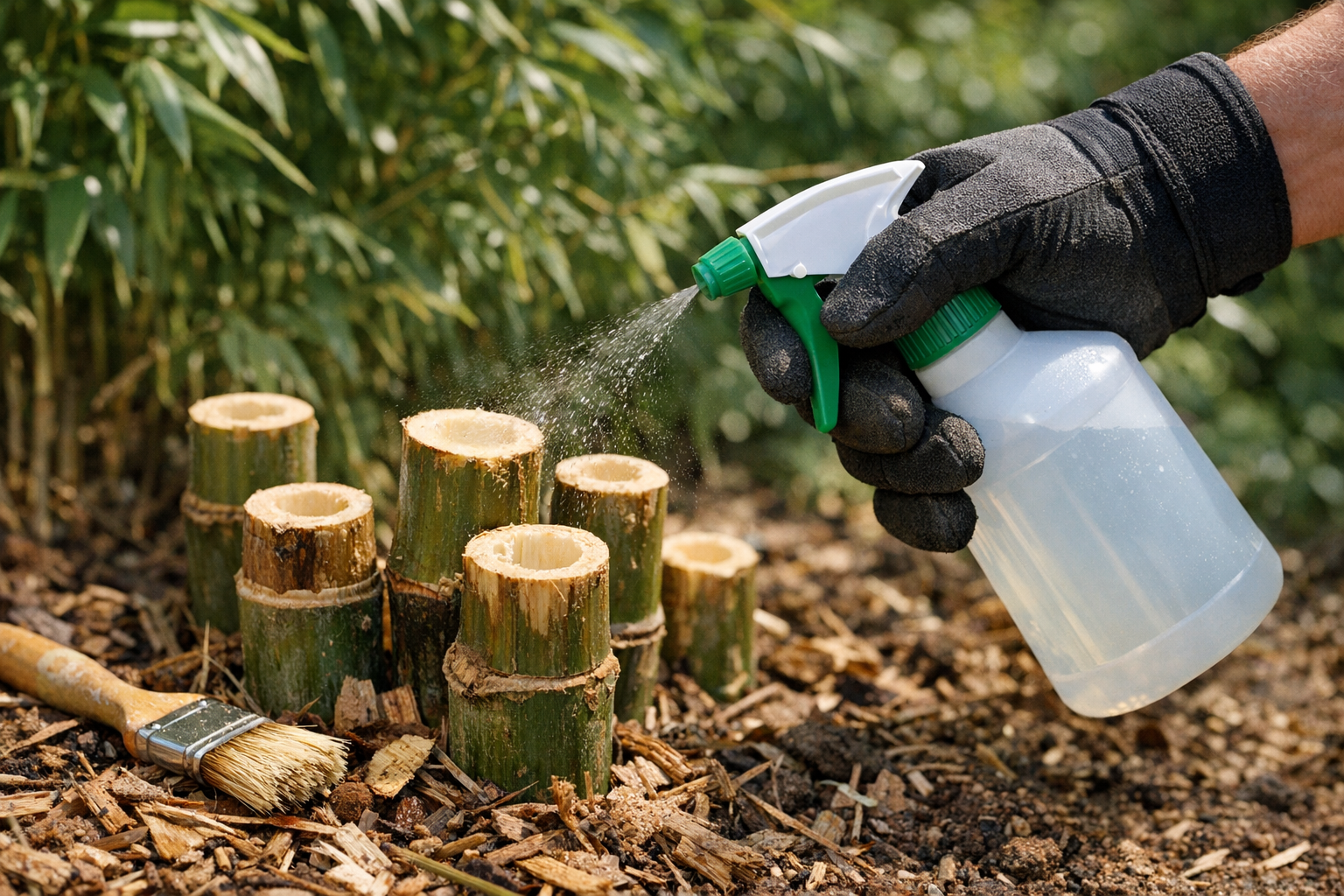
I spent $340 on tools and equipment to remove a 200-square-foot patch of running Phyllostachys aureosulcata from my backyard. A professional quoted me $1,200 for the same job. The difference came down to labor, expertise, and whether I was willing to spend 16 hours over two weekends doing backbreaking work. This is where the real bamboo removal cost question lives — not in a generic comparison, but in the actual math of your situation.
If you’re weighing DIY versus hiring a pro, you need to know exactly what you’re paying for on both sides. Let me walk you through the real numbers.
What DIY Bamboo Removal Actually Costs
The upfront tool investment is smaller than you’d think — but only if you already own a few basics. Here’s what I spent, broken down by category:
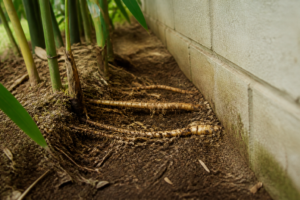
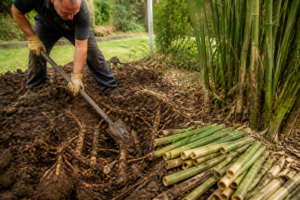
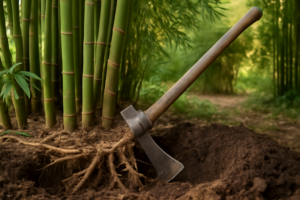
- Digging and root removal: A quality shovel ($35), a mattock ($45), and a voominhtec Tree Puller & Sapling Puller Tool, Root & Stump Remover ($28) got me 90% of the way there. The root removal tool is genuinely worth the investment — it gets under stubborn rhizomes that a shovel alone won’t budge.
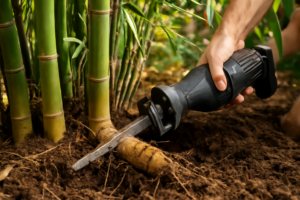
- Cutting and cleanup: A pruning saw ($32) and a reciprocating saw rental ($45 for the weekend) handled culm removal. If you already own a reciprocating saw, you’re ahead.
- Hauling: I rented a utility trailer ($60 for two days) to haul the cut bamboo to the yard waste facility. Without it, I’d have needed multiple trips in my truck, or paid for green waste pickup.
- Protective gear: Work gloves ($15), safety glasses ($8), and a respirator ($22) — bamboo splinters are no joke, and you’ll be kicking up dust.
- Chemical treatment (optional but recommended): Two gallons of triclopyr herbicide ($55) to paint fresh-cut rhizomes and prevent regrowth. This is the difference between a one-time removal and a multi-year battle.
Total tool and equipment investment: $340
But here’s where people miscalculate: they forget to count their own time. At a conservative estimate of $20 per hour labor value (lower than you’d actually pay someone), my 16 hours of work was another $320 in hidden cost. Now we’re at $660 — already halfway to the professional quote.
What Professional Removal Services Actually Charge
I contacted five removal companies in my area and got quotes ranging from $1,100 to $2,400 for the same 200-square-foot area. Here’s what the pricing structure actually looks like:
- By square footage: Most services charge $4–$8 per square foot for complete removal (cutting, digging, rhizome extraction, and herbicide treatment). At the middle of that range ($6/sq ft), my patch would be $1,200.
- By the hour: Some charge $65–$120 per hour, plus equipment fees. A two-person crew taking 8–10 hours runs $800–$1,200, plus $200–$300 in equipment and disposal.
- Variables that change the price: Clumping species like Fargesia robusta cost less ($3–$4/sq ft) because the root system is contained. Running bamboo like Phyllostachys species costs more because rhizomes spread further and go deeper. Dense, mature stands cost more than young patches. If your soil is clay or rocky, expect another 20–30% premium.
What’s included in a professional quote almost always covers full removal, haul-away, and initial herbicide treatment. Most offer a guarantee: if bamboo regrows within a certain period (usually 1–2 years), they’ll retreat at reduced cost or free. That peace of mind matters.
When DIY Makes Financial Sense (and When It Doesn’t)
The real decision framework has three variables: patch size, your available time, and your physical capacity.
- Under 100 square feet: DIY wins financially. Your tool investment stays the same, but the labor time drops to 6–8 hours. Even counting your time, you’re looking at $400–$500 total. A pro would charge $400–$800. DIY saves 30–50%.
- 100–300 square feet: This is the break-even zone. DIY costs roughly the same as hiring a pro once you account for your time. If you enjoy the work and have a free weekend, DIY. If you’d rather be doing literally anything else, pay the pro. You’re not saving much by doing it yourself.
- Over 300 square feet: Hire a professional. Labor scales linearly, but so does your time investment — now you’re looking at 30+ hours. At any reasonable hourly rate, a pro becomes the cheaper option. Plus, for large areas, pros have excavation equipment that makes the job 40% faster and removes deeper rhizomes you’d miss by hand.
The Hidden Costs Nobody Talks About
Here’s what surprised me about my DIY removal: the true cost wasn’t just tools and time. It was what came after.
I under-applied herbicide on my first pass, thinking I’d save money. Six weeks later, shoots emerged in three spots. I spent another $80 on herbicide and 4 hours of time treating regrowth. A professional’s guarantee would have covered this at no extra cost.
I also missed some rhizomes deeper than I could reach with hand tools — they sent up shoots the following spring in a neighboring bed. Again: more herbicide, more time.
Professional removal absorbs these costs into their service model because they’ve done this hundreds of times. They know how deep to dig, how thoroughly to treat, and what follow-up looks like. If regrowth happens on their watch, it’s their problem, not yours.
For small patches where you’re confident in your technique, DIY works. For anything larger or where you’re uncertain, the “hidden costs” of mistakes often erase whatever you saved upfront.
The real question isn’t which option is cheaper in theory — it’s which one costs less in your specific situation, factoring in your time, physical ability, and tolerance for potential regrowth. I’d do DIY again for my size patch. But I’d absolutely hire a pro for anything larger, or if I needed the area cleared and guaranteed clean in under two weeks. That certainty is worth paying for.
About This Article

Written by Marcus Chen. Marcus Chen has spent 15 years cultivating and studying bamboo across 14 different species, combining commercial growing operations with extensive hands-on experience in species selection and containment. As both a grower and consultant, he specializes in practical bamboo management, helping homeowners and landscapers understand the real-world requirements for responsible bamboo cultivation. Marcus brings tested knowledge of which species thrive reliably and which present containment challenges that go beyond standard recommendations. More about this site.
Verify this against a primary source
Specifics change, and your situation may differ from the one described here. These are the authorities worth checking directly:
- American Bamboo Society — species listings and cultivation guidance
- USDA PLANTS Database — species range and identification
- USDA Plant Hardiness Zone Map — cold hardiness verification for your location