I’ve installed running bamboo in three gardens and clumping bamboo in five. One choice nearly cost me a friendship. The difference between these two growth patterns isn’t just botanical—it’s about whether your bamboo stays where you plant it or becomes your neighbor’s problem in year three.
Instead of reading another generic comparison, answer these six yes-or-no questions. Five minutes from now, you’ll know exactly which type belongs in your space. No guesswork, no regret removals.
The Running vs Clumping Bamboo Checklist
Question 1: Do You Have a Defined Growing Space With Firm Boundaries?
If YES: Clumping bamboo. Varieties like Fargesia robusta or Fargesia nitida grow in tight clumps 3 to 6 feet in diameter and stay put. No rhizome runners to monitor. I planted Fargesia robusta Campbell against a patio wall six years ago—still contained in a 4-foot footprint.
If NO (open landscape, unclear property lines, or you want spread): You could still use running bamboo, but you need to be honest about containment commitment. See Question 4.
Question 2: Are You Willing to Install and Maintain a Physical Root Barrier?
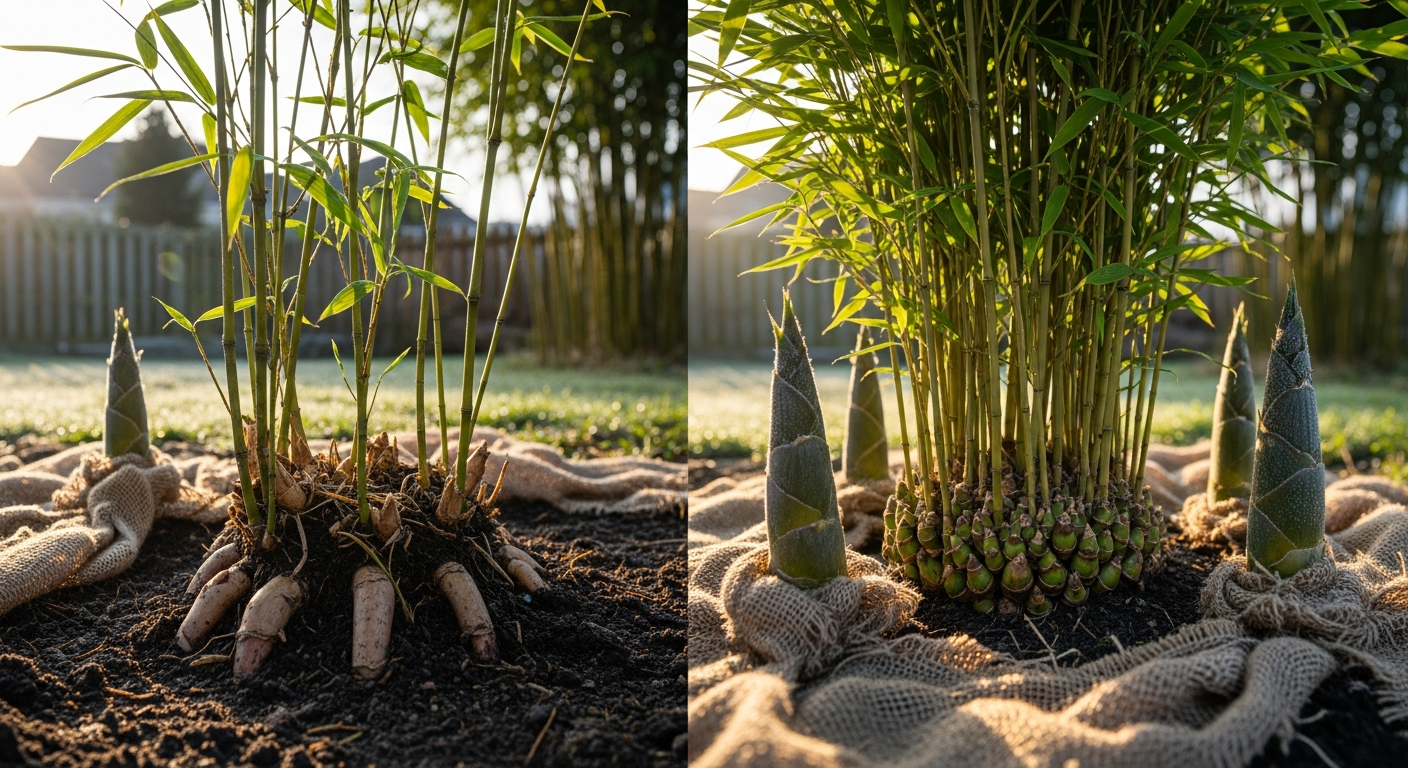
This is the hinge question. Running bamboo—species like Phyllostachys edulis or Phyllostachys aurea—spreads via rhizomes that travel 20 to 40 feet in ideal soil over 5 to 10 years if uncontained.
If YES: You can grow running bamboo if you install a root barrier at planting. I use the 40-inch HDPE root barrier (60 mil thickness) installed 24 inches deep, extending 2 inches above soil. Cost: $80–$150 per 100 linear feet. Maintenance: walk the perimeter twice yearly, check for escapes, trim any rhizomes poking above the barrier edge.
If NO: Stop here. Clumping only. Running bamboo without a barrier is not a choice—it’s a future apology letter to whoever owns the adjacent property.
Question 3: How Cold Does Your Winter Get?
Hardiness matters for species selection within each category, but it’s a tiebreaker, not a decider.
If USDA Zone 6 or colder (winter lows −10°F or below): Clumping is safer. Fargesia robusta and Fargesia nitida tolerate −20°F. Running varieties like Phyllostachys edulis can survive Zone 6, but dieback is common. You’ll be replanting culms (shoots) every few years.
If Zone 7 or warmer: Both types thrive, so this question doesn’t eliminate either option.
Question 4: Do You Need Fast, Aggressive Growth for Privacy or Erosion Control?
If YES: Running bamboo is your tool—specifically with a barrier installed. Running types produce new shoots at a faster rate and fill space more aggressively. Phyllostachys aurea can reach mature height (35–45 feet) in 3 to 5 years. Clumping varieties take 6 to 8 years to reach full canopy density. If you need a privacy screen by next summer, running bamboo is the only honest answer.
If NO (you want moderate growth, low maintenance): Clumping is cleaner. Slower spread, no barrier required, less monitoring.
Question 5: Are You Comfortable Harvesting and Managing Culms Annually?
Running bamboo produces more new shoots per year, so it needs more tending.
If YES: Running bamboo rewards active management. You can thin culms, thin new shoots, encourage architectural shape, and even harvest poles in spring. It’s a biologically active system. I spend 20 hours yearly on my running stand—pruning, thinning, staking. I find it meditative.
If NO (plant it and leave it): Clumping. It’s genuinely low-maintenance. A light thinning in late winter, and you’re done. Fargesia robusta requires maybe 5 hours of work per year.
Question 6: Do You Want Multiple Discrete Plantings or One Large, Spreading Mass?
If MULTIPLE PLANTINGS: Clumping only. Each clump stays independent. I’ve planted three separate Fargesia robusta groves in one garden, and they never interweave or compete.
If ONE CONTIGUOUS GROVE: Running bamboo (with barrier) creates that unified, rhizome-connected system faster. It reads as a single living organism rather than distinct plants.
Your Verdict in 60 Seconds
- Answered mostly YES to Questions 1, 3, and 5? Clumping bamboo is your match. Start with Fargesia robusta or Fargesia nitida.
- Answered YES to Questions 2, 4, and 6? Running bamboo with a barrier is justified. Install that root barrier first, then plant Phyllostachys aurea or Phyllostachys edulis.
- Mixed answers? Reread Questions 2 and 4. If you won’t install a barrier and don’t need aggressive spread, clumping wins. If you need fast coverage and will commit to a barrier, running wins.
The One Thing I’d Change If I Could Rewind
I planted running bamboo in a rental garden without a barrier in 2015. By 2019, rhizomes had crossed the property line. The neighbor’s foundation eventually became surrounded by shoots. I paid $3,200 to remove it and rebuild trust. The barrier would have cost $120 and four hours of labor upfront.
There’s no “default” choice between these two. The right answer depends entirely on your boundary discipline and timeline expectations. Answer those six questions honestly, and you’ll plant once and live with zero regret.
About This Article

Written by Marcus Chen. Marcus Chen has spent 15 years cultivating and studying bamboo across 14 different species, combining commercial growing operations with extensive hands-on experience in species selection and containment. As both a grower and consultant, he specializes in practical bamboo management, helping homeowners and landscapers understand the real-world requirements for responsible bamboo cultivation. Marcus brings tested knowledge of which species thrive reliably and which present containment challenges that go beyond standard recommendations. More about this site.
Verify this against a primary source
Specifics change, and your situation may differ from the one described here. These are the authorities worth checking directly:
- American Bamboo Society — species listings and cultivation guidance
- USDA PLANTS Database — species range and identification
- USDA Plant Hardiness Zone Map — cold hardiness verification for your location