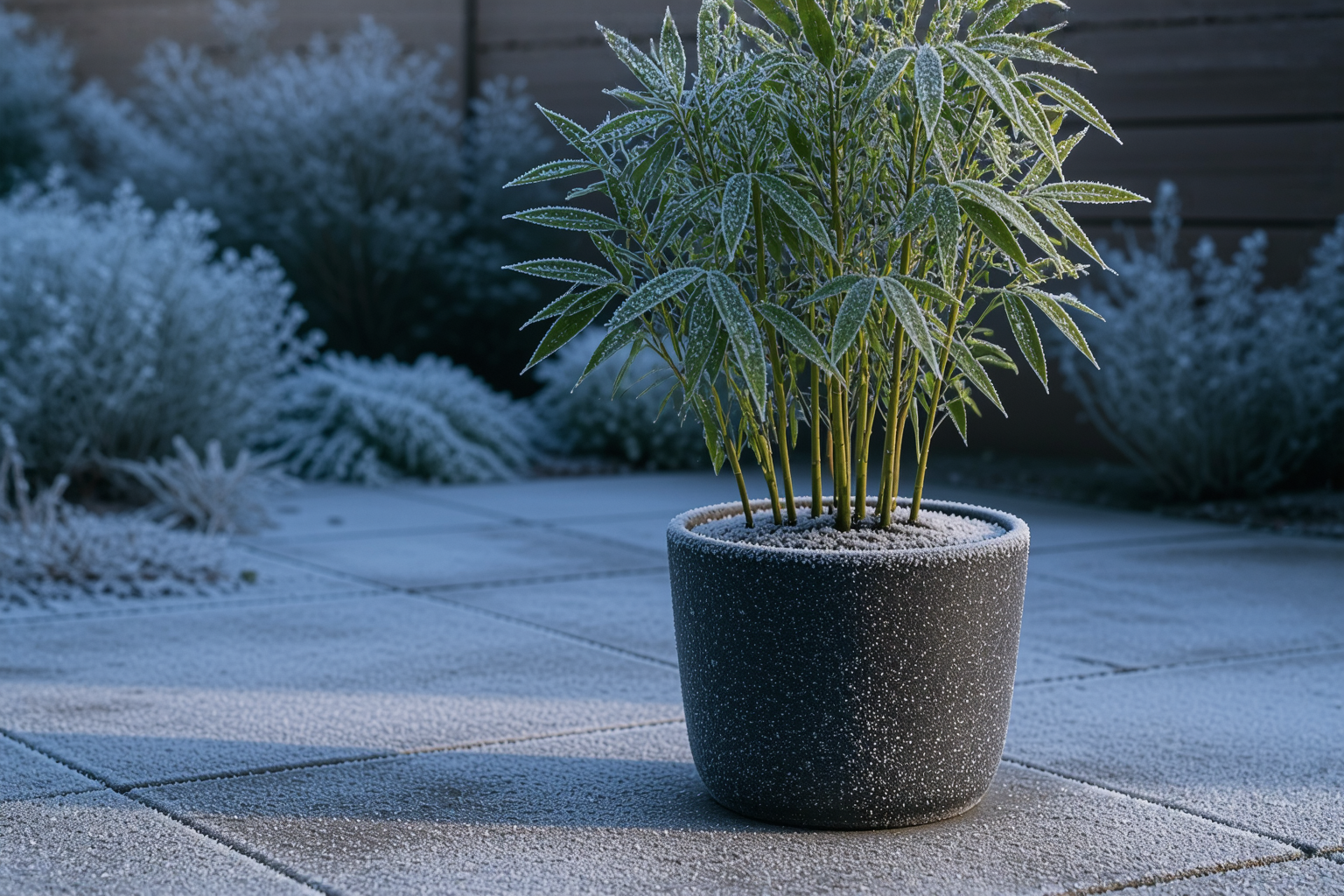
Losing a beautiful three-year-old container bamboo to a single hard freeze taught me that potted bamboo plays by completely different rules than bamboo planted in the ground. Roots in a pot have almost no thermal mass protecting them, so a cold snap that a grove in open soil shrugs off can freeze a container solid and kill the rhizomes outright — which means overwintering potted bamboo is really about insulating the root zone, not just protecting the foliage. That expensive Phyllostachys edulis ‘Timber’ specimen I’d nursed along? Dead by February. The lesson was hard but invaluable, and it’s what I want to share with you now, along with the strategies that actually work.
Why Potted Bamboo Freezes Differently Than In-Ground Plants
The difference comes down to physics. When bamboo grows directly in native soil, the earth acts as a giant heat sink. Even in cold climates, soil below the frost line stays above freezing because it’s insulated by the soil mass above it — sometimes remaining 35–45°F even when air temperatures drop to single digits. Bamboo rhizomes, which prefer to stay in the 40–50°F range during dormancy, can survive this.
A container? Not a chance. A 15-gallon pot of soil in a Minnesota winter exposed to the wind will freeze solid from the outside in. The roots lose their protective buffer, and if temperatures drop far enough, the ice crystals that form will rupture cell walls and kill the rhizomes. I’ve learned that even cold-hardy species like Phyllostachys bissetii, which tolerate Zone 5 winters in the ground, struggle in containers in anything colder than Zone 7 without serious winter protection.
The goal of overwintering potted bamboo is simple: keep the root zone from freezing solid. That’s it. You’re not trying to keep the plant warm — you’re trying to keep it from experiencing the extreme, prolonged cold that would kill it.
Start With the Right Container and Drainage Setup
Before winter arrives, make sure your bamboo is in a container that’s actually suitable for overwintering. This is the foundation everything else builds on.
First, size matters. I use a minimum 15-gallon container for any bamboo I plan to keep long-term; smaller pots — especially anything under 10 gallons — have too little soil mass to insulate roots effectively. The wider the container’s footprint, the better, because soil conducts heat differently along the vertical and horizontal axes.
Second, drainage holes are non-negotiable. I learned this the hard way too. Waterlogged soil freezes faster and stays frozen longer than well-draining soil. Make sure your pot has drainage holes on the bottom, and use a quality potting mix — not garden soil — that’s formulated to drain freely. I mix standard bamboo potting soil with extra perlite (about 20% by volume) to improve drainage and air space in the root zone.
Container material also plays a subtle but real role. Terracotta is attractive but terrible for overwintering; it conducts cold efficiently right into the root zone. Plastic or fabric pots are far better insulators. I prefer sturdy plastic nursery pots or breathable fabric containers, which maintain soil temperature better than ceramic.
Build an Insulation Strategy Four to Six Weeks Before Your First Hard Frost
The time to start overwintering potted bamboo is not when temperatures drop — it’s when you see the forecast calling for the first frost. For most gardeners, that’s 4–6 weeks before your region’s typical first hard freeze date. This gives you time to gradually acclimate the plant and set up protection without shocking it.
Here’s my step-by-step approach:
- Move the pot to its winter location. Choose a spot against a south-facing or east-facing wall of your house if possible. This passive solar heat source can raise nighttime temperatures by 5–10°F compared to an exposed location. Avoid low spots where cold air pools, and keep pots off bare concrete or flagstone — place them on a wooden deck or raised platform so air can circulate underneath.
- Water deeply, then reduce watering frequency. Give the container a thorough soaking, but then scale back dramatically. Dormant bamboo needs far less water — only enough to keep the soil from drying out completely. Overwatered soil becomes waterlogged, which insulates poorly and can cause root rot. I water container bamboo once every 2–3 weeks in winter, checking soil moisture by sticking my finger 2 inches down.
- Stop fertilizing immediately. Any feeding now will stimulate soft, tender new growth that won’t harden off in time and will be killed by frost. Bamboo goes dormant in winter — respect that.
Physical Insulation Methods That Actually Work
Once you’ve set the pot in position, insulate the root zone. I use a combination approach:
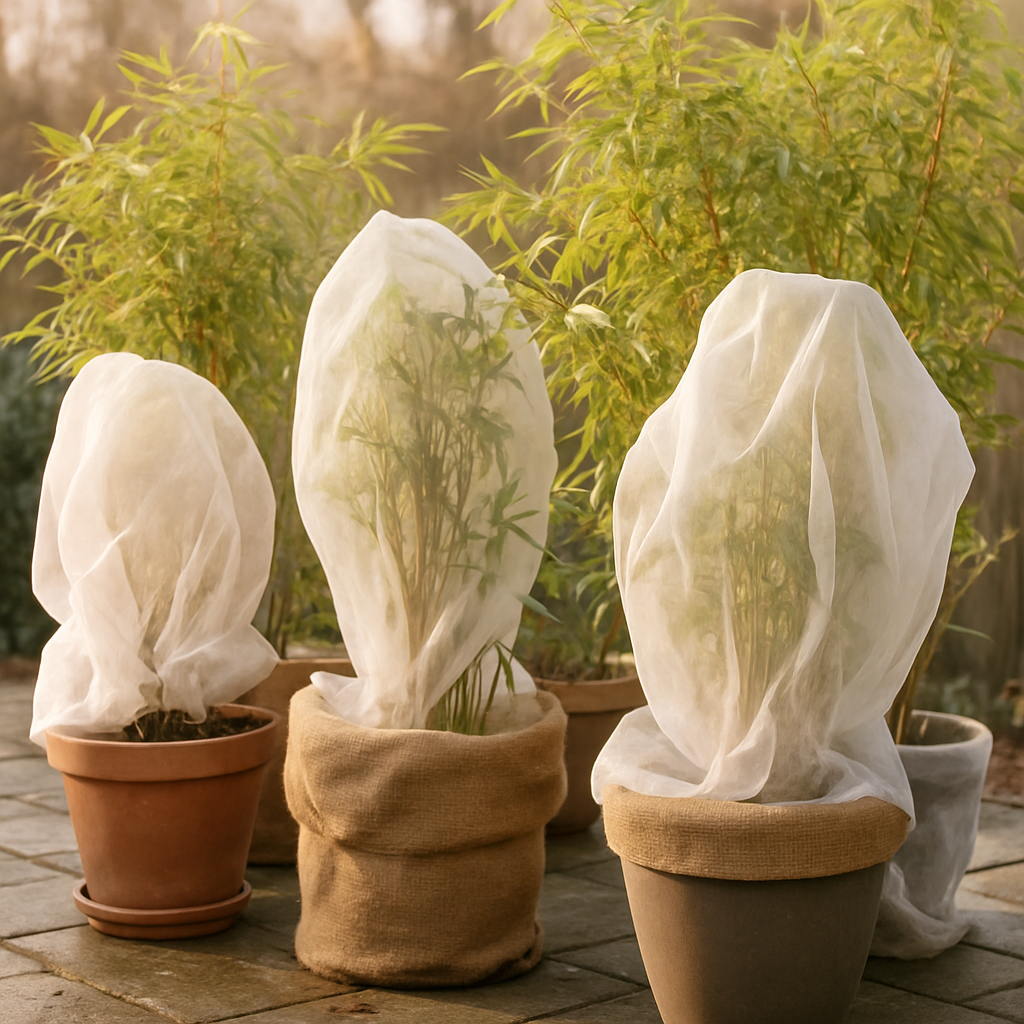
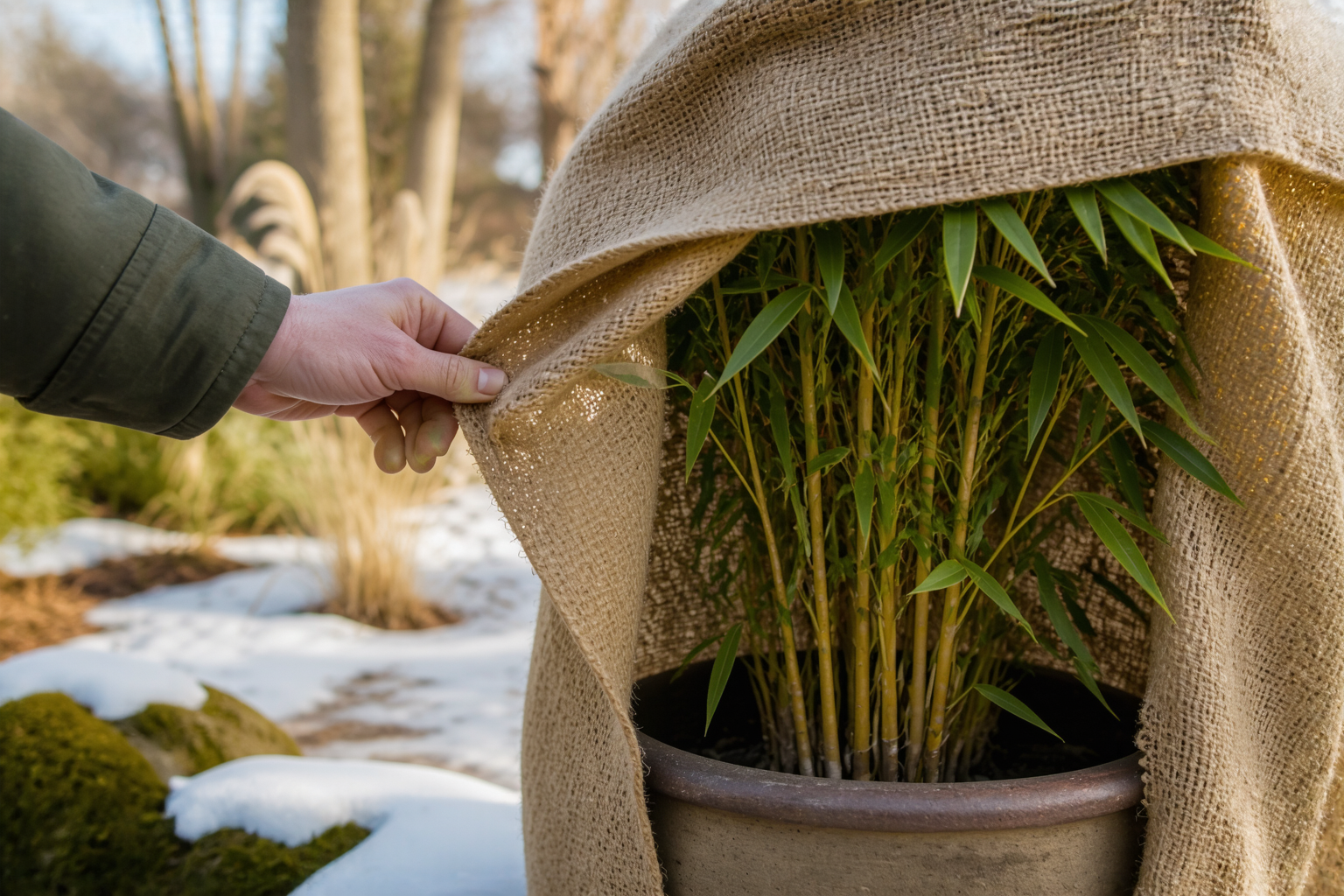
- Wrap the pot itself. I use burlap, leaves, or straw to create a 4–6 inch blanket around the exterior of the pot. This doesn’t have to be beautiful — function is everything. Wrap snugly but not so tight that water can’t drain. Secure with twine or landscape staples.
- Mulch the soil surface heavily. Add 4–6 inches of wood chips, bark mulch, or shredded leaves directly on top of the pot’s soil. This insulates the root zone from above and moderates temperature swings. Some gardeners use straw or hay, but I’ve found wood chips stay in place better in wind.
- Group pots together. If you have multiple potted bamboos, cluster them. They’ll insulate each other. A single isolated pot gets hit harder by wind and temperature extremes than a group.
- For extreme climates, add a cold frame or mini-hoop. If you’re in Zone 5 or colder and growing tender species like Phyllostachys aurea, consider a simple wooden or PVC cold frame over the pot, or a row cover held up with wire hoops. This creates an air pocket that can mean the difference between survival and loss. I’ve used 4-mil plastic sheeting held down with landscape weights.
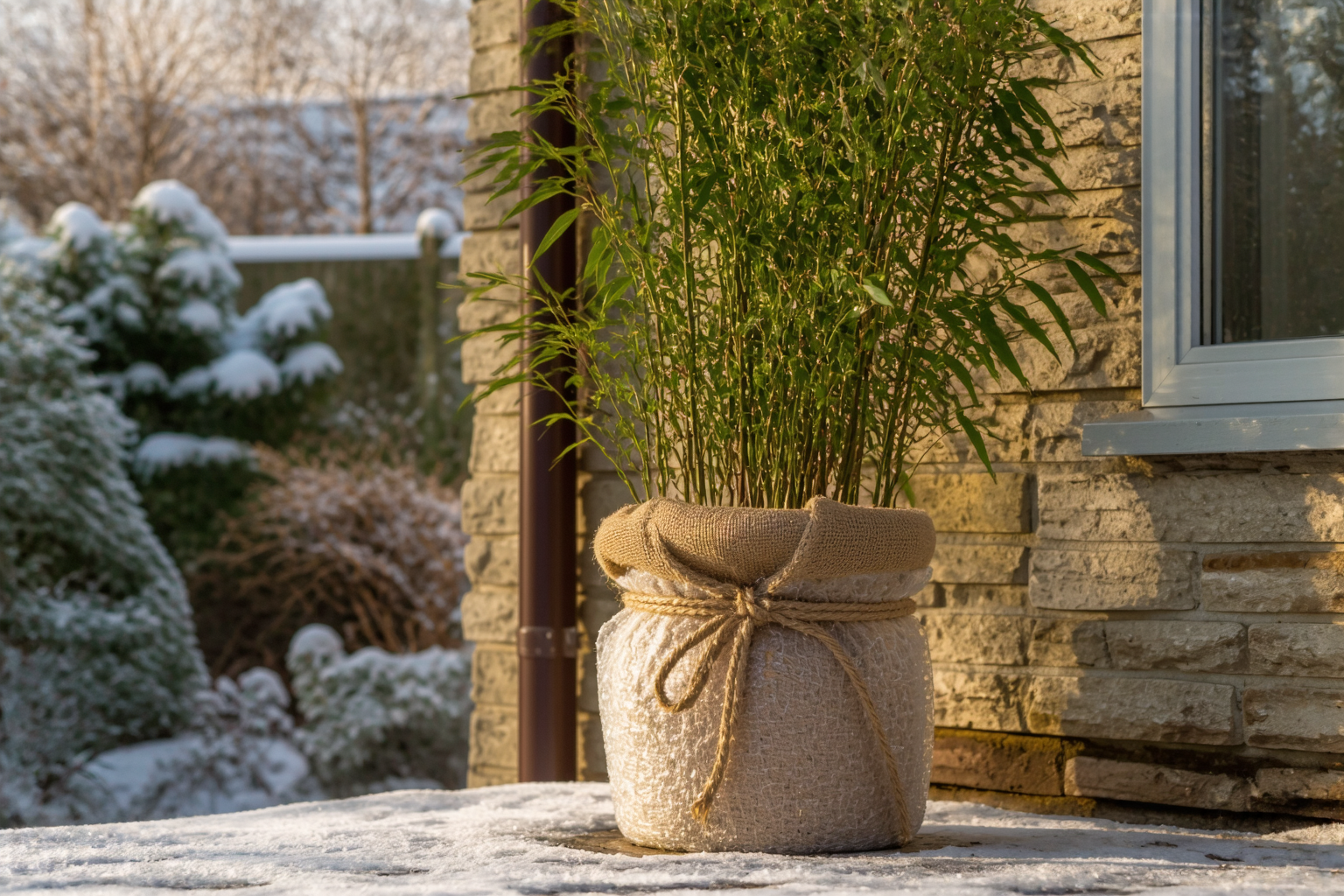
The key is that all these layers work together. You’re not trying to keep the pot warm — you’re creating dead air space and thermal mass that slows heat loss from the root zone.
Monitor Through Winter and Know When to Unwrap
Once your insulation is in place, check on your overwintering potted bamboo every couple of weeks. Gently press the mulch aside and feel the soil — it should feel cool but not rock-hard frozen. If it’s frozen solid all the way through, you may need additional insulation. If it’s staying too warm or starting to decompose, you may have trapped too much moisture.
In most climates, I leave protection in place until 2–3 weeks after your region’s last frost date. This is usually later than you’d think — most areas have a real risk of frost until mid-May. I’ve made the mistake of unwrapping too early and watched new shoots get nailed by a late frost, so I’m conservative about this now.
As temperatures consistently warm — I wait for 10 consecutive days in the 50s at night — gradually remove mulch and burlap. Don’t strip it all at once; bamboo that’s been dormant suddenly exposed to sun and wind can get stressed. Remove insulation in stages over a week or two.
Resume normal watering only after you see new shoots emerging and the soil has warmed to at least 50°F. Feeding can wait until growth is clearly active, usually 4–6 weeks after your last frost date.
Species Matter — Know What You’re Growing
Not all bamboo needs the same level of winter protection. Cold-hardy running bamboos like Phyllostachys bissetii and Phyllostachys nuda can tolerate Zone 5 in the ground and will survive Zone 6 winters in containers with moderate insulation. Clumping tropicals like Bambusa oldhamii and Dendrocalamus latiflorus need tropical or frost-free conditions — if you’re not in Zone 9+, container culture is temporary, and you’ll need to bring them indoors or treat them as annuals.
Know your species before investing three years in a container specimen. If you’re in a cold climate and want reliable overwintering success, stick with hardy Phyllostachys species and be patient with insulation. If you love tropical clumpers, commit to bringing them inside or accept that they’re seasonal.
Your Winter-Ready Bamboo Awaits
Overwintering potted bamboo isn’t mysterious or difficult — it just requires understanding that container plants live in a different thermal world than in-ground groves. By choosing the right container, positioning it wisely, and insulating the root zone effectively, you can keep container bamboo alive through winters that would kill unprotected pots in days.
Start now, before frost arrives. Move your pots to a protected location, wrap them, mulch them, and check on them through winter. By spring, you’ll have healthy rhizomes ready to push new shoots, and you’ll have learned exactly what works in your garden. That’s worth far more than any three-year-old specimen that didn’t make it through.
Your next step: Check your local frost date, count back six weeks, and mark that date on your calendar. That’s when overwintering season begins in your garden.
About This Article

Written by Marcus Chen. Marcus Chen has spent 15 years cultivating and studying bamboo across 14 different species, combining commercial growing operations with extensive hands-on experience in species selection and containment. As both a grower and consultant, he specializes in practical bamboo management, helping homeowners and landscapers understand the real-world requirements for responsible bamboo cultivation. Marcus brings tested knowledge of which species thrive reliably and which present containment challenges that go beyond standard recommendations. More about this site.
Verify this against a primary source
Specifics change, and your situation may differ from the one described here. These are the authorities worth checking directly:
- American Bamboo Society — species listings and cultivation guidance
- USDA PLANTS Database — species range and identification
- USDA Plant Hardiness Zone Map — cold hardiness verification for your location