Tag: process

  • How Bamboo Charcoal is Made: From Raw Material to Finished Product

    How Bamboo Charcoal is Made: From Raw Material to Finished Product

    Understanding Bamboo Charcoal Production

    Bamboo charcoal represents a sustainable alternative to traditional wood charcoal. The production process transforms raw bamboo into a valuable material with numerous applications. This ancient technique has evolved significantly over centuries, incorporating modern technology while maintaining core principles.

    When preparing bamboo for charcoal production, having the right tools and materials makes all the difference in achieving professional results throughout the entire process. If you’re working with bamboo in any capacity, a bamboo splitter becomes essential for dividing stalks evenly into workable pieces that will carbonize uniformly during the heating process. Before beginning production, it’s crucial to assess moisture levels in your raw materials using a moisture meter to ensure bamboo is properly dried and ready for the kiln. For those who want to experiment with traditional cooking methods using bamboo charcoal, a pack of bamboo charcoal provides chemical-free fuel that burns cleanly for extended periods. Similarly, Thai-style charcoal offers authentic results for traditional grilling and cooking applications that require consistent, long-lasting heat. Once you’ve produced or acquired bamboo charcoal, storing it properly becomes important, and a collapsible drying rack provides excellent ventilation for cooling and organizing finished pieces in your workspace. Beyond fuel applications, bamboo charcoal’s odor-absorbing properties make it perfect for creating charcoal deodorizer bags that naturally purify air in closets, cars, and other enclosed spaces. Artists and craftspeople also appreciate bamboo charcoal’s versatility, which is why a compressed charcoal drawing set includes various hardness levels perfect for sketching and shading artistic projects. When working with bamboo in woodworking applications, a precision Japanese pull saw delivers clean cuts that preserve the integrity of the bamboo fibers throughout your project. Finally, if you’re using bamboo charcoal for grilling or smoking foods, a wireless meat thermometer ensures perfect cooking temperatures while taking advantage of the clean, consistent heat that bamboo charcoal provides.

    The journey from bamboo forest to finished charcoal involves multiple stages. Each step requires careful attention to temperature, timing, and environmental conditions. Manufacturers must balance traditional methods with contemporary efficiency standards.
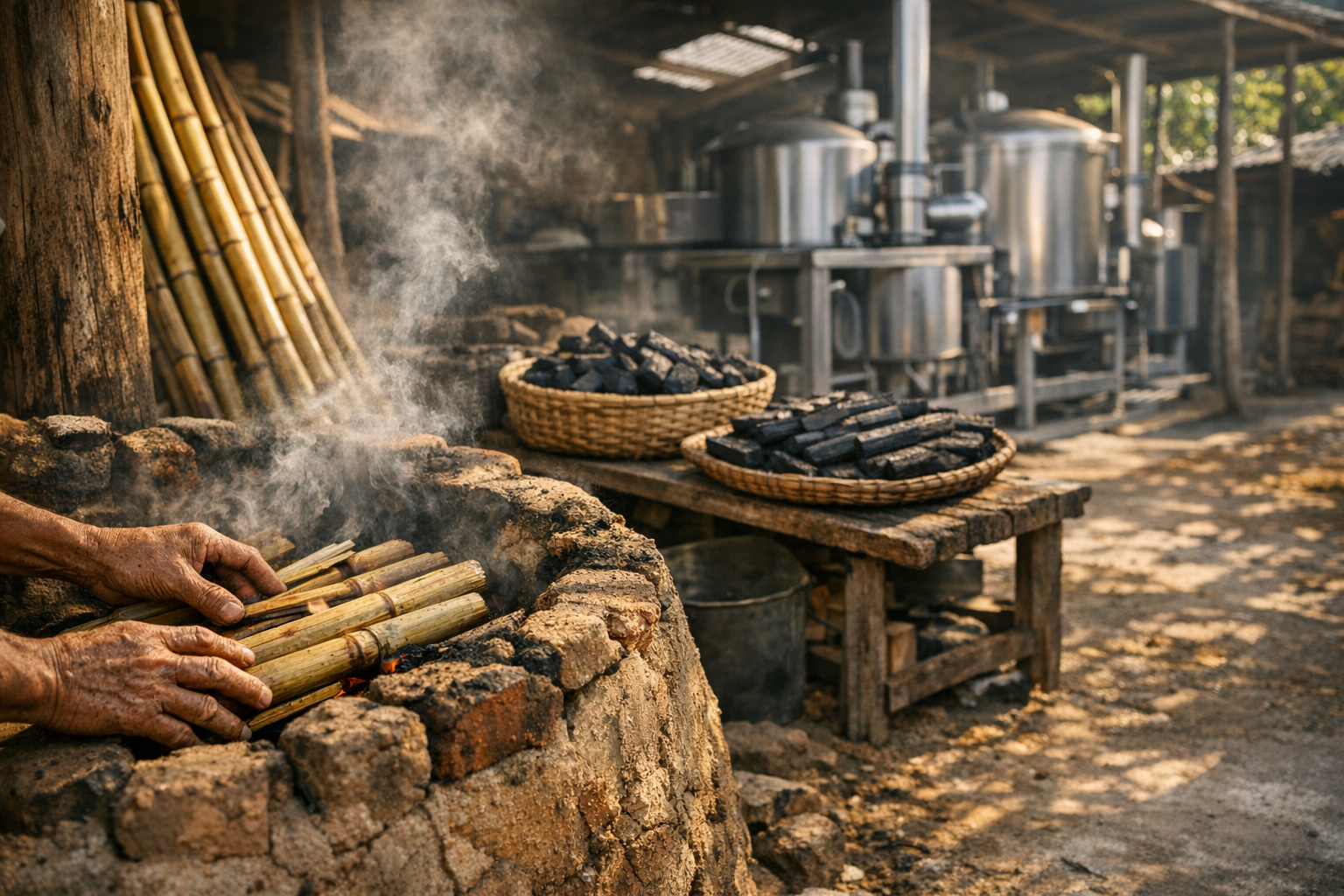
    A split-scene photograph showing traditional bamboo charcoal production alongside modern manufacturing, captured in warm natural daylight streaming through an open-air workshop. In the foreground, weathered hands of an artisan arrange split bamboo stalks in a traditional earthen kiln built from clay bricks, smoke gently rising from vents. The middle ground shows the contrast with a contemporary metal kiln system with clean geometric lines and polished surfaces. Raw golden bamboo poles lean against rustic wooden posts on one side, while finished jet-black charcoal pieces are displayed in woven baskets on aged wooden tables. Dappled sunlight filters through a partially covered workspace, creating dramatic shadows across the dirt floor mixed with concrete sections. The composition captures the intersection of old and new methods, with natural textures of bamboo, clay, metal, and wood throughout the frame. Shallow depth of field emphasizes the craftsperson's hands in the foreground while the modern equipment softly blurs in the background, shot with the authentic imperfection and warm tones characteristic of documentary-style Instagram photography.

    Selecting and Preparing Raw Bamboo

    The quality of finished charcoal depends heavily on raw material selection. Source Manufacturers typically choose bamboo that has reached four to five years of maturity. Younger bamboo contains excessive moisture, while older specimens may have begun deteriorating.

    Harvesting occurs during specific seasons to ensure optimal moisture content. Winter harvesting generally produces superior results because bamboo stores less water during dormant periods. Workers cut stalks close to ground level, leaving root systems intact for regeneration.

    After harvesting, workers remove branches and leaves from the main stalks. They cut bamboo into uniform lengths, typically ranging from one to two meters. This standardization ensures consistent burning and facilitates efficient kiln loading.

    Initial Drying Phase

    Freshly cut bamboo contains 40-50% moisture content. Manufacturers reduce this through natural air drying over several weeks. They stack bamboo pieces in well-ventilated areas, allowing air circulation between stalks. Proper spacing prevents mold growth while promoting even moisture reduction.

    Some operations use mechanical dryers to accelerate this process. However, traditional air drying remains popular because it requires no energy input. The drying period typically extends from two to four weeks, depending on climate conditions.
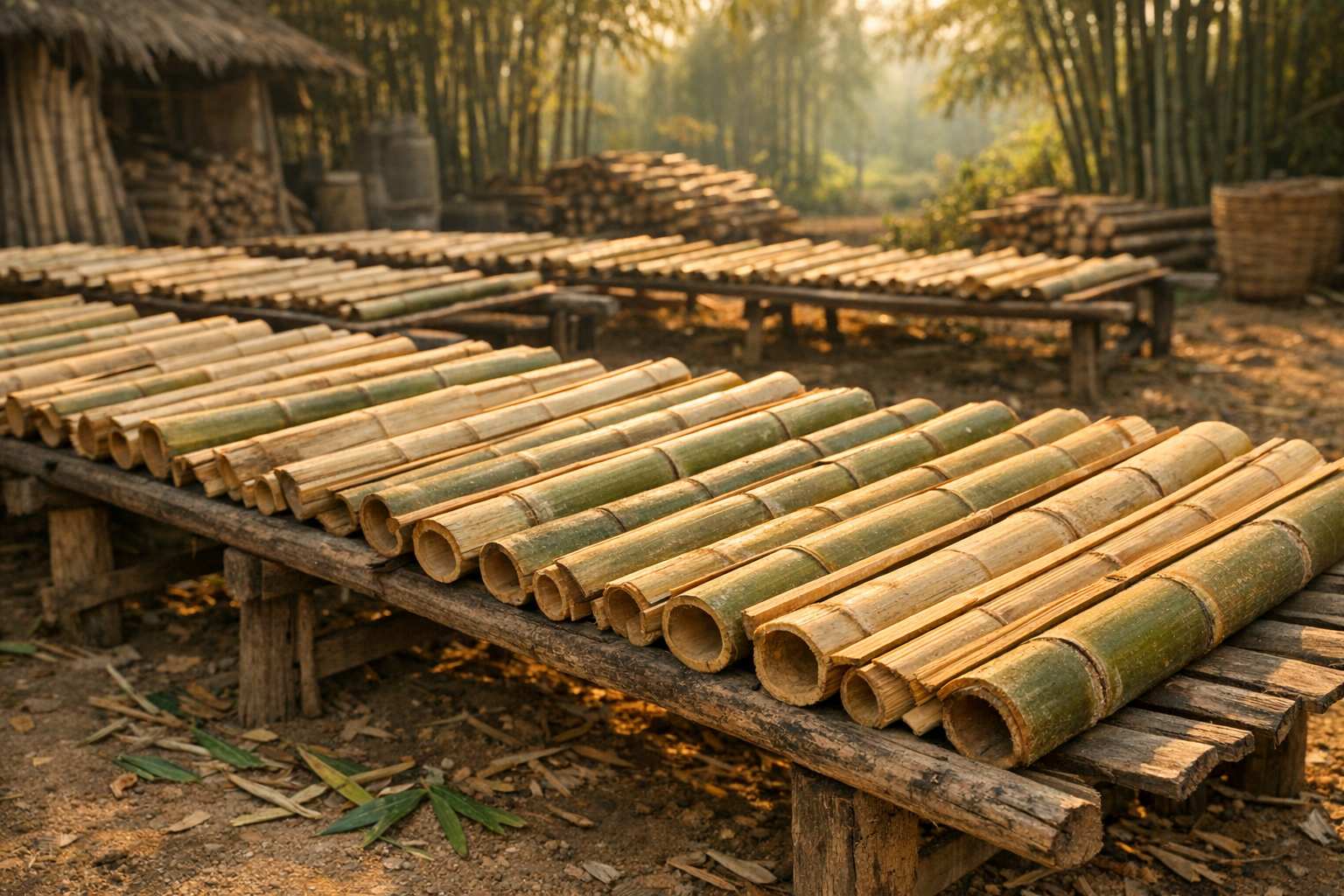
    A rustic outdoor scene showing freshly cut bamboo stalks laid out in neat rows on elevated wooden drying racks under bright natural sunlight, with dappled shadows cast across the pale yellow-green bamboo pieces. The setting appears to be in a rural Asian countryside with a traditional bamboo processing area, where split bamboo segments of various sizes are arranged systematically to air dry. Morning golden hour light filters through surrounding bamboo groves in the soft-focused background, creating an authentic documentary-style composition. The foreground shows the texture and natural grain of the raw bamboo clearly visible, with some pieces appearing fresher and greener while others show signs of drying with slightly darker, more golden tones. A few bamboo leaves scattered naturally on the ground add organic detail to this candid, unposed agricultural scene captured in warm, natural lighting typical of lifestyle photography.

    The Carbonization Process

    Carbonization transforms bamboo into charcoal through controlled heating in oxygen-limited environments. This process, called pyrolysis, breaks down organic compounds while preserving carbon structure. Temperature management proves critical throughout carbonization.

    Kiln Loading and Preparation

    The Art of Bamboo Arrangement

    The process begins with precise stacking techniques. Workers typically bundle the bamboo culms together. Vertical stacking is the most common method used. For instance, standing the bamboo upright allows smoke to rise naturally. This orientation mimics the bamboo’s natural growth pattern. Consequently, the heat travels upward through the hollow centers.

    If workers arrange the pieces haphazardly, uneven burning occurs. Therefore, experienced artisans inspect every bundle. They remove bent or irregular pieces immediately. This strict quality control prevents wasted space. Furthermore, a uniform arrangement creates a stable structure inside the kiln. Stability prevents the stack from collapsing during the intense carbonization phase.

    Sealing Methods: Ancient and Modern

    Once the kiln is full, the sealing phase commences. This step is absolutely critical for carbonization. Oxygen is the enemy of charcoal production. If air enters the kiln, the bamboo burns away completely. As a result, the valuable carbon turns into white ash.

    Traditional Earth Kilns:

    • Artisans mix a specific blend of red clay and water.
    • They plaster this mud over the brick entrance.
    • However, this requires constant monitoring for cracks.
    • Ideally, the clay allows the kiln to “breathe” slightly.

    Modern Mechanical Kilns:

    • Industrial sites rely on heavy steel doors.
    • Additionally, high-temperature gaskets create a vacuum seal.
    • Mechanized clamps lock the door firmly in place.
    • This method eliminates the risk of human error.

    Optimizing Heat Distribution

    Proper loading dictates the internal airflow. The goal is consistent heat circulation. Heat must reach the core of the stack effectively. If the bamboo is packed too tightly, the center remains raw. Conversely, loose packing wastes valuable thermal energy.

    Workers aim for a specific density. This balance allows hot gases to permeate the entire chamber. Moreover, it ensures that every piece carbonizes at the same rate. Uniform temperature creates high-quality charcoal. Finally, correct spacing reduces the overall production time significantly.

    The arrangement pattern affects final product quality significantly. Vertical stacking allows better heat penetration compared to horizontal arrangements. Additionally, maintaining small gaps between pieces promotes uniform carbonization throughout the load.

    Temperature Stages

    The carbonization process unfolds through distinct temperature phases. Initially, operators raise kiln temperatures gradually to 150-200°C. During this warming stage, remaining moisture evaporates from bamboo fibers. Steam and light smoke emerge from ventilation openings.

    As temperatures climb to 200-300°C, thermal decomposition begins. Bamboo releases volatile compounds including gases, liquids, and tars. The smoke becomes dense and carries a distinctive acidic odor. This stage requires careful monitoring because excessive heat can damage the developing charcoal structure.

    The primary carbonization phase occurs between 300-500°C. Consequently, bamboo undergoes rapid chemical transformation during this critical period. Cellulose and lignin break down, leaving primarily carbon behind. Operators maintain these temperatures for several hours to ensure complete carbonization.
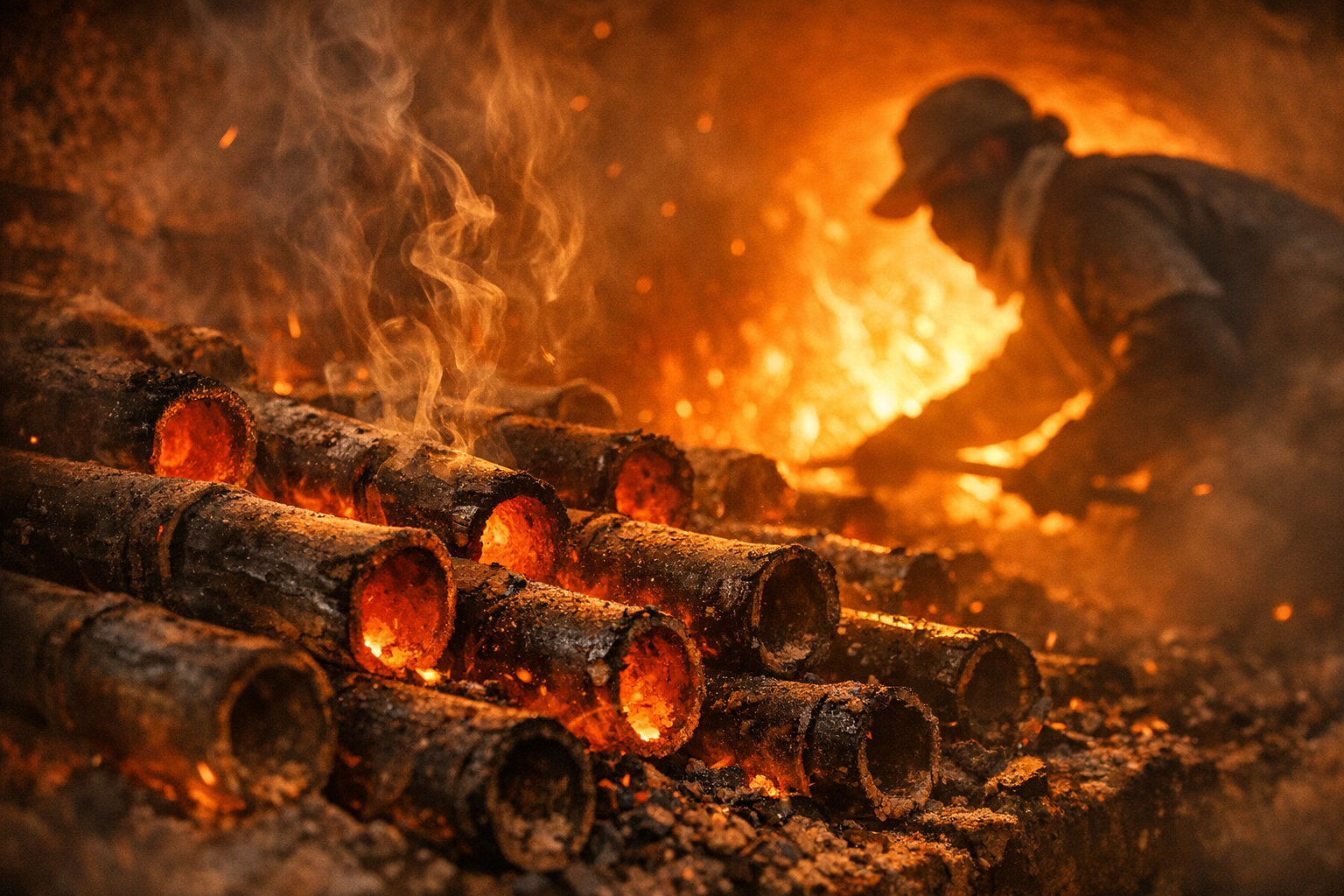
    A dramatic close-up shot of glowing orange and red hot bamboo pieces inside a traditional kiln, with intense flames and embers visible in the background. The scene captures the carbonization process with natural firelight illuminating thick bamboo stalks arranged in layers, their surfaces beginning to char and turn black while inner sections still radiate with heat. Wisps of smoke curl upward through the frame, creating an atmospheric haze. In the slightly blurred background, a worker in protective gear tends to the kiln opening, their silhouette backlit by the intense glow. The composition emphasizes the raw, industrial beauty of the process with warm amber and deep orange tones dominating the frame, shot in a candid documentary style with shallow depth of field that draws focus to the transforming bamboo in the foreground.

    Collecting Valuable Byproducts

    The carbonization process generates more than just charcoal. Smoke contains numerous compounds that manufacturers can capture and refine. These secondary products often add significant value to overall operations.

    Bamboo Vinegar Collection Systems

    Bamboo vinegar, also called pyroligneous acid, represents the most valuable byproduct. This amber liquid forms when smoke condenses during specific temperature ranges. Manufacturers install condensation equipment to capture these vapors systematically.

    The collection system typically includes pipes leading from kiln vents to cooling chambers. As hot smoke travels through these pipes, it gradually cools. Water-soluble compounds condense into liquid form while gases continue flowing.

    The Critical Temperature Window

    Harvesting bamboo vinegar is a delicate art. It relies heavily on precise temperature management. Timing is everything in this chemical process. Specifically, the chimney smoke offers vital clues regarding quality. Operators must watch these thermal indicators constantly. Therefore, manual monitoring or automated sensors are essential. If the timing is off, the yield suffers significantly.

    Avoiding Early Contamination

    Initially, the kiln warms up slowly. During this early phase, smoke temperatures stay below 80°C. However, collecting condensation now produces poor results. The liquid is primarily water mixed with heavy solids. Additionally, it contains dangerous impurities like methanol. These substances are harmful and undesirable. Consequently, this early runoff is usually discarded. It is simply too toxic for commercial use.

    Capturing the “Liquid Gold”

    The ideal collection window opens strictly between 80°C and 150°C. At this stage, the smoke color often shifts. It typically changes from thick white to a pale blue. This visual cue signals the presence of beneficial compounds. For example, acetic acid condenses perfectly within this range.

    Operators take the following steps during this phase:

    1. Monitor gauges: They track the rapid rise in heat.
    2. Divert flow: Smoke is routed into long cooling pipes.
    3. Collect liquid: The vapor turns into raw bamboo vinegar.

    The Risks of Overheating

    Vigilance is required as the kiln heat increases. Eventually, the smoke temperature will surpass 150°C. At this point, the chemical composition alters drastically. Valuable compounds unfortunately remain in a gaseous state. Furthermore, thick wood tar begins to accumulate rapidly. This tar is sticky and difficult to separate later. As a result, the collection equipment must be detached immediately. Stopping on time preserves the purity of the batch. Source

    Condensation Equipment Design

    Effective condensation systems require multiple components working together. Primary condensers use water jackets or air cooling to reduce smoke temperature rapidly. Secondary condensers capture remaining vapors that escape initial cooling.

    Many operations use stainless steel pipes and collection vessels. This material resists corrosion from acidic compounds while maintaining hygiene standards. Furthermore, stainless steel facilitates easier cleaning between production batches.

    Collection vessels must include separation chambers. Bamboo vinegar naturally separates into distinct layers based on density. The middle layer contains the highest concentration of useful compounds. Top and bottom layers require additional processing or disposal.
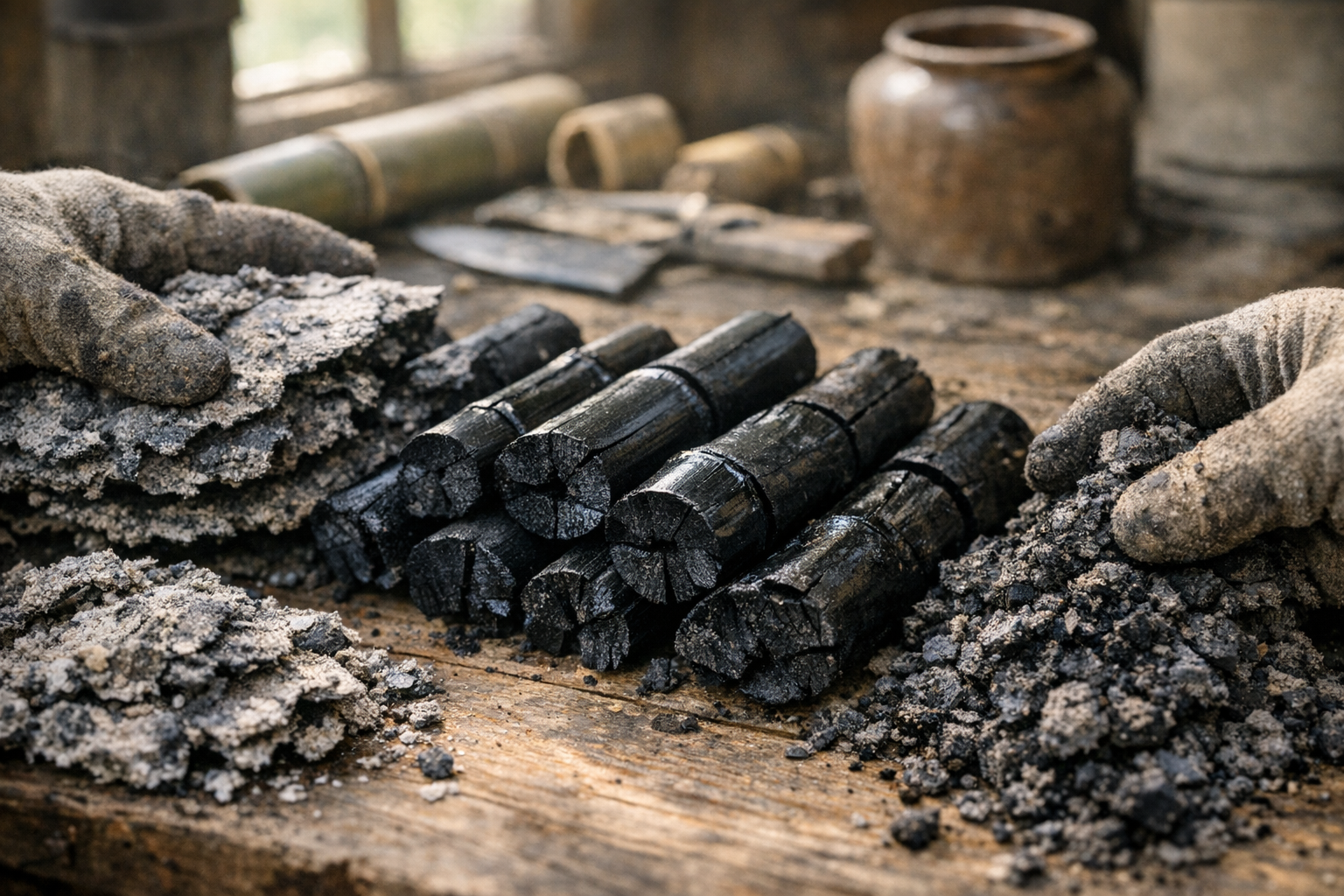
    A close-up documentary-style photograph showing hands in work gloves carefully separating layers of bamboo charcoal after the carbonization process, with the top crusty ash-covered layer and bottom sediment layer being set aside on a rustic wooden work table, while the pristine middle sections of glossy black charcoal pieces remain in focus in the center, natural daylight streaming through a workshop window illuminating the textured surfaces and creating subtle highlights on the charcoal's porous structure, with bamboo processing tools and ceramic containers visible in the soft-focused background, shot with shallow depth of field in the authentic style of artisanal craft documentation photography

    Refining Collected Vinegar

    Raw bamboo vinegar requires refinement before commercial use. Initial settling removes heavy tars and particulates. Manufacturers then filter the liquid through activated carbon or ceramic filters. This process removes remaining impurities while clarifying the solution.

    Aging improves bamboo vinegar quality significantly. Storage in sealed containers for six months allows harsh compounds to break down. The liquid becomes milder and develops more complex aromatic profiles. Subsequently, manufacturers test pH levels and organic acid concentrations before packaging.

    Diverse Applications of Refined Bamboo Vinegar

    Refined bamboo vinegar has emerged as a versatile natural product with remarkable utility. The liquid contains over 200 organic compounds. These compounds give it powerful antimicrobial properties. Furthermore, its acidic nature makes it effective across multiple industries. The substance has gained popularity in organic and eco-friendly markets worldwide.

    Agricultural and Horticultural Uses

    In farming, bamboo vinegar acts as an organic pest deterrent. For example, diluted solutions repel aphids, mites, and fungal infections. Moreover, farmers spray it on crops to prevent disease without harsh chemicals. The vinegar also enhances soil quality by promoting beneficial microorganisms. Additionally, it helps balance soil pH levels naturally. Gardeners use concentrations of 100:1 to 500:1 for foliar applications. Consequently, plants show improved growth rates and stronger resistance to environmental stress.

    Personal Care and Cosmetic Integration

    The antibacterial characteristics make bamboo vinegar valuable in skincare formulations. Manufacturers incorporate it into soaps, shampoos, and facial cleansers. For instance, it helps combat acne-causing bacteria effectively. Meanwhile, its natural astringent properties tighten pores and reduce oiliness. Bath products containing bamboo vinegar soothe skin irritations and minor inflammations. Therefore, consumers seeking natural alternatives increasingly choose these products. The substance also appears in foot care items to address odor and fungal concerns.

    Household and Commercial Cleaning Products

    As a natural deodorizer, bamboo vinegar neutralizes unpleasant odors rather than masking them. It breaks down odor-causing compounds at the molecular level. Consequently, manufacturers add it to air fresheners and fabric sprays. Cleaning solutions benefit from its antimicrobial and grease-cutting abilities. For example, diluted bamboo vinegar effectively cleans kitchen surfaces and bathroom fixtures. In contrast to synthetic cleaners, it leaves no harmful residues. As a result, eco-conscious consumers prefer these safer alternatives for their homes.

    Cooling and Quality Control

    The cooling phase is arguably the most delicate stage of production. It determines the final structural integrity of the bamboo charcoal. If the temperature drops too suddenly, the material suffers from thermal shock. Consequently, the charcoal becomes brittle and useless. Therefore, operators must treat this step with extreme precision to ensure a premium product.

    Furthermore, fire management is critical during this transition. Introducing oxygen too early can reignite the hot bamboo. This would instantly turn valuable charcoal into worthless white ash. Thus, the kiln must remain a strictly airtight environment. Operators carefully monitor internal temperatures before opening any seals.

    Traditional Sealing Techniques

    Artisans have relied on natural cooling methods for centuries to preserve quality. This manual process requires patience and attention to detail.

    1. Sealing: Workers block the kiln entrance with wet clay or bricks.
    2. Suffocation: This effectively cuts off the oxygen supply completely.
    3. Resting: The kiln is left undisturbed to lower the temperature naturally.

    This slow process allows the bamboo to settle gradually. As a result, the internal structure remains dense, hard, and conductive. Typically, this natural cooling period lasts between 24 to 48 hours. However, larger earthen kilns may require even more time to reach safe handling temperatures.

    Modern Cooling Innovations

    In contrast, industrial facilities often prioritize production speed and efficiency. They cannot afford to wait days for a single batch to finish. Therefore, engineers have developed advanced cooling systems to solve this bottleneck.

    These modern systems utilize heat exchangers to remove thermal energy rapidly. Additionally, some setups inject inert gases like nitrogen into the chamber. This cools the bamboo without the risk of combustion or oxidation. Consequently, production cycles are significantly shorter. Despite the increased speed, the quality remains consistent due to precise computer-controlled monitoring.

    Inspecting the Final Product

    Once the kiln is finally opened, the quality inspection begins immediately. High-quality bamboo charcoal should sound metallic when struck against another piece. Specifically, it should produce a clear, high-pitched ringing tone.

    If the cooling process was rushed, the pieces will sound dull. Moreover, visible cracks or crumbling indicate improper temperature management. Therefore, successful cooling is the true test of a charcoal master’s skill and patience.

    Temperature monitoring continues throughout the cooling phase. Operators ensure internal temperatures drop below 60°C before opening kilns. Premature exposure to oxygen can cause charcoal to ignite spontaneously.

    Sorting and Grading

    Workers remove cooled charcoal and sort pieces by size and quality. Large, intact pieces command premium prices. Smaller fragments and powder find use in different applications or require further processing.

    Quality assessment examines several characteristics. High-grade bamboo charcoal produces a clear, metallic sound when struck. The surface appears smooth and glossy with minimal cracks. Cross-sections reveal uniform black coloration throughout.

    Final Processing Steps

    Many manufacturers perform additional processing to meet specific market requirements. Grinding produces activated charcoal powder for filtration applications. Some operations compress charcoal fragments into briquettes or shaped products.

    Packaging protects charcoal from moisture absorption during storage and transport. Sealed plastic bags or containers maintain product quality. Labels provide information about grade, origin, and intended applications.

    Environmental Considerations

    Modern bamboo charcoal production emphasizes sustainability. Manufacturers capture and utilize waste heat from kilns. Some operations generate electricity using combustible gases released during carbonization. These practices reduce environmental impact while improving economic efficiency.

    Bamboo’s rapid growth rate makes it an excellent renewable resource. Forests regenerate quickly after harvesting without replanting. This sustainability advantage positions bamboo charcoal as an environmentally responsible choice compared to wood-based alternatives.

    Conclusion

    The transformation of bamboo into charcoal involves careful orchestration of multiple processes. From selecting mature bamboo through controlled carbonization to collecting valuable byproducts, each step requires expertise and attention to detail. Modern producers balance traditional knowledge with contemporary technology to maximize both product quality and operational efficiency. The collection of bamboo vinegar adds significant value while reducing waste. As demand for sustainable materials grows, bamboo charcoal production continues evolving to meet market needs while maintaining environmental responsibility.

    When preparing bamboo for charcoal production, having the right tools and materials makes all the difference in achieving professional results throughout the entire process. If you’re working with bamboo in any capacity, a bamboo splitter becomes essential for dividing stalks evenly into workable pieces that will carbonize uniformly during the heating process. Before beginning production, it’s crucial to assess moisture levels in your raw materials using a moisture meter to ensure bamboo is properly dried and ready for the kiln. For those who want to experiment with traditional cooking methods using bamboo charcoal, a pack of bamboo charcoal provides chemical-free fuel that burns cleanly for extended periods. Similarly, Thai-style charcoal offers authentic results for traditional grilling and cooking applications that require consistent, long-lasting heat. Once you’ve produced or acquired bamboo charcoal, storing it properly becomes important, and a collapsible drying rack provides excellent ventilation for cooling and organizing finished pieces in your workspace. Beyond fuel applications, bamboo charcoal’s odor-absorbing properties make it perfect for creating charcoal deodorizer bags that naturally purify air in closets, cars, and other enclosed spaces. Artists and craftspeople also appreciate bamboo charcoal’s versatility, which is why a compressed charcoal drawing set includes various hardness levels perfect for sketching and shading artistic projects. When working with bamboo in woodworking applications, a precision Japanese pull saw delivers clean cuts that preserve the integrity of the bamboo fibers throughout your project. Finally, if you’re using bamboo charcoal for grilling or smoking foods, a wireless meat thermometer ensures perfect cooking temperatures while taking advantage of the clean, consistent heat that bamboo charcoal provides.

    *As an Amazon Associate, I earn from qualifying purchases.
  • How Bamboo Transforms Into Activated Charcoal: The Complete Production Method

    How Bamboo Transforms Into Activated Charcoal: The Complete Production Method

    Bamboo charcoal has taken the wellness and industrial worlds by storm. You see it in whitening toothpaste, high-end face masks, and powerful water filters. However, few people understand the complex science behind this black powder. It is not simply burnt wood. Instead, it results from a rigorous engineering process. Specifically, manufacturers transform fast-growing grass into a highly porous material capable of trapping toxins.

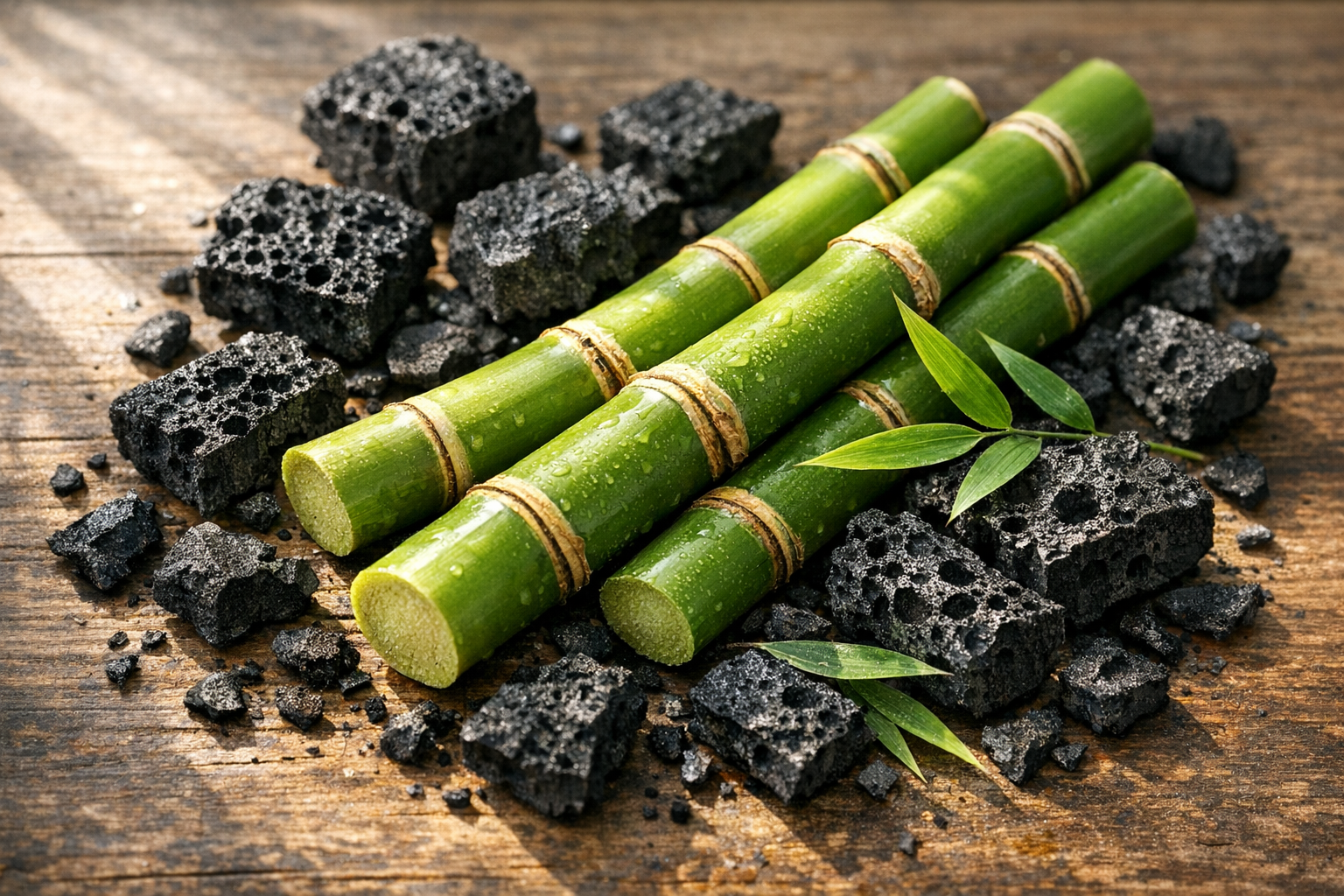
    A close-up overhead shot of fresh green bamboo stalks lying on a rustic wooden surface, with pieces of black porous activated charcoal scattered artfully around them, creating a striking contrast between the natural pale green bamboo and the deep black charcoal pieces. Natural window light streams across the scene from the left side, casting soft shadows and highlighting the texture of both materials. The bamboo stalks show their characteristic segmented joints and smooth surface, while the charcoal pieces display their rough, honeycomb-like porous structure. A few bamboo leaves are scattered in the composition, and the shallow depth of field keeps the focus on the main materials in the center, with a gently blurred background suggesting a minimalist, earth-toned kitchen or workspace environment.

    This transformation requires extreme heat and precise timing. Furthermore, the difference between regular charcoal and “activated” charcoal lies entirely in the processing method. Regular charcoal burns as fuel. In contrast, activated charcoal acts as a magnet for impurities. Therefore, understanding this production cycle reveals why this material is so effective. Let’s explore the step-by-step journey from the forest to the final product.

    If you’re intrigued by the science of bamboo charcoal and want to experience its benefits firsthand, there are numerous products available that harness this remarkable material’s purifying properties. For daily oral care, consider trying a bamboo charcoal toothpaste pack that uses the natural whitening power of activated charcoal to gently remove stains and freshen breath. Your skin can also benefit from bamboo charcoal’s detoxifying abilities with an overnight hydration face mask that nourishes and protects your skin barrier while you sleep. To improve your drinking water quality, a bamboo charcoal water purifier pack can naturally filter impurities and enhance taste without requiring electricity or complicated installation. For those interested in culinary or wellness applications, Viva Doria activated charcoal powder offers food-grade quality that’s versatile enough for various DIY projects and health routines. If you’re dealing with persistent odors in your home, a large bamboo charcoal odor absorber bag can naturally eliminate smells in bedrooms, basements, or kitchens without harsh chemicals or artificial fragrances. For internal wellness support, NaturaLife Labs activated charcoal capsules provide a convenient way to incorporate this natural detoxifier into your daily supplement routine. Your skincare regimen can be elevated with a bamboo charcoal soap pack that offers gentle exfoliation and deep cleansing for both face and body. For comprehensive water purification throughout your home, an advanced reverse osmosis water filtration system can remove contaminants while remineralizing your water for optimal health benefits. Finally, if you need odor control in multiple areas like cars, closets, and shoes, a multi-pack of activated charcoal odor absorber bags provides an eco-friendly solution that can be recharged in sunlight and reused for years. These diverse applications demonstrate how the ancient wisdom of bamboo charcoal has been adapted into modern products that make it easy to incorporate this powerful natural material into every aspect of your daily life.

    Step 1: Harvesting and Preparation

    The Ideal Species

    Choosing the right botanical source is the foundation of quality. Consequently, manufacturers almost exclusively rely on Moso bamboo (Phyllostachys edulis). This giant timber bamboo offers distinct advantages over other varieties. For instance, it achieves a massive diameter suitable for various products. Furthermore, its thick walls provide substantial biomass for the kiln. This natural density is crucial for creating long-burning fuel or effective filtration. Without this robust starting material, the final charcoal would be brittle.

    The Science of Maturity

    Patience is a virtue in charcoal production. Therefore, the five-year waiting period is a strict scientific requirement. Young bamboo contains excessive moisture and soluble sugars. Burning these immature stalks leads to significant shrinkage. Additionally, the resulting charcoal often crumbles into useless dust.

    However, waiting allows the plant to undergo lignification. This biological process hardens the cell walls significantly. As a result, the bamboo develops a steel-like structure. This maturity ensures the final charcoal retains its shape and porosity.

    Optimal Harvesting Conditions

    Beyond age, the specific timing of the cut is vital. Experienced harvesters usually work during the cold winter months. During this dormant season, the bamboo holds significantly less sap. This naturally low moisture content is beneficial for several reasons:

    • Reduced cracking: Less internal pressure builds up during heating.
    • Faster drying: The raw material requires less time to cure.
    • Higher yield: The carbon structure remains denser and heavier.

    Consequently, winter harvesting ensures a superior final product. It also prevents insect damage, as pests are less active in cold weather.

    Sustainable Collection Methods

    Finally, the harvest supports the forest’s overall health. Because bamboo is a grass, it regenerates from its rhizome root system. Thus, cutting mature stalks actually stimulates new growth. Farmers selectively harvest only the oldest stalks. Meanwhile, younger shoots are left to develop further.

    This selective method maintains a continuous supply chain. Moreover, it eliminates the need for replanting seeds after every harvest. This cycle makes bamboo charcoal a highly renewable resource.

    Farmers harvest the bamboo stalks carefully. Then, they cut the long poles into uniform segments. This uniformity ensures even heating later in the kiln. After cutting, the bamboo needs to dry. Workers stack the segments in open-air sheds for several weeks. This air-drying phase reduces moisture content significantly. Consequently, the bamboo requires less energy to carbonize during the heating stage. Proper drying prevents the stalks from cracking or exploding under intense heat.

    Step 2: The Carbonization Process

    Once the bamboo is dry, the carbonization phase begins. This stage turns organic wood into pure carbon. Technicians place the dried bamboo segments into a specialized kiln. Then, they seal the kiln to limit oxygen flow. This oxygen restriction is crucial. If oxygen enters freely, the bamboo will simply burn to ash. Instead, the goal is pyrolysis. Pyrolysis is the thermal decomposition of materials at elevated temperatures in an inert atmosphere.

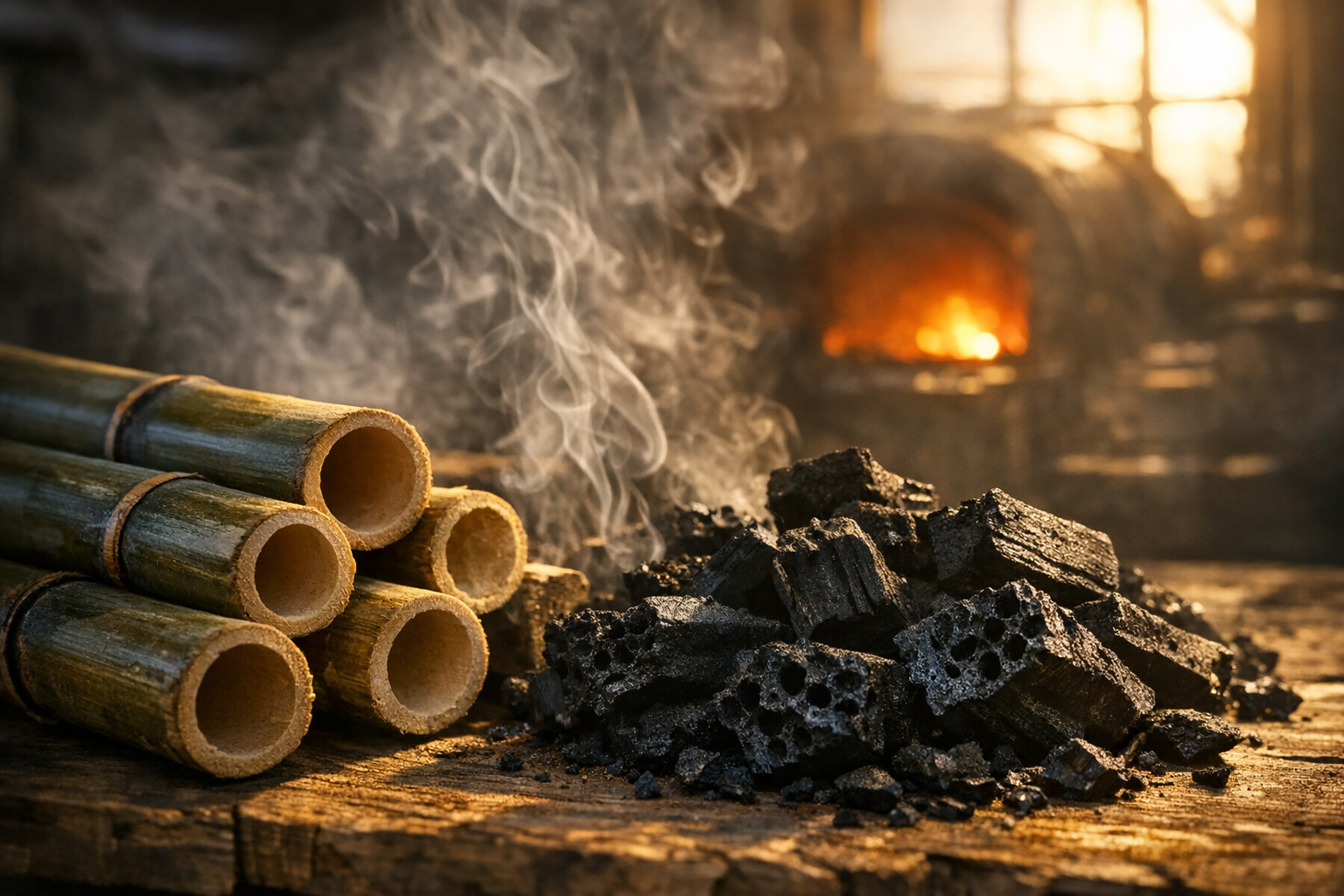
    A close-up shot of raw bamboo stalks arranged beside dark, porous activated charcoal pieces on a rustic wooden surface, with dramatic side lighting creating strong shadows and highlighting the textural contrast between the smooth, natural bamboo segments and the rough, honeycomb-like structure of the black charcoal chunks. Steam or smoke wisps rise gently in the background, creating an atmospheric haze that catches the golden hour sunlight streaming through an industrial workshop window. The composition shows the transformation process visually through the juxtaposition of materials, with shallow depth of field keeping focus on the foreground elements while a blurred kiln or furnace glows warmly in the background, suggesting heat and transformation without any visible text or signage.

    The kiln temperature rises slowly. It eventually reaches approximately 800 degrees Celsius (1472 degrees Fahrenheit). As the heat intensifies, volatile compounds inside the bamboo vaporize. Smoke billows out, carrying away tars and resins. Meanwhile, the bamboo structure hardens and shrinks. It turns jet black. This process leaves behind a carbon skeleton. However, this material is not yet “activated.” It is merely charcoal. The pores are currently clogged with tar residues. Therefore, it lacks the massive surface area required for filtration.

    Step 3: The Critical Activation Phase

    Activation is the most important step in the production line. Source This phase distinguishes standard fuel charcoal from filtration-grade activated charcoal. The goal here is to scour the carbon structure clean. Manufacturers must remove the remaining tars that clog the microscopic pores. To achieve this, they use a process called physical activation. Alternatively, some use chemical activation, but physical activation is more common for bamboo.

    Physical Activation Using Steam

    In physical activation, the carbonized bamboo re-enters a furnace. This time, the temperature climbs even higher. It often exceeds 900 degrees Celsius. While the charcoal heats up, technicians inject steam into the kiln. This steam acts as a powerful cleaning agent. It eats away the internal carbon structure. Consequently, it creates a vast network of tiny tunnels and holes.

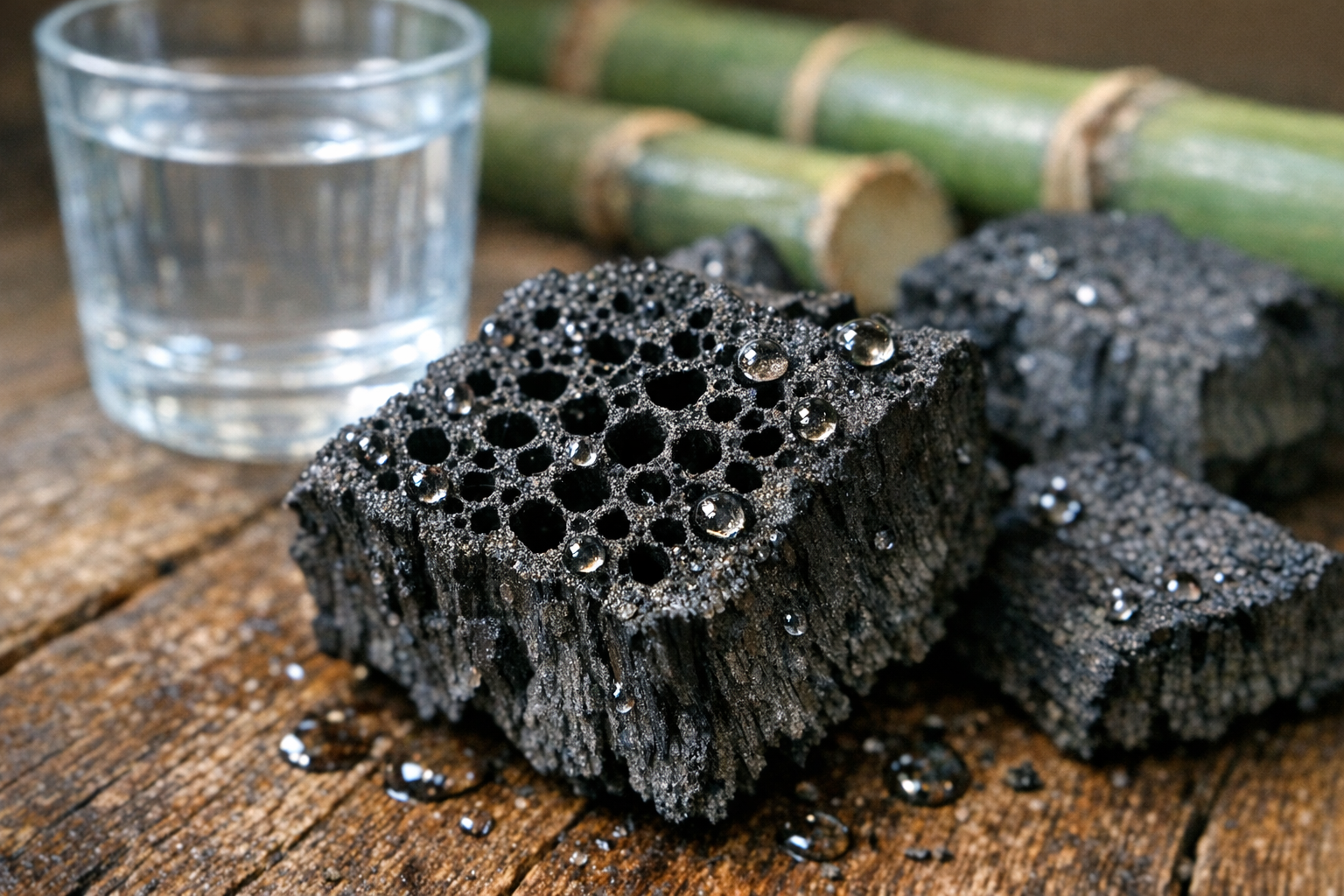
    This erosion process effectively expands the surface area. Imagine a solid block of swiss cheese turning into a sponge. The steam blasts open millions of microscopic pores. These pores are what trap toxins and chemicals later. Without this steam treatment, the charcoal would have very little adsorption power. Thus, the steam activation transforms the material into a super-absorbent tool.

    Chemical Activation Alternatives

    Some manufacturers choose chemical activation instead of steam. In this method, they soak the bamboo charcoal in strong chemicals. Typically, they use phosphoric acid or potassium hydroxide. These chemicals penetrate the carbon structure. Then, the manufacturer heats the mixture. The chemicals cause the carbon structure to open up at lower temperatures than steam activation requires.

    However, this method has a downside. The final product requires extensive washing. Producers must remove all traces of the activating chemicals. If they fail to wash it thoroughly, chemical residue remains. Therefore, many eco-friendly brands prefer steam activation. Steam yields a purer product without the risk of chemical contamination. Nevertheless, both methods successfully increase the charcoal’s porosity.

    Step 4: Washing and Drying

    After activation, the charcoal is extremely porous but also dirty. It contains ash and mineral residue from the burning process. Therefore, the next step involves thorough cleaning. Workers transfer the activated carbon to large washing tanks. They rinse the material with diluted acid solutions to remove mineral ash. Then, they wash it repeatedly with pure water.

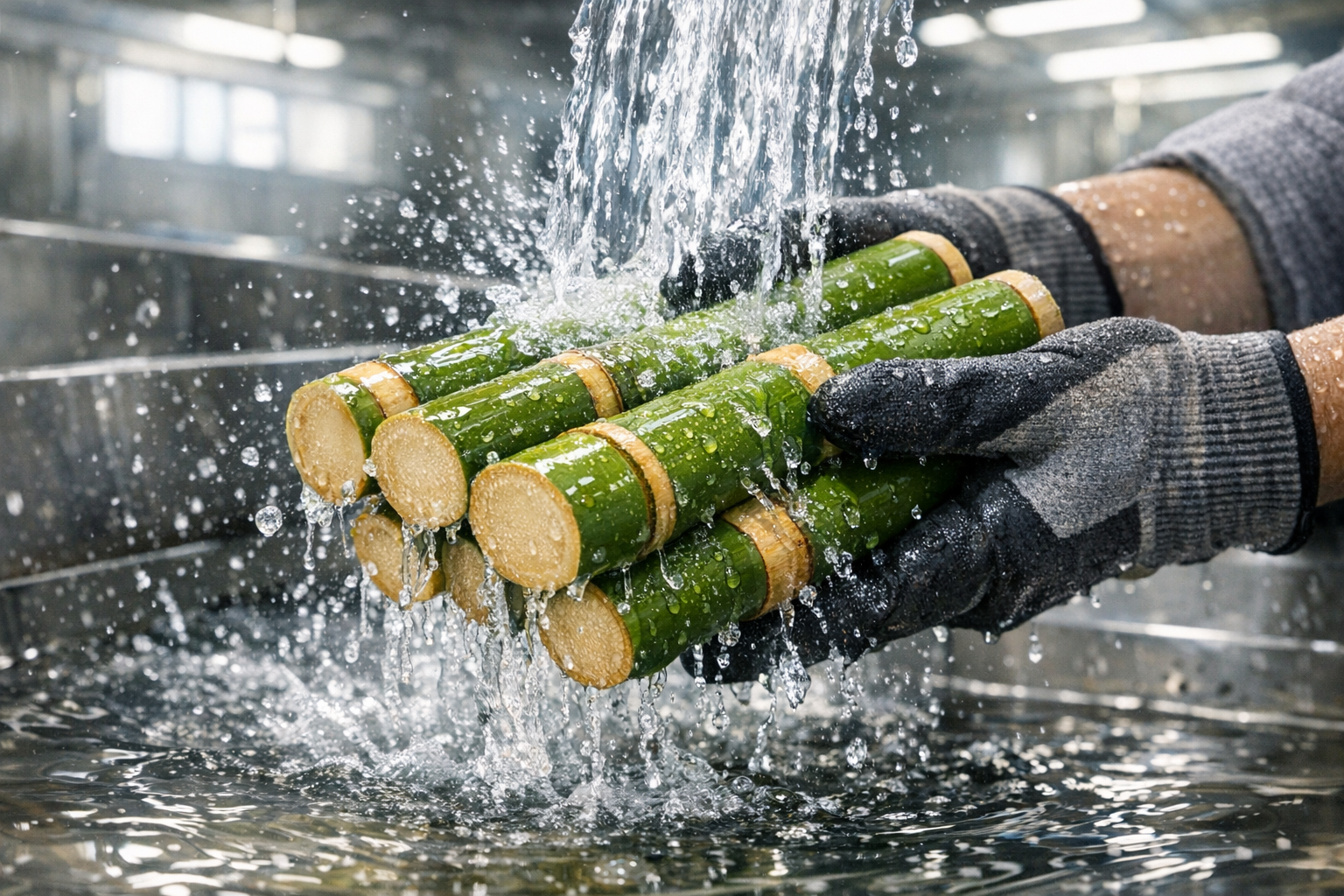
    A close-up shot of fresh-cut bamboo stalks being rinsed under cascading streams of crystal-clear water, droplets glistening in natural daylight as they roll off the smooth green and tan bamboo segments. The scene captures hands wearing industrial gloves holding cylindrical bamboo pieces under a flowing water stream, with water splashing and creating a misty spray effect. The background shows a clean industrial washing station with stainless steel surfaces reflecting the bright overhead natural light filtering through skylights. Water pools and ripples are visible on the metallic surface below, creating dynamic reflections. The composition emphasizes the purification process with the bamboo's natural texture contrasting against the modern processing environment, shot with shallow depth of field focusing on the water interaction with the bamboo surface.

    This washing cycle continues until the water runs clear. It ensures the pH level stabilizes. Once clean, the wet charcoal must dry again. Industrial dryers blast the material with hot air. This removes all moisture absorbed during the washing phase. Moisture control is vital here. If the charcoal remains damp, mold could grow. Additionally, wet charcoal weighs more, which increases shipping costs. Thus, producers ensure the product is bone-dry before the final step.

    Step 5: Grinding and Sizing

    The final production stage focuses on form and function. The dried activated charcoal usually exists as chunks or granules. However, different applications require different sizes. For example, water filters use granular charcoal. Conversely, toothpaste and face masks require a fine powder. Therefore, the manufacturer feeds the charcoal into crushing machines.

    These machines grind the material into specific particle sizes. Technicians use sieves to sort the particles. They separate the fine dust from the larger granules. This sorting process ensures consistency. A face mask manufacturer does not want gritty chunks in their cream. Similarly, a water filter company avoids dust that could clog the system. Finally, workers package the sorted charcoal into airtight bags. These bags protect the product from moisture and contaminants during shipping.

    Why Surface Area Matters

    The entire production process aims to maximize surface area. But why is this so important? The answer lies in adsorption. Note the “d” in adsorption. Absorption involves soaking up a liquid, like a sponge. Adsorption, however, involves adhesion. Molecules stick to the surface of the charcoal. Therefore, more surface area equals more sticking power.

    Because the activation process creates millions of pores, the surface area is immense. A single gram of activated bamboo charcoal can have a surface area larger than a football field. This incredible statistic explains its efficiency. When water passes through the charcoal, contaminants get trapped in the pores. They stick to the carbon walls. Consequently, the water exits the filter clean and safe.

    A close-up macro photograph of freshly processed bamboo charcoal pieces arranged on a rustic wooden surface, shot in natural window light. The main focus is on the intricate honeycomb-like porous structure of the charcoal, with shallow depth of field revealing countless tiny cavities and holes across its matte black surface. Water droplets bead on the charcoal's textured exterior, catching the soft morning light. In the background, slightly out of focus, a clear glass of purified water sits beside raw bamboo stalks, creating a natural before-and-after composition. The lighting is soft and diffused, casting gentle shadows that emphasize the three-dimensional texture of the porous charcoal structure. The color palette features deep blacks contrasted with warm wood tones and crystal-clear water, shot from a 45-degree angle with authentic smartphone photography aesthetics.

    Conclusion

    The transformation begins deep in the bamboo forest. Although bamboo grows incredibly fast, patience remains essential. Farmers must wait for the perfect maturity level. Usually, this means waiting at least five years. At this age, the stalk possesses the necessary density. Consequently, the resulting charcoal will be hard and durable. Younger bamboo is simply too soft for high-quality production. Therefore, careful selection is the first critical step in the manufacturing chain.

    Sustainable Harvesting and Preparation

    Expert harvesters cut the stalks at the base. This specific method allows the root system to remain intact. As a result, new shoots can sprout immediately without replanting. This rapid regeneration cycle makes bamboo a highly renewable resource. Once harvested, the stalks require seasoning. Workers air-dry the wood for several weeks to prepare it.

    Furthermore, this drying step effectively reduces internal moisture content. If the wood is too wet, it might crack inside the kiln. Thus, proper drying ensures structural integrity during the heating phase. The stalks are then cut into uniform lengths. This uniformity ensures they cook evenly during the next stage.

    The Art of Carbonization

    Next, the dried bamboo enters a specialized kiln. This stage is known as carbonization. The temperature management here creates a distinct difference in final quality. For instance, temperatures rise slowly to roughly 800 degrees Celsius or higher. This intense heat occurs in a low-oxygen environment.

    Consequently, the organic material does not burn to ash. Instead, it undergoes a process called pyrolysis. This chemical change strips away volatile impurities. Eventually, only pure carbon remains in a solid form. The smoke produced during this time is often condensed. This byproduct becomes bamboo vinegar, another useful substance.

    Steam Activation and Finishing

    The final phase is perhaps the most scientific. Manufacturers use steam activation to drastically enhance the charcoal. They inject hot steam into the carbonized material. This process eats away internal structures. Therefore, it creates a vast network of microscopic pores. These tiny holes act like a sponge for impurities.

    Specifically, the benefits of activation include:

    • Surface Area: Activation drastically increases the internal surface area.
    • Absorption: The new pores trap toxins and odors effectively.
    • Filtration: The material becomes ideal for water and air purification.

    Finally, the charcoal is processed for specific commercial uses. Machines might grind it into a fine powder for cosmetics. Alternatively, workers cut it into solid blocks for dehumidifiers. Ultimately, this rigorous sequence creates a versatile, eco-friendly product.

    By understanding this method, consumers can appreciate the value of activated charcoal. It is not just burnt wood. It is a highly engineered material. Whether it filters your water or whitens your teeth, bamboo charcoal proves that nature, when refined by science, offers powerful solutions. Next time you use a charcoal product, remember the heat, steam, and precision that made it possible.

    If you’re intrigued by the science of bamboo charcoal and want to experience its benefits firsthand, there are numerous products available that harness this remarkable material’s purifying properties. For daily oral care, consider trying a bamboo charcoal toothpaste pack that uses the natural whitening power of activated charcoal to gently remove stains and freshen breath. Your skin can also benefit from bamboo charcoal’s detoxifying abilities with an overnight hydration face mask that nourishes and protects your skin barrier while you sleep. To improve your drinking water quality, a bamboo charcoal water purifier pack can naturally filter impurities and enhance taste without requiring electricity or complicated installation. For those interested in culinary or wellness applications, Viva Doria activated charcoal powder offers food-grade quality that’s versatile enough for various DIY projects and health routines. If you’re dealing with persistent odors in your home, a large bamboo charcoal odor absorber bag can naturally eliminate smells in bedrooms, basements, or kitchens without harsh chemicals or artificial fragrances. For internal wellness support, NaturaLife Labs activated charcoal capsules provide a convenient way to incorporate this natural detoxifier into your daily supplement routine. Your skincare regimen can be elevated with a bamboo charcoal soap pack that offers gentle exfoliation and deep cleansing for both face and body. For comprehensive water purification throughout your home, an advanced reverse osmosis water filtration system can remove contaminants while remineralizing your water for optimal health benefits. Finally, if you need odor control in multiple areas like cars, closets, and shoes, a multi-pack of activated charcoal odor absorber bags provides an eco-friendly solution that can be recharged in sunlight and reused for years. These diverse applications demonstrate how the ancient wisdom of bamboo charcoal has been adapted into modern products that make it easy to incorporate this powerful natural material into every aspect of your daily life.

    *As an Amazon Associate, I earn from qualifying purchases.