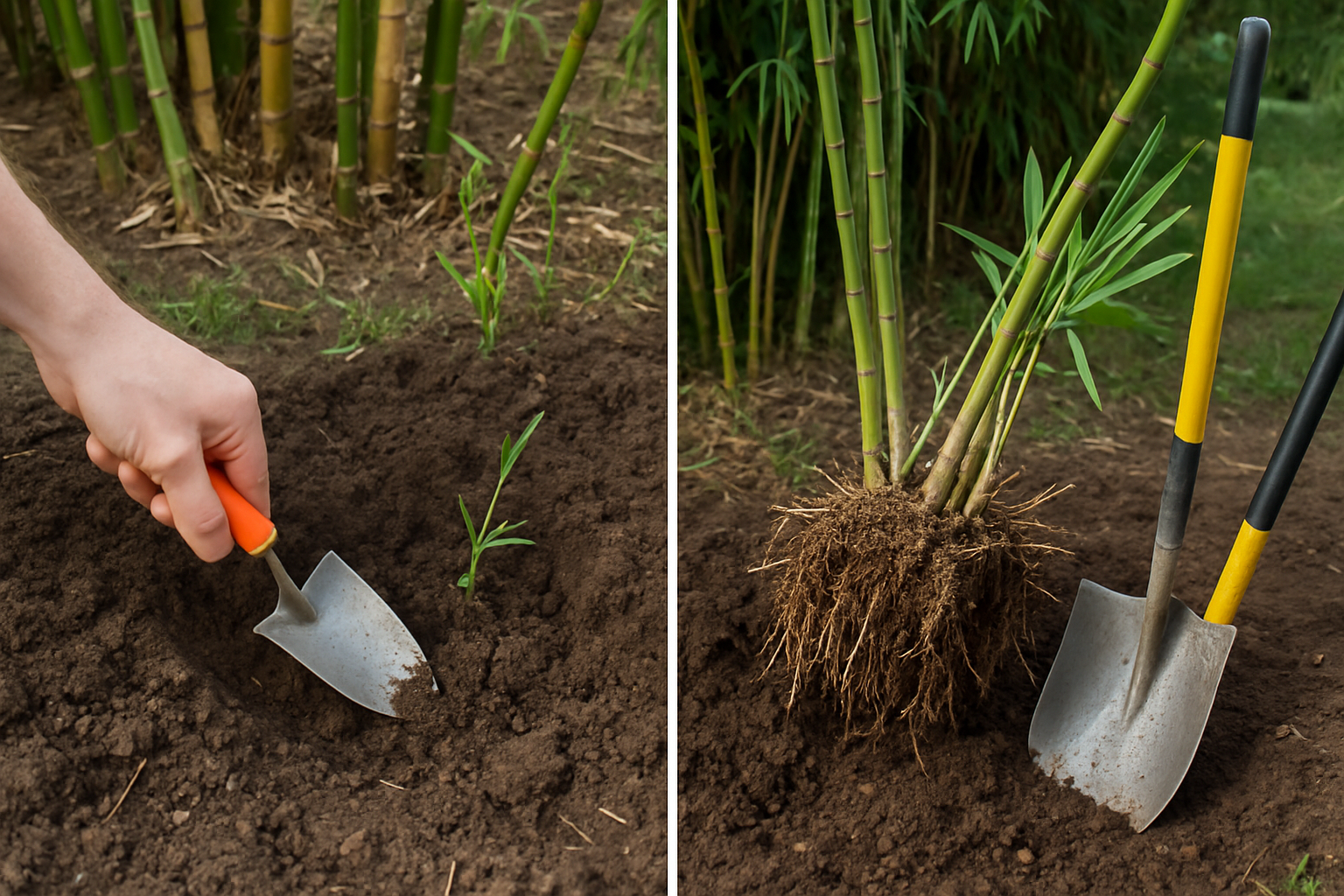
I want to tell you about the afternoon I decided to dig out bamboo roots by hand using nothing but a standard garden trowel, a misplaced sense of confidence, and apparently zero understanding of what bamboo roots actually look like underground. Spoiler: the trowel snapped in half. My pride did not survive either.
This post contains affiliate links. As an Amazon Associate, I earn from qualifying purchases.
It started innocently enough. The previous owners of our house had planted a running bamboo along the back fence — the kind that, if given half a chance, will colonize your neighbor’s yard, your neighbor’s neighbor’s yard, and possibly a small country. By the time we moved in, it had spread about eight feet beyond the fence line and was cheerfully sprouting through the lawn. I figured I’d spend a Saturday afternoon sorting it out. One Saturday afternoon. I genuinely believed that.
Why Bamboo Roots Laugh at Your Optimism
Here’s what I didn’t know about bamboo before that fateful Saturday: running bamboo spreads through underground stems called rhizomes, and those things are basically the subway system of the plant world — dense, interconnected, and going in directions you absolutely did not expect. They can run horizontally two to three feet deep, and they branch constantly. When I drove my little trowel into the soil and hit the first woody rhizome, I thought I’d found the main root. Reader, I had found approximately one percent of the main root.
I dug. I pulled. The trowel flexed in a way metal should not flex. Then, with a sound I can only describe as a disappointed crack, the handle snapped clean off and I sat down hard in the dirt. My dog watched me from the porch with an expression that I’m pretty sure was pity.
The good news? That embarrassing afternoon sent me down a research rabbit hole, and I eventually figured out what actually works. Let me save you the broken tools and the wounded dignity.
How to Actually Dig Out Bamboo Roots By Hand (The Real Method)
The key insight that changed everything for me is this: you are not digging up roots so much as you are systematically severing and extracting a network. Think of it less like pulling a weed and more like dismantling plumbing. You need to expose sections, cut them cleanly, and work your way through methodically rather than just yanking at whatever you can grab.
Step 1: Cut Down All the Canes First
Before you touch the soil, cut every cane down to ground level. This removes the top growth, makes the area manageable, and honestly makes the whole project feel less overwhelming. A reciprocating saw with the right blade makes short work of even thick canes — more on that in the tools section below.
Step 2: Define Your Work Zone
Don’t try to tackle the whole area at once. Mark out a section about three feet wide and work from one edge inward. This lets you actually see what you’re pulling out and prevents you from stepping on and snapping rhizomes you haven’t dug up yet — which just encourages them to reshoot from the broken end. Fun fact I also learned the hard way.
Step 3: Loosen, Don’t Just Dig
Use a heavy-duty spade to loosen the soil around and beneath the rhizomes before you try to pull anything out. Work the blade down alongside the rhizome, lever gently, and let the soil break apart around it. Once it’s loose, you can trace it in both directions and cut it free from the network. Trying to muscle out a rhizome that’s still locked in compacted soil is exactly how trowels die.
Step 4: Collect Every Piece
Bamboo rhizomes can regenerate from surprisingly small sections. As you pull pieces out, drop them straight into a wheelbarrow or bin — don’t leave them sitting on the soil surface. Even a fist-sized chunk left behind can sprout again given enough time and moisture.
Step 5: Repeat for Several Seasons
I know. I know. But it’s the truth. After your initial dig-out, monitor the area and remove any new shoots the moment they appear. Each time a shoot is removed before it matures, the root system loses stored energy. After one to two growing seasons of consistent shoot removal, most bamboo stands will exhaust themselves and stop resprouting.
Tools That Actually Help You Dig Out Bamboo Roots By Hand
If my snapped trowel taught me anything, it’s that bamboo removal is a tool investment situation. Here are the tools I actually use now, all of which have held up considerably better than that trowel.
For Cutting Canes and Thick Roots
A reciprocating saw is genuinely one of the best things I brought to this project. For green canes and woody rhizomes, I reach for the EZARC Japanese Teeth Reciprocating Saw Blades — the 15-inch arc-edge design gets into awkward angles really well, and the Japanese-style teeth slice through fibrous bamboo canes cleanly without binding. For thinner growth and buried rhizomes closer to the surface, the 5-Pack 9-Inch Wood Pruning Reciprocating Saw Blades are a more maneuverable option and the storage case keeps them from rattling loose in your tool bag.
For Digging and Loosening
The tool that replaced my tragic trowel is the Root Slayer Garden Shovel with Serrated Blade. The serrated edge on the sides of the blade means you can slice through lateral roots as you push down, rather than just hitting them and stopping. It’s the shovel I wish I’d had on day one.
For Pulling Out Stubborn Sections
Once rhizomes are loosened, a dedicated pulling tool saves your back enormously. For smaller woody stems and sapling-sized growth, the voominhtec Heavy-Duty Tree and Stump Puller grips stems from a quarter inch up to an inch and uses leverage rather than brute force — your lower back will thank you. For larger, more established clumps with bigger root systems, the CGENWDCH Large Size Sapling Puller handles woody stems up to two inches and is built for exactly the kind of deep, sprawling root systems that running bamboo develops over years.