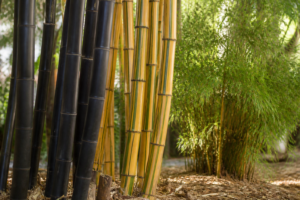
Three years ago, a neighbour two streets over knocked on my door in a panic. She had just bought her home and discovered bamboo pushing up through the gravel under her garden shed. The previous owners had planted a golden bamboo — Phyllostachys aurea, one of the most aggressive running species you can buy — and installed what they thought was a proper root barrier. What they actually installed was a 20-mil plastic edging strip, about 12 inches deep, with an overlapping seam they’d fastened with a single piece of duct tape.
By the time she called me, the rhizomes had tunnelled under the shed foundation, come up through a crack in her driveway, and were making a serious push toward the fence line she shared with yet another neighbour. The remediation cost her just over $4,200 — and that was with me donating two full days of my own labour because I felt genuinely bad for her.
I’ve been growing bamboo commercially and on my own property for 15 years. I grow 14 different species across two sites, sell poles and divisions to landscapers and homeowners, and spend a significant chunk of my time helping people clean up messes that previous owners left behind. I’ve seen bamboo root barrier installation done right maybe a third of the time. The other two-thirds? The barrier either wasn’t deep enough, wasn’t thick enough, wasn’t properly sealed at the seam, or was never inspected after installation. Usually it’s all four.
This post is about what actually works — not what the packaging suggests, not what a landscaping influencer told you, but what I’ve tested and corrected in the field over a decade and a half.
Why Running Bamboo Is a Different Problem Than Most People Expect
There are two types of bamboo: clumping and running. Clumping bamboo (Fargesia and related genera) spreads slowly and stays relatively manageable. Running bamboo — the Phyllostachys species, Pleioblastus, Pseudosasa japonica — spreads via horizontal rhizomes that can travel two to five feet per year in good soil. Those rhizomes are opportunistic. They find the path of least resistance, and they will follow it under driveways, along fence lines, and into neighbouring properties.
The rhizomes of a mature Phyllostachys grove typically run at depths between 2 and 18 inches. Most of the growth activity happens in the top 12 inches. But here’s what most homeowners don’t account for: rhizomes actively probe downward when they hit a barrier, looking for a way underneath. If your barrier ends at 18 inches, you’re essentially counting on the rhizome giving up. It won’t. I’ve seen them turn a corner at 22 inches and come up clean on the other side.
The Most Common Bamboo Root Barrier Installation Mistakes
Using the Wrong Thickness
The industry standard for bamboo specifically — not generic root barriers, but bamboo — is a minimum of 60 mil (60 thousandths of an inch) HDPE. I will not install anything lighter than this for a running species, full stop. I’ve tested 40-mil products and seen rhizomes punch through them within four growing seasons. Thinner products are fine for ornamental edging or grass control. They are not fine for Phyllostachys.
Not Going Deep Enough
The minimum depth I install is 24 inches. For aggressive species like Phyllostachys bambusoides or golden bamboo, I go 28 to 30 inches if the soil allows. The barrier needs to be installed with approximately 2 inches left above the soil surface so you can see rhizomes attempting to cross at the top — which they will. You need to be able to spot and cut those before they clear the barrier.
Failing the Seam
The seam is where almost every DIY installation fails. You cannot just overlap the barrier ends and hope for the best. The overlap should be a minimum of 18 inches, and it needs to be clamped or secured with proper hardware — not tape, not zip ties, not garden staples. I use purpose-made seam clamps. Some installers use stainless steel bands. The point is that the seam must be physically locked and then buried under consistent soil pressure. A loose seam is an open door.
Skipping Annual Inspection
A root barrier is not a one-time solution. I inspect every bamboo planting on my property twice a year — once in spring before the shooting season and once in autumn. I look for rhizomes attempting to crest the top of the barrier, signs of barrier displacement from soil movement or freeze-thaw cycles, and any soft spots or deformation in the HDPE itself. This takes less than an hour per planting. Skipping it for two or three seasons is how you end up with bamboo in your neighbour’s yard and a very uncomfortable conversation.
What a Proper Installation Actually Looks Like
Here’s my standard process for bamboo root barrier installation on a new planting:
- Trench depth: 26 inches minimum. I use a trenching spade and take my time squaring the walls.
- Barrier material: 60-mil HDPE, minimum 24 inches wide (which gives me 22 inches below grade and 2 inches above).
- Seam treatment: 18-inch overlap, secured with stainless steel seam clamps spaced no more than 12 inches apart.
- Backfill: Firm, consistent compaction in layers. No large air pockets. Rhizomes navigate around soft spots.
- Above-grade lip: Visible and clear of mulch. Mulch piled over the barrier edge hides rhizome escape attempts.
- Documentation: I photograph the installation before and after backfill, and I note the barrier brand and depth in a simple site log.
For an existing planting where you’re retrofitting a barrier — which is significantly harder — you’ll need to hand-excavate around the root mass, which risks damaging rhizomes and causing unpredictable reshoot patterns. I always recommend pairing a retrofit installation with a full root pruning in autumn, cutting all rhizomes cleanly at the trench line before the barrier goes in.
An Honest Caveat: Barriers Are Not Foolproof
I want to be direct about something the product listings won’t tell you. A root barrier, installed perfectly, is still a management tool — not a guarantee. In sandy, loose, or heavily disturbed soil, barriers can shift. In areas with significant freeze-thaw cycles, the ground movement over several years can create gaps at the seam or displace the top edge. And in a grove that has been growing for more than five or six years before the barrier is installed, you may have rhizomes that have already extended well beyond the planting area. The barrier contains future growth; it doesn’t undo the past.
I’ve had clients who did everything right and still found a rhizome making a run for it in year three. The difference between them and the $4,200 nightmare is that they caught it during their annual inspection, cut it cleanly, and the damage was zero. The inspection habit is genuinely more important than any product specification.
What I Use and Recommend
I’m selective about what I recommend because I’ve watched cheap products fail in real installations. These are the 60-mil options I’ve used or evaluated directly and would use on my own property:
The West Bay 50ft x 24in x 60mil Tree Root Barrier is one of the few options that comes in a 24-inch width out of the box, which means you’re getting genuine depth without having to compromise. The 60-mil thickness is consistent across the roll, and the material is stiff enough to hold its shape during backfill — which matters more than most people realise.
The 50ft x 18in x 60mil Tree Root Barrier Root Barrier Grass is an 18-inch option, which I’ll use in situations where the soil profile genuinely doesn’t allow me to go deeper — near existing infrastructure, for example. At 60 mil it’s properly rated for bamboo. I wouldn’t use an 18-inch barrier for the most aggressive running species, but for moderate runners and in constrained installations, it’s a solid product.
The Convivium Tree Root Barrier 17in x 20ft x 60mil is made from recycled HDPE and is notably rigid — which actually makes it easier to keep plumb during installation. The 17-inch width is on the shorter end for running bamboo, so I’d recommend this one for clumping species, smaller-scale containment, or as a secondary barrier in a layered installation.
The Bottom Line
Bamboo root barrier installation is not complicated, but it is unforgiving of shortcuts. The barrier needs to be the right thickness, the right depth, properly sealed at the seam, and inspected on a regular schedule. Every single element matters. Miss one, and you’re not slowing down the bamboo — you’re just delaying the problem by a few years and usually passing the cost of it to yourself or someone else.
If you’re planting a running species and you’re not prepared to do the installation properly, my honest advice is to choose a clumping species instead. I grow and sell both. The clumping varieties are beautiful, they’re manageable, and they won’t end up costing your neighbour $4,200 and their goodwill. The running species are extraordinary — some of the most useful and productive plants I grow — but they demand respect and a properly executed containment system from day one.
Do it right the first time. The trenching is the easy part.
The 60mil Barrier Thickness That Actually Stops Running Rhizomes
After my neighbour’s disaster, I learned that bamboo rhizomes don’t just push down—they probe sideways and upward with relentless pressure, and anything thinner than 60mil HDPE will eventually split, seam apart, or simply get punctured by a determined runner searching for escape. The West Bay barrier is built thick enough that rhizomes find the effort too costly and redirect deeper into your containment zone instead of through it.
What works
- The 60mil thickness resists puncture and micro-tearing that thinner barriers surrender to within 2–3 years of aggressive running species like Phyllostachys aurea pushing against it.
- At 24 inches deep, it reaches far enough below the soil surface that even the lateral rhizomes of fast spreaders have to work hard enough that they quit and spread within the zone instead of under your fence line.
- The 20-foot length is long enough to contain a modest grove without needing ten separate overlapped seams, which is where cheap barriers fail—fewer seams means fewer places for rhizomes to find a weak point.
What doesn’t
- Installation is harder and slower than thinner materials—you need a trench dug to exactly 24 inches and a helper to hold the material in place while you backfill, or it twists and creates low spots where rhizomes will find their way under.
- It costs significantly more upfront than the 20mil strips, which can feel expensive until you’re staring at a $3,000+ excavation bill to remove bamboo that escaped a cheaper barrier.
I questioned whether 60mil was overkill my first year—until I dug down at year two and saw rhizome tips pressed hard against the barrier in three separate spots, testing it like a persistent animal at a fence. West Bay 50ft x 24in x 60mil Tree Root Barrier
About This Article

Written by Marcus Chen. Marcus Chen has spent 15 years cultivating and studying bamboo across 14 different species, combining commercial growing operations with extensive hands-on experience in species selection and containment. As both a grower and consultant, he specializes in practical bamboo management, helping homeowners and landscapers understand the real-world requirements for responsible bamboo cultivation. Marcus brings tested knowledge of which species thrive reliably and which present containment challenges that go beyond standard recommendations. More about this site.
Verify this against a primary source
Specifics change, and your situation may differ from the one described here. These are the authorities worth checking directly:
- American Bamboo Society — species listings and cultivation guidance
- USDA PLANTS Database — species range and identification
- USDA Plant Hardiness Zone Map — cold hardiness verification for your location