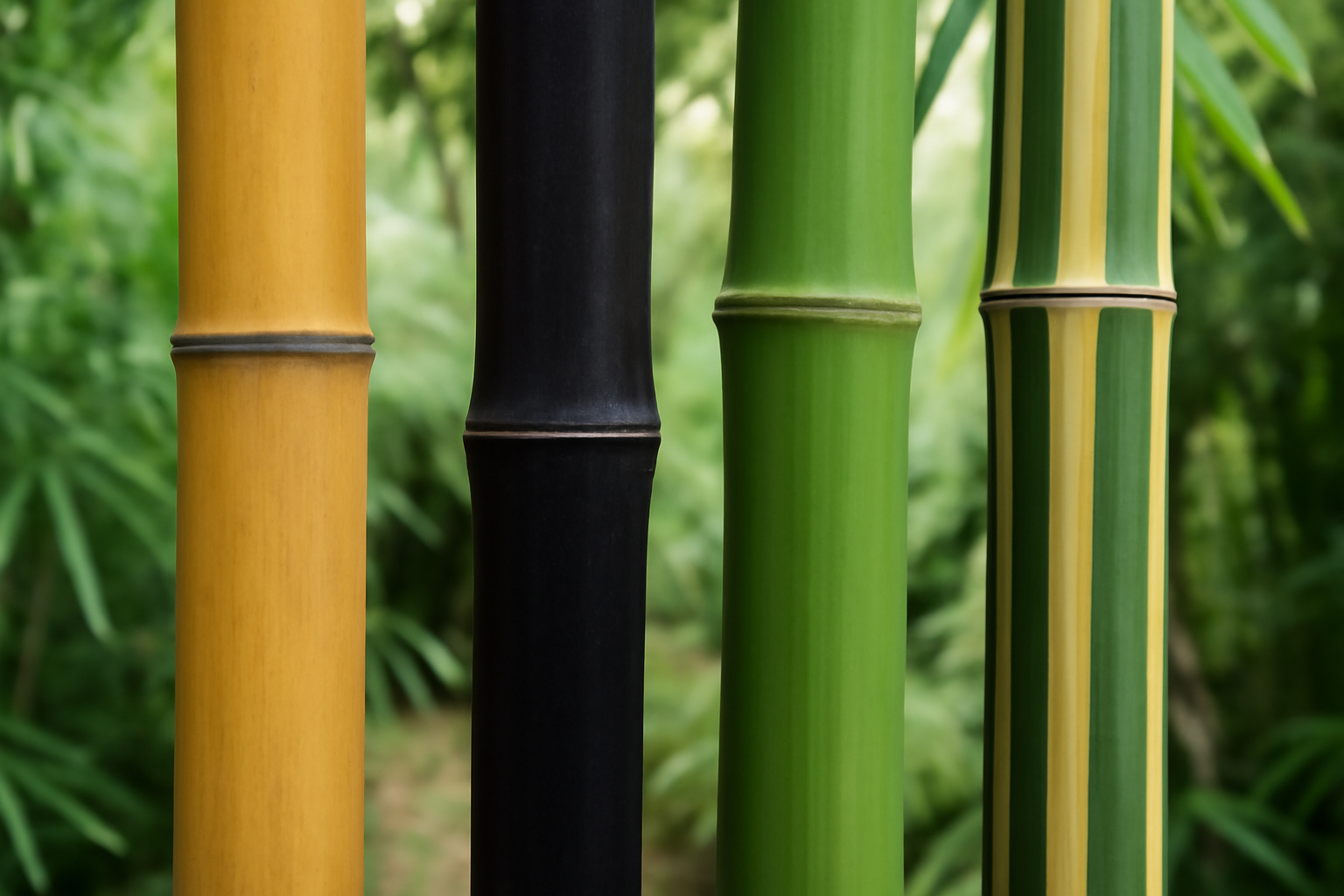
Running bamboo spreads — that’s not a flaw, it’s just what it does. The real question is which species you’re dealing with, because not all runners behave the same way, and knowing the difference can save you years of frustration (and a few arguments with your neighbors).
After growing bamboo for over a decade and making plenty of containment mistakes along the way, I’ve learned that understanding your specific species is step one. Some runners are genuinely manageable. Others will test your patience and your property line. Here’s a breakdown of the most common types of running bamboo, what makes each one unique, and what it takes to keep them in check.
What Makes Bamboo a “Runner”?
Running bamboo spreads through underground stems called rhizomes. Unlike clumping bamboo, which expands slowly from a central root mass, running bamboo sends rhizomes laterally — sometimes several feet in a single growing season. These rhizomes can travel 3 to 15 feet per year depending on the species, soil conditions, and climate. Left unchecked, some species will colonize a surprisingly large area within just a few years.
The vast majority of running bamboo species belong to the genus Phyllostachys, though genera like Pleioblastus and Pseudosasa also include aggressive spreaders. Understanding which genus and species you’re working with determines how aggressively you’ll need to manage it.
10 Running Bamboo Species Worth Knowing
Below is a comparison of the most commonly grown running bamboo species in North America, including their key characteristics and how difficult they are to contain.
| Species | Common Name | Height Range | USDA Zone | Culm Color | Spread Aggressiveness | Best Use |
|---|---|---|---|---|---|---|
| Phyllostachys aurea | Golden Bamboo | 10–20 ft | 6–10 | Golden yellow | Very High | Screening, specimen |
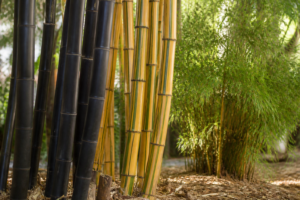
| Phyllostachys nigra | Black Bamboo | 15–25 ft | 7–10 | Black (matures from green) | Moderate–High | Ornamental, screening |
| Phyllostachys bissetii | Bisset’s Bamboo | 15–25 ft | 5–9 | Dark green | High | Cold-climate screening |
| Phyllostachys nuda | Nude Sheath Bamboo | 20–35 ft | 5–9 | Bright green | Moderate | Timber, cold climates |
| Phyllostachys rubromarginata | Red Margin Bamboo | 25–45 ft | 5–10 | Green with reddish tint | Moderate | Timber, tall screening |
| Phyllostachys vivax | Chinese Timber Bamboo | 30–45 ft | 6–10 | Green or yellow-green | High | Timber production |
| Phyllostachys aureosulcata | Yellow Groove Bamboo | 15–25 ft | 5–9 | Green with yellow sulcus | High | Cold-climate screening |
| Phyllostachys bambusoides | Giant Timber Bamboo | 35–55 ft | 7–10 | Glossy green | Moderate–High | Timber, large landscapes |
| Pleioblastus viridistriatus | Dwarf Greenstripe | 1–3 ft | 6–9 | Striped green and yellow | Very High | Ground cover (contained) |
| Pseudosasa japonica | Arrow Bamboo | 8–15 ft | 6–9 | Dark green | Moderate | Hedging, shade gardens |
The Most Aggressive Species — Be Honest With Yourself
Phyllostachys aurea, commonly called Golden Bamboo, is probably the most widely planted running bamboo in North America — and arguably the most problematic. Its rhizomes can advance 5 to 10 feet per year in warm climates and it tolerates drought, poor soil, and neglect with remarkable ease. Those traits that make it appealing to beginners are exactly what make it such a persistent spreader. Several Southern states consider it invasive, and for good reason.
Phyllostachys vivax is another one to watch closely. It’s beautiful — those thick-walled culms can reach genuine timber dimensions — but it establishes fast and spreads to match. In Zone 7 and warmer, you can expect aggressive lateral movement within two to three years of planting.
Pleioblastus viridistriatus is deceptively small. At only one to three feet tall, it looks manageable. It isn’t. The low stature just means the rhizomes put more energy into lateral spread than vertical growth. As a ground cover it’s stunning, but only inside a hard physical boundary.
Cold-Hardy Runners That Perform in Tough Climates
If you’re gardening in Zone 5 or 6, your choices narrow considerably — but a few species genuinely deliver. Phyllostachys bissetii is one of the most reliably cold-hardy runners available, handling temperatures down to about -10°F with foliage intact. It’s also a vigorous spreader, so it needs containment even in colder regions where growth is somewhat moderated.
Phyllostachys nuda is another cold-climate workhorse, surviving similar temperature extremes while producing impressively tall, green culms. It tends to be slightly less aggressive than Bisset’s in comparable conditions, making it a better choice if you’re balancing performance with some degree of control.
Phyllostachys aureosulcata, the Yellow Groove Bamboo, rounds out the cold-hardy list. It’s one of the more ornamentally interesting options — the yellow groove running along each green culm is genuinely striking — and it holds its foliage well through harsh winters. That said, it spreads vigorously once established, so don’t let the good looks distract you from the containment plan.
Containment: Matching the Strategy to the Species
Every running bamboo benefits from a physical root barrier, but the specifications matter. For moderately aggressive species like Pseudosasa japonica or Phyllostachys nuda, a 24-inch deep HDPE barrier (at least 40 mil thickness) installed around the planting perimeter is usually sufficient, provided it’s inspected annually and rhizomes are cut back at the barrier edge each spring.
For highly aggressive species — Ph. aurea, Ph. vivax, Ph. bissetii, and any Pleioblastus — a 30-inch deep barrier is more appropriate, and annual rhizome pruning is non-negotiable. Some growers in warmer climates plant these species in raised beds or large containers as an alternative to in-ground barriers.
Rhizome pruning is exactly what it sounds like: once a year in late summer or early fall, you walk the barrier perimeter and sever any rhizomes attempting to escape over or under the barrier edge. A sharp spade works fine. Miss a year, and you may find rhizomes have already pushed through to the other side.
Natural barriers — streams, paved surfaces — offer partial containment but shouldn’t be relied on alone. Ph. aurea has been documented crossing under asphalt paths where root pressure found gaps. If you’re planting near a property line, a physical barrier combined with a 3-foot mowing buffer on the far side is the most reliable combination.
Choosing the Right Species for Your Site
Matching the species to your actual conditions — not your aspirations — is where most people go wrong. If you’re in Zone 5 and want a tall privacy screen, Ph. rubromarginata or Ph. aureosulcata will outperform Ph. bambusoides, which struggles with cold and will spend years looking half-dead instead of screening anything. If you want an ornamental focal point in a container or raised bed, Ph. nigra is hard to beat for visual drama, and the container itself solves most of your containment concerns.
Whatever species you choose, plan the containment before you plant. Installing a root barrier after the fact is significantly more labor-intensive — and if the rhizomes have already traveled, you may be in for a multi-year removal project. Running bamboo rewards growers who prepare thoughtfully and punishes those who assume they’ll deal with it later.
The Root Barrier That Finally Stopped My Runners from Crossing the Property Line
No matter which running species you’re growing, a properly installed root barrier is your only real defense against rhizomes tunneling under fences and into your neighbor’s yard. I learned this the hard way after spending two years pulling up bamboo shoots in places they had no business being.
What works
- The 60-mil thickness actually stops aggressive runners like Phyllostachys aureosulcata—not just slows them down, but forces them to grow upward instead of outward.
- Installation is straightforward enough that you can dig a trench, drop it in vertically, and backfill without special tools—I did mine in a weekend for a 50-foot run.
- It stays intact after five seasons of root pressure and seasonal freeze-thaw cycles; no cracking, no splits, no surprise breaches.
What doesn’t
- Rhizomes still occasionally find weak points at seams or where you didn’t overlap the edges correctly—which means installation precision actually matters, not just “good enough.”
- The roll is heavy and awkward to handle alone, and if you’re containering a large area, the material cost adds up fast relative to other options.
I almost returned mine after the first season when I found a single shoot had somehow escaped near the corner—turns out I’d left a 2-inch gap in the overlap, a mistake I won’t make twice. If you’re serious about containment, this is worth the investment.
About This Article

Written by Marcus Chen. Marcus Chen has spent 15 years cultivating and studying bamboo across 14 different species, combining commercial growing operations with extensive hands-on experience in species selection and containment. As both a grower and consultant, he specializes in practical bamboo management, helping homeowners and landscapers understand the real-world requirements for responsible bamboo cultivation. Marcus brings tested knowledge of which species thrive reliably and which present containment challenges that go beyond standard recommendations. More about this site.
Verify this against a primary source
Specifics change, and your situation may differ from the one described here. These are the authorities worth checking directly:
- American Bamboo Society — species listings and cultivation guidance
- USDA PLANTS Database — species range and identification
- USDA Plant Hardiness Zone Map — cold hardiness verification for your location