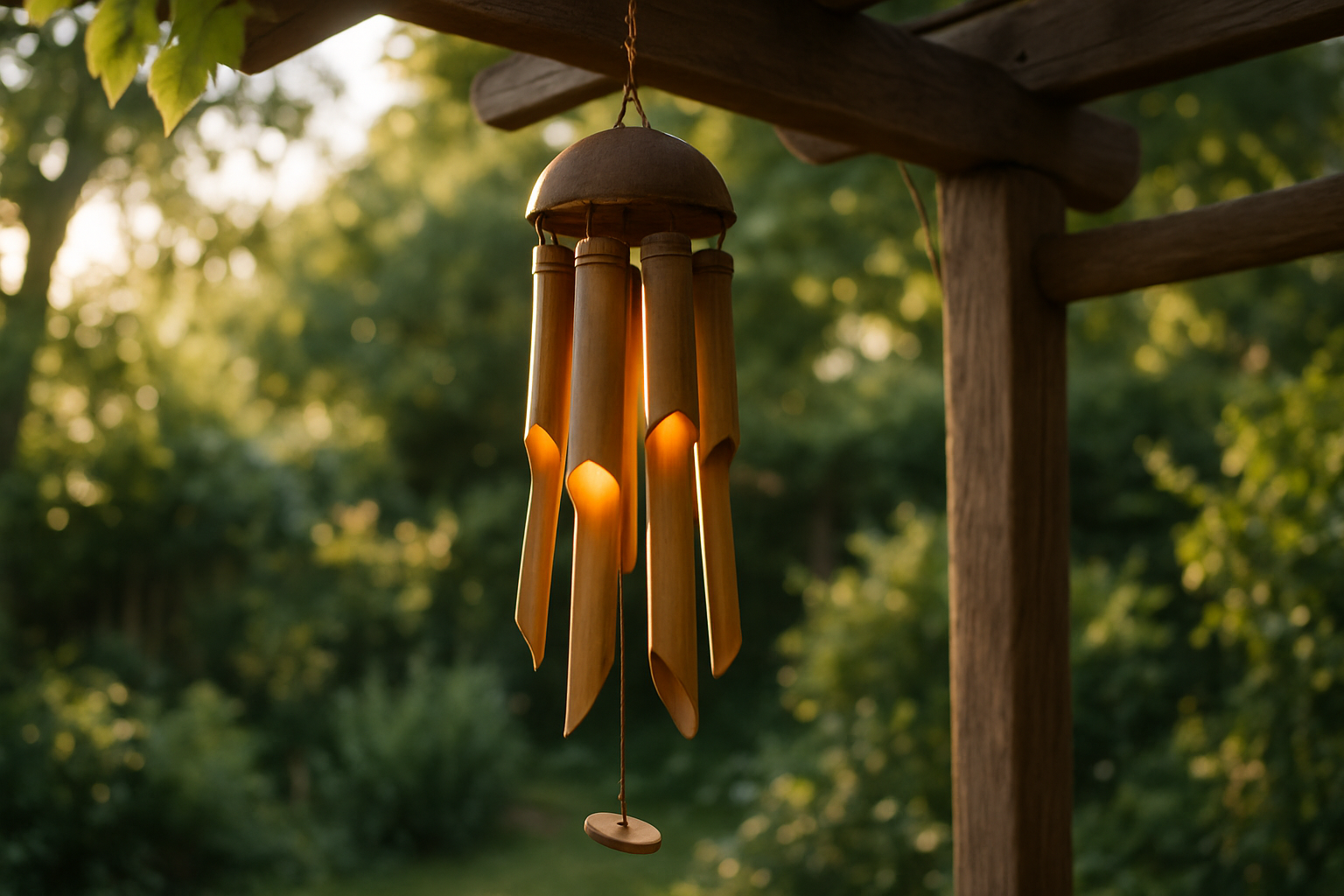
I almost set my backyard on fire trying to make a gift.
That’s not a metaphor. There was an actual small fire, a very alarmed squirrel, and my garden hose doing the Lord’s work while I stood there in my bathrobe holding a craft knife and a half-finished set of DIY bamboo wind chimes. And yet — somehow — the whole ridiculous ordeal produced the most meaningful gift I’ve ever given anyone. My neighbor Margaret actually cried when she unwrapped them. Happy tears, I promise. She still texts me photos of them hanging on her porch to this day.
This post contains affiliate links. As an Amazon Associate, I earn from qualifying purchases.
Let me back up.
The Wind Chime Incident (A Story of Ambition and Poor Planning)
Margaret had mentioned, approximately forty-seven times over the past year, that she wanted wind chimes for her porch. Something natural. Something with a soft, mellow tone. Not the jangling metal kind from the hardware store, but the deep, woody sound she remembered from a trip to Bali decades ago. I, a person who had never crafted anything more complex than a grilled cheese sandwich, decided I would make them for her birthday.
My first mistake was assuming I could “just wing it.” My second mistake was trying to use a scented candle to heat-treat my bamboo tubes at 6 a.m. on a Saturday, because I’d read that a small amount of heat removes excess moisture and I interpreted “small amount of heat” very loosely. The candle tipped. The bamboo shavings on my workbench caught. The squirrel on the fence screamed (they do that, apparently). The hose saved the day. The bathrobe did not survive with dignity intact.
But you know what? After I cleaned up, made coffee, and actually read a proper guide, the chimes turned out beautifully. And you can skip the squirrel trauma entirely by following the steps below.
Choosing the Right Bamboo for DIY Bamboo Wind Chimes
This is where most beginners go wrong — and where I went wrong first. Not all bamboo behaves the same way when cut into chime tubes. The species, age, and wall thickness of your bamboo all affect the sound it produces. Thick-walled, mature bamboo creates that deep, resonant tone that makes a wind chime feel meditative rather than chaotic.
Here’s what to look for when selecting your bamboo:
- Wall thickness matters most. Thicker walls produce lower, richer tones. Thin-walled bamboo tends to give a sharper, shorter sound — fine for some styles, but less ideal for that mellow Bali vibe Margaret was after.
- Use mature culms. Bamboo that’s at least 3–5 years old is drier, denser, and more acoustically resonant than young green canes.
- Cut above the node. Each tube should include a closed node at one end if possible — this affects both the sound and the structural integrity of the chime.
- Dry your bamboo properly. And I cannot stress this enough — do not use a scented candle. Allow cut bamboo to dry in a shaded, ventilated area for several weeks, or purchase pre-dried craft tubes so you can skip this step entirely.
If you don’t have a bamboo grove to harvest from (or you do but it’s the middle of winter), pre-cut bamboo craft tubes are a fantastic shortcut. I’ve used the INature Bamboo Craft Tubes (100 Count, 5″) and been really happy with the consistency — same diameter, already dried, easy to work with. The Rivajam 125 Bamboo Sticks for Crafts are another solid option if you want more pieces to work with or experiment on before committing to your final design. For slightly longer tubes with a bit more acoustic depth, the IA Crafts Bamboo Tubes at 5.9″ long are worth considering — they come in a range of inner diameters which gives you more control over your tonal variety.
Tools I Use for Making Bamboo Wind Chimes
Beyond the bamboo itself, you’ll need a few key supplies. Some you probably already have. A couple of them I wish I’d bought before the bathrobe incident.
Hardware and Assembly Supplies
- A small hand saw or craft knife for trimming tubes to length (please use this instead of fire)
- Sandpaper (150–220 grit) to smooth cut ends and prevent splitting
- A drill with a small bit for creating suspension holes near the top of each tube
- Nylon cord or fishing line for stringing the tubes — both hold up well outdoors
- A wooden or bamboo platform piece to serve as the top from which your tubes hang
If you want to blend bamboo tubes with some metal ones for a more complex sound profile — which I highly recommend — the 60 Pieces Wind Chime Tubes Parts Supplies kit is a great grab. Alternating materials creates a layered, melodic quality that’s really hard to achieve with one material alone. And if you’d rather start with a complete framework and add your bamboo tubes around it, the Glarks 61Pcs Wind Chime Kit includes multiple tube lengths, swivel hooks, and thread wire — everything you need in one box. I’d have saved myself a lot of measuring anxiety if I’d started with this.
How to Tune Your Bamboo Chimes (Sort Of)
You don’t need to be a musician to get a pleasing sound — but a little intentionality goes a long way. The length of each tube is your main tuning tool. Longer tubes produce lower tones; shorter tubes produce higher ones. A common approach is to cut five tubes in gradually increasing lengths — say, from about 9 inches down to 5 inches — and hang them in a slightly staggered circle so they catch the breeze from multiple angles.
Tap each tube with a wooden dowel before you drill and hang it. Listen. Adjust the length by trimming small amounts from the bottom until you get a combination of tones