Running bamboo spreads aggressively through underground rhizomes and can overtake a yard — or a neighbor’s yard — within a few seasons. Clumping bamboo stays where you plant it, expanding slowly outward from a central base. That single difference shapes every decision you’ll make about which type belongs in your landscape.
What Actually Makes Bamboo “Run” or “Clump”
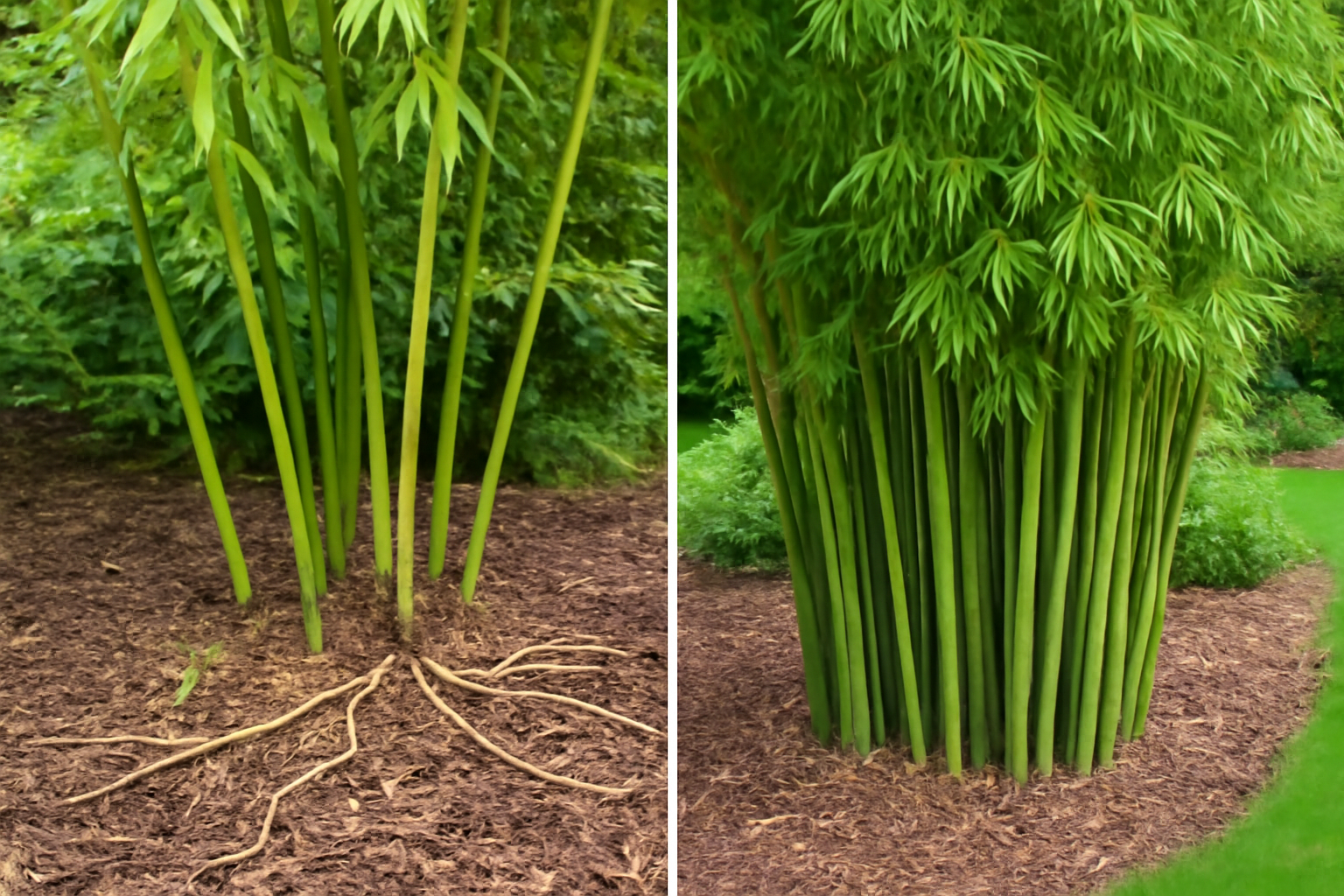
The distinction comes down to rhizome behavior — the underground stem system that drives how bamboo moves through soil. Running bamboo, primarily from the Phyllostachys and Pleioblastus genera, produces leptomorph rhizomes: long, horizontal, fast-moving root structures that can travel 5 to 15 feet or more from the parent plant in a single growing season. They run shallow — typically 2 to 12 inches below the surface — which makes them surprisingly easy to miss until new shoots are already pushing up through your lawn, your flower bed, or your neighbor’s garden.
Clumping bamboo, including genera like Fargesia and Bambusa, uses pachymorph rhizomes: shorter, curved structures that turn upward and produce new culms close to the original plant. The colony expands, but slowly — usually 2 to 6 inches outward per year. That’s the difference between a plant you manage and a plant that manages you.
A Side-by-Side Look at Running vs Clumping
Before choosing a species, it helps to understand how these two categories compare across the factors that matter most to homeowners:
| Factor | Running Bamboo | Clumping Bamboo |
|---|---|---|
| Spread risk | High — can travel 15+ ft/year | Low — 2 to 6 inches/year |
| Privacy screen speed | Fast — dense coverage in 2–3 years | Moderate — 3 to 5 years for full screen |
| Maintenance level | High — requires active rhizome management | Low to moderate |
| Root barrier needed | Yes — strongly recommended | No |
| Cold hardiness | Many tolerate -10°F to -20°F (USDA zones 5–6) | Varies — some hardy to -20°F, others zone 8+ |
| Best use case | Large properties, windbreaks, rural buffers | Urban lots, near fences, small gardens |
| Neighbor-friendly | Not without containment measures | Yes |
Running Bamboo Species Worth Knowing
If you’re working with a large rural property or need a fast-growing windbreak along an open fence line, running bamboo can be genuinely excellent — as long as you go in with clear eyes about what containment requires.
- Phyllostachys aurea (Golden Bamboo): One of the most widely planted running bamboos in North America. Hardy to around 0°F (zone 7), it reaches 10 to 20 feet tall and forms dense thickets quickly. It’s also one of the most commonly found escaping property lines.
- Phyllostachys bissetii (Bisset’s Bamboo): More cold-hardy than most, tolerating temperatures down to -15°F or zone 5. Reaches 18 to 22 feet. Excellent for northern climates needing a fast privacy screen, provided it’s properly contained.
- Phyllostachys nigra (Black Bamboo): Prized for its striking dark culms that deepen to near-black in the second year. Hardy to about 0°F to -5°F. Slower-spreading than some other Phyllostachys, but still a runner — don’t let its visual elegance lull you into skipping containment.
With any of these species, installing a root barrier is not optional if you value your property boundaries. A high-density polyethylene (HDPE) barrier at least 60 mil thick, buried 24 to 30 inches deep with 2 to 3 inches above the soil surface, is the industry standard for keeping runners contained. You can read more about root barrier installation for running bamboo to understand exactly what that process looks like before you plant.
Clumping Bamboo Species for Tighter Spaces
Clumping bamboo — often marketed as “non-invasive bamboo” — is exactly what that label implies: it will not send rhizomes racing under fences or through garden beds. The clump expands gradually, predictably, and can be managed with basic edging if needed. For urban lots, courtyard gardens, or any planting within 10 to 15 feet of a property line, clumping species are the responsible choice.
- Fargesia murielae (Umbrella Bamboo): One of the hardiest clumping bamboos available, tolerating temperatures down to -20°F (zone 5). It tops out around 10 to 12 feet with an arching, fountain-like habit. Prefers partial shade and is ideal for shadier corners of the yard.
- Fargesia robusta (Pingwu Bamboo): More upright than F. murielae, reaching 12 to 15 feet, with notable white powder on new sheaths. Hardy to around -5°F to -10°F. It tolerates more sun than most Fargesia and forms a cleaner, more structured privacy screen.
- Bambusa multiplex (Hedge Bamboo): A classic clumping bamboo for warmer climates (zone 8 and above), growing 15 to 25 feet depending on the cultivar. It’s widely used for ornamental hedging in the Southeast and coastal regions. Several dwarf cultivars like Alphonse Karr stay under 35 feet and are popular for container growing.
The practical truth about non-invasive bamboo is this: “non-invasive” means the plant won’t aggressively spread beyond its planting zone. It does not mean the plant stays tiny or requires no maintenance — mature clumping bamboo is still a substantial plant that benefits from thinning every few years to keep it looking its best.
When Running Bamboo Actually Makes Sense
There’s a tendency in bamboo discussions to treat running bamboo as the villain and clumping bamboo as the hero. That framing is too simple. Running bamboo can be an excellent choice in specific situations:
- Large rural properties with natural boundaries — If your nearest neighbor is an acre away and you have a creek, road, or open field as a natural stop, running bamboo’s aggressive spread becomes an asset for establishing a fast, dense windbreak or wildlife habitat corridor.
- Areas where spread is intentional — Some landowners use running bamboo to stabilize eroding slopes or fill a large open area with a living ground cover. When the goal is coverage rather than containment, runners do that job exceptionally well.
- When you’re committed to maintenance — Annual rhizome trenching (cutting back underground growth along a defined boundary each spring) is an effective way to keep runners in check without a barrier. It’s labor-intensive but doable on smaller plantings.
If none of those conditions apply to your property, clumping bamboo will almost certainly serve you better — not just ecologically, but in terms of your own peace of mind and your relationship with whoever lives next door.
Making the Right Call for Your Yard
The question isn’t really “which is better” — it’s which one fits the constraints and goals of your specific landscape. A small urban backyard where you want a living privacy screen along a 20-foot fence? Fargesia robusta or Bambusa multiplex will give you exactly that without any drama. A 5-acre property where you need a 200-foot windbreak along a farm road by year three? Phyllostachys bissetii with a properly installed root barrier along the interior boundary is a legitimate strategy. Knowing the difference between running bamboo and clumping bamboo before you buy — and before you plant — is the single most important thing you can do to make sure bamboo becomes a feature you love rather than a problem you’re trying to undo.
🛒 Recommended Products
DeepRoot Bamboo Barrier 18″ — the essential containment system for running bamboo, prevents rhizome spread beyond planting area
View on Amazon →Root Barrier 24″ Depth — heavy-duty HDPE barrier for aggressive running bamboo species like Moso and Golden Bamboo
View on Amazon →Miracle-Gro All Purpose Plant Food — feeds both running and clumping bamboo through the active growing season
View on Amazon →As an Amazon Associate I earn from qualifying purchases. Prices and availability subject to change.
Running vs Clumping Bamboo: Common Questions
What is the difference between running bamboo and clumping bamboo?
The core distinction in running bamboo vs clumping bamboo comes down to how each plant spreads. Running bamboo spreads aggressively through underground rhizomes (monopodial root system) and can travel 15 feet or more from the parent plant in a single season. Clumping bamboo, by contrast, grows in tight, self-contained clusters using a sympodial root system, expanding only 1–4 inches per year at the base — making it far more predictable and manageable.
Is clumping bamboo invasive?
No. Unlike its counterpart in the running bamboo vs clumping bamboo debate, clumping bamboo is non-invasive. It stays neatly within a defined clump and expands slowly and predictably over time. This controlled growth habit makes clumping bamboo a safe and popular choice for residential gardens where boundary concerns are a priority.
Can you stop running bamboo from spreading?
Yes, but it requires a proactive approach. The most effective method is installing a physical root barrier made from 60–80 mil HDPE, buried to a minimum depth of 30 inches around the planting area. Alternatively, regular rhizome pruning — performed at least twice yearly — can help keep spread under control. Keep in mind that containment is an ongoing commitment, not a one-time fix.
Which is better for a privacy screen — running or clumping?
When evaluating running vs clumping bamboo for a privacy screen, both have trade-offs. Running bamboo fills in gaps more quickly but demands consistent containment efforts to prevent it from encroaching on neighboring areas. Clumping bamboo is slower to establish a full screen but requires far less maintenance once planted. For most homeowners, clumping varieties such as Bambusa textilis offer the best balance of privacy, safety, and low upkeep.