This post contains affiliate links. As an Amazon Associate, I earn from qualifying purchases at no extra cost to you.
Last spring, my tomato garden was an absolute disaster. Three weeks after transplanting, my Beefsteak and Roma plants were already flopping sideways. The wire cages I had relied on for years had rusted through over winter. I needed a replacement fast — and that search led me deep into a bamboo stakes garden support review rabbit hole I never expected to fall into.
I had always assumed metal or plastic stakes were the serious gardener’s choice. Bamboo felt old-fashioned, almost quaint. But after watching my tomatoes lean helplessly against a rusted cage at a 45-degree angle, I was ready to try anything. A neighbor down the street had her plants standing tall and straight, and when I asked her secret, she pointed at a bundle of smooth, tan bamboo poles running through her raised beds.
That conversation sent me to Amazon that same evening. What I found surprised me. Bamboo stakes had quietly become one of the most recommended garden supports in organic and home gardening communities. After two hours of reading reviews, I landed on the COLOtime Bamboo Stakes 58 Inch (Approx 5FT) Garden Stakes Plant Stakes for Outdoor Climbing Plants Poles Sticks Support Tomatoes 20 Pack. Here is everything that happened next.
Why I Chose the COLOtime Bamboo Stakes Over Everything Else
Shopping for garden stakes sounds simple until you actually start. Dozens of options crowded my search results — plastic, fiberglass, coated metal, and bamboo in every conceivable diameter and height. I had a clear checklist: tall enough for indeterminate tomatoes, sturdy enough to handle wind, and affordable enough to buy in bulk without guilt.
The 58-inch length stood out immediately. Most cheap bamboo stakes top out at 48 inches, which barely clears a mature tomato canopy. Indeterminate varieties like Brandywine can push past five feet easily. Having that extra height built in felt like a genuine advantage rather than a marketing gimmick.
Reviews consistently mentioned that these stakes arrived straight and unsplintered, which matters more than you might think. I had ordered a competing brand two years earlier and opened the bag to find half the poles warped like banana peels. The 20-pack quantity also aligned perfectly with my raised bed layout — two stakes per plant across ten tomato plants.
Price played a role too. At roughly the cost of a single bag of potting mix, getting 20 stakes felt genuinely reasonable. I was not risking much. That said, I did seriously consider the thicker Jollybower 6FT Heavy Duty Bamboo Stakes as an alternative — more on those later.
First Impressions: Unboxing and Build Quality
The package arrived in a flat, well-wrapped bundle. Opening it, I immediately noticed the consistent coloring — a warm, natural tan with no green patches or signs of premature aging. Stakes that still have green in them tend to be freshly cut and more likely to rot quickly once they hit moist soil. These looked properly cured.
Running my hand down each pole, I felt smooth nodes rather than rough, splintery ridges. That mattered because I planned to tie soft plant tape directly to the stakes without any wrapping. Splinters would have shredded the tape and potentially damaged delicate stems.
All 20 stakes were straight. Genuinely, impressively straight. I lined three of them up side by side on my driveway and could not slip a finger under any curve or bow. That consistency is rarer than it should be in this product category. The diameter felt uniform across the full length — roughly 0.4 to 0.5 inches — which suggested careful selection during manufacturing rather than random bundling.
One small note: the pointed tips varied slightly in sharpness. Most were well-tapered for easy soil insertion. A few required a gentle twisting motion to get started in my dense, clay-heavy raised bed mix. That was a minor inconvenience, not a dealbreaker.
My Testing Protocol: How I Actually Used These Stakes
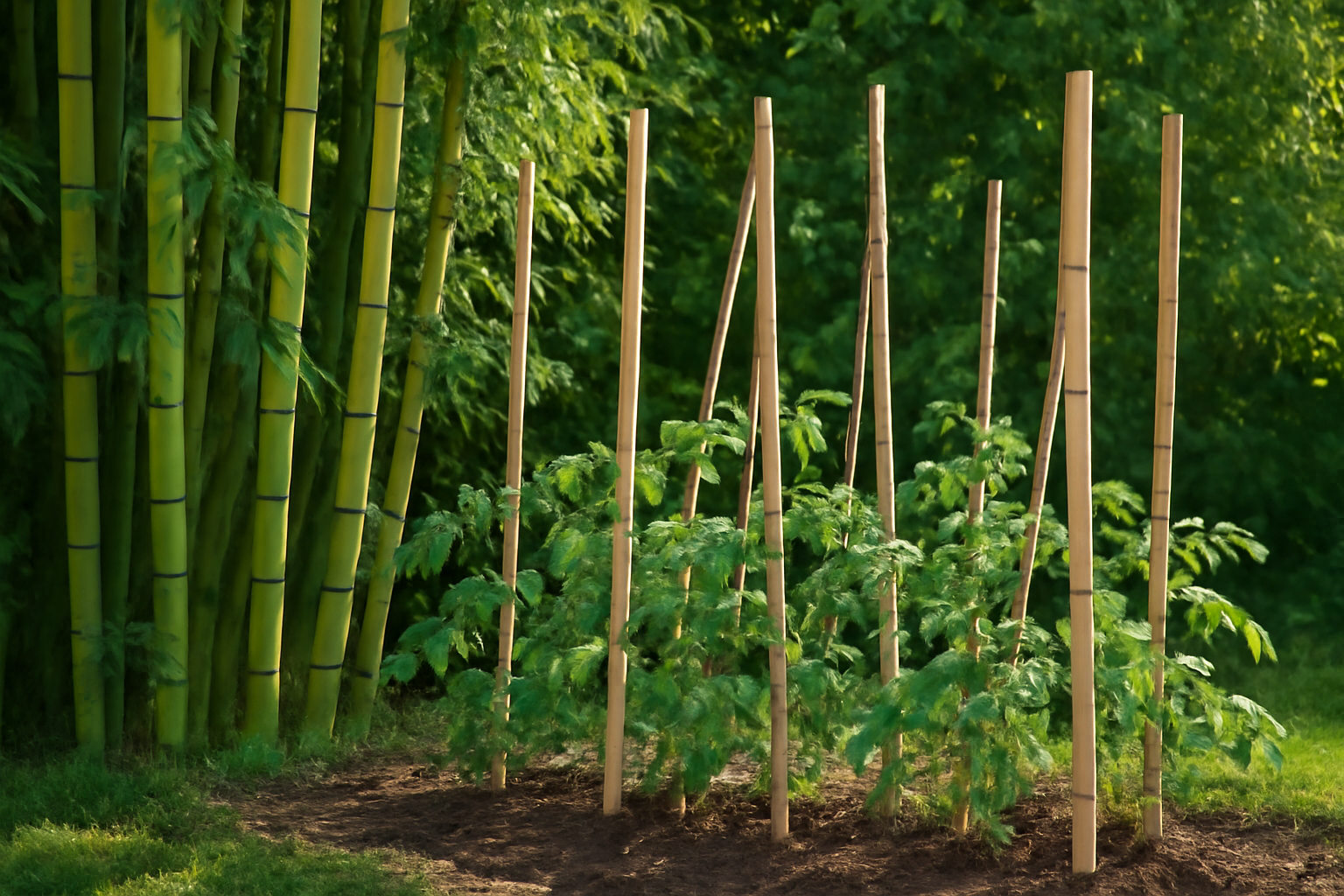
I planted ten tomato seedlings across two 4×8 raised beds in early May. Each plant received two COLOtime Bamboo Stakes 58 Inch stakes — one on each side about four inches from the stem. I drove them approximately ten inches into the soil using a rubber mallet, leaving roughly 48 inches of usable height above ground.
For tying material, I used soft silicone plant ties on the lower portion and biodegradable jute twine higher up. I retied plants every two to three weeks as they climbed. By mid-June, my tallest plant had its main stem reaching 36 inches, and I added a horizontal bamboo cross-support between the two stakes using zip ties.
July brought three separate storms with sustained winds between 25 and 35 miles per hour according to my local weather station. Those were my real test events. After each storm, I walked the garden at first light looking for damage, leaning stakes, or snapped connections.
I also intentionally stress-tested two stakes by pressing sideways against them with moderate force — roughly what I estimated a heavy fruit-laden branch in wind might generate. They flexed slightly but showed no cracking. Bamboo’s natural flexibility is a structural advantage that rigid materials like metal conduit do not always share.
What Actually Changed: Honest Results With a Timeline
Within the first two weeks, the improvement in plant posture was obvious. Stems that had been curving toward the sun straightened against the stakes. Airflow through the foliage improved visibly because plants were no longer bunching together. Fewer leaves touched the soil, which typically reduces early blight pressure.
By late June, three plants were loaded with developing fruit — clusters of five to eight tomatoes each. That kind of weight would have snapped my old rusted cages entirely. The COLOtime Bamboo Stakes 58 Inch held firm without any wobbling at the soil line, even on a particularly wet week when my raised bed soil softened considerably.
Then came my moment of doubt. Around week seven, I noticed one stake had developed a small surface crack near a node about six inches above the soil. It had not compromised structural integrity, and the stake was still perfectly upright. Still, I wondered whether the whole set would start splitting by August under fruit load. I nearly ordered a replacement set that evening.
I decided to monitor rather than panic. That crack never spread. By harvest in late August, all 20 stakes were still standing straight. My tomato yield that season was the strongest I have had in four years — though I want to be honest that better support was just one contributing factor alongside improved watering and a lucky disease-free summer.
Specific Wins Worth Noting
- Zero stakes broke or bent under fruit load throughout the entire season
- All 20 stakes survived three wind events without pulling out of the soil
- The 58-inch height was sufficient for all ten plants, including my tallest Brandywine at roughly 54 inches
- Stakes pulled out of the soil cleanly at season’s end without crumbling or rotting
- No surface splinters ever transferred to plant ties or my hands during maintenance
The Downsides: What Did Not Impress Me
No product review worth reading skips the negatives. These stakes have real limitations, and pretending otherwise would be dishonest.
First, the diameter. At roughly half an inch, these are not the beefiest bamboo stakes on the market. For very large indeterminate tomato varieties that routinely exceed five feet with heavy fruit clusters, a thicker stake would provide more confidence. The one surface crack I mentioned earlier happened on the thinnest stake in the bundle, and it appeared during a particularly wet stretch. That suggests moisture management matters for long-term durability.
Second, storage presents a mild challenge. Twenty 58-inch poles are awkward to store in a typical garden shed without a designated vertical space or hanging bracket. They do not bundle compactly after a season of use because the ties leave slight impressions in the bamboo. Worth planning for before you buy.
Third, these are not suitable for container gardens on balconies with very shallow pots. Driving a stake ten inches deep requires at least 12 to 14 inches of growing medium. In a standard 10-inch pot, you would get barely two to three inches of anchor depth — far too little for wind resistance.
Finally, bamboo does not last forever. Even well-cured bamboo exposed to soil moisture, UV, and freeze-thaw cycles will eventually weaken. These held up perfectly through one full season. I plan to use them for a second year, but I would not guarantee a third without close inspection for splitting along the nodes.
Final Verdict: My Complete Bamboo Stakes Garden Support Review
After one full growing season with ten tomato plants, three wind events, and a mountain of ripe fruit, I can say confidently: the COLOtime Bamboo Stakes 58 Inch (Approx 5FT) Garden Stakes Plant Stakes for Outdoor Climbing Plants Poles Sticks Support Tomatoes 20 Pack delivered exactly what I needed at a price that felt genuinely fair.
This is not a magic product. It is a well-made, consistently sized, properly cured bamboo stake that does its job without drama. That dependability is exactly what a garden support should offer.
Buy These If You Are:
- Growing indeterminate tomatoes in raised beds or in-ground gardens with at least 12 inches of soil depth
- Looking for an affordable 20-pack that covers a full 10-plant bed
- Replacing rusted or broken metal cages and want a natural, biodegradable alternative
- Supporting climbing plants like beans, cucumbers, or sweet peas that need vertical guidance
Skip These If You Are:
- Growing in shallow containers under 12 inches deep
- Supporting very large heritage tomato varieties with extremely heavy fruit loads — consider thicker stakes instead
- Expecting a multi-year stake without any maintenance or annual inspection
The Alternative Worth Considering
If you grow particularly large or heavy-fruiting tomato varieties, the Jollybower 20pcs 5/8″ D Thicker Heavy Duty Bamboo Stakes, 6FT Plant Stakes are worth serious consideration. They are one full inch taller and notably thicker in diameter — designed specifically for heavy-duty applications like supporting trees, large bean trellises, or very top-heavy tomato plants.
The tradeoff is cost and weight. Thicker, taller stakes cost more per unit and are harder to drive into dense soil without a mallet. For most home gardeners growing standard tomato varieties, the extra thickness may be more than necessary. However, if you have had stakes snap or split under extreme fruit load in the past, that added girth buys real peace of mind across a long season.
Both products serve the same core purpose well. Your choice ultimately comes down to plant size, soil type, and how much structural confidence you want going into peak summer.