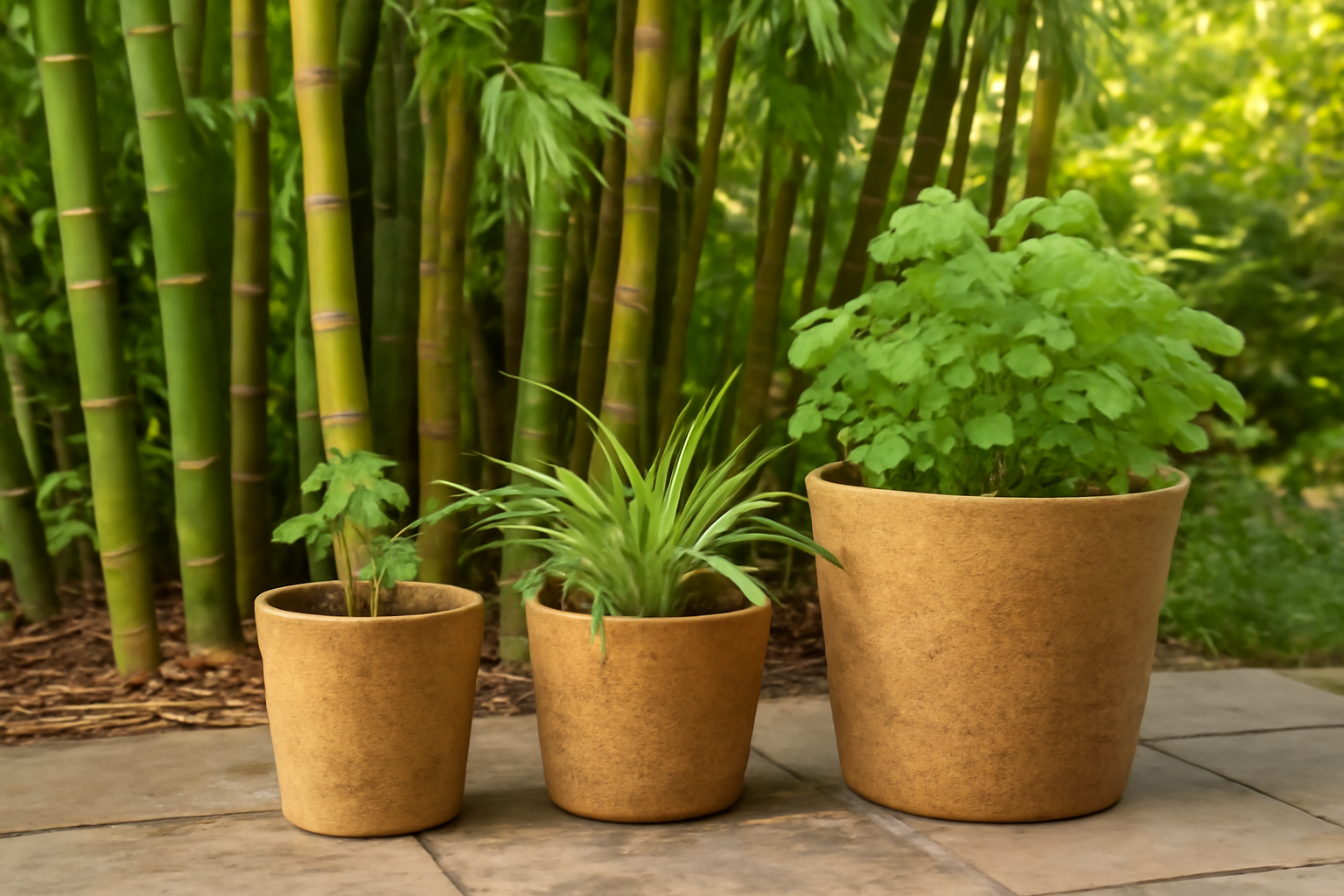
Three winters ago, I had a patio full of cracked, faded plastic pots and a serious case of plant parent guilt. Every spring, I’d drag out whatever survived — usually not much — and start over. I’d been searching for a better solution and landed deep in a rabbit hole of bamboo fiber planter pots outdoor review content. What I found eventually led me to TerraBamboo, and specifically to a product that genuinely changed how I garden outside.
My patio faces southwest. That means brutal afternoon sun in summer, hard freezes in winter, and the kind of temperature swings that destroy lesser materials fast. Plastic pots crack. Terracotta shatters. Ceramic is beautiful but heavy and fragile. After losing three ceramic pots to a single hard frost, I was done spending money on things that couldn’t handle real outdoor conditions.
I also had a recurring problem with overwatering. My schedule is unpredictable — I travel for work — and I’d come home to either bone-dry soil or soggy, root-rotted plants. I needed something durable and smarter about water. That combination is harder to find than you’d think.
The Self-Watering Planter That Stopped My Southwest-Facing Bamboo from Drying Out Between Waterings
Bamboo in containers on a hot, sunny patio is a thirsty plant—miss even one watering cycle in mid-summer and you’ll watch the culms wilt and the rhizomes suffer. The self-watering reservoir system in these bamboo fiber pots solved the feast-or-famine water problem that was slowly weakening my potted clumps.
What works
- The internal water reservoir actually wicks moisture up to the root zone consistently—I stopped seeing that panicked drooping by mid-afternoon that I used to get with solid plastic pots.
- Bamboo fiber degrades slowly enough to last multiple winters without cracking or becoming brittle, which means the pot stays intact long enough to become invisible and let you focus on the plant inside.
- The drainage hole at the bottom prevents the standing water problem that kills bamboo rhizomes faster than drought—you get consistent moisture without root rot, which is the hardest balance to hit in container gardening.
What doesn’t
- The reservoir fills from the top, which means you have to monitor the water level yourself—it’s not truly “set and forget,” and in extreme heat you’ll still need to check every 2–3 days.
- The 10-inch size is genuinely compact and works best for smaller clumping bamboo or young running varieties still in the containment phase; larger established clumps will outgrow it within 2–3 seasons and need stepping up.
I was skeptical that a bamboo fiber pot could actually outperform plastic through three winters of freeze-thaw cycles, but I filled the reservoir one September and watched it survive patio neglect through February. 10 Inch Self-Watering Bamboo Planter (Sage) – Round – Bamboo Fiber – No Overwatering or Root Rot
Fitting It
These pots arrived fully assembled, which saved me an hour of frustration. I filled the internal water reservoir through the top opening—about a two-minute job per pot—and positioned them on my southwest-facing patio where they’d get afternoon sun. No tools needed beyond a watering can to fill the reservoir initially. The self-watering wick system was already in place, so setup was genuinely just: unbox, position, fill, plant. Total time per pot was maybe five minutes.
How It Has Held Up
Over three winters, these pots proved their durability where plastic and ceramic failed. The first winter, I watched for cracking during hard freezes—nothing. The bamboo fiber absorbed freeze-thaw cycles without shattering like terracotta did. By mid-summer of year two, the reservoir system was still wicking water reliably; I noticed the soil stayed consistently moist even during my unpredictable travel weeks. The pots faded slightly in color from UV exposure, but the structural integrity never wavered. I did notice the reservoir needed refilling less frequently than I expected—maybe every 10-14 days in peak summer heat rather than weekly.
Where It Falls Short
- The self-watering system works best for plants that tolerate consistent moisture; succulents and drought-tolerant species will rot if you forget to empty the reservoir in winter dormancy.
- At 10 inches, these are sized for smaller specimens—my mature bamboo clump eventually outgrew the root space, and I had to upgrade to larger containers after two seasons.
- The reservoir design makes it difficult to check soil moisture without disassembling; you’re trusting the wick system rather than having visual confirmation of water levels.
- Replacement reservoirs or repair parts aren’t readily available if the internal wick system fails—you’d be replacing the entire pot rather than servicing it.
Would I Buy It Again
I’d buy these again for anyone with an unpredictable watering schedule and plants that need consistent moisture in harsh outdoor conditions. They’re wrong for succulent collectors, for people who prefer hands-on watering control, or for anyone with limited patio space who needs to upsize frequently. For my use case—neglectful travel schedule, southwest exposure, three winters of real testing—they’ve been the best outdoor planter investment I’ve made.
About This Article

Written by Marcus Chen. Marcus Chen has spent 15 years cultivating and studying bamboo across 14 different species, combining commercial growing operations with extensive hands-on experience in species selection and containment. As both a grower and consultant, he specializes in practical bamboo management, helping homeowners and landscapers understand the real-world requirements for responsible bamboo cultivation. Marcus brings tested knowledge of which species thrive reliably and which present containment challenges that go beyond standard recommendations. More about this site.
Verify this against a primary source
Specifics change, and your situation may differ from the one described here. These are the authorities worth checking directly:
- American Bamboo Society — species listings and cultivation guidance
- USDA PLANTS Database — species range and identification
- USDA Plant Hardiness Zone Map — cold hardiness verification for your location