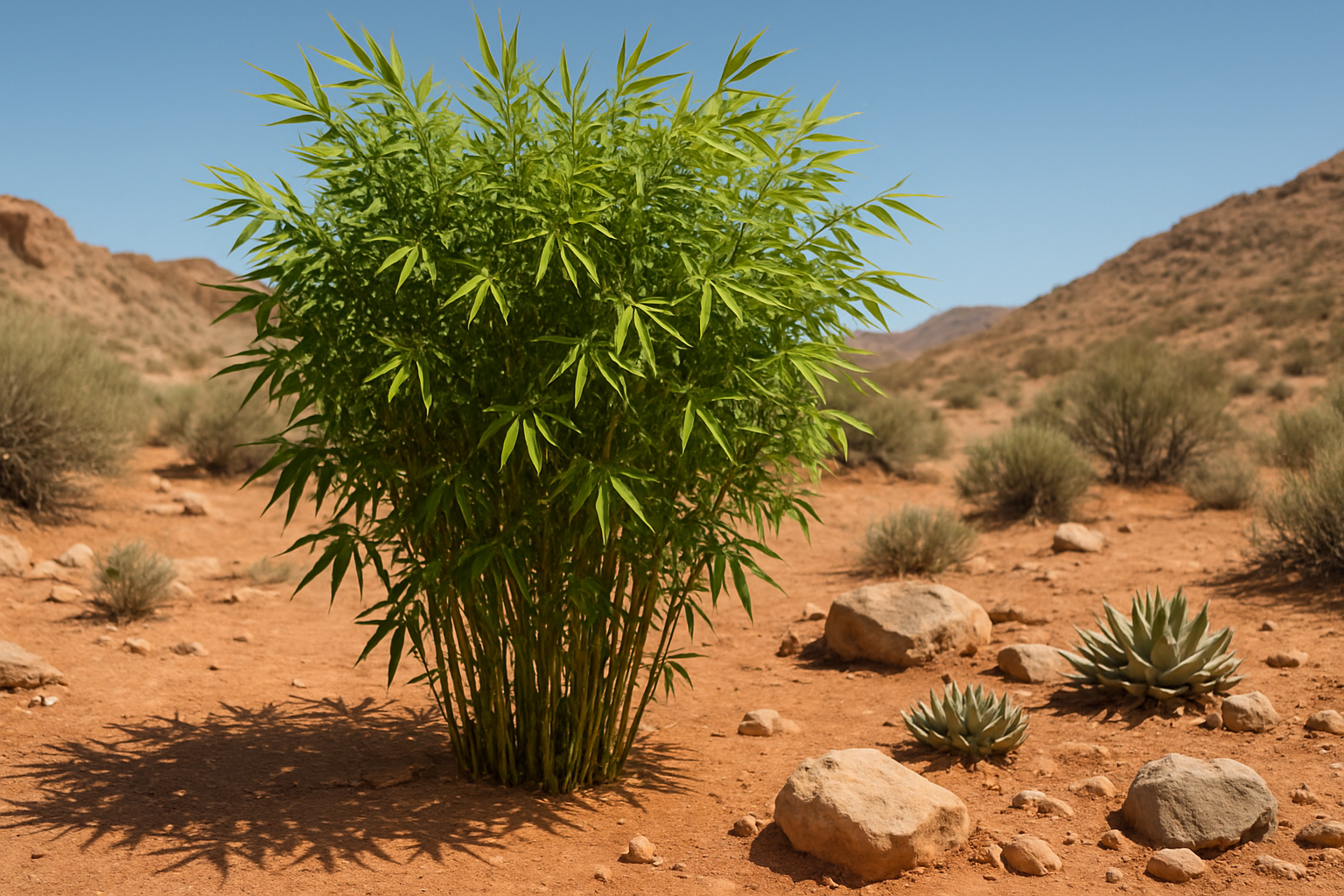
I still remember standing in my backyard in Phoenix, staring at a pile of dead plants and a credit card bill I didn’t want to open. I had spent nearly $400 on ornamental grasses, tropical shrubs, and yes — bamboo — that a well-meaning nursery employee swore would “do great out here.” Three months later, the Arizona summer had turned every single one of them into crispy, brown ghosts of their former selves. My husband didn’t say “I told you so,” but I could feel it hanging in the air between us every time we walked past that sad corner of the yard.
That disaster was the beginning of what turned into a genuine obsession with finding bamboo that could actually survive — and even thrive — in a bamboo hot dry climate situation. And spoiler alert: I eventually found it. But first, let me save you from making the same expensive mistakes I did.
This post contains affiliate links. As an Amazon Associate, I earn from qualifying purchases. This means if you click a link and make a purchase, I may earn a small commission at no extra cost to you. I only recommend products I genuinely find useful.
Why Most Bamboo Fails in Hot, Dry Climates
Here’s the hard truth nobody told me at that nursery: most bamboo sold in big-box garden centers is bred for humidity and mild temperatures. When you’re dealing with triple-digit heat, low rainfall, and low humidity — the trifecta of desert gardening misery — the wrong bamboo variety doesn’t just struggle. It dies fast and takes your money with it.
Bamboo is a grass at its core, and like all grasses, it comes in an enormous range of climate tolerances. The key factors that will make or break bamboo in hot, dry climates are:
- Heat tolerance: Some varieties handle sustained heat above 100°F; many absolutely do not.
- Drought resistance: True drought-tolerant bamboo can go longer between watering once established, but they still need help getting there.
- Soil adaptability: Desert soils are often alkaline and sandy. You need varieties that won’t throw a tantrum over pH.
- Root establishment time: Bamboo needs extra support during its first year in harsh conditions. This is where most desert gardeners lose the battle.
After my $400 disaster, I did what any stubborn desert gardener does: I went deep into research mode. Forums, university extension publications, bamboo society newsletters. I was going to crack this.
The Best Bamboo Varieties for Hot Dry Climate Gardening
Not all hope is lost for bamboo lovers in the desert Southwest, Southern California, or other hot, arid regions. These varieties have proven track records in difficult conditions.
Bambusa oldhamii (Giant Timber Bamboo)
This clumping bamboo is a desert gardener’s best friend. It tolerates heat extremely well, can handle brief drought periods once established, and grows impressively fast. It’s one of the most widely successful bamboos in Southern California and Arizona. Clumping types are also a safer choice in general because they won’t send runners racing under your fence into your neighbor’s yard — something I learned about the hard way with my first failed attempt.
Bambusa multiplex (Hedge Bamboo)
Another clumping variety that handles heat and some drought with grace. It stays more compact than Oldhamii, making it perfect for privacy screens or container growing on a covered patio. This one is particularly forgiving during the establishment phase, which makes it great for beginners trying bamboo in a challenging climate for the first time.
Black Bamboo (Phyllostachys nigra)
Black bamboo is the one that made me fall in love all over again after my disaster. Those dramatic dark culms are absolutely stunning against a desert landscape with terracotta walls or gravel paths. It is technically a running bamboo, so you’ll want to use root barriers, but it handles heat better than most running varieties and has a surprisingly good drought tolerance once established. If you want to try growing it from seed, these Black Bamboo Seeds are a fun project — just know that growing from seed takes patience and a good germination setup.
Consider a Bamboo Alternative: Nandina (Heavenly Bamboo)
Okay, this one isn’t technically bamboo — it’s actually a shrub — but hear me out. Nandina domestica, commonly called Heavenly Bamboo, gives you that airy, bamboo-like aesthetic with incredible drought tolerance and year-round color. For spots where even the toughest bamboo struggles, Nandina Gulf Stream is a gorgeous, low-maintenance option that holds its own beautifully in hot, dry gardens. I planted two of these flanking my back gate and they have been absolutely effortless.
How I Finally Made Bamboo Work in the Arizona Desert
After my initial failure, I changed my entire strategy. The plants weren’t the only problem — my planting and watering methods were all wrong for the desert environment. Here’s what actually worked.
Deep Root Watering Changed Everything
Surface watering in extreme heat is almost pointless. The moisture evaporates before it reaches the roots, and it encourages shallow root systems that can’t handle the dry spells between waterings. The single biggest game-changer for me was switching to deep root irrigation stakes. I use these 24-inch Deep Drip Watering Stakes around all of my bamboo, and if you prefer a tan color that blends with natural mulch, this tan version works just as well. They push water straight down to the root zone, which is exactly where bamboo needs it most during establishment and heat stress.
Mulch Like You Mean It
A thick layer of mulch — we’re talking four to six inches — around the base of your bamboo is non-negotiable in desert climates. It insulates the soil, retains moisture, and keeps the root zone temperature from spiking to levels that stress the plant. Organic mulch also slowly improves your soil structure over time, which is a bonus when you’re working with compacted, alkaline desert dirt.
Plant in Fall, Not Spring
This was the advice that finally turned things around for me. Planting bamboo in the fall gives it the cooler months to establish its root system before facing its first brutal summer. Spring planting in the desert throws a brand-new plant