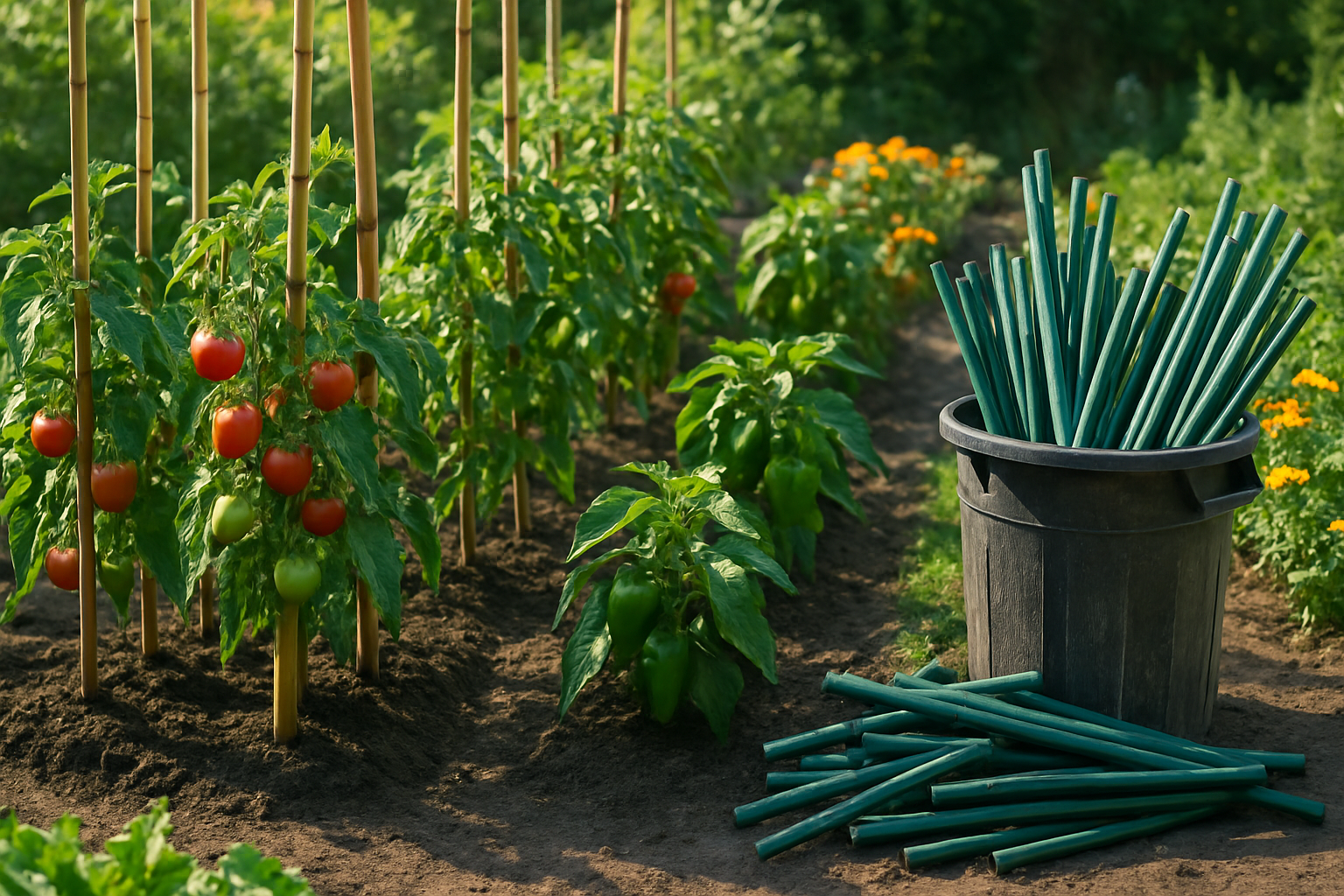
- Drive them in at planting time, not when your plant is already struggling. You’ll disturb fewer roots and get a better anchor.
- Use a figure-eight tie when attaching stems to stakes. Loop the tie around the stake, cross it, then loop around the stem. This gives the stem room to move and grow without being strangled.
- Angle the stake slightly toward the direction of prevailing wind if you’re in an exposed area. It dramatically improves stability under pressure.
- Soak bamboo stakes overnight before driving them into hard soil.
I want to tell you about the day I accidentally staked an entire raised bed with what turned out to be decorative cocktail skewers. Not garden stakes. Cocktail skewers. My Roma tomatoes were practically laughing at me by July.
It was my third year gardening, and I’d grabbed what I thought was a fresh pack of plastic garden stakes from the garage shelf. They looked right. They were roughly the right length. They were, I later discovered while puzzling over a collapsed tomato cage, rated to hold approximately four olives and a maraschino cherry. My plants hit the dirt like tired toddlers. I hit rock bottom as a gardener. And that humiliating afternoon is exactly why I started doing real research into bamboo garden stakes vs plastic — and why I have never once regretted the switch I made the following weekend.
This post contains affiliate links. As an Amazon Associate, I earn from qualifying purchases.
The Problem With Plastic Stakes (Beyond My Cocktail Skewer Incident)
Once I started paying attention, I realized the cocktail skewer disaster was just the most embarrassing symptom of a bigger problem. I had a garden full of plastic stakes in various states of defeat. Some had snapped clean in half mid-season. A few had cracked along the sides and were held together mostly by the twist ties wrapped around them. And every single fall, when I finally pulled them out to clean up the beds, I’d find another one had shattered into sharp little shards I had to hunt through the soil like a miserable Easter egg hunt.
Here’s what I didn’t fully appreciate until I made the switch: plastic garden stakes are often made from low-grade polypropylene or fiberglass composites that degrade with UV exposure. The sun basically slowly destroys them all summer long, which is a remarkable design flaw for something intended to be used outdoors in the summer. They get brittle, they snap, they leave microplastic fragments in your garden beds. For anyone growing food, that last part is genuinely worth thinking about.
Bamboo, on the other hand, is naturally strong along its grain, flexible enough to absorb wind stress without snapping, and it breaks down at the end of its life in the most garden-appropriate way possible: it becomes compost. Not confetti. Not shards. Compost.
Bamboo Garden Stakes vs Plastic: What Actually Matters When You’re Choosing
Not all bamboo stakes are created equal, and I say that as someone who now owns an embarrassing quantity of them. Here’s what I’ve learned actually matters when you’re shopping:
Length Is Everything
Match your stake length to your plant’s mature height, not its current height. A tomato plant that looks politely small in May will absolutely be towering over your fence by August. For determinate tomatoes and most peppers, 4-foot stakes work beautifully. For indeterminate tomato varieties, climbing beans, or cucumbers trained on a single stem, go longer — 48 inches or more.
Thickness Determines Load
Thin stakes (around 6-8mm) are perfect for indoor plants, seedlings, or flowers that just need a little guidance. Thicker stakes (10mm and up) are what you want when you’re asking bamboo to hold up a full-grown vegetable plant in a windstorm. Most product listings will tell you the diameter — actually read that number.
Treated vs. Natural
Some bamboo stakes are kiln-dried or heat-treated for extra durability and to prevent mold. For stakes that will be in contact with moist soil all season, this matters. Look for stakes that are described as natural or kiln-dried — both are fine, just understand that untreated bamboo in perpetually wet soil will break down faster.
Tools I Use: My Favorite Bamboo Stakes on Amazon
I’ve tried a lot of options over the past few seasons, and these are the ones I actually keep reordering:
For indoor plants, seedlings, and craft projects, the HOPELF 50 Pack 8″ Bamboo Plant Stakes are my go-to. They’re slender, tidy, and come in three sizes (8″, 12″, and 16″), which makes them incredibly versatile. I used a pack of these to support my pepper seedlings this spring and had plenty left over for a little trellis craft project with my daughter.
For tomatoes, beans, and anything that’s going to grow tall and heavy, I love the Suzile 100 Pcs Bamboo Stakes in 48 Inch. The bulk quantity is genuinely useful if you have more than a few raised beds, and 48 inches gives you enough stake to drive firmly into the ground and still have plenty of height above soil for your plants to climb.
If you want something that comes with everything you need out of the box, the 32 Pcs Garden Stakes Set with Twist Ties is a fantastic starter kit. The included twist ties are a small detail that makes a real difference — soft enough not to cut into stems, and they’re right there with the stakes so you’re not hunting through a drawer for them.
For medium-height plants — think young fruit trees, dahlias, or taller peppers — I reach for the Mininfa Natural Bamboo Stakes 4 Feet, 25 Pack. These are solid, well-sized for most vegetable garden situations, and the 25-pack is a reasonable quantity if you’re not ready to buy in bulk just yet.
And for a smaller-quantity option that’s great for containers or raised beds with a mix of plants, the GAGINANG 20 Pcs Bamboo Plant Stakes, 18 Inches hit a nice sweet spot. Eighteen inches is perfect for most container tomatoes, potted herbs that are getting leggy, and flowers that need a little backbone through summer storms.
Tips for Getting the Most Out of Your Bamboo Stakes
- Drive them in at planting time, not when your plant is already struggling. You’ll disturb fewer roots and get a better anchor.
- Use a figure-eight tie when attaching stems to stakes. Loop the tie around the stake, cross it, then loop around the stem. This gives the stem room to move and grow without being strangled.
- Angle the stake slightly toward the direction of prevailing wind if you’re in an exposed area. It dramatically improves stability under pressure.
- Soak bamboo stakes overnight before driving them into hard soil.
Why I Replaced All My Plastic Garden Stakes With Bamboo (And Never Looked Back)