This post contains affiliate links. As an Amazon Associate I earn from qualifying purchases at no extra cost to you.
It was a Saturday morning in late June when I finally admitted defeat. I was standing in my backyard holding a rotted cedar plank that had basically crumbled in my hand, staring at the gap it left in my fence — a gap wide enough for my neighbor’s dog to stroll through at will. Seven years of staining, patching, power washing, and re-nailing, and this was where we ended up. That morning I started seriously researching the bamboo privacy screen vs wood fence question, and two years later, I have not once regretted what I did next.
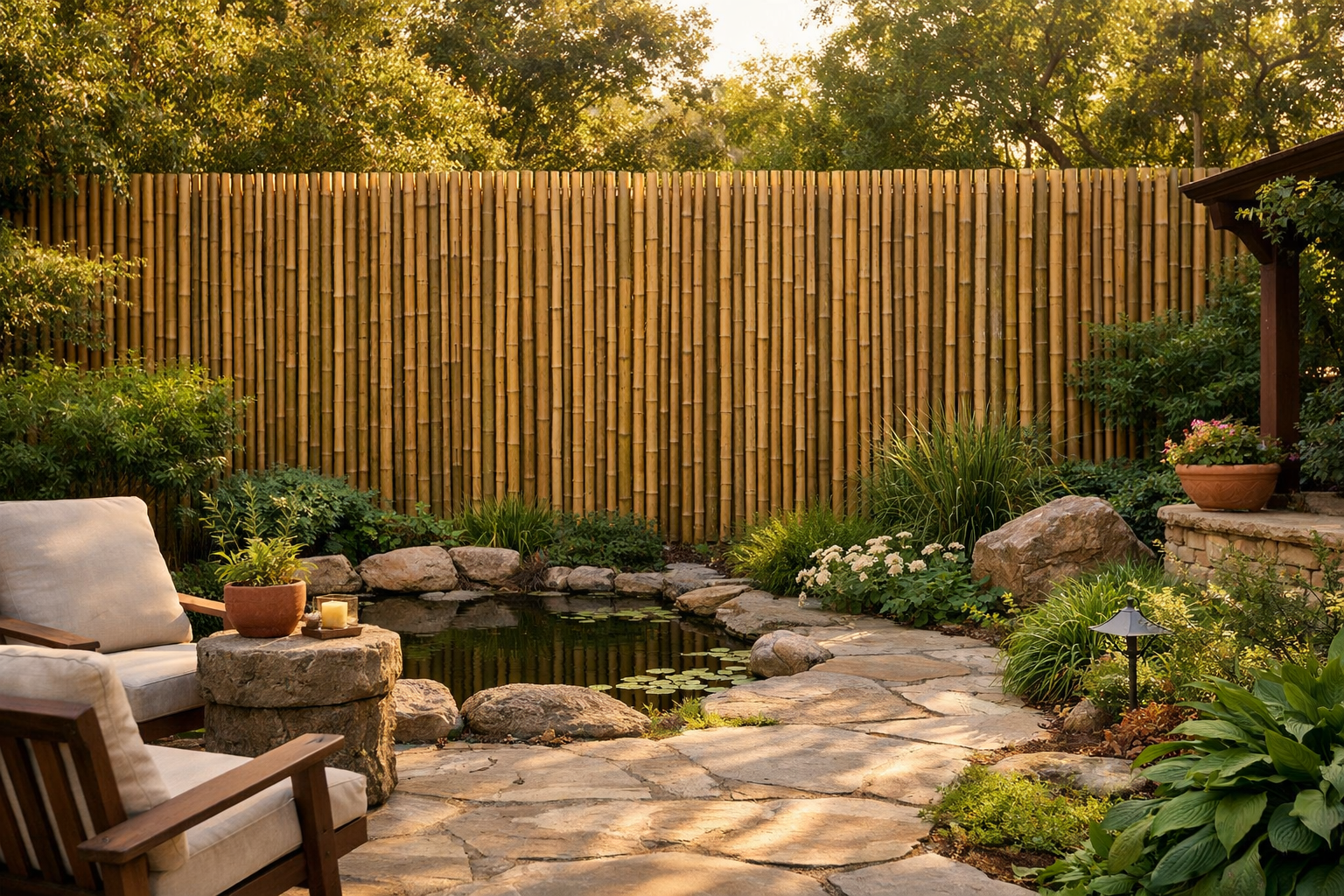
The Real Cost of My Cedar Fence (It Was More Than I Thought)
Let me paint you the full picture, because I think people dramatically underestimate what a wood fence actually costs you over time — and I was one of those people.
When I put in the cedar fence, I was pretty proud of myself. Cedar is naturally rot-resistant, everyone said so. It looked gorgeous. My backyard felt like a real grown-up space for the first time. For about two years, I had almost no complaints.
Then the maintenance cycle began. Year three, I noticed the boards were starting to gray and dry out. Bought a deck and fence stain, spent a full weekend applying it. Year four, a few boards warped. Year five, I found a wasp nest tucked between two planks on the south-facing side — something I only discovered because I reached my hand in there without looking first, which was a completely terrible decision. Year six, rot showed up at the base of several posts. Year seven: the crumbling-plank Saturday.
When I actually sat down and added up what I had spent — materials, stain, sealant, replacement boards, the occasional handyman visit when a post needed resetting — I was genuinely a little sick. The maintenance costs over seven years had added up to nearly half the original installation price, all over again. And the fence still looked tired.
That is when bamboo started looking a lot more interesting.
What I Actually Installed (And How It Works)
I want to be upfront here: I did not rip out my old fence posts. The cedar posts were still structurally sound — it was the boards between them that had given up. So what I did was attach bamboo screening panels directly to my existing post framework. If you are starting from scratch, you will want solid posts, and I will mention a helpful option for that in a moment.
For the main run of fence along my back property line, I used the 6.5ft x 13ft Bamboo Slat Screening Roll. These are full-size panels made from natural bamboo slats woven together, and they cover a serious amount of ground. Two panels handled most of my back fence, and the coverage was genuinely impressive. The slats sit tight enough that you have real privacy — my neighbor cannot see into my yard from his deck at all, which is the entire point.
For a shorter section near my patio, I went with the Forever Bamboo Natural Bamboo Fencing Decorative Rolled Fence Panel, which comes in a 6ft x 8ft size that fit perfectly in that tighter space. The bamboo poles on this one are thicker — about three-quarter inch diameter — which gives it a more substantial, tropical look that I am genuinely obsessed with.
If you have a balcony, a pool surround, or a smaller garden section to screen, the Sprigra Bamboo Slat Fence 4ft x 13ft is worth looking at. It is a slimmer profile panel that works beautifully in spaces where you need privacy without the visual weight of a full-height fence.
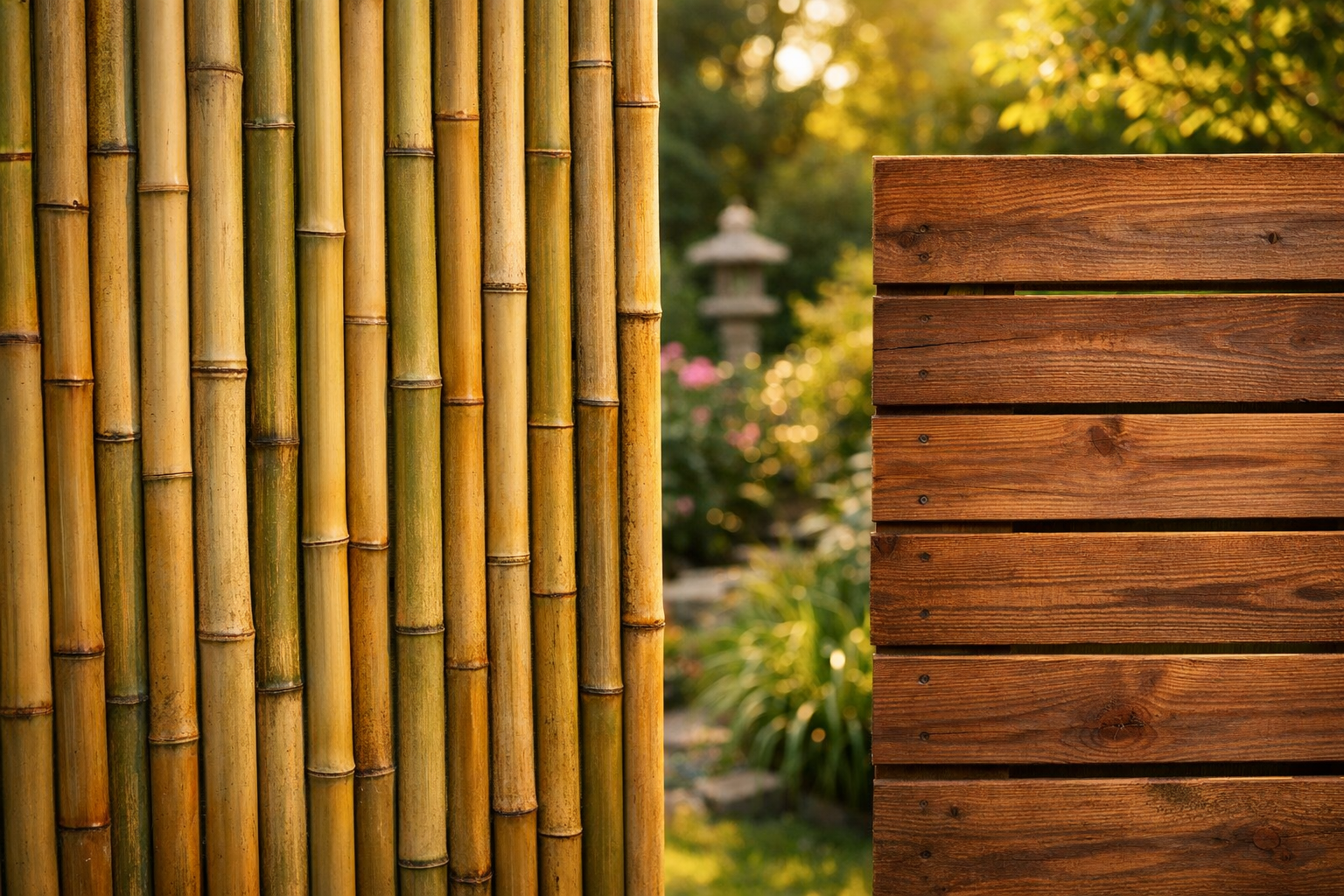
Bamboo Privacy Screen vs Wood Fence: The Honest Breakdown
Okay, here is where I get into the actual head-to-head comparison, because I think this is what most people searching for the bamboo privacy screen vs wood fence debate really want to know. Let me go category by category.
Installation
Bamboo wins easily. Rolling out a bamboo panel and zip-tying or wiring it to existing posts took me about forty-five minutes for the whole back fence run. A wood fence requires posts set in concrete, boards cut to length, and nails or screws driven one by one. Even for a handy person, a full wood fence installation is a weekend project minimum. Bamboo can be done in an afternoon.
Privacy
Both do the job, but in slightly different ways. A solid wood fence gives you an absolute visual block. Bamboo slat panels get very close to that — you can see light through the tiny gaps between slats, but people cannot see through. For most residential privacy situations, bamboo is completely adequate. Reed-style panels, like the VEVOR Reed Fencing Roll in 5.5×16.4 ft, offer a softer, slightly more open look that is beautiful but a bit less opaque — great for decorative dividers and balconies.
Maintenance
This is where bamboo absolutely destroys wood. In two years, I have done essentially nothing to my bamboo fence. No staining. No sealing. No replacing individual boards. I spray it off with the hose if it gets dusty, and that is genuinely the extent of my maintenance. Wood fences need to be stained or sealed every one to three years, and boards need replacing as they rot or warp. The labor difference over a decade is enormous.
Appearance
This is subjective, but I will tell you what my actual guests say when they come into my backyard now: they comment on how warm and natural and almost resort-like it feels. The bamboo has a texture and color that softens the whole space. A cedar fence, even when freshly stained, has a more utilitarian look. Bamboo feels intentional in a way that I find really satisfying.
Cost
Bamboo panels are genuinely affordable, especially when you factor out the maintenance costs over time. Reed-style options like the Natural Reed Fencing Roll with cable zip ties are available in smaller sizes that are very budget-friendly for anyone who wants to test the look before committing to a full run. For larger projects, the Natural Reed Fencing Roll in 6ft x 16.4ft gives you excellent coverage at a price that compares very favorably to equivalent wood materials.
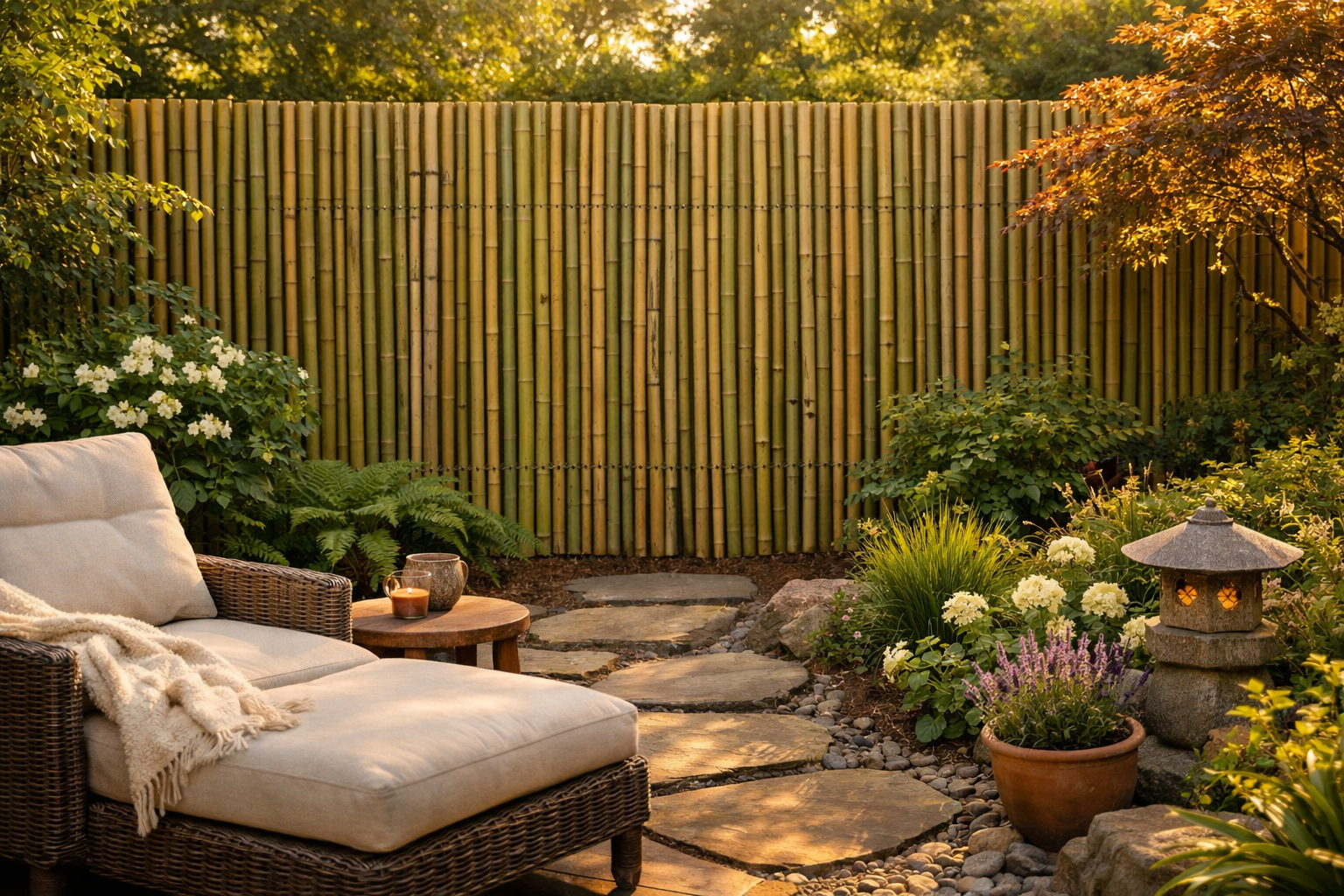
A Few Things to Know Before You Install
I want to be honest about a few things that the bamboo enthusiasm can sometimes gloss over.
First, bamboo panels need a solid framework to attach to. They are not self-supporting the way a wood fence is. If you are starting from scratch without existing posts, you will need to set posts first. I would recommend the YIDIE Garden Stakes Sturdy Metal Fence Posts for a lightweight, affordable post option that works well for bamboo panel attachment — especially for shorter decorative runs, garden sections, or balcony setups where you are not digging into concrete.
Second, bamboo panels will weather and change color over time. They start out a warm golden tan and gradually shift to a more silvery gray, similar to how cedar grays out. Some people love this look. If you want to slow the color change, a light application of teak oil or outdoor wood sealer on the panels once a year will help preserve the original tone.
Third, if you have a garden alongside your fence and need stakes for plants that are growing up against or near the bamboo structure, natural Bamboo Stakes in 4ft lengths are a gorgeous complement — they match the visual language of the fence and keep your whole garden looking cohesive and intentional. I use these everywhere in my vegetable beds now.
Here is a quick summary of what to keep in mind:
- Bamboo panels require a post framework for support — plan accordingly
- They will gray over time without occasional oil treatment
- Slat panels offer more privacy than reed-style panels
- Most panels attach easily with zip ties or galvanized wire
- Avoid direct contact with standing water at the base — airflow underneath extends life significantly
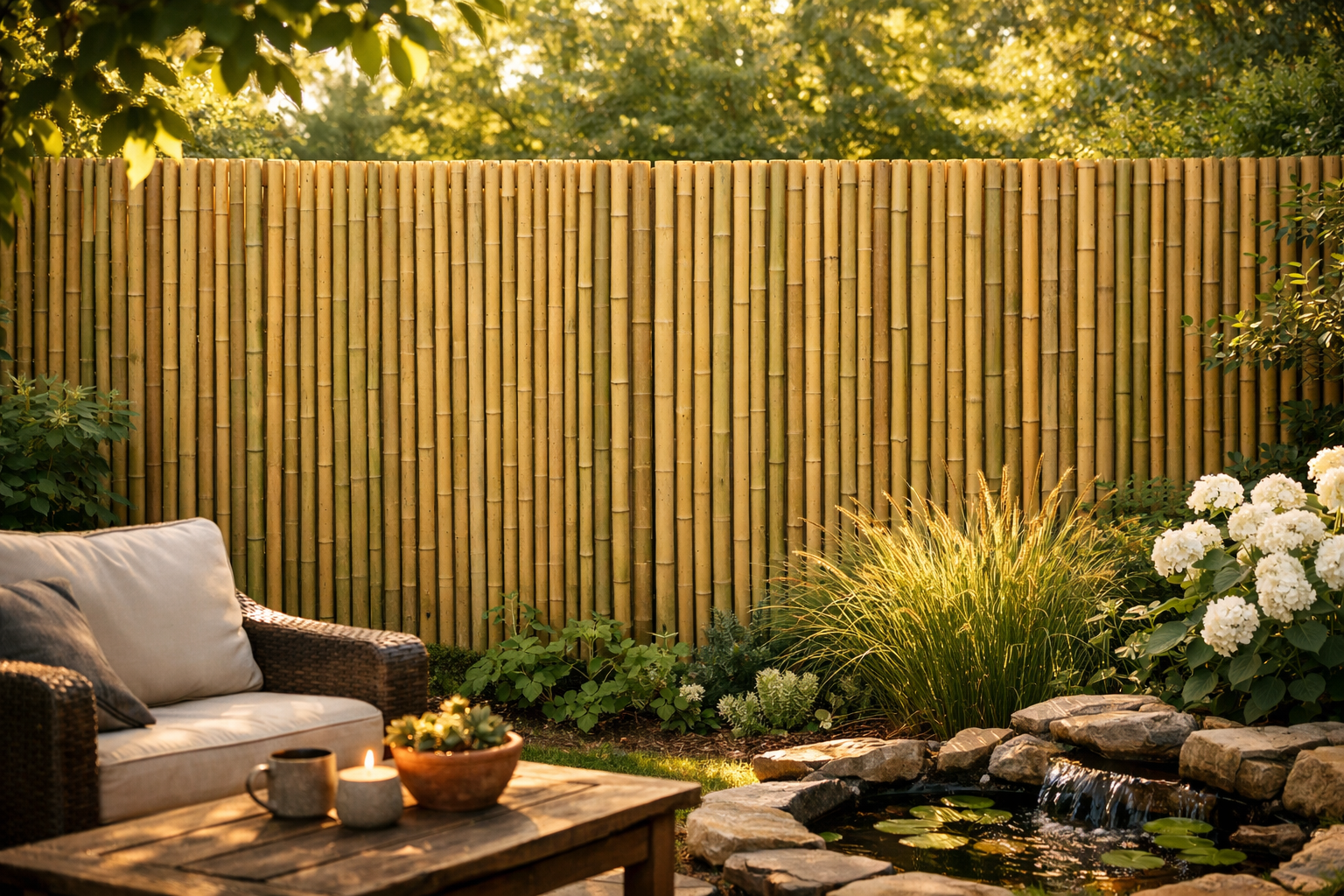
My Final Verdict on Bamboo Privacy Screen vs Wood Fence
Two years in, and the bamboo privacy screen vs wood fence question has a clear answer in my backyard: bamboo won, and it was not particularly close.
I have spent almost nothing on maintenance. My yard looks better than it ever did with cedar. The installation took an afternoon rather than a weekend. My neighbor’s dog has not visited uninvited in two years. And every time I sit on my patio, I actually enjoy looking at the fence instead of mentally cataloguing what needs fixing on it. That last part turns out to matter more than I would have predicted.
If you are dealing with a tired, rotting, or high-maintenance wood fence, I genuinely encourage you to at least price out bamboo panels before you commit to another round of cedar boards and stain. Start with the 6.5ft x 13ft Bamboo Slat Screening Roll for a full fence run, or grab the Sprigra Bamboo Slat Fence 4ft x 13ft if you are working with a smaller space or want to test the look first. Either way, I think you are going to like what you find.
Have you made the switch from wood to bamboo, or are you still weighing your options? Drop a comment below — I would love to hear what your specific situation looks like and help you figure out the best path forward.