The day I realized my neighbor was no longer speaking to me, it was because of bamboo. Specifically, the massive clump of golden bamboo I had planted along our shared fence line three years earlier — the clump that had quietly, relentlessly sent runners under the fence and was now erupting through her rose garden. I stood there with a sick feeling in my stomach watching her yank up canes from the middle of her prize-winning Grandifloras, her jaw set tight. That was the moment I got serious about chemical free bamboo removal, and I want to share everything I learned on that long, humbling journey back to a healthy yard — and a repaired friendship.
This post contains affiliate links. As an Amazon Associate, I earn from qualifying purchases.
Why I Chose the Chemical-Free Route
My first instinct was to reach for the strongest herbicide I could find. But my neighbor has vegetable beds. Her grandchildren play in that yard. And honestly, our shared soil is interconnected in ways that made me nervous about chemicals migrating where they shouldn’t. Beyond that, I had done some reading and learned that herbicides on established bamboo can be a long, repeated process anyway — often requiring multiple applications over a couple of years. If I was going to commit to a multi-season effort regardless, I wanted to do it in a way I felt good about. Chemical free bamboo removal felt like the right choice for my situation, even knowing it would take patience.
Spoiler: it did take patience. A lot of it. But the results were real, and the process taught me more about this plant than I ever expected to learn.
Understanding What You’re Actually Dealing With
Before you pull on your gloves, it helps to understand bamboo’s survival strategy. Running bamboo — the variety most commonly responsible for neighbor disputes like mine — spreads through underground rhizomes that can travel six feet or more in a single season. The plant stores enormous energy in that rhizome network. When you cut it back at the surface, it simply draws on those reserves and sends up new shoots. This is why a single round of cutting does almost nothing. You have to be systematic and persistent.
There are two main chemical-free strategies that actually work: exhaustion and smothering. Used together, they’re surprisingly effective. Here’s how I approached both.
The Exhaustion Method: Cut, Wait, Cut Again
The exhaustion method works by repeatedly cutting new shoots the moment they emerge from the ground — ideally when they’re still short and soft, under a foot tall. Every time a new shoot gets cut, the plant has to spend stored energy trying again. Do this consistently and you gradually deplete the rhizome’s energy reserves. It sounds simple, and it is. What it requires is commitment. During peak growing season in spring, I was checking my bamboo patch every two to three days. I used a sharp spade and just snapped the new culms off at soil level. After about two full growing seasons of this, the regrowth became noticeably weaker and less frequent.
The Smothering Method: Cut Low, Cover, Wait
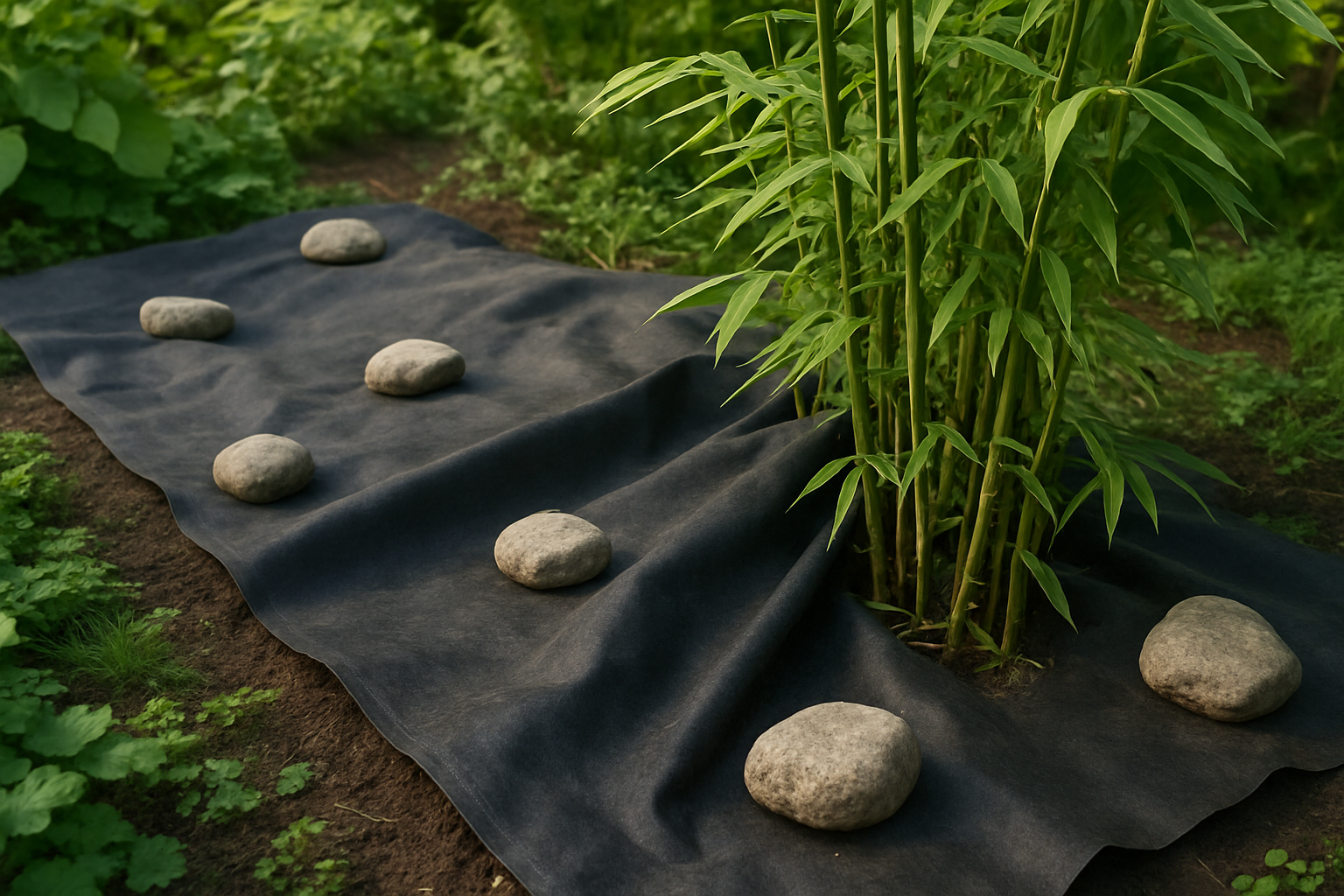
For the area on my side of the fence, I combined the exhaustion method with smothering. After cutting everything as low as possible, I laid down a heavy-duty weed barrier fabric and secured it tightly across the entire footprint of the bamboo patch, including a generous border around the edges where I knew rhizomes had traveled. Blocking sunlight prevents photosynthesis and adds another layer of stress to an already depleted root system. This is where having the right fabric really matters — thin or flimsy material will eventually be punctured by determined bamboo shoots.
Tools I Use for Chemical Free Bamboo Removal
After experimenting with several options, these are the products I genuinely recommend for smothering bamboo without chemicals.
Weed Barrier Landscape Fabric
For large bamboo patches, you need something substantial. I’ve had good results with the Happybuy 6x300ft Premium Weed Barrier Landscape Fabric — it’s a heavy-duty 2.4oz woven fabric that holds up season after season and comes in a generous roll that covers serious ground. If you’re working with a smaller or more defined area, the LAVEVE 4FT x 100FT Weed Barrier Landscape Fabric at 3.2oz is an excellent choice with a bit more heft per square foot. For those who want fabric and fasteners in one purchase, the FEED GARDEN 4FT x 100FT Landscape Fabric with 30 U-Shaped Stakes is a convenient two-pack bundle that comes ready to install.
Landscape Staples to Secure the Fabric
Fabric that shifts or lifts at the edges is worse than no fabric at all — bamboo will find every gap. Pin it down firmly and generously. I use two types of staples depending on the job. The CEWOR 100 Pack 4-Inch Landscape Staples work well for most soil types and are galvanized for durability. For areas with looser soil or where I need extra holding power, the HongWay 240 Pack 6-Inch Landscape Staples are my go-to — 11-gauge galvanized steel with real grip. I place staples every 12 inches along the edges and at any overlapping seams.
Practical Tips to Make the Process Go Smoothly
- Start in early spring. Catching the first flush of new shoots before they harden gives you the biggest energy drain on the rhizome system.
- Dig out what you can first. Before laying fabric, spend a day digging out as much of the visible rhizome network as possible with a mattock or sharp spade. Every chunk you remove is energy the plant can’t use.
- Extend your coverage zone. Lay fabric well beyond the visible edge of the bamboo — rhizomes travel farther underground than the surface canes suggest.
- Overlap seams by at least 12 inches. Bamboo shoots are surprisingly strong and will exploit any gap or seam if given the chance.
- Check the perimeter regularly. Even under heavy fabric, rhizomes can sneak out sideways. Walk the border every few weeks and cut anything poking through at the edges.
- Be patient with the timeline. Plan for two to three growing seasons of active management. If you go into it expecting that, you won’t feel defeated when regrowth appears in year two.