Understanding Bamboo Charcoal Production
Bamboo charcoal represents a sustainable alternative to traditional wood charcoal. The production process transforms raw bamboo into a valuable material with numerous applications. This ancient technique has evolved significantly over centuries, incorporating modern technology while maintaining core principles.
What We Recommend
If you’re planning to make bamboo charcoal at home or simply want to understand the process better, a quality bamboo splitter is essential for preparing your raw bamboo culms. Properly split bamboo pieces char more evenly and completely, which is crucial for achieving consistent, high-quality charcoal. We’ve found that investing in a dedicated splitter saves time and produces superior results compared to using generic tools.
Moisture content plays a critical role in successful charcoal production, and a reliable moisture meter takes the guesswork out of knowing when your bamboo is properly dried before carbonization. We recommend checking your bamboo’s moisture levels throughout the drying process to ensure optimal conditions for charring. This simple step dramatically improves your final charcoal’s quality and burn characteristics.
A collapsible drying rack is invaluable for the initial drying stage of bamboo charcoal production, allowing air to circulate evenly around your prepared bamboo pieces. Here at TerraBamboo, we love how these racks maximize space efficiency while ensuring uniform moisture loss before the carbonization process begins. The ability to stack and collapse them makes storage simple when you’re not actively producing charcoal.
Once you’ve successfully created your own bamboo charcoal, high-quality finished bamboo charcoal serves as an excellent reference and comparison point for your homemade batches. We use premium commercial bamboo charcoal to evaluate our own production standards and explore the different grades and applications available in the market. It’s a practical way to learn what excellence looks like in the final product.
The journey from bamboo forest to finished charcoal involves multiple stages. Each step requires careful attention to temperature, timing, and environmental conditions. Manufacturers must balance traditional methods with contemporary efficiency standards.
Selecting and Preparing Raw Bamboo
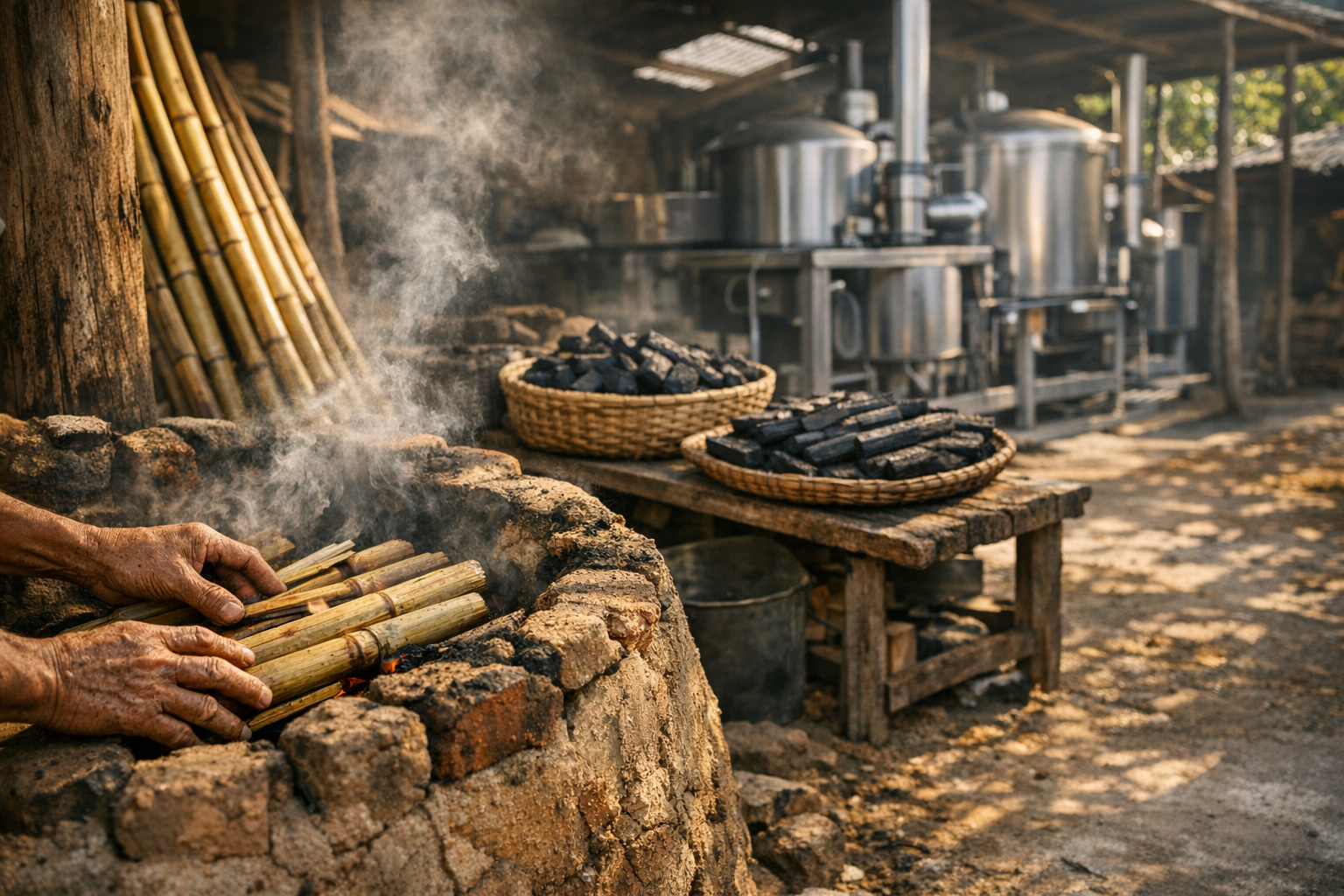
The quality of finished charcoal depends heavily on raw material selection. Source Manufacturers typically choose bamboo that has reached four to five years of maturity. Younger bamboo contains excessive moisture, while older specimens may have begun deteriorating.
Harvesting occurs during specific seasons to ensure optimal moisture content. Winter harvesting generally produces superior results because bamboo stores less water during dormant periods. Workers cut stalks close to ground level, leaving root systems intact for regeneration.
After harvesting, workers remove branches and leaves from the main stalks. They cut bamboo into uniform lengths, typically ranging from one to two meters. This standardization ensures consistent burning and facilitates efficient kiln loading.
Initial Drying Phase
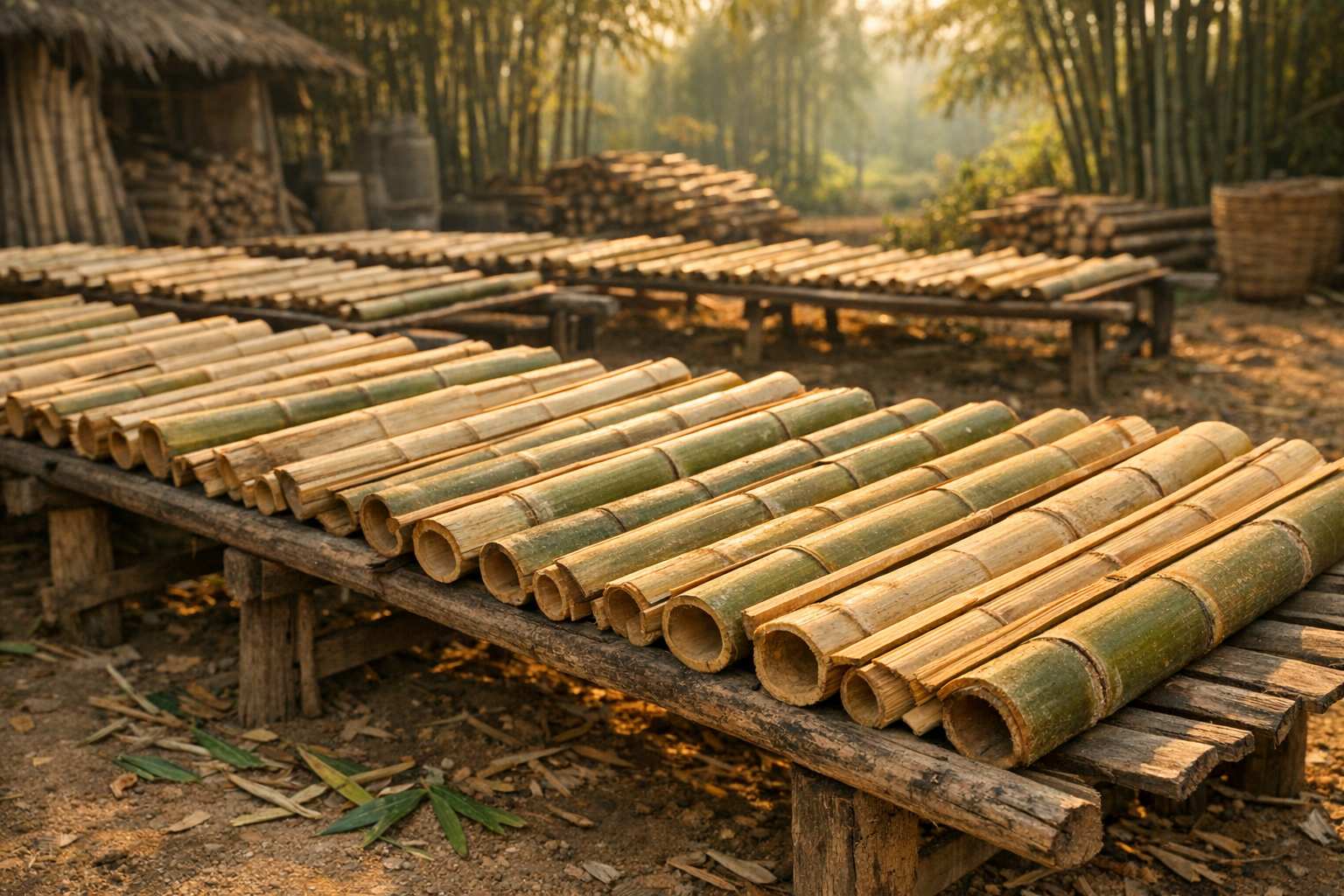
Freshly cut bamboo contains 40-50% moisture content. Manufacturers reduce this through natural air drying over several weeks. They stack bamboo pieces in well-ventilated areas, allowing air circulation between stalks. Proper spacing prevents mold growth while promoting even moisture reduction.
Some operations use mechanical dryers to accelerate this process. However, traditional air drying remains popular because it requires no energy input. The drying period typically extends from two to four weeks, depending on climate conditions.
The Carbonization Process
Carbonization transforms bamboo into charcoal through controlled heating in oxygen-limited environments. This process, called pyrolysis, breaks down organic compounds while preserving carbon structure. Temperature management proves critical throughout carbonization.
Kiln Loading and Preparation
The Art of Bamboo Arrangement
The process begins with precise stacking techniques. Workers typically bundle the bamboo culms together. Vertical stacking is the most common method used. For instance, standing the bamboo upright allows smoke to rise naturally. This orientation mimics the bamboo’s natural growth pattern. Consequently, the heat travels upward through the hollow centers.
If workers arrange the pieces haphazardly, uneven burning occurs. Therefore, experienced artisans inspect every bundle. They remove bent or irregular pieces immediately. This strict quality control prevents wasted space. Furthermore, a uniform arrangement creates a stable structure inside the kiln. Stability prevents the stack from collapsing during the intense carbonization phase.
Sealing Methods: Ancient and Modern
Once the kiln is full, the sealing phase commences. This step is absolutely critical for carbonization. Oxygen is the enemy of charcoal production. If air enters the kiln, the bamboo burns away completely. As a result, the valuable carbon turns into white ash.
Traditional Earth Kilns:
- Artisans mix a specific blend of red clay and water.
- They plaster this mud over the brick entrance.
- However, this requires constant monitoring for cracks.
- Ideally, the clay allows the kiln to “breathe” slightly.
Modern Mechanical Kilns:
- Industrial sites rely on heavy steel doors.
- Additionally, high-temperature gaskets create a vacuum seal.
- Mechanized clamps lock the door firmly in place.
- This method eliminates the risk of human error.
Optimizing Heat Distribution
Proper loading dictates the internal airflow. The goal is consistent heat circulation. Heat must reach the core of the stack effectively. If the bamboo is packed too tightly, the center remains raw. Conversely, loose packing wastes valuable thermal energy.
Workers aim for a specific density. This balance allows hot gases to permeate the entire chamber. Moreover, it ensures that every piece carbonizes at the same rate. Uniform temperature creates high-quality charcoal. Finally, correct spacing reduces the overall production time significantly.
The arrangement pattern affects final product quality significantly. Vertical stacking allows better heat penetration compared to horizontal arrangements. Additionally, maintaining small gaps between pieces promotes uniform carbonization throughout the load.
Temperature Stages
The carbonization process unfolds through distinct temperature phases. Initially, operators raise kiln temperatures gradually to 150-200°C. During this warming stage, remaining moisture evaporates from bamboo fibers. Steam and light smoke emerge from ventilation openings.
As temperatures climb to 200-300°C, thermal decomposition begins. Bamboo releases volatile compounds including gases, liquids, and tars. The smoke becomes dense and carries a distinctive acidic odor. This stage requires careful monitoring because excessive heat can damage the developing charcoal structure.
The primary carbonization phase occurs between 300-500°C. Consequently, bamboo undergoes rapid chemical transformation during this critical period. Cellulose and lignin break down, leaving primarily carbon behind. Operators maintain these temperatures for several hours to ensure complete carbonization.
Collecting Valuable Byproducts
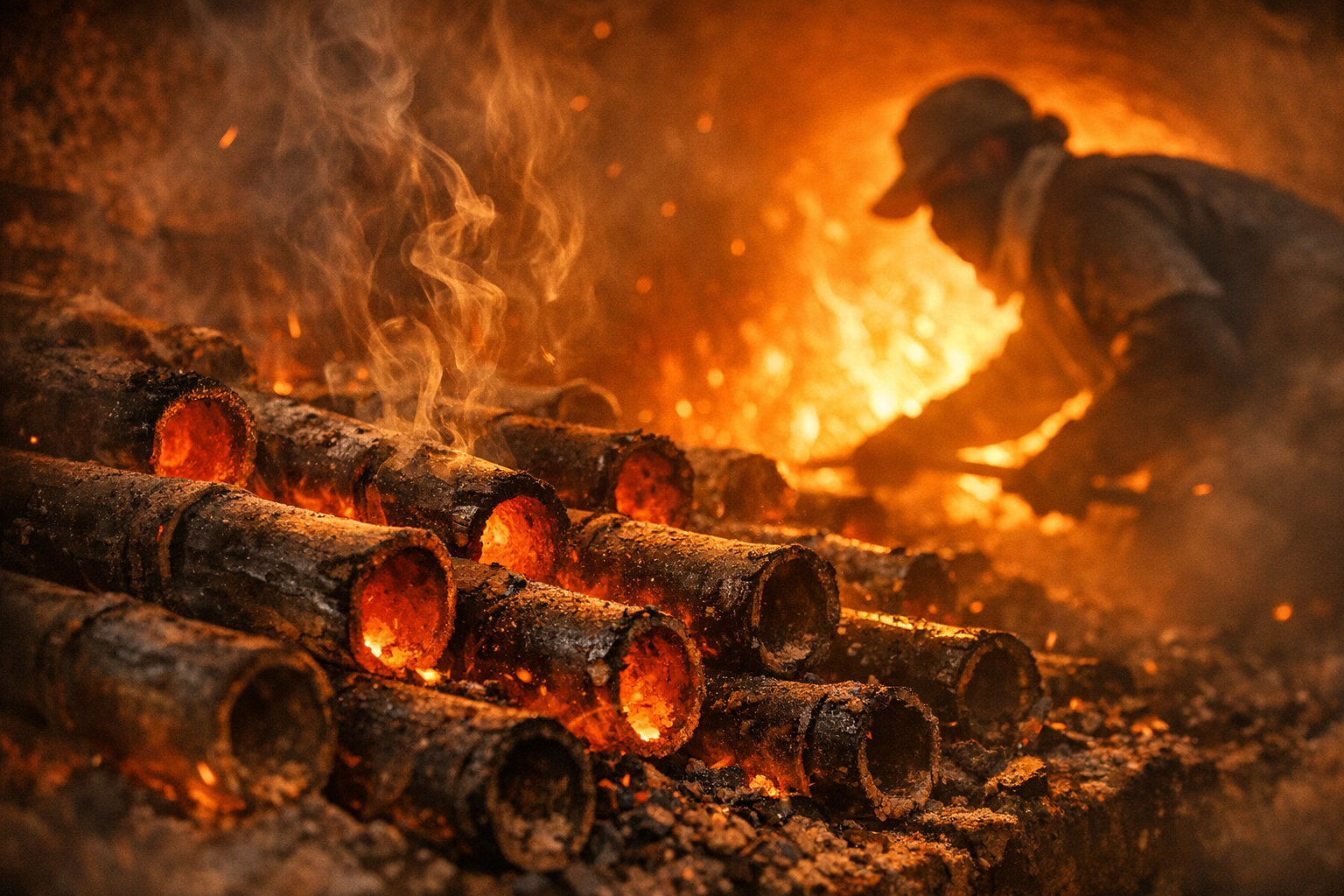
The carbonization process generates more than just charcoal. Smoke contains numerous compounds that manufacturers can capture and refine. These secondary products often add significant value to overall operations.
Bamboo Vinegar Collection Systems
Bamboo vinegar, also called pyroligneous acid, represents the most valuable byproduct. This amber liquid forms when smoke condenses during specific temperature ranges. Manufacturers install condensation equipment to capture these vapors systematically.
The collection system typically includes pipes leading from kiln vents to cooling chambers. As hot smoke travels through these pipes, it gradually cools. Water-soluble compounds condense into liquid form while gases continue flowing.
The Critical Temperature Window
Harvesting bamboo vinegar is a delicate art. It relies heavily on precise temperature management. Timing is everything in this chemical process. Specifically, the chimney smoke offers vital clues regarding quality. Operators must watch these thermal indicators constantly. Therefore, manual monitoring or automated sensors are essential. If the timing is off, the yield suffers significantly.
Avoiding Early Contamination
Initially, the kiln warms up slowly. During this early phase, smoke temperatures stay below 80°C. However, collecting condensation now produces poor results. The liquid is primarily water mixed with heavy solids. Additionally, it contains dangerous impurities like methanol. These substances are harmful and undesirable. Consequently, this early runoff is usually discarded. It is simply too toxic for commercial use.
Capturing the “Liquid Gold”
The ideal collection window opens strictly between 80°C and 150°C. At this stage, the smoke color often shifts. It typically changes from thick white to a pale blue. This visual cue signals the presence of beneficial compounds. For example, acetic acid condenses perfectly within this range.
Operators take the following steps during this phase:
- Monitor gauges: They track the rapid rise in heat.
- Divert flow: Smoke is routed into long cooling pipes.
- Collect liquid: The vapor turns into raw bamboo vinegar.
The Risks of Overheating
Vigilance is required as the kiln heat increases. Eventually, the smoke temperature will surpass 150°C. At this point, the chemical composition alters drastically. Valuable compounds unfortunately remain in a gaseous state. Furthermore, thick wood tar begins to accumulate rapidly. This tar is sticky and difficult to separate later. As a result, the collection equipment must be detached immediately. Stopping on time preserves the purity of the batch. Source
Condensation Equipment Design
Effective condensation systems require multiple components working together. Primary condensers use water jackets or air cooling to reduce smoke temperature rapidly. Secondary condensers capture remaining vapors that escape initial cooling.
Many operations use stainless steel pipes and collection vessels. This material resists corrosion from acidic compounds while maintaining hygiene standards. Furthermore, stainless steel facilitates easier cleaning between production batches.
Collection vessels must include separation chambers. Bamboo vinegar naturally separates into distinct layers based on density. The middle layer contains the highest concentration of useful compounds. Top and bottom layers require additional processing or disposal.
Refining Collected Vinegar
Raw bamboo vinegar requires refinement before commercial use. Initial settling removes heavy tars and particulates. Manufacturers then filter the liquid through activated carbon or ceramic filters. This process removes remaining impurities while clarifying the solution.
Aging improves bamboo vinegar quality significantly. Storage in sealed containers for six months allows harsh compounds to break down. The liquid becomes milder and develops more complex aromatic profiles. Subsequently, manufacturers test pH levels and organic acid concentrations before packaging.
Diverse Applications of Refined Bamboo Vinegar
Refined bamboo vinegar has emerged as a versatile natural product with remarkable utility. The liquid contains over 200 organic compounds. These compounds give it powerful antimicrobial properties. Furthermore, its acidic nature makes it effective across multiple industries. The substance has gained popularity in organic and eco-friendly markets worldwide.
Agricultural and Horticultural Uses
In farming, bamboo vinegar acts as an organic pest deterrent. For example, diluted solutions repel aphids, mites, and fungal infections. Moreover, farmers spray it on crops to prevent disease without harsh chemicals. The vinegar also enhances soil quality by promoting beneficial microorganisms. Additionally, it helps balance soil pH levels naturally. Gardeners use concentrations of 100:1 to 500:1 for foliar applications. Consequently, plants show improved growth rates and stronger resistance to environmental stress.
Personal Care and Cosmetic Integration
The antibacterial characteristics make bamboo vinegar valuable in skincare formulations. Manufacturers incorporate it into soaps, shampoos, and facial cleansers. For instance, it helps combat acne-causing bacteria effectively. Meanwhile, its natural astringent properties tighten pores and reduce oiliness. Bath products containing bamboo vinegar soothe skin irritations and minor inflammations. Therefore, consumers seeking natural alternatives increasingly choose these products. The substance also appears in foot care items to address odor and fungal concerns.
Household and Commercial Cleaning Products
As a natural deodorizer, bamboo vinegar neutralizes unpleasant odors rather than masking them. It breaks down odor-causing compounds at the molecular level. Consequently, manufacturers add it to air fresheners and fabric sprays. Cleaning solutions benefit from its antimicrobial and grease-cutting abilities. For example, diluted bamboo vinegar effectively cleans kitchen surfaces and bathroom fixtures. In contrast to synthetic cleaners, it leaves no harmful residues. As a result, eco-conscious consumers prefer these safer alternatives for their homes.
Cooling and Quality Control
The cooling phase is arguably the most delicate stage of production. It determines the final structural integrity of the bamboo charcoal. If the temperature drops too suddenly, the material suffers from thermal shock. Consequently, the charcoal becomes brittle and useless. Therefore, operators must treat this step with extreme precision to ensure a premium product.
Furthermore, fire management is critical during this transition. Introducing oxygen too early can reignite the hot bamboo. This would instantly turn valuable charcoal into worthless white ash. Thus, the kiln must remain a strictly airtight environment. Operators carefully monitor internal temperatures before opening any seals.
Traditional Sealing Techniques
Artisans have relied on natural cooling methods for centuries to preserve quality. This manual process requires patience and attention to detail.
- Sealing: Workers block the kiln entrance with wet clay or bricks.
- Suffocation: This effectively cuts off the oxygen supply completely.
- Resting: The kiln is left undisturbed to lower the temperature naturally.
This slow process allows the bamboo to settle gradually. As a result, the internal structure remains dense, hard, and conductive. Typically, this natural cooling period lasts between 24 to 48 hours. However, larger earthen kilns may require even more time to reach safe handling temperatures.
Modern Cooling Innovations
In contrast, industrial facilities often prioritize production speed and efficiency. They cannot afford to wait days for a single batch to finish. Therefore, engineers have developed advanced cooling systems to solve this bottleneck.
These modern systems utilize heat exchangers to remove thermal energy rapidly. Additionally, some setups inject inert gases like nitrogen into the chamber. This cools the bamboo without the risk of combustion or oxidation. Consequently, production cycles are significantly shorter. Despite the increased speed, the quality remains consistent due to precise computer-controlled monitoring.
Inspecting the Final Product
Once the kiln is finally opened, the quality inspection begins immediately. High-quality bamboo charcoal should sound metallic when struck against another piece. Specifically, it should produce a clear, high-pitched ringing tone.
If the cooling process was rushed, the pieces will sound dull. Moreover, visible cracks or crumbling indicate improper temperature management. Therefore, successful cooling is the true test of a charcoal master’s skill and patience.
Temperature monitoring continues throughout the cooling phase. Operators ensure internal temperatures drop below 60°C before opening kilns. Premature exposure to oxygen can cause charcoal to ignite spontaneously.
Sorting and Grading
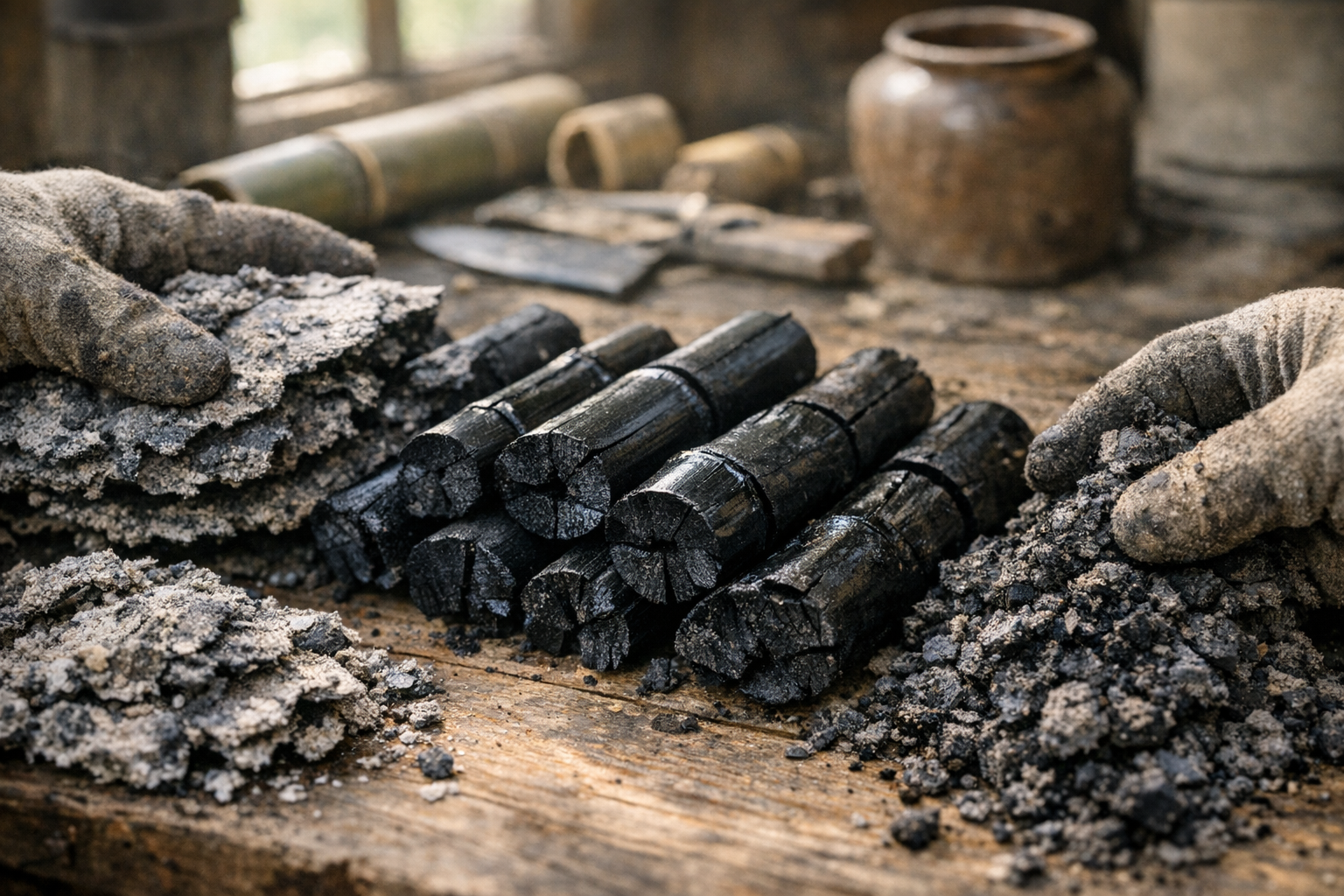
Workers remove cooled charcoal and sort pieces by size and quality. Large, intact pieces command premium prices. Smaller fragments and powder find use in different applications or require further processing.
Quality assessment examines several characteristics. High-grade bamboo charcoal produces a clear, metallic sound when struck. The surface appears smooth and glossy with minimal cracks. Cross-sections reveal uniform black coloration throughout.
Final Processing Steps
Many manufacturers perform additional processing to meet specific market requirements. Grinding produces activated charcoal powder for filtration applications. Some operations compress charcoal fragments into briquettes or shaped products.
Packaging protects charcoal from moisture absorption during storage and transport. Sealed plastic bags or containers maintain product quality. Labels provide information about grade, origin, and intended applications.
Environmental Considerations
Modern bamboo charcoal production emphasizes sustainability. Manufacturers capture and utilize waste heat from kilns. Some operations generate electricity using combustible gases released during carbonization. These practices reduce environmental impact while improving economic efficiency.
Bamboo’s rapid growth rate makes it an excellent renewable resource. Forests regenerate quickly after harvesting without replanting. This sustainability advantage positions bamboo charcoal as an environmentally responsible choice compared to wood-based alternatives.
Conclusion
The transformation of bamboo into charcoal involves careful orchestration of multiple processes. From selecting mature bamboo through controlled carbonization to collecting valuable byproducts, each step requires expertise and attention to detail. Modern producers balance traditional knowledge with contemporary technology to maximize both product quality and operational efficiency. The collection of bamboo vinegar adds significant value while reducing waste. As demand for sustainable materials grows, bamboo charcoal production continues evolving to meet market needs while maintaining environmental responsibility.
*As an Amazon Associate, I earn from qualifying purchases.