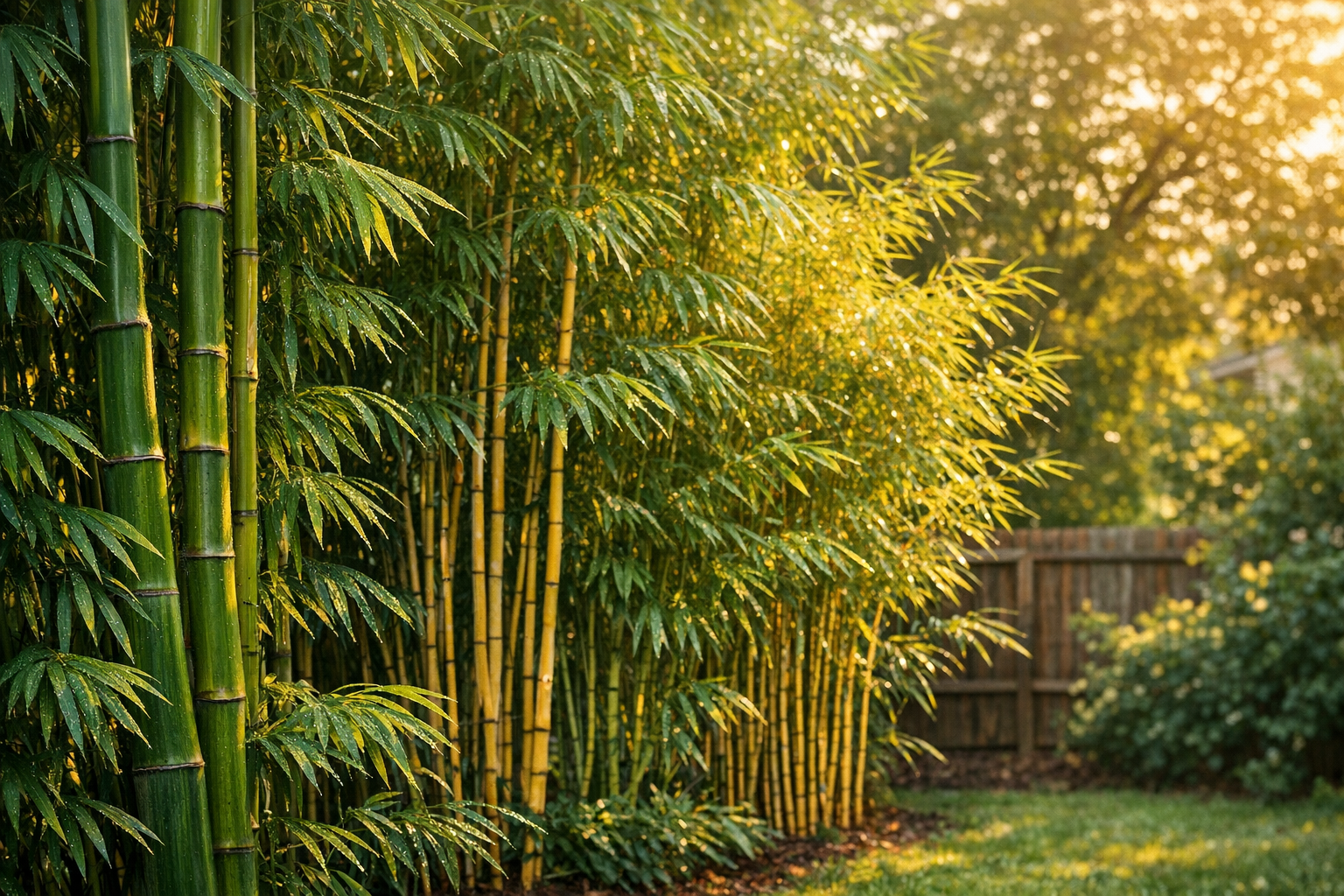
Nothing ruins a relaxing afternoon like the feeling of being watched. Whether you live in a crowded suburb or a busy city, privacy remains essential, and traditional fences often look stark and uninviting. Bamboo offers a lush, fast-growing solution for natural privacy barriers — but choosing the wrong variety can turn into a gardening nightmare. You have to select the right species for your specific needs.
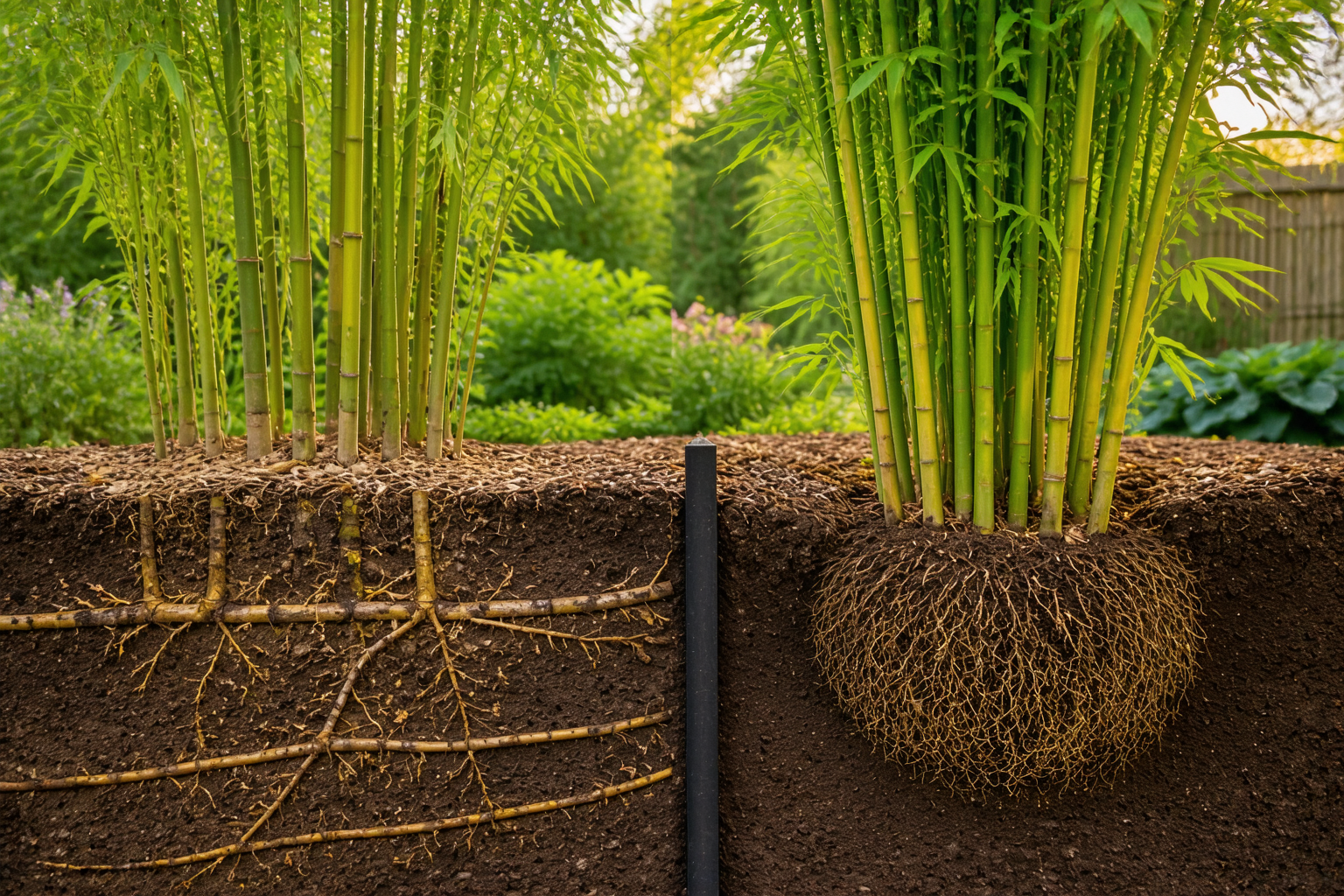
Bamboo grows incredibly fast — it holds the Guinness World Record for the fastest-growing plant. That makes it ideal for urgent screening needs, but the speed comes with risks. You need to understand the fundamental differences between bamboo types before planting. This guide covers the running-vs-clumping decision, a couple of clumping varieties worth comparing, and how to manage whichever you choose safely.
Understanding Running vs. Clumping Bamboo
The first decision you’ll face when selecting bamboo for privacy is understanding the two main growth patterns: running and clumping. This distinction is absolutely critical because it determines whether your privacy screen becomes a blessing or a neighborhood nightmare.
Running bamboo spreads aggressively through underground rhizomes and will cross property lines if you’re not obsessive about containment. The rhizomes—underground stems that spread horizontally—can travel several feet per year, popping up shoots far from where you planted them. I learned this the hard way, and now I exclusively plant clumping varieties like Bambusa eutuldoides when privacy is the goal—it stays put without constant barrier maintenance.
Clumping varieties, by contrast, grow in a tight mound pattern. New shoots emerge right next to the mother plant rather than venturing across your yard. This containment is worth the slight delay in establishing a full privacy screen.
The Clumping Variety That Won’t Destroy Your Neighbor’s Yard
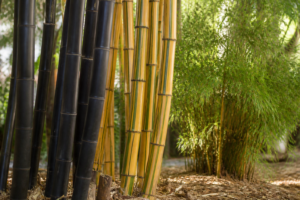
If privacy is your goal and you value peaceful neighbor relations, clumping bamboo is the only responsible choice. Bambusa eutuldoides represents the gold standard for residential privacy screening because it delivers everything you need without the aggravation of rhizome management.
What Works
- Clumping growth habit means new shoots emerge in a tight mound rather than popping up 20 feet away, so you actually get the privacy screen you planted instead of a slow-motion invasion.
- Establishes fast enough to block sight lines within 2–3 growing seasons without requiring the obsessive rhizome pruning that running varieties demand every spring.
- Asian bamboo varieties are genuinely cold-hardy in temperate zones, so your privacy screen won’t die back or thin out in winter like some tropical imports do.
- Mature clumping bamboo reaches heights of 30–40 feet depending on variety, creating a dense, visually striking barrier that rivals any traditional fence.
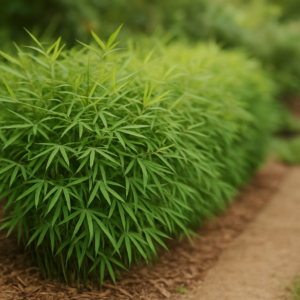
- The foliage remains thick and full at ground level, providing genuine privacy rather than a see-through tangle of tall culms with bare lower sections.
What Doesn’t Work
- Clumping varieties grow slower in the first year than their invasive cousins, so if you’re impatient for an instant wall, you’ll be tempted to switch to running bamboo and regret it later.
- Needs consistent water and feeding to reach full height, unlike established running bamboo that basically takes over whether you feed it or not.
- Requires more space between plants than running varieties since each clump occupies a defined area. Plan for spacing of 10–15 feet between plants to allow mature growth.
If You’re in a Colder Zone: Fargesia Instead of Bambusa
Bambusa eutuldoides is a warm-climate clumper — it thrives in zones 8 and up but won’t survive a hard northern winter. If you’re gardening in zone 5–7, Fargesia robusta (often sold as ‘Campbell’) is the clumping variety I’d point you to instead. It’s cold-hardy down to around -10°F, tops out shorter at 10 to 15 feet with a mature spread of about 8 to 10 feet, and stays just as contained — no rhizome barrier needed either way. The trade-off is speed and height: Fargesia establishes and screens more slowly than Bambusa, and it won’t give you the same 30–40 foot wall. For a full-height, fast-establishing screen in a warm climate, Bambusa eutuldoides remains the better pick. For a shorter, slower, genuinely cold-hardy screen, Fargesia robusta is the one to buy instead.
Planning Your Privacy Barrier
Before purchasing a single plant, assess your site carefully. Bamboo requires full sun to partial shade—at least 4–6 hours of direct sunlight daily produces the densest foliage. Check your soil drainage and amend with compost before planting if you have heavy clay. Bamboo tolerates poor soil but establishes faster in well-draining, fertile conditions.
Consider the mature height you need. If you’re screening a two-story neighbor’s windows, you’ll need varieties that reach at least 25–30 feet. If you only need to block a ground-level view, 15–20 feet suffices and gives you more variety options.
Maintenance Expectations
Here’s what nobody tells you: even clumping bamboo requires basic care to look its best. Water deeply during establishment (first 2–3 years), especially during dry spells. Mulch around plants to retain moisture and moderate soil temperature. Feed annually in spring with a balanced fertilizer or bamboo-specific formula.
Thin out some lower culms occasionally to increase the sense of height and openness, though this is optional. Remove any dead or damaged canes at ground level. Unlike running bamboo, you won’t spend weekends hunting down rogue rhizomes in your neighbor’s petunias.
I questioned whether waiting three seasons was worth it until my neighbor’s fence line stayed clear—no legal letters, no awkward digging out of rhizomes in their yard. That’s when I knew clumping was the only way. Get started with Bambusa eutuldoides Asian bamboo.
About This Article

Written by Marcus Chen. Marcus Chen has spent 15 years cultivating and studying bamboo across 14 different species, combining commercial growing operations with extensive hands-on experience in species selection and containment. As both a grower and consultant, he specializes in practical bamboo management, helping homeowners and landscapers understand the real-world requirements for responsible bamboo cultivation. Marcus brings tested knowledge of which species thrive reliably and which present containment challenges that go beyond standard recommendations. More about this site.
Verify this against a primary source
Specifics change, and your situation may differ from the one described here. These are the authorities worth checking directly:
- American Bamboo Society — species listings and cultivation guidance
- USDA PLANTS Database — species range and identification
- USDA Plant Hardiness Zone Map — cold hardiness verification for your location