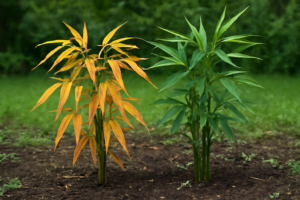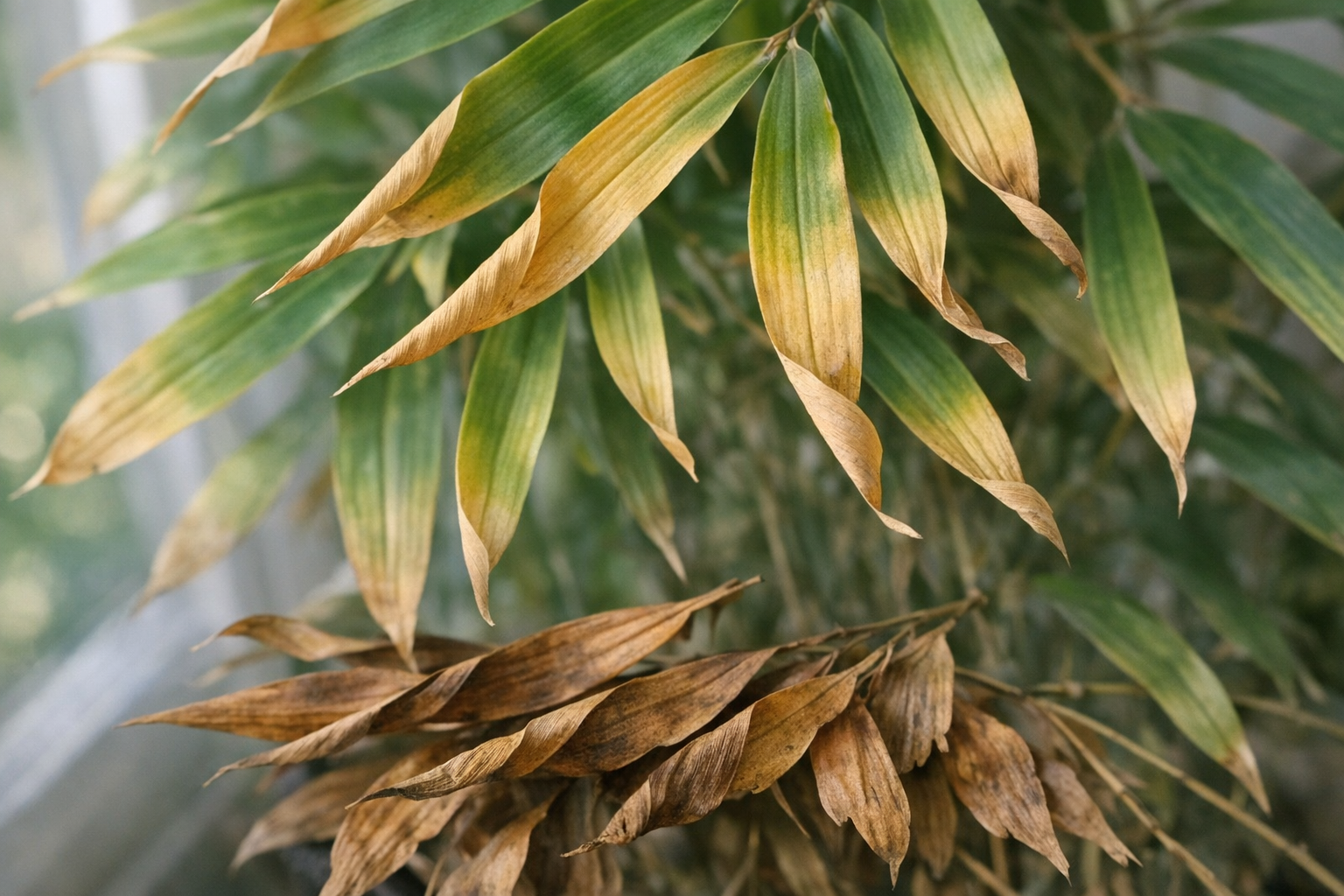
I dug up my Phyllostachys aureosulcata last spring, moved it across the yard, and watched it turn completely yellow within two weeks. My first instinct was panic—I’d killed it. But I didn’t. After sitting with that yellowing bamboo for another four weeks, most of the color came back, new shoots appeared, and by midsummer it was thriving again. The difference between what I did right and what I could have done wrong taught me something crucial: bamboo turning yellow after transplanting isn’t always a crisis, but you need to know exactly what you’re looking at and what to do—or not do—while it recovers.
If your newly transplanted bamboo is yellow, this post will help you figure out whether you’re dealing with normal transplant shock (which takes 4–8 weeks to resolve) or real structural problems that need immediate fixing.
Normal Transplant Shock vs. Actual Root Damage: How to Tell the Difference
This is the first thing to get right, because your next steps depend entirely on the diagnosis.
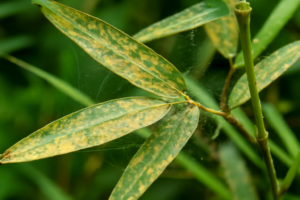
Normal transplant shock looks like this: The foliage yellows uniformly across the cane. The culms (the bamboo stems) stay firm and don’t feel mushy. New growth may be slower than usual, or the plant may go dormant for a few weeks. The yellowing typically appears within 7–10 days of transplanting and affects existing leaves, but the rhizome system and root zone remain intact underground. In this scenario, the plant is essentially conserving energy while it regrows severed root hairs and re-establishes contact with the new soil.
Real damage signals something different: The culms feel soft or hollow when you gently squeeze them. The yellowing progresses rapidly from one side of the plant (a sign of root damage on that side). There’s a foul smell coming from the soil line—earthy is normal, rotten is not. Or the new growth comes in pale and stays weak even after four weeks. The base of the plant feels loose in the soil, or you notice the bamboo settling downward slightly as soil compacts beneath it, suggesting poor soil contact under the root ball.
The simple truth: if the plant feels mechanically sound and the yellowing is even across the foliage, you have shock. If the plant feels compromised or the yellowing is asymmetrical, you have a planting problem.
Diagnosing the Planting Errors That Actually Cause Persistent Yellowing
If you’ve identified real damage rather than simple shock, one of three things usually happened during the transplant itself.
Wrong planting depth. This is the most common error I see. Bamboo needs to be planted at exactly the same depth it was growing before—no deeper, rarely shallower. If you buried the base of the culms below soil level, you’ve essentially smothered the lower stems and created a moisture trap where rot begins. Even a 2–3 inch difference can trigger yellowing that doesn’t recover. Check this by gently excavating around the base. The soil line on the culm should match the soil line from the nursery pot or the original planting location. If it’s buried, carefully remove excess soil. Do this within the first 14 days; after that, the damage is usually permanent.
Poor soil contact under the root ball. If you didn’t backfill carefully or if the soil beneath the root ball settled unevenly, there are air pockets between the roots and the surrounding soil. Roots can’t absorb water or nutrients from air. The plant looks yellow because it’s genuinely dry, even if the soil surface is moist. To check: press firmly around the base of the plant—does it feel solid, or is there give? You can also use the XLUX Soil Moisture Meter, which will show you dryness at root depth that you can’t see. If you suspect this within the first week, you can carefully lift the plant slightly and re-tamp the soil beneath it. After two weeks, the roots have usually started growing into voids, and disturbing them again causes more damage.
Actual root damage during digging or transport. If the root ball broke apart, if you severed a large rhizome during extraction, or if the roots dried out completely in transit, the plant can’t rehydrate itself. This yellowing is usually dramatic and accompanied by wilting. Unfortunately, there’s limited recovery from this—the plant may survive, but it’s a season-long struggle. Your only real option is patience and light watering (I’ll cover this below).
The Real Recovery Timeline: What to Expect Week by Week
I’m going to give you the timeline I’ve observed consistently with my own plantings and those of other gardeners on the TerraBamboo forum.
Weeks 1–2: Yellowing appears or intensifies. This is the plant’s natural response to root disruption. The foliage yellows because the plant can’t transport enough water upward, even if the soil is moist. New growth stalls. This is normal and expected—don’t panic.
Weeks 3–4: If it’s transplant shock, the yellowing should stabilize—meaning it’s not getting worse. You might see the tiniest hints of new growth, but it’s slow. This is when gardeners typically start second-guessing themselves and making mistakes (fertilizing, overwatering, moving the plant again).
Weeks 5–8: New growth appears noticeably. The shoots are usually paler than normal, which is fine. The older, yellow foliage may remain yellow for the entire season—the plant won’t shed it yet. But the new growth is healthy and increasingly vigorous.
Weeks 9–16: By mid-to-late summer, if you started transplanting in spring, the plant should look nearly normal. The old yellow leaves may finally drop in fall.
If yellowing is still intensifying past week 4, you don’t have shock—you have a planting problem or root damage.
What to Do (and Not Do) While Your Bamboo Recovers
Do: Water thoughtfully. The soil should be consistently moist but not soggy. Too much water can accelerate rot if there are already planting issues. Too little leaves the plant more stressed. Stick your finger 2 inches into the soil—it should feel like a wrung-out sponge. Once a week, or twice weekly in hot weather, is usually right for spring transplants.
Do not: Fertilize. This is the biggest mistake. A recovering plant can’t use nitrogen effectively, and excess fertilizer salts can further stress the root system. Wait until new growth is vigorous (usually week 6 or later) before adding even light fertilizer.
Do: Mulch conservatively. A 1–2 inch layer of wood chips keeps soil temperature stable and moisture even. But don’t heap mulch against the culms—keep it 3 inches away from the base. Mulch piled against the stems traps moisture and invites rot.
Do not: Move or disturb the plant. I know the temptation is strong if it’s not recovering as fast as you’d hoped. Resist it. Moving it again resets the recovery clock and causes more root damage.
Do: Monitor soil moisture at depth. The XLUX Soil Moisture Meter takes the guesswork out of watering. Press it into the soil 3–4 inches deep near the base. If the reading shows dryness below a moist surface, you have the air-pocket problem I mentioned earlier. If it’s consistently soggy, dial back watering immediately.
Do not: Prune the yellowed foliage. Even though it looks bad, that foliage is still photosynthesizing and feeding the plant’s recovery. Leave it until it naturally drops or until new growth is fully established (usually late summer).
When Yellow Really Does Mean the Plant Is Dying
Be honest with yourself at week 5. If the yellowing has spread to new growth, if the culms have turned mushy or black at the base, or if you see no new growth at all despite consistent moisture, the plant is probably not coming back. This happens when root damage is severe or when multiple planting mistakes compound each other. You can keep watering and waiting through week 8, but if there’s no improvement by then, accept the loss and dig it up to see what went wrong. Understanding the actual cause—girdled roots, soil compaction, wrong depth—helps you succeed with the next planting.
Most bamboo that yellows after transplanting recovers completely. The key is distinguishing shock (temporary, normal, self-resolving) from structural problems (real, requires immediate correction). Once you know which you’re dealing with, your job is simple: provide consistent moisture, resist the urge to tinker, and give the plant 4–8 weeks to reestablish itself. I’ve watched Phyllostachys bissetii, Fargesia robusta, and Phyllostachys edulis all come back from serious transplant yellowing. Yours will too—if you know what you’re looking at and when to act.
About This Article

Written by Marcus Chen. Marcus Chen has spent 15 years cultivating and studying bamboo across 14 different species, combining commercial growing operations with extensive hands-on experience in species selection and containment. As both a grower and consultant, he specializes in practical bamboo management, helping homeowners and landscapers understand the real-world requirements for responsible bamboo cultivation. Marcus brings tested knowledge of which species thrive reliably and which present containment challenges that go beyond standard recommendations. More about this site.
Verify this against a primary source
Specifics change, and your situation may differ from the one described here. These are the authorities worth checking directly:
- American Bamboo Society — species listings and cultivation guidance
- USDA PLANTS Database — species range and identification
- USDA Plant Hardiness Zone Map — cold hardiness verification for your location