- Bonide Captain Jack’s Neem Oil 32 oz Ready-to-Use Spray — great for spot treatments and small groves
How I Managed to Miss an Entire Aphid Colony for Three Weeks
It started innocently enough. I noticed a faint yellowish tinge on a few of my Phyllostachys aurea leaves in late June, but honestly? I blamed the heat. I told myself the bamboo was just “adjusting.” I maybe also told my husband it was “totally normal seasonal variation,” which is gardener-speak for “I have no idea what’s happening and I’m choosing optimism.” I carried on with my summer, blissfully ignorant, until the afternoon I decided to take a closer look and discovered that roughly half of one culm was absolutely coated in tiny green aphids. There were so many that the stem was visibly glistening. It was, in a word, a lot.
I may have screamed. My neighbor definitely looked over the fence. We don’t need to dwell on that part.
Understanding Aphids on Bamboo: What You’re Actually Dealing With
Once the screaming subsided and I got serious, I learned that aphids on bamboo are actually pretty common, especially during warm, dry stretches of summer. They’re soft-bodied insects that cluster on new growth, stems, and the undersides of leaves, feeding by piercing plant tissue and sucking out sap. A few aphids aren’t a crisis. A full-blown colony, however, can cause real problems.
Here’s what to look for when inspecting your bamboo:
- Yellowing or curling leaves, especially on newer growth
- Sticky residue on culms or leaves — this is called honeydew, and it’s aphid waste (yes, really)
- Black sooty mold developing on that honeydew residue
- Visible clusters of tiny soft-bodied insects, usually green, yellow, or black
- Ants running up and down your culms — ants actually farm aphids for their honeydew, so ants are often a tip-off
Bamboo is generally a tough, resilient plant, and a healthy established grove can tolerate a light infestation without serious long-term damage. But left untreated, a heavy aphid population will weaken new shoots, stunt growth, and invite fungal problems. So yes, you do want to act.
Aphids on Bamboo Treatment: What Actually Works
The good news is that treating aphids on bamboo is very manageable once you know what you’re doing. I tried a few different approaches that summer, with varying levels of dignity intact.
Start With a Strong Water Blast
Your first line of defense is genuinely just a garden hose with a strong spray nozzle. Get underneath the leaves and blast the aphids right off the plant. They’re not strong climbers and most won’t make it back. Do this in the morning so the foliage can dry before evening. It won’t eliminate a severe infestation on its own, but it knocks the numbers down fast and is completely free. I did this step while narrating it like a nature documentary, which made me feel better.
Insecticidal Soap for Direct Contact Killing
Insecticidal soap is one of the safest and most effective tools for aphid control. It works on contact by disrupting the insects’ cell membranes, so thorough coverage is key — you have to actually hit the aphids with the spray, not just mist the general area. The Garden Safe Brand Insecticidal Soap Insect Killer is a solid ready-to-use option that’s approved for organic gardening. Apply it every four to seven days and make sure you’re coating the undersides of leaves where aphids love to hide.
Neem Oil: The Heavy Hitter
Neem oil is where I really turned the corner on my infestation. It works both as a contact insecticide and as a systemic disruptor — meaning it interferes with aphids’ ability to feed and reproduce even after the spray dries. I’ve used the Bonide Captain Jack’s Neem Oil Ready-to-Use Spray and found it really convenient for quick treatments on smaller areas. For a larger grove or if you want better value over time, the Bonide Captain Jack’s Neem Max 64 oz Spray is excellent and goes further. If you prefer to mix your own and customize your concentration, the Bonide Neem Max 8 oz Concentrate is the most economical route. Apply neem oil in the early morning or evening — never in direct hot sun, which can cause leaf burn.
A Gentle All-in-One Option
If you want something that handles insects, fungal issues, and mites all at once — which honestly is often what’s going on at the same time — the Earth’s Ally 3-in-1 Plant Spray is a wonderful OMRI-listed option that’s safe around kids, pets, and pollinators. I appreciate that it smells like a spa instead of a chemistry lab.
Tools I Use for Aphid Control on Bamboo
- Bonide Captain Jack’s Neem Oil 32 oz Ready-to-Use Spray — great for spot treatments and small groves
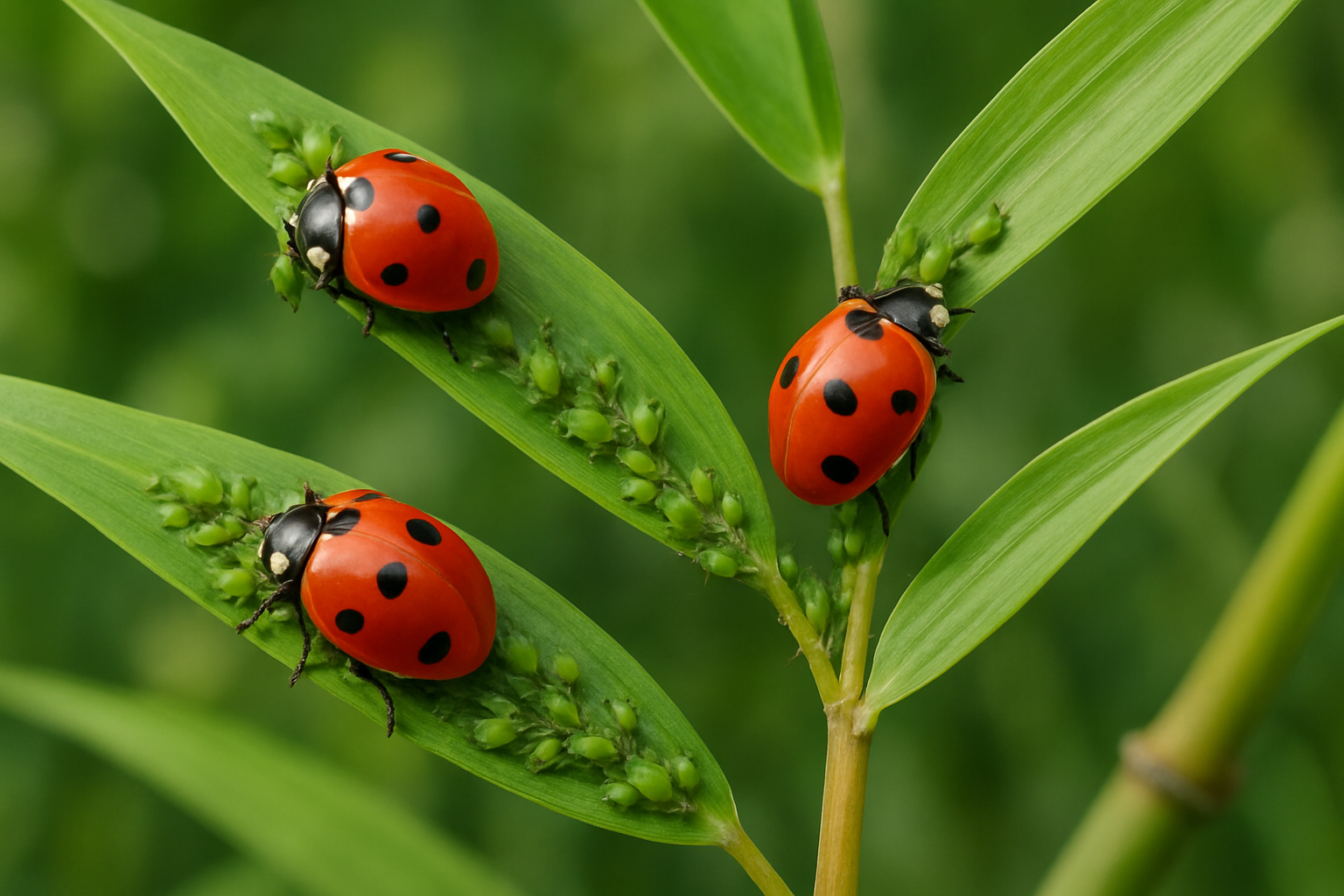
Aphids on Bamboo: The Infested Summer That Accidentally Created a Ladybug Paradise