Understanding Bamboo’s Aggressive Growth Patterns
Bamboo presents unique challenges for homeowners who want to remove it from their property. Source This fast-growing plant spreads through underground rhizomes that can extend several feet in all directions. Moreover, these rhizomes store energy reserves that allow bamboo to regenerate even after repeated cutting.
If you’re tackling bamboo removal, having the right equipment makes this challenging task significantly more manageable and efficient. Start by investing in a quality tree root removal tool that features a sliding gravity hammer mechanism specifically designed to extract stubborn rhizomes from the ground without excessive digging. Once you’ve cut the bamboo culms down to stumps, applying an effective herbicide concentrate directly to the freshly cut surfaces will help prevent regrowth by killing the underground rhizome network. For cutting through thick bamboo canes and branches, a pair of heavy-duty loppers for tree trimming with rust-resistant blades can handle stems up to 1.5 inches in diameter with minimal effort. When dealing with particularly dense bamboo groves, a powerful air saw with multiple blade options provides the cutting power needed to slice through multiple culms quickly and efficiently. For smaller trimming tasks and precision work around garden beds, a lightweight mini chainsaw offers cordless convenience and excellent maneuverability in tight spaces where larger tools won’t fit. Applying herbicide treatments accurately requires a reliable pump spray bottle with adjustable nozzles that allow you to target cut stumps without contaminating surrounding plants you want to keep. Protecting your hands during this intensive physical work is essential, so quality gardening gloves with rubber coating provide the grip and durability needed when handling sharp tools and rough bamboo material. If you’re removing bamboo near property lines or valuable landscaping, installing a root barrier prevents future rhizome invasion and protects adjacent areas from underground spread that could damage foundations or driveways. For clearing large areas of bamboo undergrowth and maintaining control after initial removal, a versatile brush cutter blade kit with multiple tooth configurations handles everything from fine trimming to heavy-duty clearing with professional results. Finally, keep a durable soil knife in your toolkit for digging around rhizomes, cutting through roots, and performing detailed excavation work that larger tools simply cannot accomplish effectively.
The plant’s resilience comes from its biological structure. Each culm, or cane, connects to an extensive underground network. Therefore, removing visible growth above ground rarely solves the problem. The rhizomes continue to produce new shoots season after season, making bamboo one of the most persistent plants to eliminate.
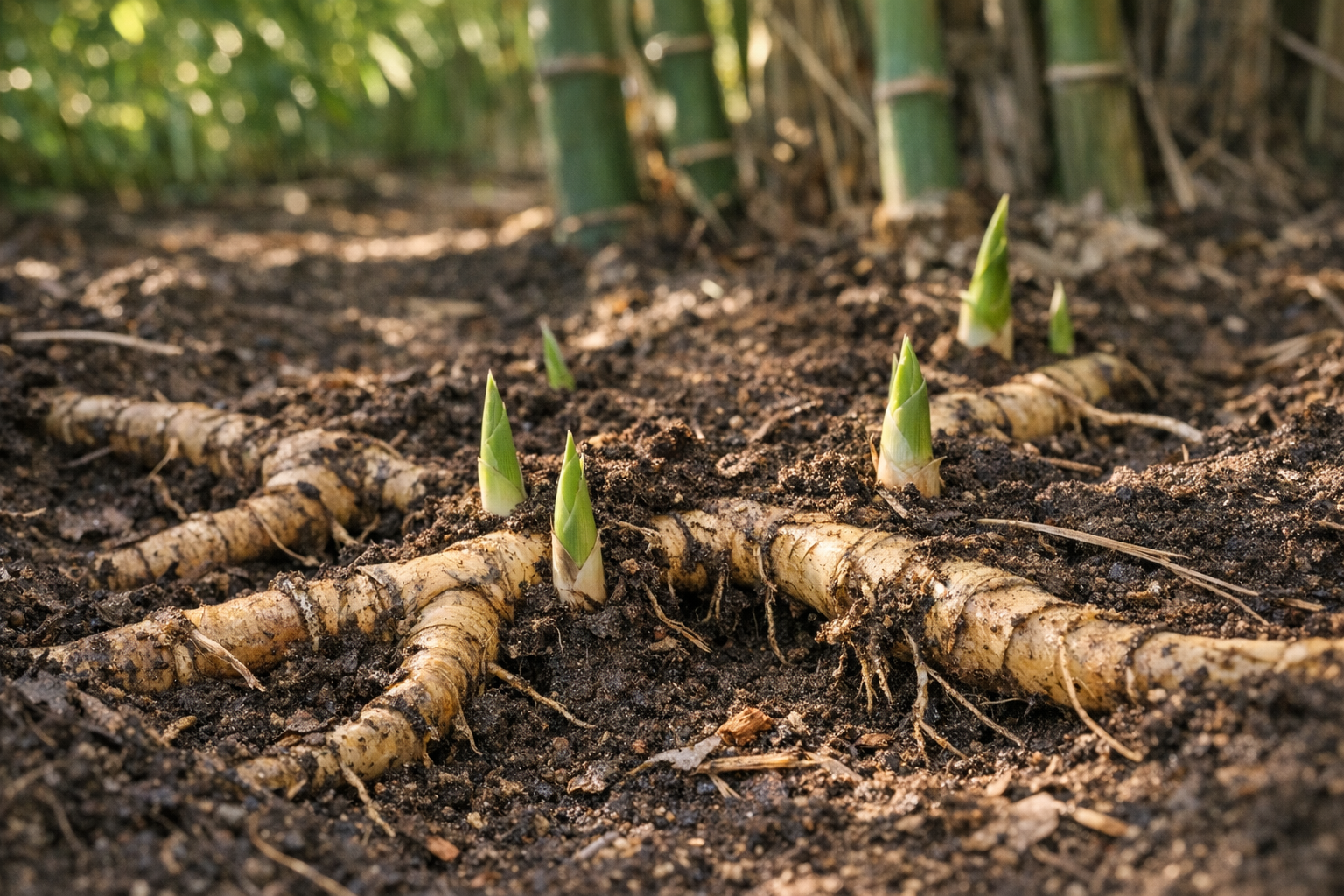
Two main types of bamboo create different removal challenges. Running bamboo spreads aggressively through long rhizomes, while clumping bamboo grows in tight clusters. However, both types require thorough removal strategies to prevent regrowth. Understanding which type you have helps you plan your removal approach.
The Cut Stump Method for Maximum Effectiveness
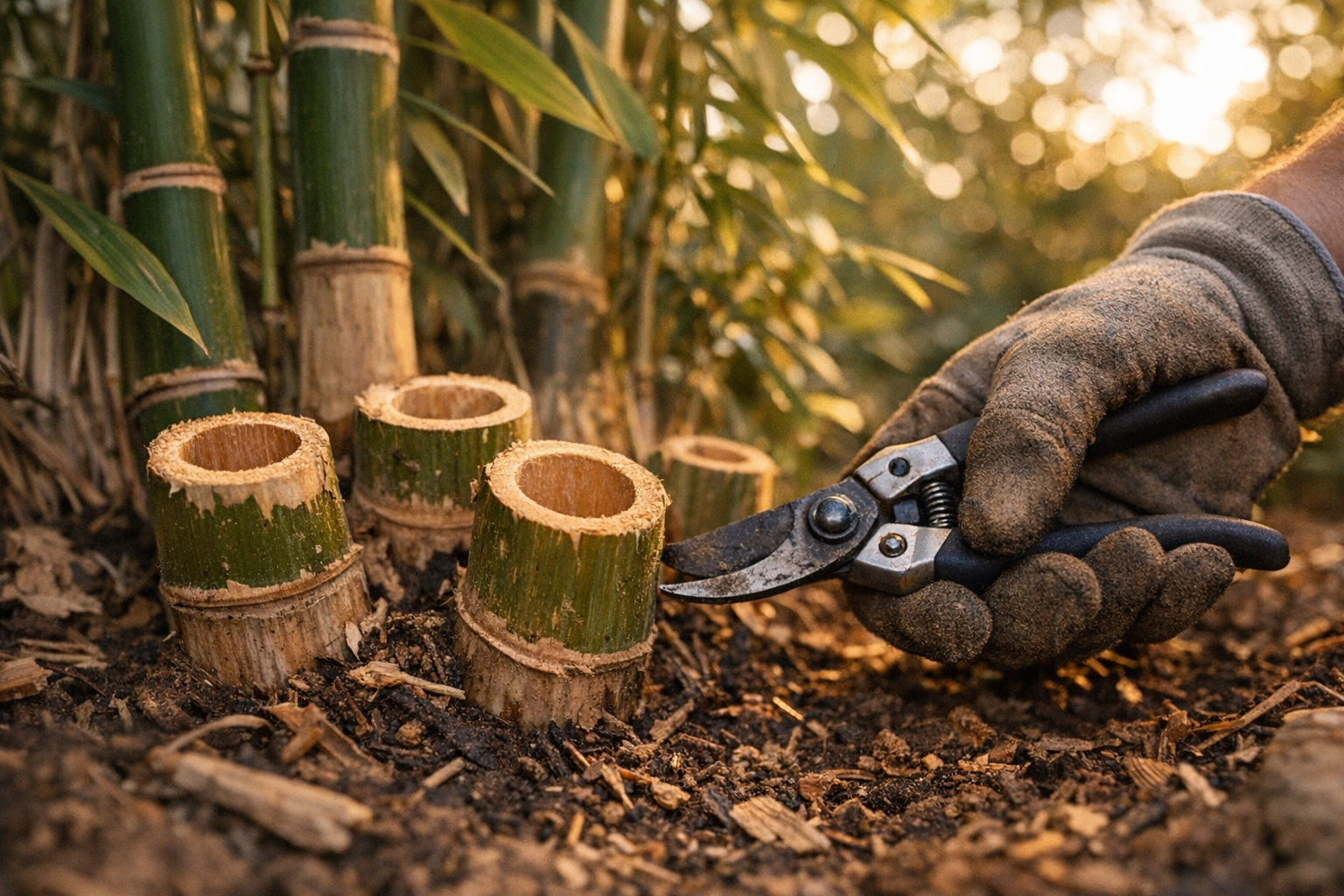
The cut stump technique delivers herbicide directly to the plant’s vascular system. You cut each bamboo cane as close to ground level as possible. Immediately afterward, you apply concentrated herbicide to the fresh cut surface. This timing proves critical for success.
Fresh cuts expose the plant’s internal transport system. Consequently, herbicide absorbs directly into the rhizomes below ground. You must apply the treatment within minutes of cutting. Waiting even 30 minutes significantly reduces effectiveness because the cut surface begins to seal.
Concentrated glyphosate-based herbicides work best for this application. Mix the product at full strength rather than diluting it. Additionally, choose products specifically labeled for woody plant control. Apply the herbicide using a paintbrush or spray bottle to cover the entire cut surface.
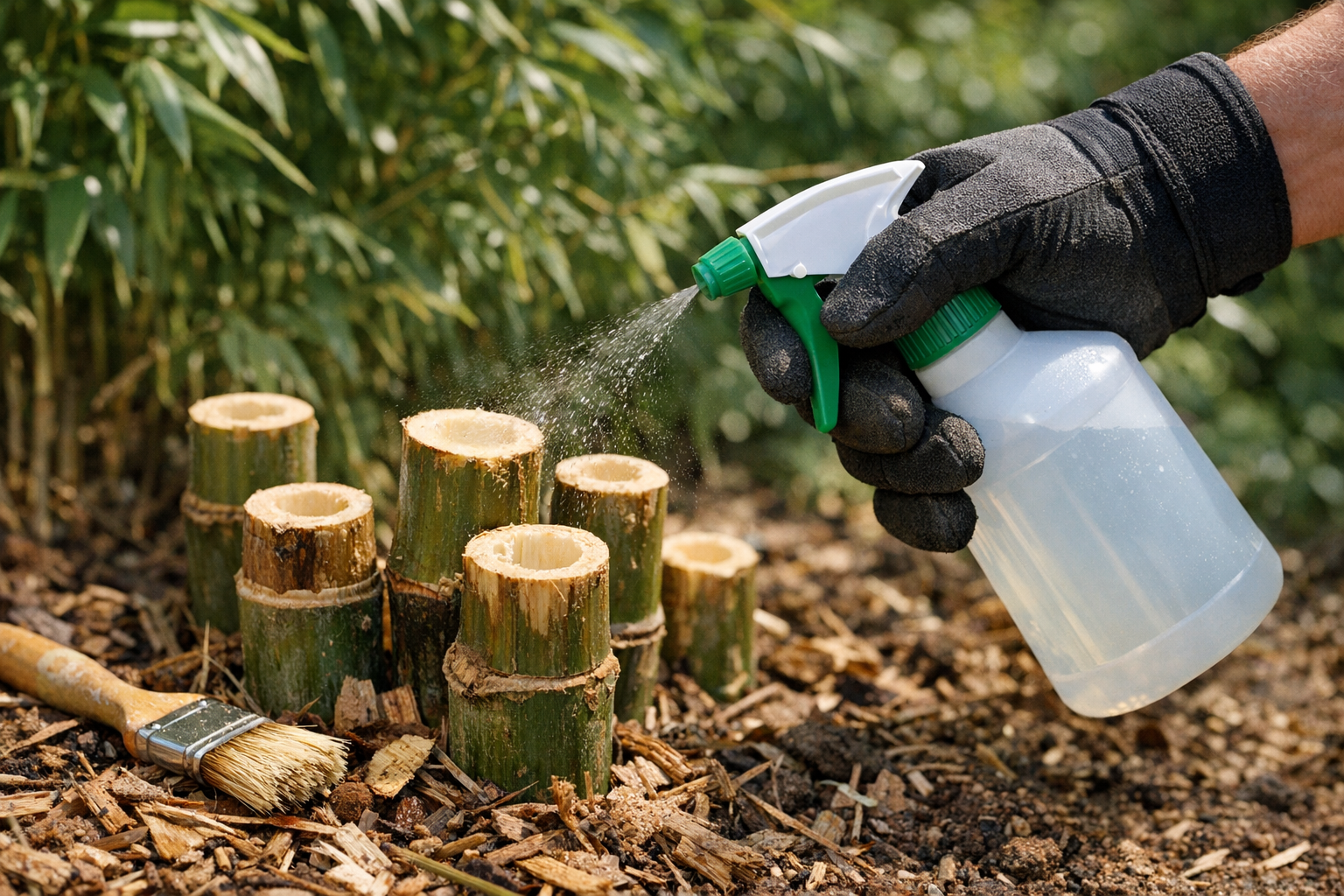
Proper Cutting Techniques
Sharp tools make clean cuts that absorb herbicide better. Use loppers for canes up to two inches in diameter. For larger canes, switch to a pruning saw or reciprocating saw. Clean cuts create more surface area for herbicide absorption.
Cut each cane individually rather than in batches. This approach ensures you can treat each cut immediately. Furthermore, it prevents the cut surfaces from drying out before treatment. Work systematically through your bamboo grove, cutting and treating as you go.
Optimal Timing for Bamboo Removal
Late summer and early fall offer the best window for bamboo elimination. Source During this period, plants actively transport nutrients from leaves to roots for winter storage. Therefore, herbicide applied to cut stumps travels efficiently to the rhizome network.
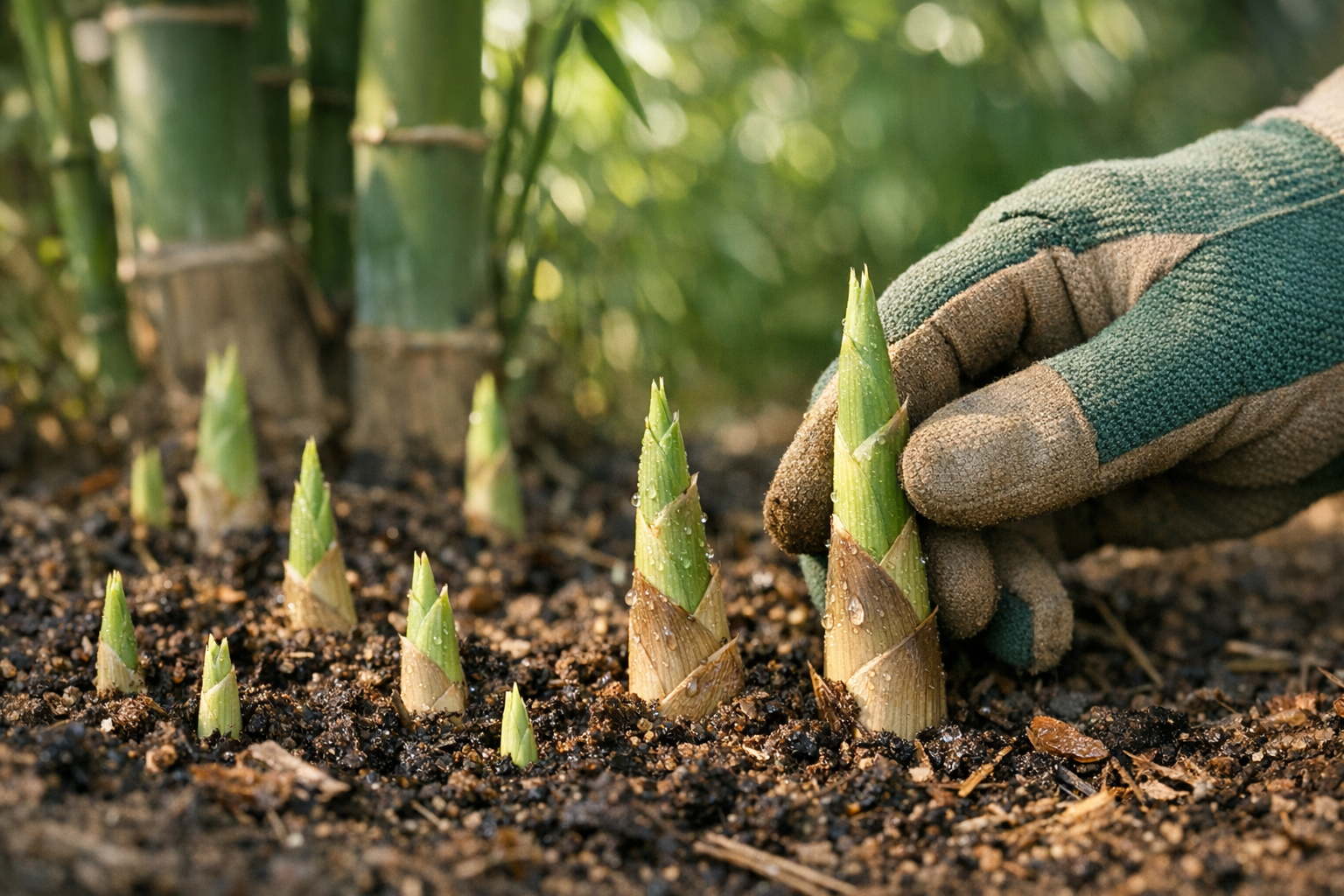
Spring applications prove less effective because energy flows upward to support new growth. However, if you missed the fall window, early spring before new shoots emerge provides a secondary option. Avoid treating during active shoot emergence when the plant focuses energy on upward growth.
Weather conditions matter significantly during application. Choose a dry day with no rain forecasted for at least 24 hours. Rain can wash away herbicide before it absorbs into the plant. Additionally, avoid extremely hot days above 85°F when herbicide may evaporate too quickly.
Follow-Up Treatments for Complete Eradication
Single applications rarely eliminate bamboo completely. Plan for multiple treatment cycles over 12-18 months. New shoots will emerge from untreated rhizome sections. Nevertheless, each treatment cycle weakens the overall system.
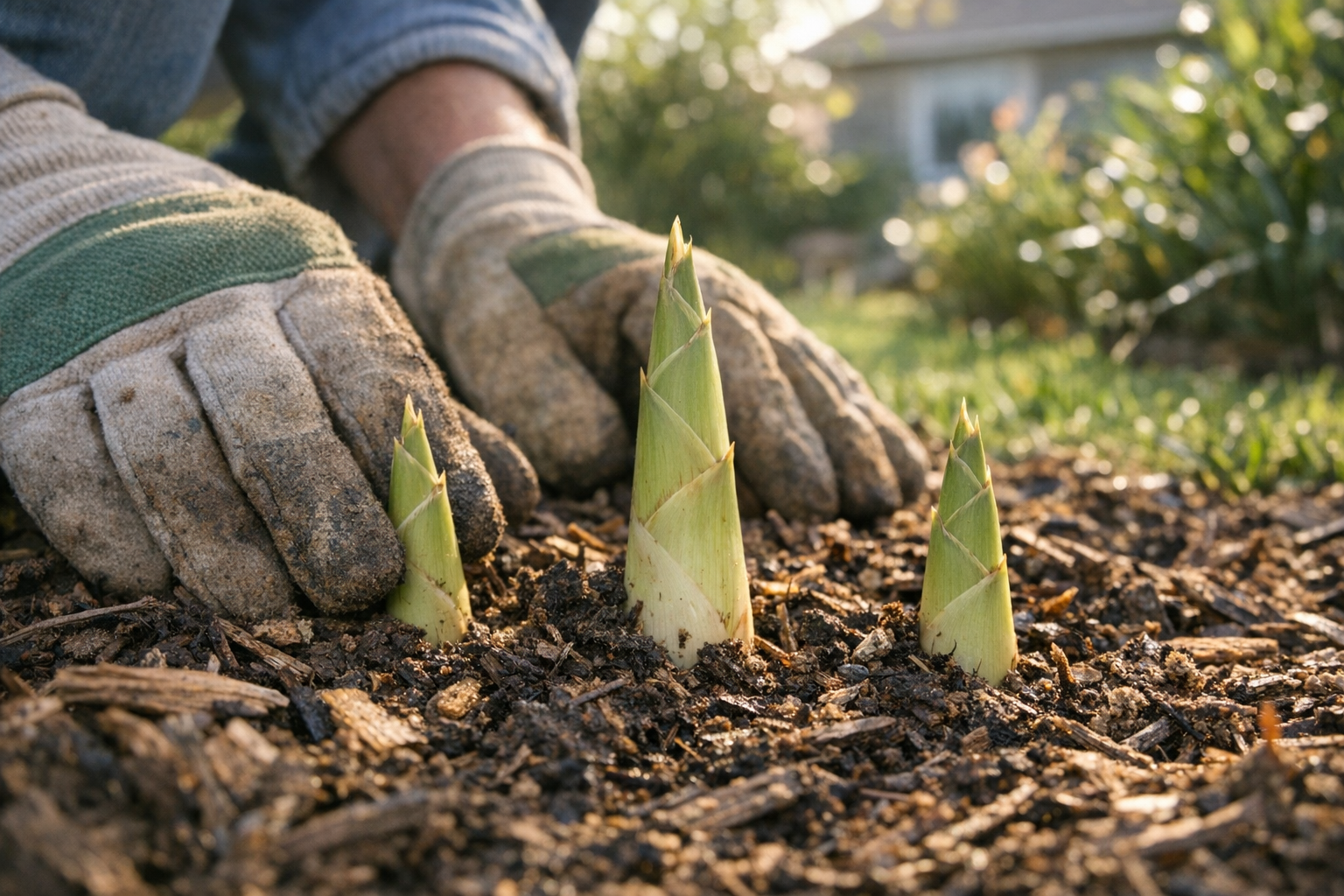
Monitor your treatment area weekly during growing season. Mark new shoots as they appear and treat them promptly. Small shoots are easier to cut and treat than mature canes. Moreover, catching them early prevents them from strengthening the rhizome network.
Document your progress with photos and notes. Record treatment dates, products used, and weather conditions. This information helps you identify patterns in regrowth. Furthermore, it guides your timing for subsequent applications.
Dealing with Persistent Regrowth
Some rhizome sections prove exceptionally resilient. These areas may require direct excavation after repeated herbicide treatments. Dig carefully to expose the rhizome network. Cut through connecting rhizomes and remove entire sections.
Combine excavation with herbicide treatment for stubborn areas. Treat any cut rhizomes with concentrated herbicide before removing them. This prevents regrowth from fragments left in the soil. Additionally, sift through removed soil to extract small rhizome pieces.
Physical Removal Strategies
Mechanical removal works best for small bamboo patches or as a complement to herbicide treatment. You need to excavate rhizomes at least 12-18 inches deep. Running bamboo rhizomes typically grow 6-12 inches below the surface, but some extend deeper.
Rent a mini excavator for large infestations. These machines allow you to dig systematically through the affected area. Work in a grid pattern to ensure complete coverage. Consequently, you reduce the chance of missing rhizome sections.
Manual digging works for smaller areas. Use a sharp spade or mattock to cut through rhizomes. Follow each rhizome to its end, removing the entire length. This labor-intensive process takes time but provides immediate results.
Root Barrier Installation
Install root barriers around remaining bamboo if you want to contain rather than eliminate it. These barriers must extend at least 30 inches deep. HDPE plastic barriers work best because they resist rhizome penetration.
Dig a trench around the bamboo area. Insert the barrier vertically with 2-3 inches protruding above ground. Overlap barrier sections by at least 6 inches and seal seams with waterproof tape. Backfill the trench and compact soil firmly.
Alternative Control Methods
Repeated mowing weakens bamboo over time but requires consistent effort. Mow new shoots as soon as they appear, ideally when they reach 12 inches tall. This prevents them from photosynthesizing and replenishing root reserves. However, you must maintain this schedule for at least two growing seasons.
Covering bamboo with heavy tarps blocks sunlight and eventually starves the plants. Use thick, UV-resistant tarps that won’t deteriorate quickly. Overlap tarps by several feet and secure edges with landscape staples. Leave tarps in place for at least one full year.
Boiling water applications kill individual shoots but don’t affect deep rhizomes. Pour boiling water directly on emerging shoots. Repeat this process for every new shoot that appears. Nevertheless, this method works best for very small infestations or as a supplement to other techniques.
Organic Herbicide Options
Vinegar-based herbicides offer a less toxic alternative. Use horticultural vinegar with 20% acetic acid concentration. Apply it to cut stumps or spray it on young shoots. However, organic options typically require more frequent applications than synthetic herbicides.
Citric acid products also show effectiveness against bamboo. Mix concentrated citric acid solutions and apply to fresh cuts. These products work through desiccation rather than systemic action. Therefore, they require more precise application and timing.
Safety Precautions and Environmental Considerations
Wear protective equipment when applying herbicides. Use chemical-resistant gloves, safety glasses, and long sleeves. Prevent herbicide drift to nearby plants by applying directly to cut surfaces. Wind can carry spray to unintended areas.
Dispose of bamboo material properly after removal. Don’t compost bamboo canes or rhizomes because they may regenerate. Bag material for municipal yard waste collection or burn it where permitted. Additionally, check local regulations regarding bamboo disposal.
Protect nearby water sources from herbicide runoff. Maintain buffer zones around streams, ponds, and wetlands. Choose herbicides labeled as safe for aquatic environments if working near water. Furthermore, avoid treating before heavy rain events.
Preventing Future Bamboo Problems
Inspect your property regularly for bamboo shoots from neighboring yards. Bamboo rhizomes can travel under fences and property lines. Treat new shoots immediately before they establish. Early intervention prevents major infestations.
Communicate with neighbors who have bamboo on their property. Coordinate removal efforts to prevent continuous reinfestation. Shared root barriers benefit both properties. Moreover, joint efforts often prove more cost-effective.
Choose alternative plants carefully when replanting cleared areas. Select species with less aggressive growth habits. Native ornamental grasses provide similar visual appeal without invasive tendencies. Research plants thoroughly before installation.
Cost Considerations and Professional Help
DIY bamboo removal costs vary based on infestation size. Herbicide expenses range from $30-100 for most residential projects. Tool rental adds $100-300 if you need excavation equipment. However, these costs remain significantly lower than professional services.
Professional removal services charge $500-3,000 depending on bamboo coverage. They provide expertise and specialized equipment. Furthermore, many companies offer warranties on their work. Consider professional help for large infestations or if DIY attempts fail.
Factor in time investment when planning removal. Complete eradication typically requires 12-24 months of monitoring and treatment. Budget time for weekly inspections during growing season. Consequently, patience and persistence determine success more than any single factor.
Conclusion: Your Path to a Bamboo-Free Yard
Eliminating bamboo demands commitment and strategic action. The cut stump method combined with proper timing delivers the most reliable results. Apply concentrated herbicide to fresh cuts during late summer or early fall for maximum effectiveness.
Plan for multiple treatment cycles over at least one year. Monitor treated areas consistently and address regrowth promptly. Combine herbicide applications with physical removal for stubborn infestations. Additionally, maintain vigilance even after apparent success to catch any remaining shoots.
Success requires understanding bamboo’s biology and exploiting its vulnerabilities. Target the underground rhizome network rather than just visible growth. With persistent effort and appropriate techniques, you can reclaim your yard from bamboo invasion permanently.
If you’re tackling bamboo removal, having the right equipment makes this challenging task significantly more manageable and efficient. Start by investing in a quality tree root removal tool that features a sliding gravity hammer mechanism specifically designed to extract stubborn rhizomes from the ground without excessive digging. Once you’ve cut the bamboo culms down to stumps, applying an effective herbicide concentrate directly to the freshly cut surfaces will help prevent regrowth by killing the underground rhizome network. For cutting through thick bamboo canes and branches, a pair of heavy-duty loppers for tree trimming with rust-resistant blades can handle stems up to 1.5 inches in diameter with minimal effort. When dealing with particularly dense bamboo groves, a powerful air saw with multiple blade options provides the cutting power needed to slice through multiple culms quickly and efficiently. For smaller trimming tasks and precision work around garden beds, a lightweight mini chainsaw offers cordless convenience and excellent maneuverability in tight spaces where larger tools won’t fit. Applying herbicide treatments accurately requires a reliable pump spray bottle with adjustable nozzles that allow you to target cut stumps without contaminating surrounding plants you want to keep. Protecting your hands during this intensive physical work is essential, so quality gardening gloves with rubber coating provide the grip and durability needed when handling sharp tools and rough bamboo material. If you’re removing bamboo near property lines or valuable landscaping, installing a root barrier prevents future rhizome invasion and protects adjacent areas from underground spread that could damage foundations or driveways. For clearing large areas of bamboo undergrowth and maintaining control after initial removal, a versatile brush cutter blade kit with multiple tooth configurations handles everything from fine trimming to heavy-duty clearing with professional results. Finally, keep a durable soil knife in your toolkit for digging around rhizomes, cutting through roots, and performing detailed excavation work that larger tools simply cannot accomplish effectively.
*As an Amazon Associate, I earn from qualifying purchases.