- Use galvanized or stainless hardware. Regular staples and wire will rust and stain your bamboo within a season. Spend a little more on corrosion-resistant fasteners and you’ll thank yourself in year two.
- Plan for panel overlap at joints. Where two panels meet at a post, let them overlap by a few inches
The moment I realized I had installed an entire section of my DIY bamboo garden fence upside down — yes, upside down — was the same moment my neighbor Dave walked over to “see how it was going.” He didn’t say anything. He just stood there, coffee mug in hand, staring at my lopsided creation with the kind of expression you’d give a child who proudly showed you a drawing of a horse that looked like a melting accordion. That was Weekend One. It got worse before it got better.
This post contains affiliate links. As an Amazon Associate, I earn from qualifying purchases. If you click a product link and buy something, I may earn a small commission at no extra cost to you. I only recommend products I’ve actually used or researched thoroughly — including the ones that saved this disaster of a fence project.
I’m writing this from my backyard, sitting in a chair I dragged next to my now-genuinely-beautiful bamboo fence, cold lemonade in hand, feeling smug in that specific way you only feel after surviving something humbling. If you’re thinking about building your own bamboo fence and you have roughly zero construction experience (hi, that’s me), this post is for you. I’m going to tell you everything — including the parts I’m mildly ashamed of.
Why I Chose Bamboo (And Why It Took Me Three Weekends)
My backyard has always looked directly into my neighbor’s garage. Not a shed — a full detached garage with a bright fluorescent light that glows into my kitchen like a suburban lighthouse. I wanted privacy. I wanted something that looked natural and warm, not like a plywood barricade. And honestly, I’d been reading about bamboo fencing on this very website and I thought: how hard could it be?
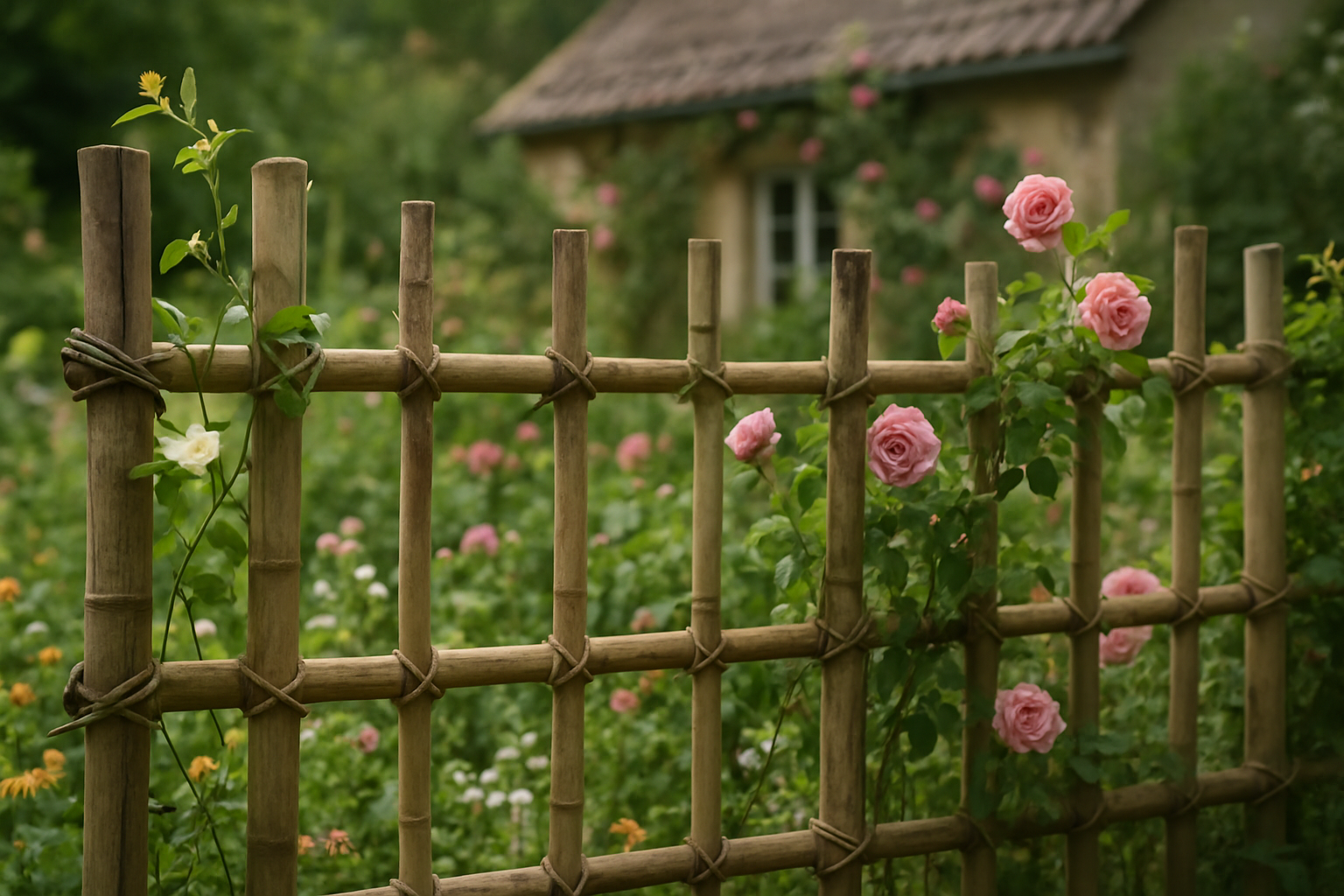
Bamboo is genuinely one of the best materials for a garden fence. It’s sustainable, it’s beautiful, it weathers gracefully, and rolled bamboo fence panels are designed to be beginner-friendly. The key is understanding what you’re working with. Bamboo poles are round and organic — they’re not going to behave like lumber. There will be slight variations in diameter, gaps between poles, and natural color differences from panel to panel. That’s not a flaw. That’s character. It took me until Weekend Two to emotionally accept this.
The Tools and Materials That Actually Helped
Before we talk about my mistakes — and we will talk about them — let me share the products that genuinely made this project work. After my first weekend disaster, I did a lot of research and made some smarter purchases.
Bamboo Fence Panels
I ended up using two different panel heights for different sections of the fence. For the main privacy run along the garage side, I used the Backyard X-Scapes 6 ft x 8 ft Natural Bamboo Rolled Fence Panel. These are solid, well-constructed, and the 6-foot height gave me real privacy without looking like I was building a fortress. For the shorter decorative sections near my raised beds, I went with the Backyard X-Scapes 4 ft x 8 ft version, which has the same great quality but a lighter, more garden-friendly scale.
For my balcony section (yes, I got ambitious), I added the Mininfa Natural Bamboo Slat Screening Panel. This one has a slightly different look — flatter slats rather than round poles — and it works beautifully as a wind and sight barrier. It gave that section a more modern, intentional look that I didn’t expect to love as much as I do.
Post Drivers (The Tool I Wish I’d Bought First)
Here is where Weekend One went sideways. I tried to drive my fence posts into the ground using a rubber mallet and what I can only describe as stubborn optimism. After 45 minutes, I had one crooked post and a bruised ego. A post driver is not optional. I eventually tried the Sekcen 8LB Fence Post Driver and then also grabbed the Gtongoko 8LB Heavy Duty Post Driver for comparison. Both worked far better than anything I improvised. The handles on these tools let you drive posts straight down with real control — critical when you’re trying to keep things level and you’ve already humiliated yourself in front of Dave.
My DIY Bamboo Garden Fence: The Embarrassing Lessons
Let’s get into it. Here are the actual mistakes I made and what I learned from each one.
- I installed a panel upside down. Rolled bamboo panels have a top and a bottom — the wire binding runs along both edges and the cut ends of the bamboo poles face down. I got excited, went fast, and attached an entire 8-foot section with the cut ends pointing up. Water pooled in the hollow poles. I caught it quickly, but the re-stapling process was not graceful.
- I didn’t account for post spacing properly. Standard rolled panels are 8 feet wide. My posts needed to be set at 8-foot intervals — but I set them slightly inside that, which meant the panels overlapped awkwardly in spots. Measure your post spacing before you dig or drive anything. Write it down. Tape it to your forehead if necessary.
- I underestimated how heavy the 6-foot panels are. Unrolling and holding a bamboo panel in place while also trying to staple it to a post is a two-person job. I learned this the hard way when a panel slowly unrolled away from me like a departing ship. Get a helper for this step or rig up a temporary prop.
- I skipped sealing the posts. Wood fence posts that go into the ground need to be treated or sealed at the base to prevent rot. I remembered this fact on Weekend Three, after the posts were already in. I’ve since treated what I can reach. Learn from my laziness.
- I didn’t level as I went. A string line and a level are not optional accessories. They are the entire project. By the time I reached the fourth post, my fence had developed a gentle but unmistakable slope that I had to correct by pulling posts and starting over. Weekend Two was largely a do-over of Weekend One.
Practical Tips for Building a Bamboo Fence That Actually Stays Up
- Use galvanized or stainless hardware. Regular staples and wire will rust and stain your bamboo within a season. Spend a little more on corrosion-resistant fasteners and you’ll thank yourself in year two.
- Plan for panel overlap at joints. Where two panels meet at a post, let them overlap by a few inches
I Built a Bamboo Garden Fence in 3 Weekends: Every Embarrassing Mistake Documented