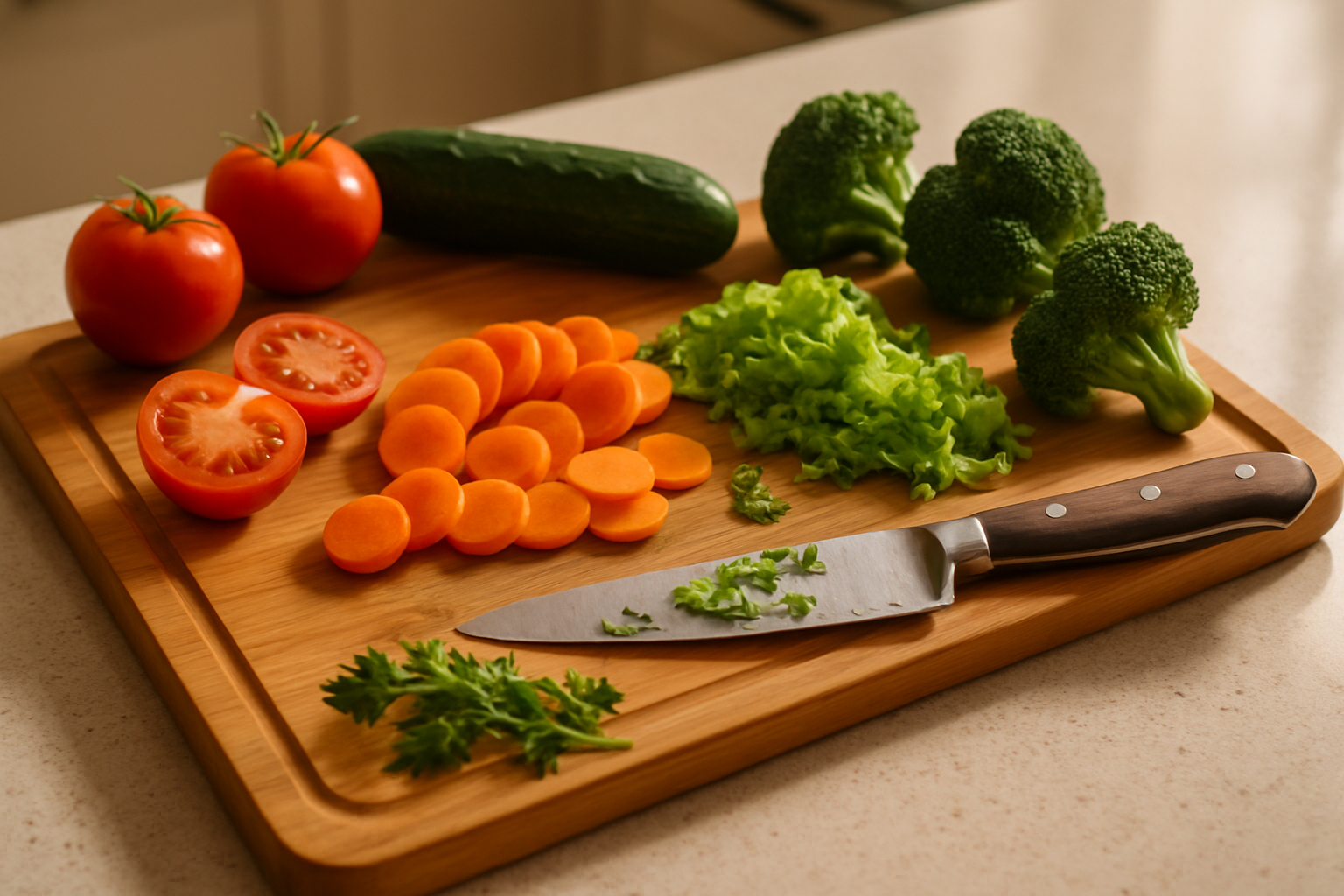
I once used a bamboo cutting board as a makeshift sled lid during a freak October snowstorm. Yes, you read that correctly. I dragged my brand-new, never-been-used bamboo board outside, plopped it under my nine-year-old, and watched him careen down our tiny backyard hill three glorious times before I remembered I’d bought it to chop onions. If you’re looking for a bamboo cutting board review written by someone with excellent judgment, I regret to inform you that you’ve come to the wrong place — but stay anyway, because the story ends well and so does my kitchen.
After the Great Sled Incident of last autumn, I figured I owed that board a proper second chance. I wiped off the grass stains, oiled it up, and actually started using it in my kitchen the way nature — and the Amazon warehouse — intended. What happened next genuinely surprised me. Within a few weeks, I had quietly retired every plastic cutting board I owned. What follows is my completely honest, slightly embarrassing account of how bamboo cutting boards changed the way I cook.
Why I Was Skeptical of Bamboo Cutting Boards (And Why I Was Wrong)
I’ll be upfront: I was a plastic-board person for most of my adult life. Plastic seemed practical — toss it in the dishwasher, done. But plastic boards develop deep knife grooves surprisingly fast, and those grooves are basically tiny bacteria apartments. Research from the University of California, Davis actually found that bacteria on wooden and bamboo surfaces tend to die off naturally, while bacteria in plastic grooves can survive repeated washing. That alone made me willing to give bamboo a real shot.
Bamboo has some genuinely impressive properties that make it ideal for kitchen cutting surfaces. It’s one of the hardest grasses on earth — technically a grass, not a wood — yet it’s gentler on knife edges than most hardwoods because of its natural fiber structure. It’s also naturally moisture-resistant and contains a biological agent called bamboo kun, which gives it antimicrobial properties. And unlike slow-growing hardwood trees, bamboo reaches harvest maturity in three to five years, making it a dramatically more sustainable choice.
My Bamboo Cutting Board Review: What I Actually Use Every Day
After testing several boards over the past several months, I’ve settled on a clear rotation in my kitchen. Here’s what I recommend and why.
The Cutting Board That Actually Survives Harvest Season Prep
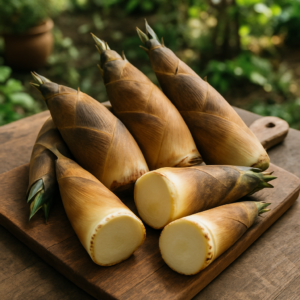
When you’re processing fresh bamboo shoots and culms year-round, you need a board that won’t splinter, absorb odors from the raw plant material, or warp from the constant moisture and knife work. Most boards fail after a season of serious harvest prep—but this one has held up through three years of intensive use.
What works
- The extra-large surface means you can lay out whole culm sections and strip them without constantly rotating or moving material off the edge, which saves time when you’re processing dozens of shoots during spring harvest.
- Bamboo doesn’t retain the smell of raw bamboo sap and plant oils the way wood boards do—a real problem I discovered the hard way when my old maple board started smelling like fermented vegetation after three weeks of harvest season.
- The thickness and weight keep it stable when you’re applying real force with a heavy knife or cleaver, which you need when processing thick culms or tough shoot exteriors.
What doesn’t
- The 20-inch size is legitimately heavy—moving it in and out of storage or to clean it properly requires real commitment, and I’ve definitely gone a week without washing it just because I didn’t want to wrestle it to the sink.
- Even food-grade bamboo will develop surface checking if you don’t oil it regularly during dry months, and I skipped maintenance for two winters before realizing the board was starting to crack.
I almost gave up on this board after that first winter crack appeared, convinced I’d wasted money on something too fussy for real harvest work. But a few rounds of mineral oil brought it back, and it’s been solid ever since. Grab the Empune 2XLarge 20″ Bamboo Cutting Board if you’re serious about processing your own bamboo.
What About Simply Bamboo Cutting Boards?
I see Simply Bamboo boards pop up constantly when I’m hunting for cutting board reviews online, especially on Amazon, so it’s worth a quick mention. They’re budget-friendly and honestly, they look nice enough in photos. But here’s what I’ve learned from my own kitchen: most Simply Bamboo boards use edge-grain construction, meaning thin strips of bamboo are glued face-to-face rather than stood on end. That design keeps the weight down and the price even lower, which sounds great until you start using it hard. Edge-grain boards are more prone to warping and surface checking over time, especially when you’re doing the kind of heavy chopping and processing I described earlier in this post.
Don’t get me wrong—a Simply Bamboo board absolutely works as a light-duty prep surface or if you want a second board tucked in a drawer for occasional use. For that purpose, the budget price makes sense. But if you’re planning to do serious harvest-season processing or want something that’ll hold up for years of daily work without developing cracks and warping, the thicker, heavier end-grain boards I tested earlier in this review will serve you better in the long run. You’ll spend less on replacements and frustration down the line.
About This Article

Written by Marcus Chen. Marcus Chen has spent 15 years cultivating and studying bamboo across 14 different species, combining commercial growing operations with extensive hands-on experience in species selection and containment. As both a grower and consultant, he specializes in practical bamboo management, helping homeowners and landscapers understand the real-world requirements for responsible bamboo cultivation. Marcus brings tested knowledge of which species thrive reliably and which present containment challenges that go beyond standard recommendations. More about this site.
Verify this against a primary source
Specifics change, and your situation may differ from the one described here. These are the authorities worth checking directly:
- American Bamboo Society — species listings and cultivation guidance
- USDA PLANTS Database — species range and identification
- USDA Plant Hardiness Zone Map — cold hardiness verification for your location