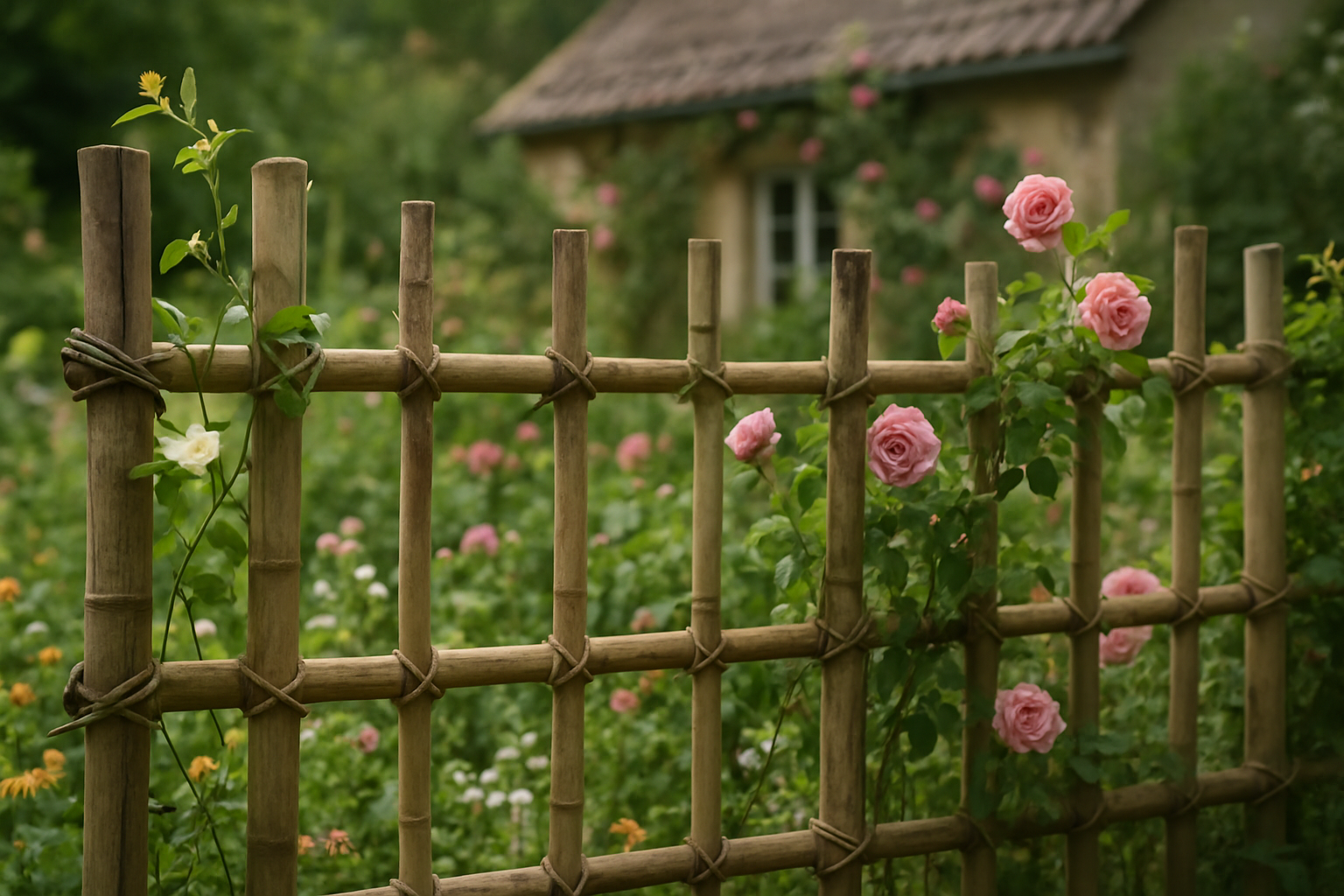
The moment I realized I had installed an entire section of my DIY bamboo garden fence upside down — yes, upside down — was the same moment my neighbor Dave walked over to “see how it was going.” He didn’t say anything. He just stood there, coffee mug in hand, staring at my lopsided creation with the kind of expression you’d give a child who proudly showed you a drawing of a horse that looked like a melting accordion. That was Weekend One. It got worse before it got better.
I’m writing this from my backyard, sitting in a chair I dragged next to my now-genuinely-beautiful bamboo fence, cold lemonade in hand, feeling smug in that specific way you only feel after surviving something humbling. If you’re thinking about building your own bamboo fence and you have roughly zero construction experience (hi, that’s me), this post is for you. I’m going to tell you everything — including the parts I’m mildly ashamed of.
Why I Chose Bamboo (And Why It Took Me Three Weekends)
My backyard has always looked directly into my neighbor’s garage. Not a shed — a full detached garage with a bright fluorescent light that glows into my kitchen like a suburban lighthouse. I wanted privacy. I wanted something that looked natural and warm, not like a plywood barricade. And honestly, I’d been reading about bamboo fencing on this very website and I thought: how hard could it be?
Bamboo is genuinely one of the best materials for a garden fence. It’s sustainable, it’s beautiful, it weathers gracefully, and rolled bamboo fence panels are designed to be beginner-friendly. The key is understanding what you’re working with. Bamboo poles are round and organic — they’re not going to behave like lumber. There will be slight variations in diameter, gaps between poles, and natural color differences from panel to panel. That’s not a flaw. That’s character. It took me until Weekend Two to emotionally accept this.
The Tools and Materials That Actually Helped
Before we talk about my mistakes — and we will talk about them — let me share the products that genuinely made this project work. After my first weekend disaster, I did a lot of research and made some smarter purchases.
The Rolled Panel That Actually Stays Flat (And Doesn’t Unravel Mid-Install)
Bamboo fence panels come in wildly different quality grades, and cheap rolled panels will twist, warp, or separate at the seams the moment you unroll them in the sun. A solid panel with proper binding and consistent slat spacing saves you from fighting the material while you’re already fighting the installation itself.
What works
- The slats stay tight and evenly spaced after unrolling—no mysterious gaps appearing two weeks later as the panel settles.
- Heavy enough that it won’t flap around in wind while you’re positioning it, but light enough that one person can wrestle it into place without a second set of hands.
- The natural finish looks aged-in within a season and blends with live bamboo screening without that cheap, plasticky yellow tone.
What doesn’t
- The binding wire can pinch your fingers during unrolling if you’re not careful—wear work gloves or you’ll learn this the hard way.
- At 6 feet tall it’s visually obvious when it’s not perfectly plumb, which means your installation mistakes (like mine, upside down) become neighborhood-visible.
I nearly sent this back after unrolling the first panel because the bottom edge looked slightly rougher than I expected, but I realized that’s actually the natural variation in bamboo—not a defect. Backyard X-Scapes 6 ft x 8 ft Natural Bamboo Rolled Fence Panel has become my standard recommendation for anyone serious about a multi-panel fence build.
About This Article

Written by Marcus Chen. Marcus Chen has spent 15 years cultivating and studying bamboo across 14 different species, combining commercial growing operations with extensive hands-on experience in species selection and containment. As both a grower and consultant, he specializes in practical bamboo management, helping homeowners and landscapers understand the real-world requirements for responsible bamboo cultivation. Marcus brings tested knowledge of which species thrive reliably and which present containment challenges that go beyond standard recommendations. More about this site.
Verify this against a primary source
Specifics change, and your situation may differ from the one described here. These are the authorities worth checking directly:
- American Bamboo Society — species listings and cultivation guidance
- USDA PLANTS Database — species range and identification
- USDA Plant Hardiness Zone Map — cold hardiness verification for your location