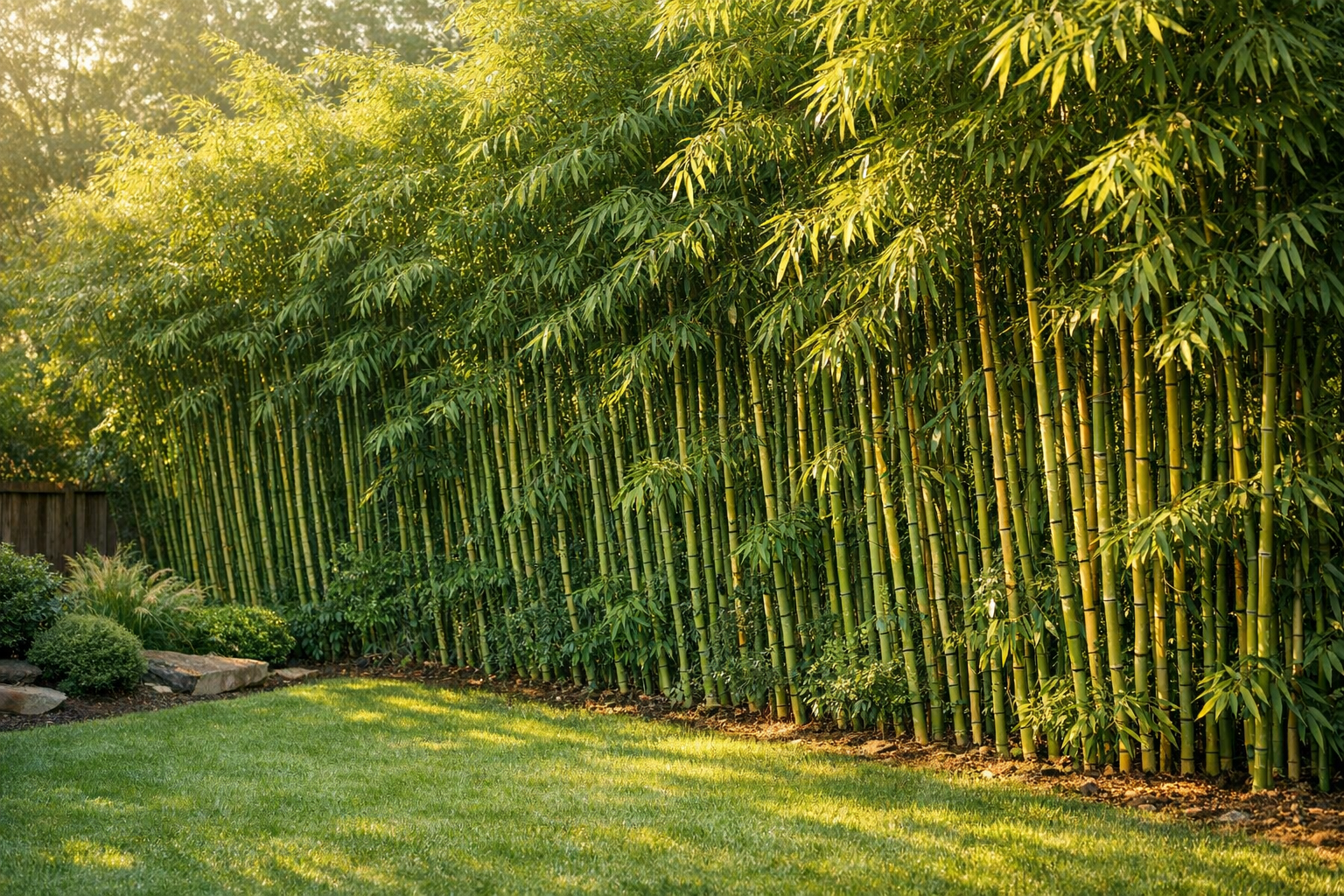
Create a private sanctuary in your backyard. Nothing ruins a relaxing afternoon like the feeling of being watched. Whether you live in a crowded suburb or a busy city, privacy remains essential. Traditional fences often look stark and uninviting. Consequently, many homeowners turn to living screens. Bamboo offers a lush, fast-growing solution for natural privacy barriers. However, choosing the wrong variety can lead to a gardening nightmare. You must select the right species for your specific needs.
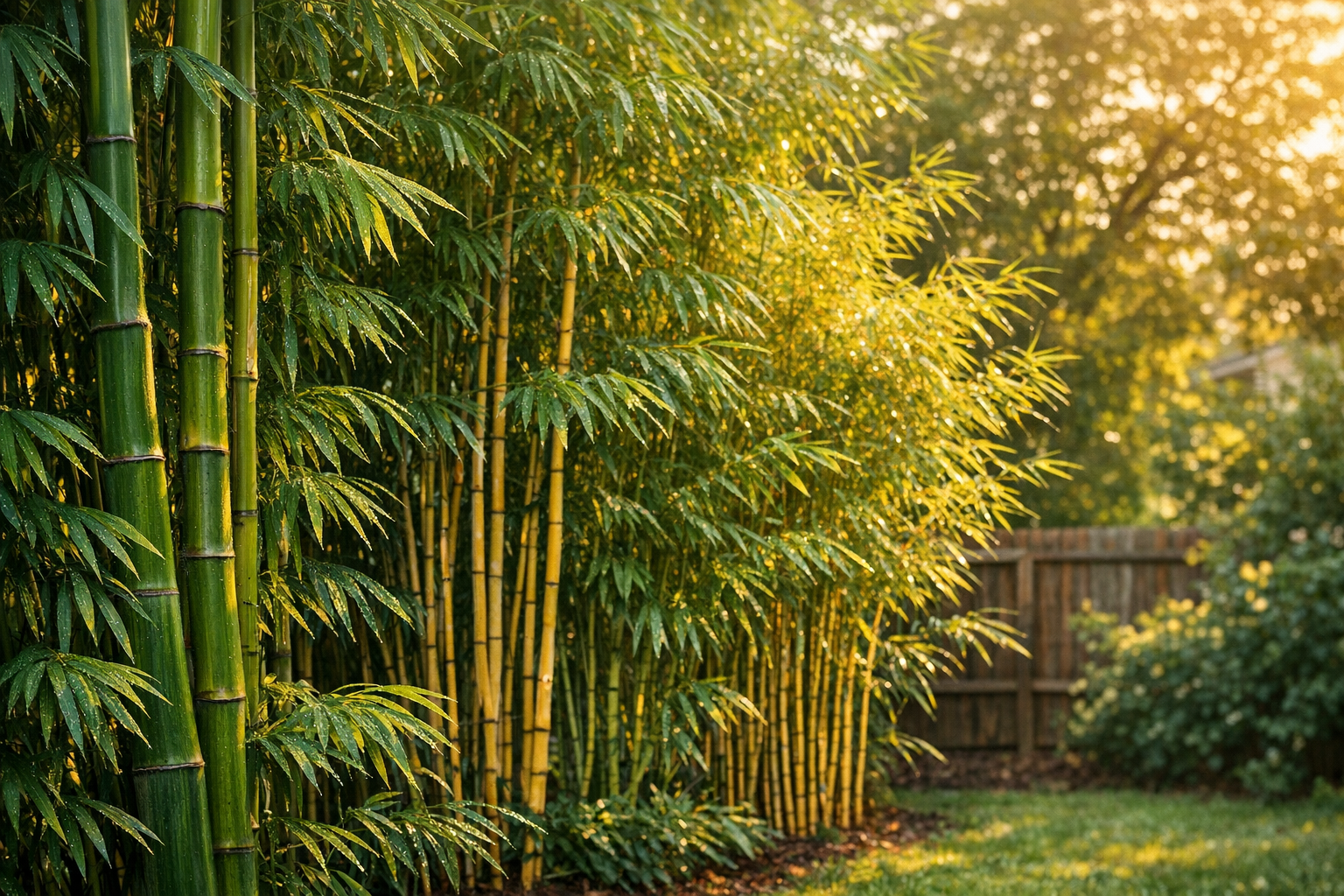
Bamboo grows incredibly fast. Source In fact, it holds the world record for the fastest-growing plant. This makes it ideal for urgent screening needs. Yet, this speed comes with risks. Therefore, you need to understand the fundamental differences between bamboo types before planting. This guide explores the best varieties for privacy and how to manage them safely.
If you’re ready to create that natural privacy screen you’ve been dreaming about, starting with the right bamboo variety makes all the difference in achieving beautiful results without future headaches. For a well-behaved, non-invasive option that won’t take over your yard, consider the Bambusa eutuldoides Asian lemon clumping bamboo, which offers attractive foliage and stays exactly where you plant it without spreading aggressively into unwanted areas. If you’re working with a tight budget and don’t mind waiting a bit longer for mature growth, green bamboo seeds provide an economical way to establish a privacy screen, though you’ll need patience as they develop from seedlings into towering specimens. For those who choose running bamboo varieties or want extra protection against any underground spread, installing a Joewuzun tree root barrier around your planting area will contain rhizomes effectively and prevent unwanted invasion into neighboring yards or garden beds. Another excellent clumping variety worth considering is the Fargesia robusta ‘Wolong’, which arrives as a substantial live plant ready to establish quickly and provides cold-hardy screening even in northern climates. For gardeners interested in bamboo that produces edible shoots along with privacy benefits, the KVITER bamboo seeds offer Bambusa oldhamii, a clumping variety known for its delicious young shoots and rapid growth that creates dense screening within just a few seasons. If you need immediate privacy while waiting for your bamboo to mature or want to supplement sparse areas, an ODTORY artificial privacy fence screen provides instant coverage and blends surprisingly well with living plants to create a fuller, more complete barrier right away. For larger properties or extended planting areas where containment is crucial, a 50ft 24in 60mil-tree root barrier gives you enough material to protect driveways, sidewalks, and property lines from aggressive bamboo rhizomes that might otherwise cause expensive damage. Once your bamboo is planted, you’ll need proper tools to maintain the area, and a RESTMO 3-in-1 heavy duty gardening tools kit provides everything necessary for transplanting, cultivating soil around established plants, and keeping your bamboo grove looking tidy and well-maintained throughout the growing season. To encourage vigorous growth and achieve that lush, dense screening effect as quickly as possible, feeding your bamboo regularly with an organic plant food bag ensures your plants receive the nutrients they need to produce thick culms and abundant foliage that effectively blocks unwanted views. With these carefully selected products and a solid understanding of bamboo growth habits, you’ll be well-equipped to create the private, peaceful outdoor sanctuary you deserve without the worry of invasive spreading or disappointing results.
Understanding the Two Main Types
Before you buy a single pot, you must distinguish between the two growth habits. Bamboo falls into two distinct categories: running and clumping. Your choice determines the maintenance level required. Mixing them up causes major headaches later. Thus, pay close attention to the labels.
Running Bamboo (Leptomorph)
Running bamboo spreads rapidly. It sends out underground rhizomes that travel far from the main plant. Consequently, it fills in long fence lines very quickly. This type creates a dense, impenetrable wall of green. However, it respects no boundaries. Without containment, it invades lawns, gardens, and even neighbor’s yards. You must install a physical barrier to control it. We will discuss containment strategies later in this guide. Despite the risk, runners remain the best choice for tall, fast screens in colder climates.
Clumping Bamboo (Pachymorph)
Clumping bamboo grows differently. It expands slowly outward from a central point. Think of it like a large ornamental grass. It does not send runners across the yard. Therefore, it behaves well in smaller gardens. You generally do not need root barriers for these varieties. They stay where you plant them. However, they grow slower than runners. Additionally, many clumping varieties prefer warmer, tropical climates. Fortunately, newer cultivars now exist for cooler regions.
Top Clumping Varieties for Safe Privacy
For most homeowners, clumping bamboo offers the safest path. You get the tropical look without the fear of invasion. These varieties work exceptionally well in urban settings or near property lines. Here are the top performers.
Fargesia robusta (Campbell Bamboo)
This variety creates a stunning, upright screen. It thrives in cooler climates where other clumpers fail. Additionally, it tolerates shade better than most bamboo. The canes grow close together, blocking sightlines effectively. It typically reaches heights of 12 to 15 feet. Furthermore, the sheaths shed early, revealing beautiful green canes. Gardeners love its tidy, vertical habit. It works perfectly for narrow spaces.
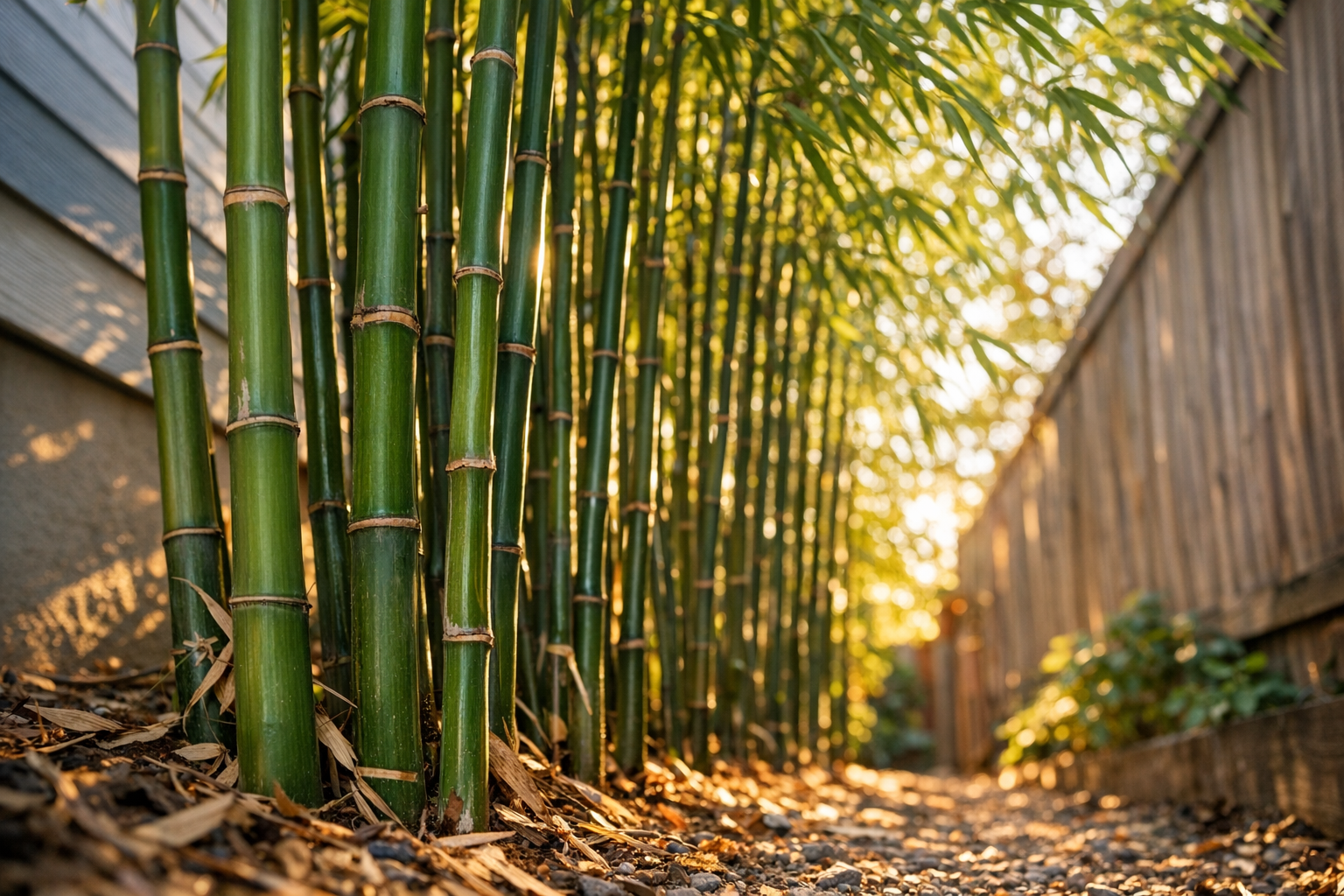
Bambusa oldhamii (Giant Timber Bamboo)
If you live in a warmer zone, choose this giant. It grows tall, straight, and thick. People often call it the most popular clumping bamboo in the United States. It creates a towering wall of green quickly. The canes can reach 55 feet in ideal conditions. Moreover, the foliage is dense and lush. It handles heat well but dislikes freezing temperatures. Consequently, it suits zones 8 and above best.
Bambusa multiplex ‘Alphonse Karr’
This variety adds color to your screen. The canes feature bright yellow stripes on green stems. It grows densely and responds well to pruning. You can maintain it as a hedge easily. It reaches a manageable height of 20 to 35 feet. Also, new shoots emerge with a reddish tint. This adds visual interest throughout the growing season. It loves the sun and tolerates heat.
Best Running Varieties for Fast Screening
Sometimes you need a screen immediately. Running bamboo fills space faster than any other plant. It also tolerates cold winters better than most clumpers. However, remember the containment rule. Always install a barrier. If you accept the maintenance, these varieties offer unmatched performance.
Phyllostachys bissetii
This is the workhorse of cold-hardy bamboo. It survives bitter winters and stays green. It grows incredibly fast and forms a thick canopy. Even in zone 5, it performs reliably. The canes are dark green and very flexible. Therefore, snow loads rarely damage them. It reaches 20 to 25 feet quickly. If you need a windbreak or total visual block, this plant delivers.
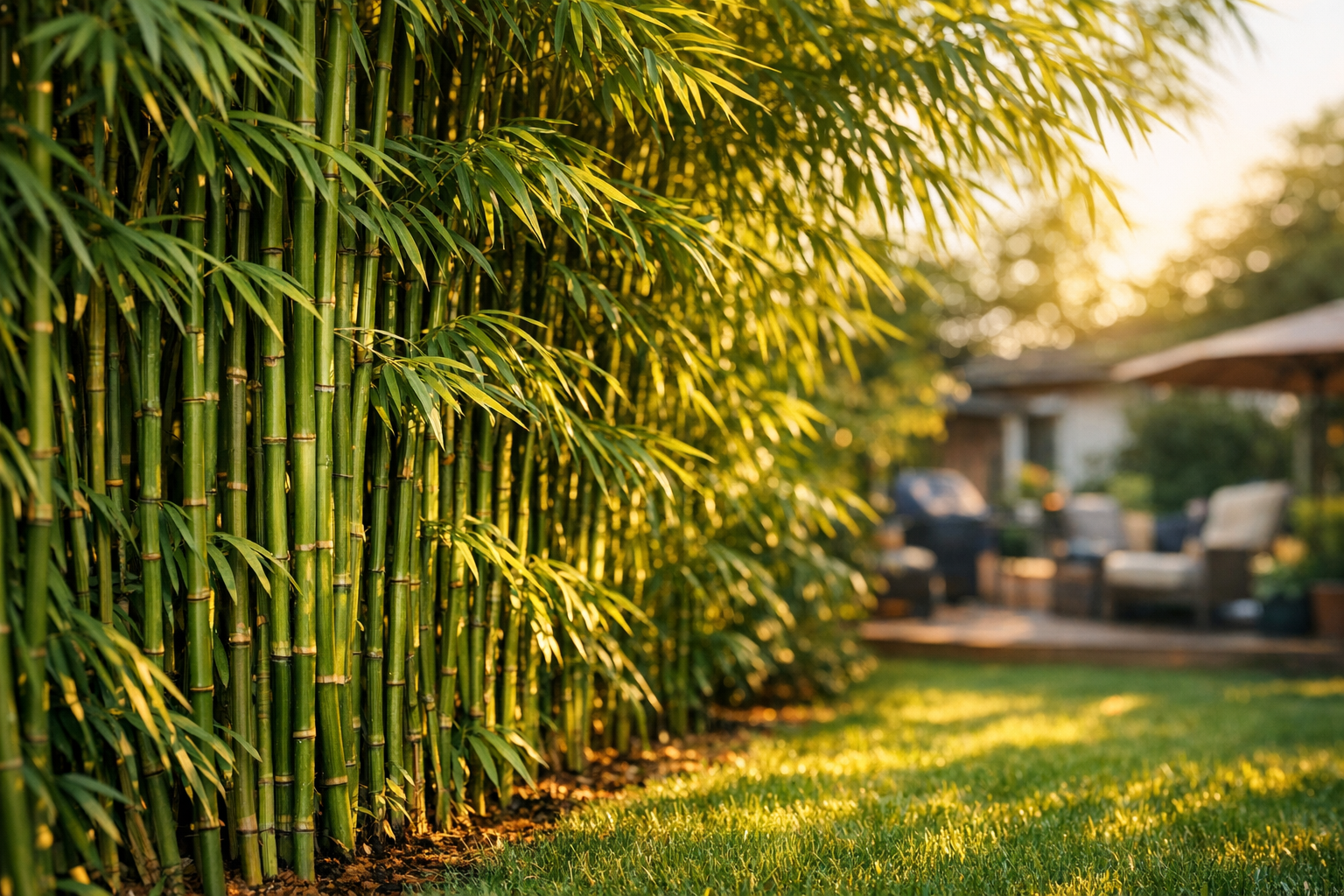
Phyllostachys aurea (Golden Bamboo)
This species is famous for its unique canes. The lower internodes often stack together, creating a tortoise-shell appearance. It loves full sun and handles heat well. While it runs, it spreads somewhat slower than other Phyllostachys types. It creates a stiff, upright screen. It typically grows to 20 feet. Furthermore, it accepts pruning very well. You can shape it to fit your landscape design.
Pseudosasa japonica (Arrow Bamboo)
Choose this for broad leaves and shade tolerance. The leaves are much larger than other temperate bamboos. This creates a tropical, jungle-like vibe. It makes an excellent sound barrier due to the thick foliage. It grows well in containers or narrow planters. It usually stays under 18 feet. While it is a runner, it is less aggressive than the timber bamboos. Nevertheless, use a barrier to be safe.
Essential Containment Strategies
If you plant running bamboo, you must contain it. Skipping this step leads to regret. You cannot rely on hope or vigilance alone. Physical barriers provide the only sure protection.
Installing a Root Barrier
Use high-density polyethylene (HDPE) plastic. Do not use concrete or metal, as they eventually crack. The barrier should be at least 60 mil thick. Additionally, it needs to be 30 inches deep. Dig a trench around the planting area. Place the plastic vertically in the trench.
Crucially, leave two inches of plastic above the soil line. This prevents rhizomes from jumping over the top. Clamp the ends of the barrier securely. Rhizomes will find any gap you leave. Therefore, seal the system completely.
Above-Ground Planters
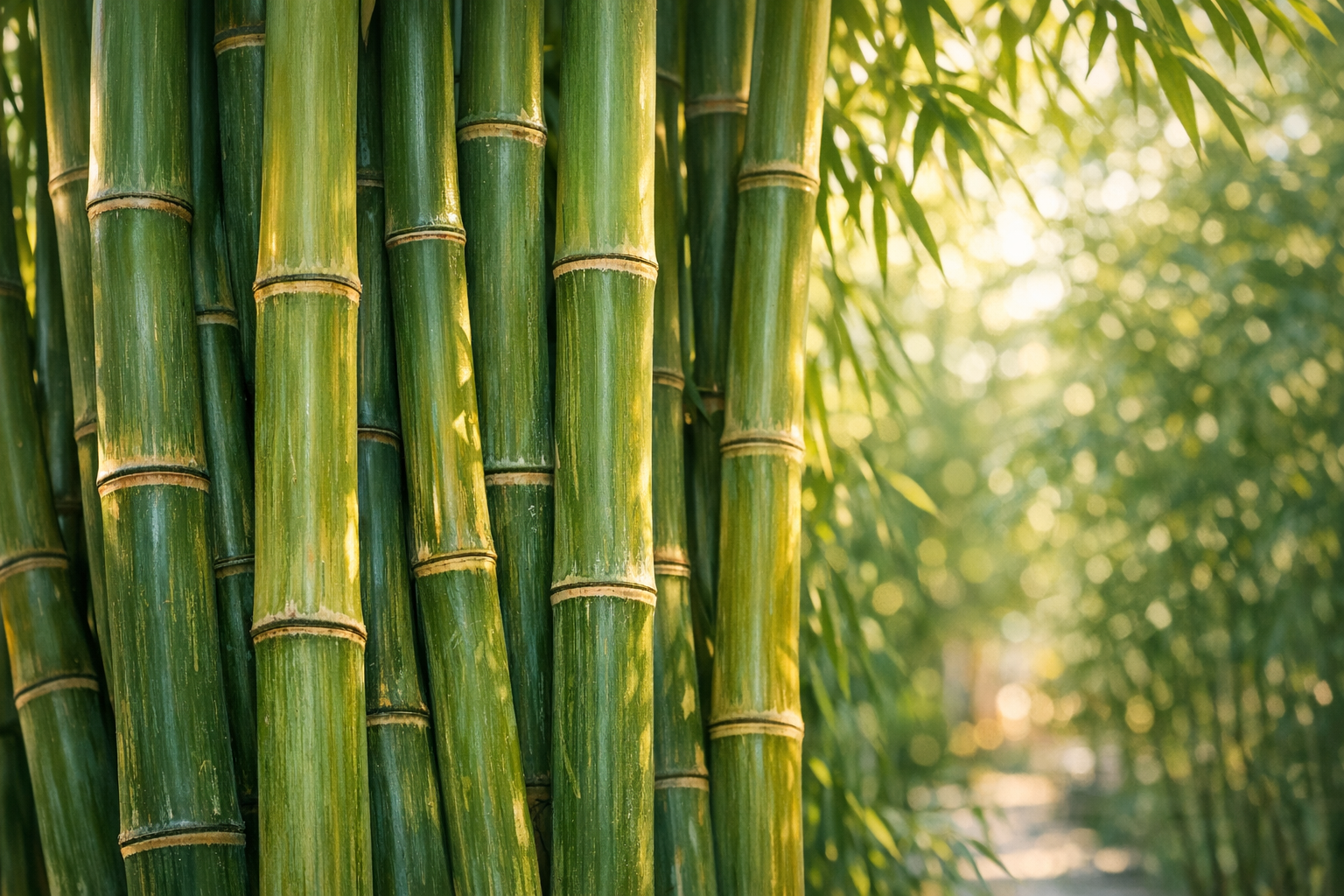
Alternatively, plant bamboo in raised beds or troughs. This keeps the roots isolated from the ground. Ensure the container is strong. Bamboo roots exert tremendous pressure. Metal or concrete planters work best. Furthermore, this method looks modern and architectural. It works perfectly for patios or decks. Just remember that potted bamboo needs more water. The soil dries out faster in containers.
Maintenance for Healthy Growth
Bamboo requires specific care to thrive. While it is rugged, it needs resources to grow tall. Follow these tips for a lush, green screen.
Watering Requirements
New plants need constant moisture. Water them deeply several times a week. Once established, they become drought tolerant. However, dry bamboo drops leaves. To keep the screen dense, water during dry spells. Additionally, mulch the base heavily. A thick layer of mulch retains moisture. It also protects shallow roots from the sun.
Feeding Your Bamboo
Bamboo is a grass. Therefore, it loves nitrogen. Feed it in early spring as new shoots emerge. Use a high-nitrogen lawn fertilizer. Alternatively, use composted manure. Apply fertilizer again in early summer. Do not fertilize in late autumn. This encourages new growth that frost might kill. Regular feeding ensures dark green leaves and rapid height gains.
Pruning and Thinning
Pruning improves the look of your screen. Remove dead or weak canes annually. Cut them at ground level. This opens up the clump for new growth. Furthermore, you can “leg up” the bamboo. Strip the lower branches to show off the canes. This creates a sophisticated, airy look. Finally, top the bamboo if it gets too tall. Cutting the top stops vertical growth forever on that cane. Instead, the plant becomes bushier.
Conclusion
Bamboo creates a privacy screen unlike any other plant. It offers beauty, sound reduction, and rapid results. By choosing the right variety, you solve your privacy issues permanently. Clumpers like Fargesia provide safety and low maintenance. Conversely, runners like Phyllostachys offer speed and height. Assess your site conditions honestly. Install barriers if you choose runners. With proper care, your green wall will stand for decades. Start planning your natural sanctuary today.
If you’re ready to create that natural privacy screen you’ve been dreaming about, starting with the right bamboo variety makes all the difference in achieving beautiful results without future headaches. For a well-behaved, non-invasive option that won’t take over your yard, consider the Bambusa eutuldoides Asian lemon clumping bamboo, which offers attractive foliage and stays exactly where you plant it without spreading aggressively into unwanted areas. If you’re working with a tight budget and don’t mind waiting a bit longer for mature growth, green bamboo seeds provide an economical way to establish a privacy screen, though you’ll need patience as they develop from seedlings into towering specimens. For those who choose running bamboo varieties or want extra protection against any underground spread, installing a Joewuzun tree root barrier around your planting area will contain rhizomes effectively and prevent unwanted invasion into neighboring yards or garden beds. Another excellent clumping variety worth considering is the Fargesia robusta ‘Wolong’, which arrives as a substantial live plant ready to establish quickly and provides cold-hardy screening even in northern climates. For gardeners interested in bamboo that produces edible shoots along with privacy benefits, the KVITER bamboo seeds offer Bambusa oldhamii, a clumping variety known for its delicious young shoots and rapid growth that creates dense screening within just a few seasons. If you need immediate privacy while waiting for your bamboo to mature or want to supplement sparse areas, an ODTORY artificial privacy fence screen provides instant coverage and blends surprisingly well with living plants to create a fuller, more complete barrier right away. For larger properties or extended planting areas where containment is crucial, a 50ft 24in 60mil-tree root barrier gives you enough material to protect driveways, sidewalks, and property lines from aggressive bamboo rhizomes that might otherwise cause expensive damage. Once your bamboo is planted, you’ll need proper tools to maintain the area, and a RESTMO 3-in-1 heavy duty gardening tools kit provides everything necessary for transplanting, cultivating soil around established plants, and keeping your bamboo grove looking tidy and well-maintained throughout the growing season. To encourage vigorous growth and achieve that lush, dense screening effect as quickly as possible, feeding your bamboo regularly with an organic plant food bag ensures your plants receive the nutrients they need to produce thick culms and abundant foliage that effectively blocks unwanted views. With these carefully selected products and a solid understanding of bamboo growth habits, you’ll be well-equipped to create the private, peaceful outdoor sanctuary you deserve without the worry of invasive spreading or disappointing results.
*As an Amazon Associate, I earn from qualifying purchases.