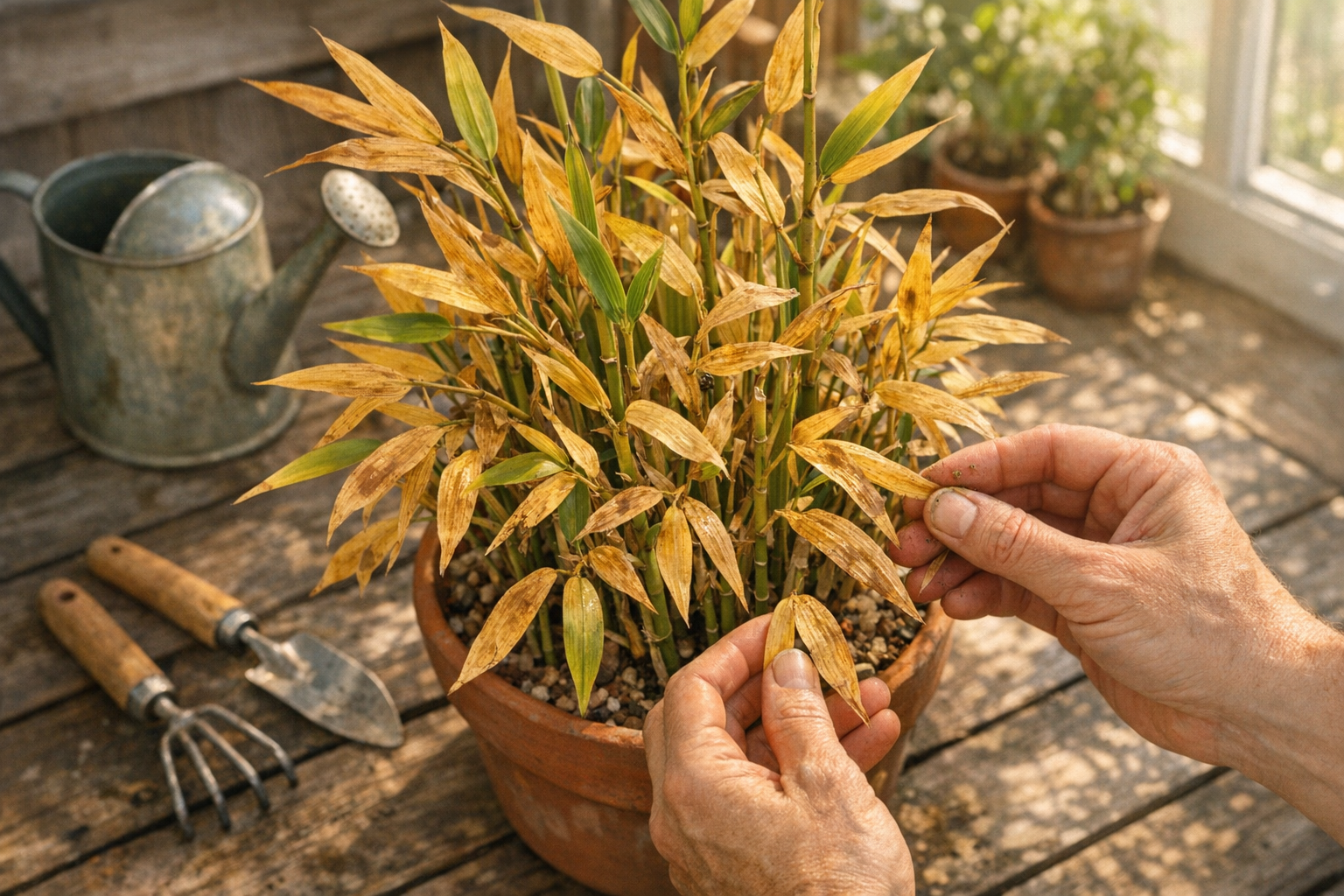
Seeing yellow leaves on your prized bamboo can feel alarming. You likely planted it for lush, green privacy screens. Consequently, spotting discoloration might make you fear the worst. However, you should not panic immediately. Bamboo is incredibly resilient. Often, yellowing leaves signal a natural process rather than a disease.
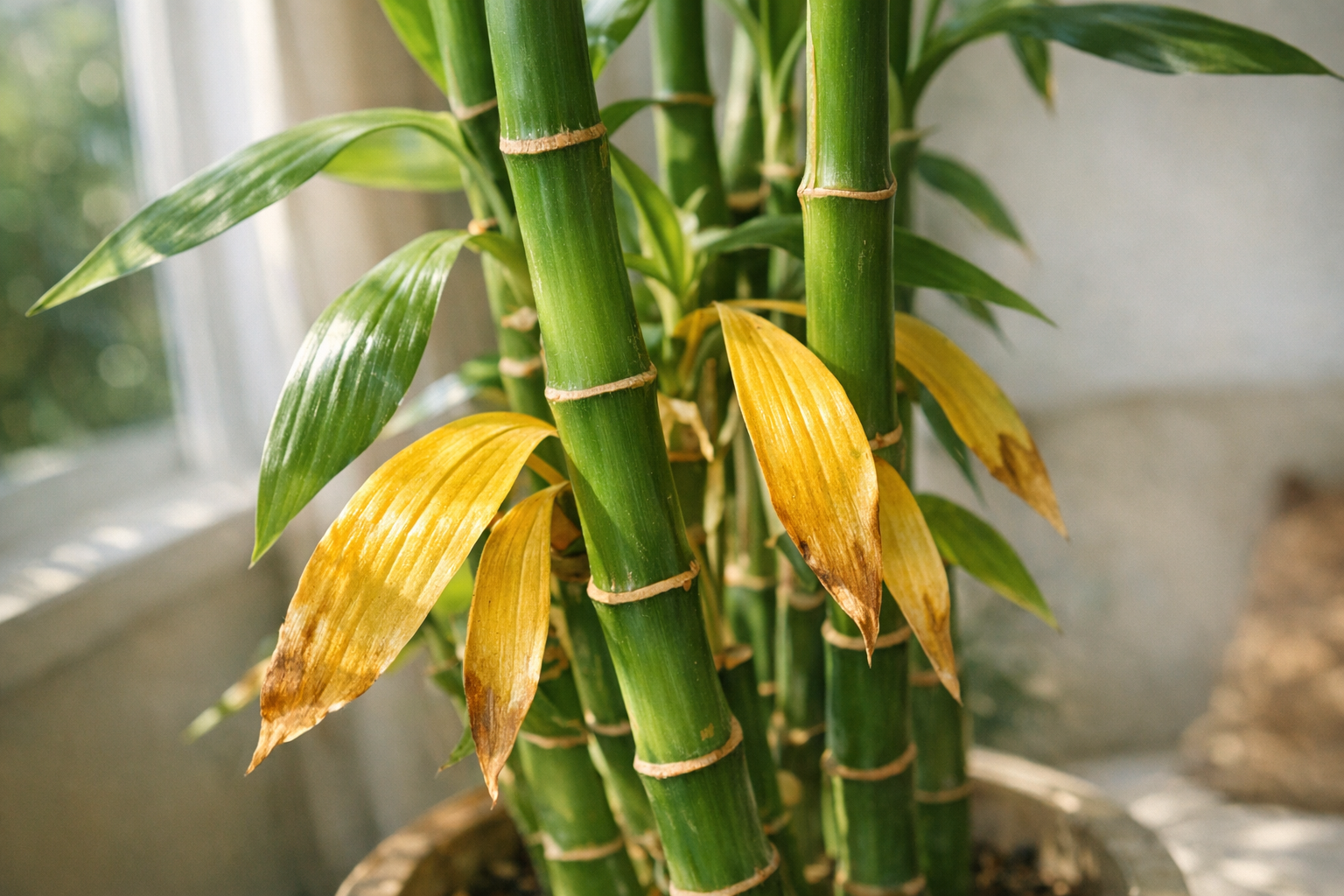
Diagnosing the Root Cause of Yellow Bamboo Leaves
Proper identification of the underlying issue is essential before taking action. Your bamboo plant communicates distress through its foliage. However, not all yellowing indicates a crisis. Some leaf discoloration occurs naturally as part of the growth cycle.
Environmental factors play a significant role in leaf health. For example, temperature fluctuations can trigger color changes. Similarly, light exposure affects photosynthesis and pigmentation. Moreover, seasonal transitions often cause temporary yellowing that resolves naturally.
Common Nutrient Deficiencies
Nitrogen deficiency manifests as pale yellow leaves starting from older growth. The plant redirects nutrients to new foliage. Consequently, lower leaves fade first. Additionally, iron deficiency creates yellow leaves with green veins. This pattern helps distinguish between different nutritional needs.
Magnesium shortage produces yellowing between leaf veins on older leaves. Meanwhile, younger leaves remain green initially. Furthermore, potassium deficiency causes yellowing at leaf edges and tips. Each deficiency presents unique visual clues for accurate diagnosis.
If you’re dealing with yellowing bamboo leaves and want to ensure your plants get the proper care they deserve, investing in the right gardening tools and products can make all the difference in maintaining that lush green appearance you’re hoping for. Starting with nutrition, a high-quality bag of organic plant food can provide fast-acting, water-soluble nutrients that help restore vibrant color to stressed bamboo within just a few applications. To avoid the guesswork about whether your bamboo needs more water or less, an XLUX Soil Moisture meter allows you to check moisture levels instantly without needing any batteries, making it perfect for monitoring your bamboo’s hydration needs throughout the season. For regular feeding that’s incredibly convenient, the Organic Plant Magic shaker format makes it easy to apply fertilizer concentrate exactly where your plants need it most without any complicated mixing or measuring required. If you want comprehensive data about your bamboo’s growing conditions, a YAMRON 4-in-1 Soil tester measures moisture, pH, temperature, and sunlight intensity all in one device with a backlit display for easy reading in any lighting condition. Building healthy soil starts with composting your kitchen scraps, and a Beautiful Kitchen Compost bin with a smell-proof lid keeps odors contained while you create nutrient-rich organic matter to feed your bamboo naturally. For consistent watering that prevents the stress that leads to yellowing, a CARPATHEN Drip Irrigation system delivers moisture directly to the roots on a schedule, covering gardens up to 131 feet with adjustable emitters that ensure every plant gets exactly what it needs. If you’re growing bamboo in containers or want to create a dedicated bamboo garden area, a Vego garden Raised bed kit provides 17 inches of depth in modular metal construction that’s perfect for controlling soil quality and drainage while looking attractive in any outdoor space. When your bamboo specifically needs a nitrogen boost to restore that deep green color to pale leaves, NUTRIENTS Nitrogen Plants, liquid fertilizer delivers a tri-source formula designed to promote lush, vibrant growth exactly where yellowing indicates a deficiency. Starting with the right foundation matters tremendously, so using OrganicMatter Purpose Potting soil gives your bamboo a chemical-free, minimally processed growing medium that supports healthy root development and nutrient uptake from the very beginning. Finally, for hands-on watering that gives you complete control over moisture levels, a Gallon Watering Can, with its removable long spout and stainless steel sprinkler head, makes it easy to deliver water precisely where your bamboo needs it most while monitoring soil saturation to prevent both drought stress and overwatering issues.
Water-Related Issues and Their Symptoms
Overwatering creates soggy soil conditions that suffocate roots. As a result, leaves turn yellow and feel mushy. Root rot often develops in persistently wet environments. In contrast, underwatering causes crispy, dry yellow leaves. The foliage becomes brittle and papery to touch.
Moisture stress affects the entire plant system rapidly. Therefore, checking soil moisture before watering is crucial. Insert your finger two inches deep into the soil. Moreover, drainage quality determines how quickly water moves through the container.
Natural Leaf Shedding Versus Health Problems
Older leaves naturally yellow and drop as bamboo matures. This process concentrates energy on new growth. Typically, one or two bottom leaves yellowing isn’t concerning. However, widespread yellowing across multiple leaves signals trouble.
Sudden color changes throughout the plant require immediate attention. For instance, rapid yellowing within days suggests environmental shock. Additionally, yellowing accompanied by spots or wilting indicates disease or pest infestation.
Is It Spring? Understanding Natural Shedding
Check the calendar before you worry. If you see yellowing during spring, your plant is likely fine. Bamboo behaves differently than many other evergreens. While it keeps foliage year-round, individual leaves do not live forever.
Source .
This process resembles a snake shedding its skin. The plant directs energy toward new shoot growth. Consequently, it stops supporting older leaves. These old leaves turn yellow and drop off. This creates a natural mulch for the roots.
Identifying Natural Molting
Distinguishing natural shedding from illness is straightforward. Look at the distribution of the yellow leaves. During natural shedding, the yellowing appears uniform across the plant. Furthermore, you will see new green shoots emerging simultaneously.
Understanding Natural Leaf Cycling in Bamboo
When your bamboo displays spring yellowing alongside robust new shoots, this signals normal regeneration. Healthy bamboo naturally sheds older foliage to redirect energy toward fresh growth. Moreover, the plant’s overall vigor tells you everything you need to know. Look for strong culms, vibrant new leaves, and active rhizome development. These indicators confirm your bamboo is thriving.
The Nutrient Recycling Process
Fallen yellow leaves serve a crucial ecological purpose in your bamboo grove. As these leaves break down, they release silica back into the surrounding soil. Additionally, decomposing foliage provides nitrogen, phosphorus, and trace minerals. This natural composting process creates a self-sustaining nutrient loop. Furthermore, the leaf litter helps retain soil moisture during warmer months. Consequently, removing these leaves disrupts this beneficial cycle.
The decomposition timeline typically spans three to six months. During this period, microorganisms and earthworms process the organic matter. Therefore, patience allows nature to complete this essential transformation. Meanwhile, the breaking-down leaves also suppress weed growth naturally.
Supporting Your Bamboo’s Natural Growth Pattern
Resist the urge to rake away yellowed foliage from healthy bamboo stands. Instead, allow the leaves to form a protective mulch layer. This approach mimics conditions in bamboo’s native forest environments. For example, wild bamboo groves maintain thick leaf litter year-round. As a result, the soil remains enriched and biologically active.
However, you can gently redistribute fallen leaves if they accumulate unevenly. This ensures consistent soil coverage throughout your planting area. Moreover, maintaining a two to three-inch leaf layer provides optimal benefits. In contrast, excessive buildup beyond four inches may harbor pests.
Water Stress: The Most Common Culprit
Water issues cause most bamboo problems outside of spring. Bamboo loves water, but it demands balance. Too much or too little water stresses the root system. As a result, the foliage suffers first.
Signs of Under-Watering
Thirsty bamboo reacts physically. The leaves will curl inward lengthwise. This defense mechanism minimizes moisture loss. Shortly after curling, they turn yellow and dry out.
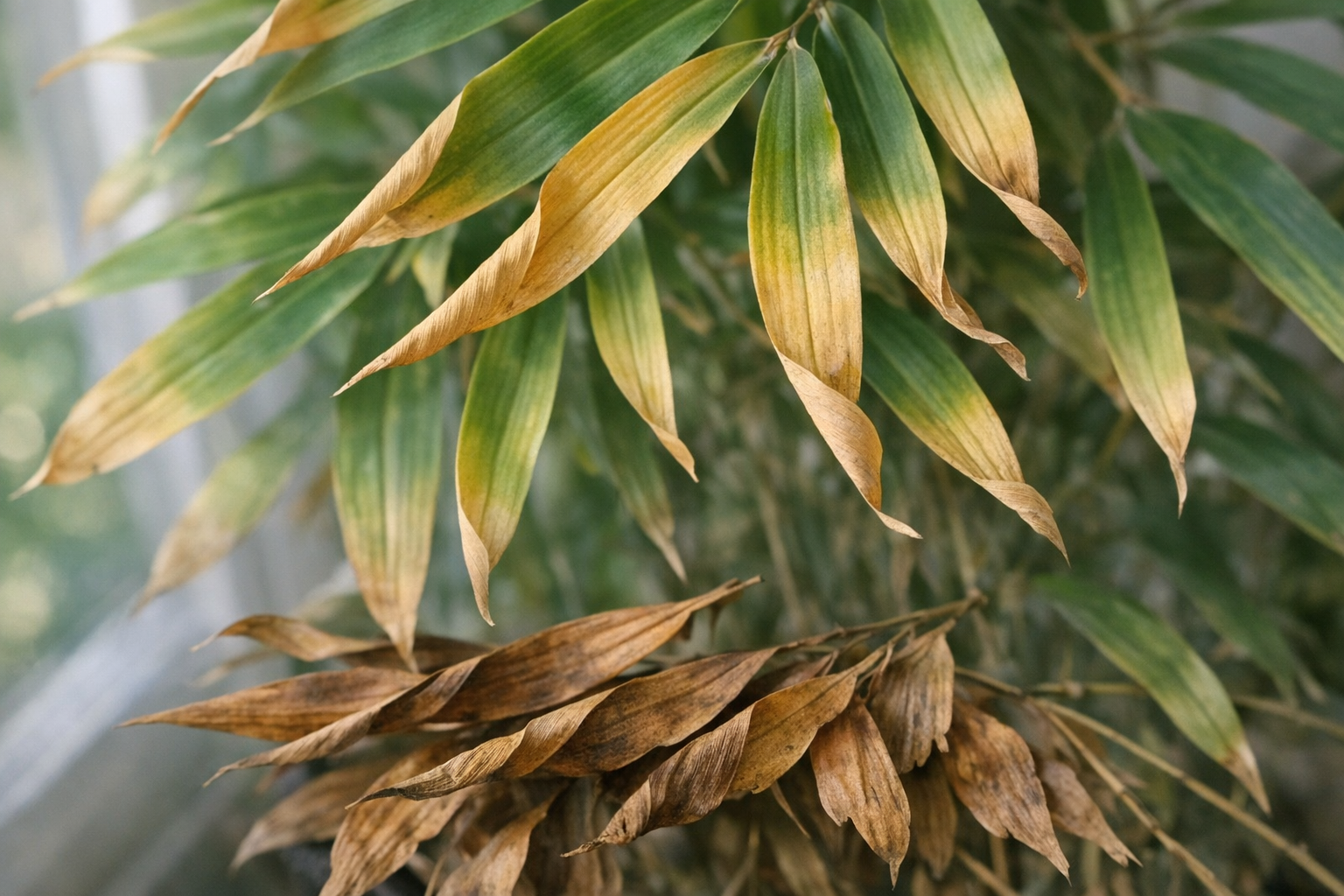
New plantings suffer most from drought. Their root systems are small. Therefore, they cannot access deep soil moisture. You must water new plants daily during hot spells. Established clumps are more drought-tolerant. However, they still need hydration during dry summers.
Check your soil moisture. Stick a finger two inches into the dirt. If it feels dry, water immediately. Deep soaking is better than light sprinkling. It encourages roots to grow downward.
The Dangers of Over-Watering
Conversely, too much water kills bamboo faster than drought. Bamboo hates “wet feet.” Standing water suffocates the roots. Without oxygen, roots rot.
Source .
Unlike drought stress, over-watered leaves usually do not curl. Instead, they turn yellow and limp. They may develop brown tips. If you suspect this, check the drainage. Heavy clay soil often traps water.
If the soil smells sour or swampy, stop watering. You may need to amend the soil. Adding organic matter improves drainage. In severe cases, you might need to transplant the bamboo to a raised bed.
Nutrient Deficiencies causing Chlorosis
Bamboo grows aggressively. Consequently, it feeds heavily. It depletes soil nutrients rapidly. When soil lacks essential minerals, the plant develops chlorosis. This condition manifests as yellowing leaves.
Nitrogen Deficiency
Nitrogen is vital for green, leafy growth. Bamboo is a grass. Therefore, it craves nitrogen. A lack of this nutrient causes older leaves to pale. Eventually, the whole plant looks light green or yellow.
Applying a high-nitrogen fertilizer usually fixes this. Lawn fertilizer often works well. However, avoid weed-and-feed products. They can harm the bamboo. Instead, use a balanced slow-release fertilizer. Compost or manure also provides excellent organic nitrogen.
Iron and Magnesium Issues
Sometimes the soil has nutrients, but the plant cannot access them. This often happens in alkaline soils. High pH locks away iron.
Iron deficiency looks distinct. The veins remain green, but the space between them turns yellow. This creates a spiderweb effect.
If you see this pattern, test your soil pH. You might need to add sulfur to lower the pH. Alternatively, apply chelated iron. This supplement helps the plant absorb iron immediately.
Environmental Stress Factors
Your local environment impacts plant health significantly. Bamboo prefers specific conditions. Deviating from these causes stress.
Light Exposure Problems
Most bamboo varieties love sun. However, some prefer shade. For example, Fargesia varieties often struggle in intense afternoon heat. Direct scorching sun bleaches their leaves. They turn pale yellow or white.
Conversely, sun-loving timber bamboo might yellow in deep shade. It cannot produce enough energy. Research your specific variety. Ensure it lives in the right light conditions. If a shade-lover sits in full sun, consider moving it. Alternatively, plant a taller tree nearby to provide canopy cover.
Temperature Extremes
Winter cold also damages foliage. Freezing winds dry out leaves. This causes “winter burn.” The leaves turn beige or yellow-brown.
Source .
Usually, the damage is cosmetic. The plant will replace these leaves in spring. You can prevent this by mulching heavily. Mulch keeps the ground from freezing solid. Additionally, you can spray anti-desiccant in late autumn. This coating protects the leaves from moisture loss.
Pest Infestations
Insects can suck the life out of your bamboo. While bamboo resists many pests, it isn’t immune. Mites are the most frequent invaders.
Bamboo Mites
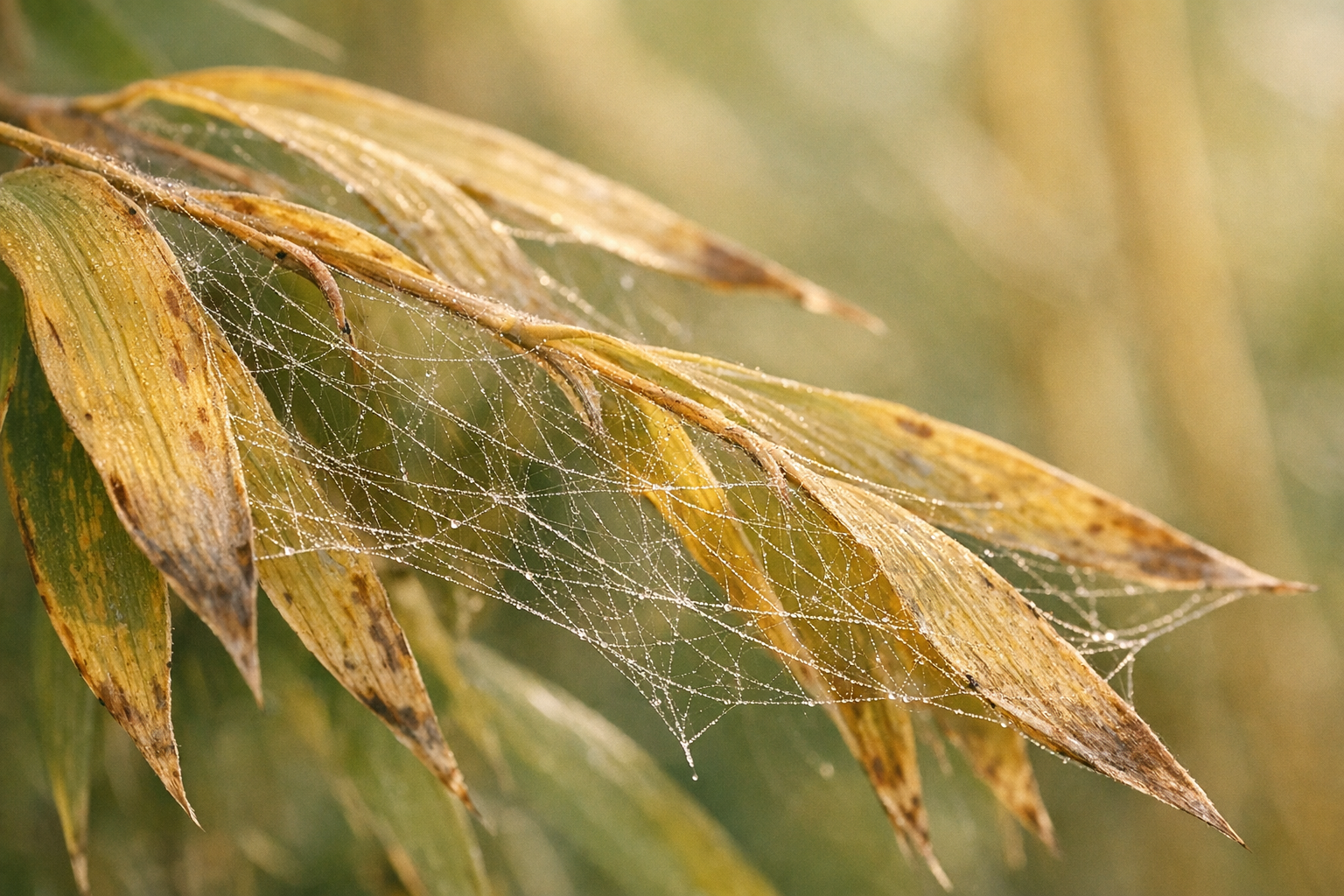
These tiny pests live on the undersides of leaves. They feed on plant juices. Their damage looks unique. You will see pale yellow rectangular blotches on the leaves.
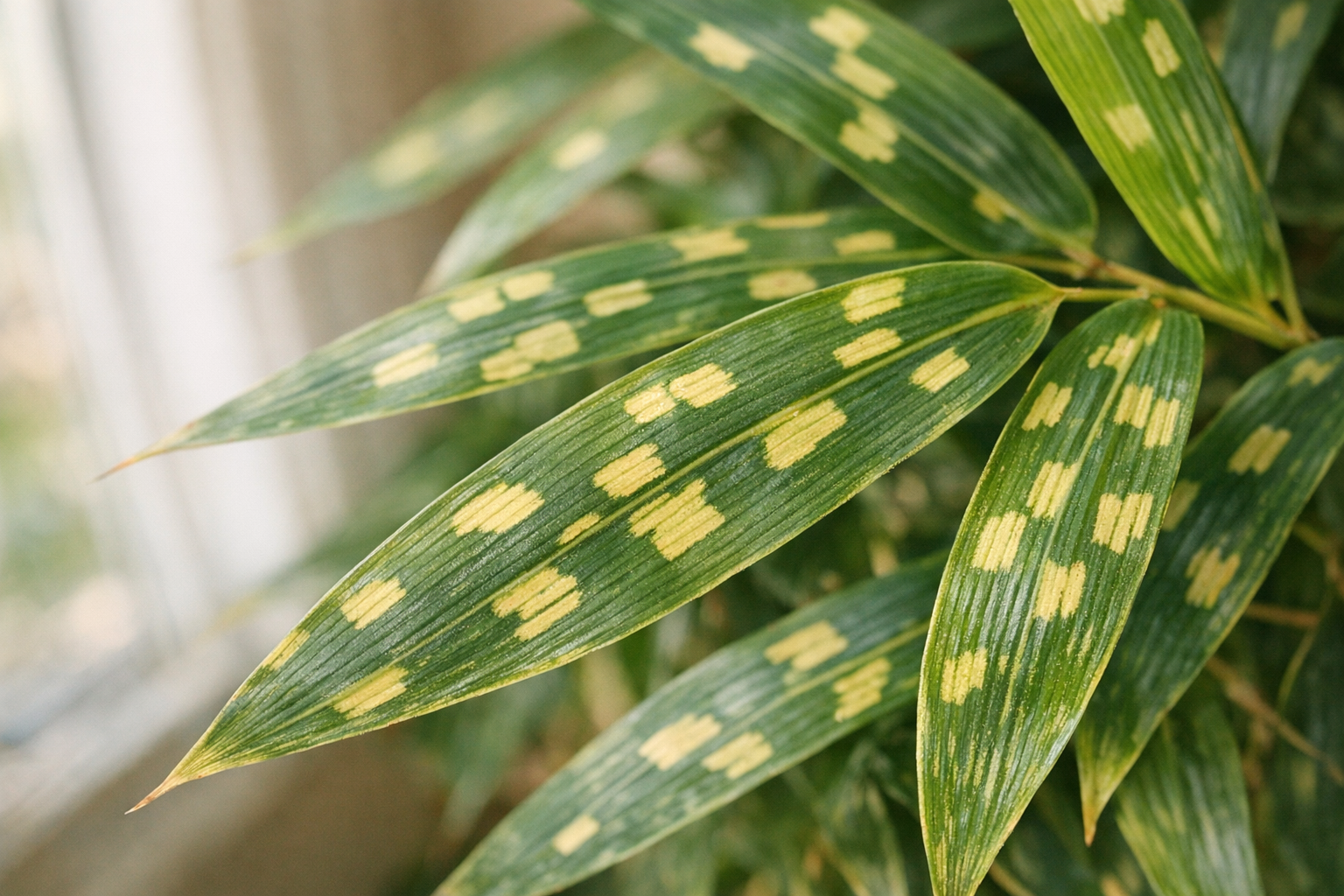
Look closely at the leaf underside. You might see small webs or moving dots. Mites thrive in dry, dusty conditions.
Treating Mites
Water blasts can help. Spray the foliage hard with a hose. This knocks off the mites. It also increases humidity, which mites hate.
For severe infestations, use insecticidal soap. Neem oil also works effectively. Apply these treatments in the evening. This prevents sun scorch on the wet leaves. You must repeat the treatment every few weeks. This breaks the mites’ breeding cycle.
When to Take Action
Not every yellow leaf requires intervention. First, observe the pattern. Is it spring? Is it the whole plant or just old leaves?
If the yellowing persists, check the soil moisture. Adjust your watering schedule accordingly. Next, inspect for pests. Finally, consider feeding the plant.
Bamboo is forgiving. It recovers quickly from stress. By identifying the root cause, you can restore its lush green glory. Patience and observation are your best tools. Soon, your bamboo will thrive again.
If you’re dealing with yellowing bamboo leaves and want to ensure your plants get the proper care they deserve, investing in the right gardening tools and products can make all the difference in maintaining that lush green appearance you’re hoping for. Starting with nutrition, a high-quality bag of organic plant food can provide fast-acting, water-soluble nutrients that help restore vibrant color to stressed bamboo within just a few applications. To avoid the guesswork about whether your bamboo needs more water or less, an XLUX Soil Moisture meter allows you to check moisture levels instantly without needing any batteries, making it perfect for monitoring your bamboo’s hydration needs throughout the season. For regular feeding that’s incredibly convenient, the Organic Plant Magic shaker format makes it easy to apply fertilizer concentrate exactly where your plants need it most without any complicated mixing or measuring required. If you want comprehensive data about your bamboo’s growing conditions, a YAMRON 4-in-1 Soil tester measures moisture, pH, temperature, and sunlight intensity all in one device with a backlit display for easy reading in any lighting condition. Building healthy soil starts with composting your kitchen scraps, and a Beautiful Kitchen Compost bin with a smell-proof lid keeps odors contained while you create nutrient-rich organic matter to feed your bamboo naturally. For consistent watering that prevents the stress that leads to yellowing, a CARPATHEN Drip Irrigation system delivers moisture directly to the roots on a schedule, covering gardens up to 131 feet with adjustable emitters that ensure every plant gets exactly what it needs. If you’re growing bamboo in containers or want to create a dedicated bamboo garden area, a Vego garden Raised bed kit provides 17 inches of depth in modular metal construction that’s perfect for controlling soil quality and drainage while looking attractive in any outdoor space. When your bamboo specifically needs a nitrogen boost to restore that deep green color to pale leaves, NUTRIENTS Nitrogen Plants, liquid fertilizer delivers a tri-source formula designed to promote lush, vibrant growth exactly where yellowing indicates a deficiency. Starting with the right foundation matters tremendously, so using OrganicMatter Purpose Potting soil gives your bamboo a chemical-free, minimally processed growing medium that supports healthy root development and nutrient uptake from the very beginning. Finally, for hands-on watering that gives you complete control over moisture levels, a Gallon Watering Can, with its removable long spout and stainless steel sprinkler head, makes it easy to deliver water precisely where your bamboo needs it most while monitoring soil saturation to prevent both drought stress and overwatering issues.
*As an Amazon Associate, I earn from qualifying purchases.