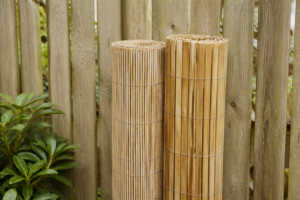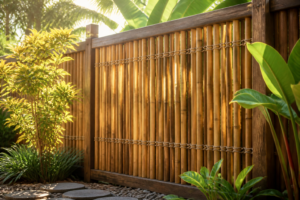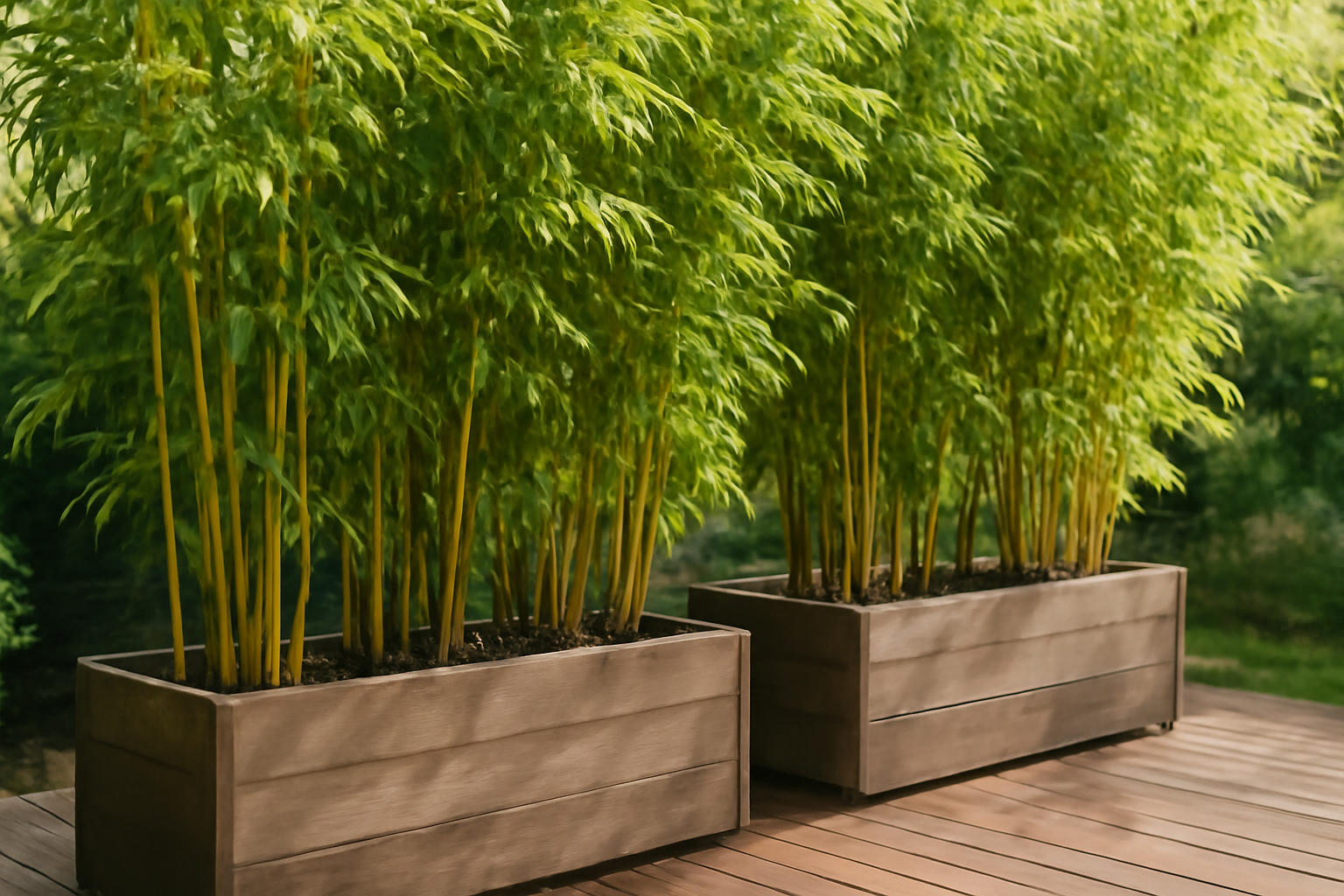
Last spring, I finally got serious about fixing my deck situation. My neighbor’s yard sits slightly elevated above mine, and every time I tried to relax outside, I felt completely exposed. I wanted a bamboo planter box privacy screen deck solution that looked natural, required zero maintenance, and didn’t need me to wait three years for real bamboo to grow. That combination of requirements turned out to be harder to find than I expected.
I’d already tried a cheap lattice panel from a hardware store. It looked out of place, warped after one rainy season, and did almost nothing for actual privacy. Real bamboo was tempting, but I’d read enough horror stories about invasive roots and city permit headaches to rule that out fast. Something had to change before summer hit.
After about two weeks of searching, I landed on an artificial bamboo option with a built-in planter base. The idea of getting height, greenery, and a contained footprint all in one unit genuinely appealed to me. So I ordered it, tested it through a full summer and into fall, and I’m sharing everything I found — good and not so good.
When You Need Instant Height Without Fighting Rhizomes for Five Years
I’ve learned the hard way that real bamboo screening takes patience—sometimes more patience than your privacy situation allows. If you’re in the same boat, an artificial bamboo planter box can give you that immediate visual barrier without the root-barrier headaches or the years of waiting for culms to reach screening height.
What works
- The adjustable height range (4.9–8.2 ft) actually lets you dial in the exact sight line you need to block your neighbor’s vantage point—I tested angles from my deck chair to confirm coverage before committing.
- The integrated planter base is heavy enough to stay put in wind without guy-wires or permanent installation, which matters if you’re renting or want to move it later without excavating a root system.
- Unlike real bamboo, there’s zero containment panic—no daily scouting for escaped rhizomes, no barrier inspections, no herbicide decisions to make when runners inevitably find a gap.
What doesn’t
- The faux stalks feel plastic to the touch and will age differently than living canes—they don’t develop that weathered, natural patina that real bamboo gets after a season or two, so the illusion breaks down on close inspection.
- You’re buying a permanent visual replacement rather than a living screen that adapts; if your privacy needs shift or you want to eventually grow real bamboo, you’re stuck storing or discarding a large, awkward structure.
I almost sent this back after the first week because the stalks looked too uniform and shiny in afternoon light, but after positioning it at a slight angle and letting some deck plants grow around the base, the artificial look faded into the background. If instant privacy without rhizome warfare is what you need, check out the SEIFE 4.9-8.2ft Artificial Bamboo Privacy Screen Outdoor with Planter Box.
Fitting It
The planter box arrived fully assembled, which saved me hours. I just had to position it on my deck—it’s heavy enough that wind isn’t a concern, but I didn’t bolt it down. The base is a self-contained plastic reservoir, so I filled it with potting soil and added a few trailing plants around the bamboo stalks to soften the look. Setup took maybe 45 minutes total, mostly because I was fussy about placement. No tools needed beyond a shovel.
How It Has Held Up
Through that first summer and into fall, the artificial bamboo held its color remarkably well. I was genuinely surprised—I expected fading by August, but it stayed convincingly green through September heat. The planter soil dried out faster than I anticipated in July, so I added drip irrigation to keep the living plants healthy. By late October, I noticed a few of the outer bamboo stalks had developed a slight chalky film from dust and pollen, but a quick rinse with the hose cleaned it right off. No cracks, no UV brittleness.
Where It Falls Short
- The planter box footprint is roughly 2 feet square—fine for a deck corner, but it eats real estate if your space is tight. A traditional lattice panel uses less floor space.
- Close inspection reveals the bamboo texture is molded plastic, not convincing beyond 8–10 feet away. If your neighbor’s sightline is directly adjacent, the illusion breaks down.
- Watering the integrated planter in winter is awkward; soil freezes and drainage becomes unpredictable in cold climates. Real bamboo or a standalone screen avoids this.
- At full height (8.2 feet), it’s top-heavy if you live in a high-wind area. I wouldn’t trust it unsecured in sustained gusts over 25 mph.
Would I Buy It Again
I’d buy it again for my specific situation—a moderately exposed deck in a mild climate where I wanted instant privacy without permits or maintenance. It’s not the right call if you have a tiny deck, live somewhere windy, or need convincing detail work up close. For those constraints, a real bamboo grove with proper root barriers or a metal privacy fence makes more sense.
About This Article

Written by Marcus Chen. Marcus Chen has spent 15 years cultivating and studying bamboo across 14 different species, combining commercial growing operations with extensive hands-on experience in species selection and containment. As both a grower and consultant, he specializes in practical bamboo management, helping homeowners and landscapers understand the real-world requirements for responsible bamboo cultivation. Marcus brings tested knowledge of which species thrive reliably and which present containment challenges that go beyond standard recommendations. More about this site.
Verify this against a primary source
Specifics change, and your situation may differ from the one described here. These are the authorities worth checking directly:
- American Bamboo Society — species listings and cultivation guidance
- USDA PLANTS Database — species range and identification
- USDA Plant Hardiness Zone Map — cold hardiness verification for your location