This post contains affiliate links. As an Amazon Associate, I earn from qualifying purchases at no extra cost to you.
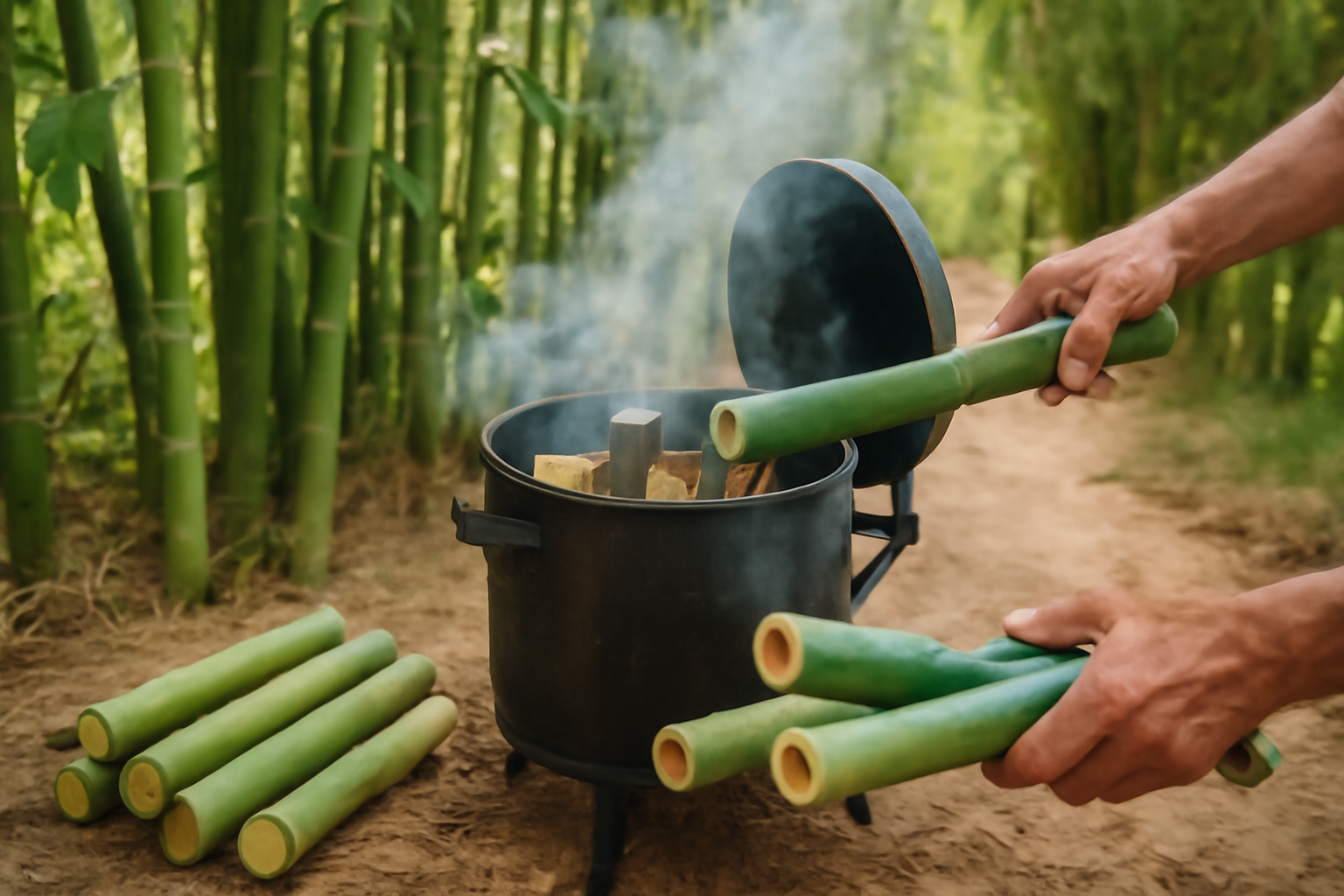
After fifteen years of growing bamboo commercially, I have accumulated a problem most people would envy: too much bamboo. Every season, I cull culms, thin groves, and harvest poles for sale. That leaves an enormous volume of offcuts, rejected poles, and trimmings that I honestly did not know what to do with for years. Burning it in an open pile felt wasteful. Chipping it into mulch helped, but only so much. Then I started reading seriously about bamboo charcoal — specifically about using a charcoal retort kiln bamboo review-style approach to convert waste culms into a usable, high-value product. That research eventually landed me on a surprisingly practical solution in the form of a compact portable grill unit that doubled as a small-batch retort.
I want to be upfront about something. When I first started looking at this, I expected to need a purpose-built retort — something steel, heavy, and expensive. What I found instead surprised me. A well-constructed portable charcoal grill, used with intention and a little technique, can produce decent bamboo charcoal in small batches. It is not an industrial solution. However, for experimenting, learning the process, and actually using the charcoal you produce, it works better than I expected.
Scaling Up Charcoal Production Without a Kiln Budget
Once I committed to processing bamboo offcuts into charcoal, I faced a hard reality: purpose-built kilns cost thousands, and I wasn’t ready to drop that kind of money on an experiment. A portable charcoal grill became my workaround—small enough to iterate on, hot enough to actually carbonize bamboo material, and cheap enough to replace if I wrecked it learning.
What works
- Tabletop grills heat fast and hold steady temperatures—I found I could load thin bamboo trimmings and achieve consistent char in under 2 hours, much faster than experimenting with drum or barrel methods.
- The compact footprint lets you batch-process in manageable quantities without overwhelming your garden workspace or committing to huge production volumes you might not sell.
- Portable models are forgiving when you’re learning—mistakes don’t destroy expensive infrastructure, so you can dial in timing, air flow, and material prep without financial panic.
What doesn’t
- Output ceiling is real—a tabletop grill maxes out at maybe 5–10 pounds of finished charcoal per batch, which feels trivial once you’re staring at a season’s worth of culm waste.
- Charcoal quality is inconsistent across batches because heat distribution in a small grill isn’t uniform; I’ve ended up with over-burned powder on one side and under-carbonized chunks on the other.
I nearly gave up after my first three attempts produced mostly ash and disappointment, convinced the whole idea was a non-starter. But I ordered a Portable Grill Charcoal for Outdoor, Leonyo Small BBQ Charcoal Grill for Tabletop anyway, tweaked my loading method, and suddenly had product worth bagging and selling.
This post contains affiliate links. As an Amazon Associate, I earn from qualifying purchases at no extra cost to you.