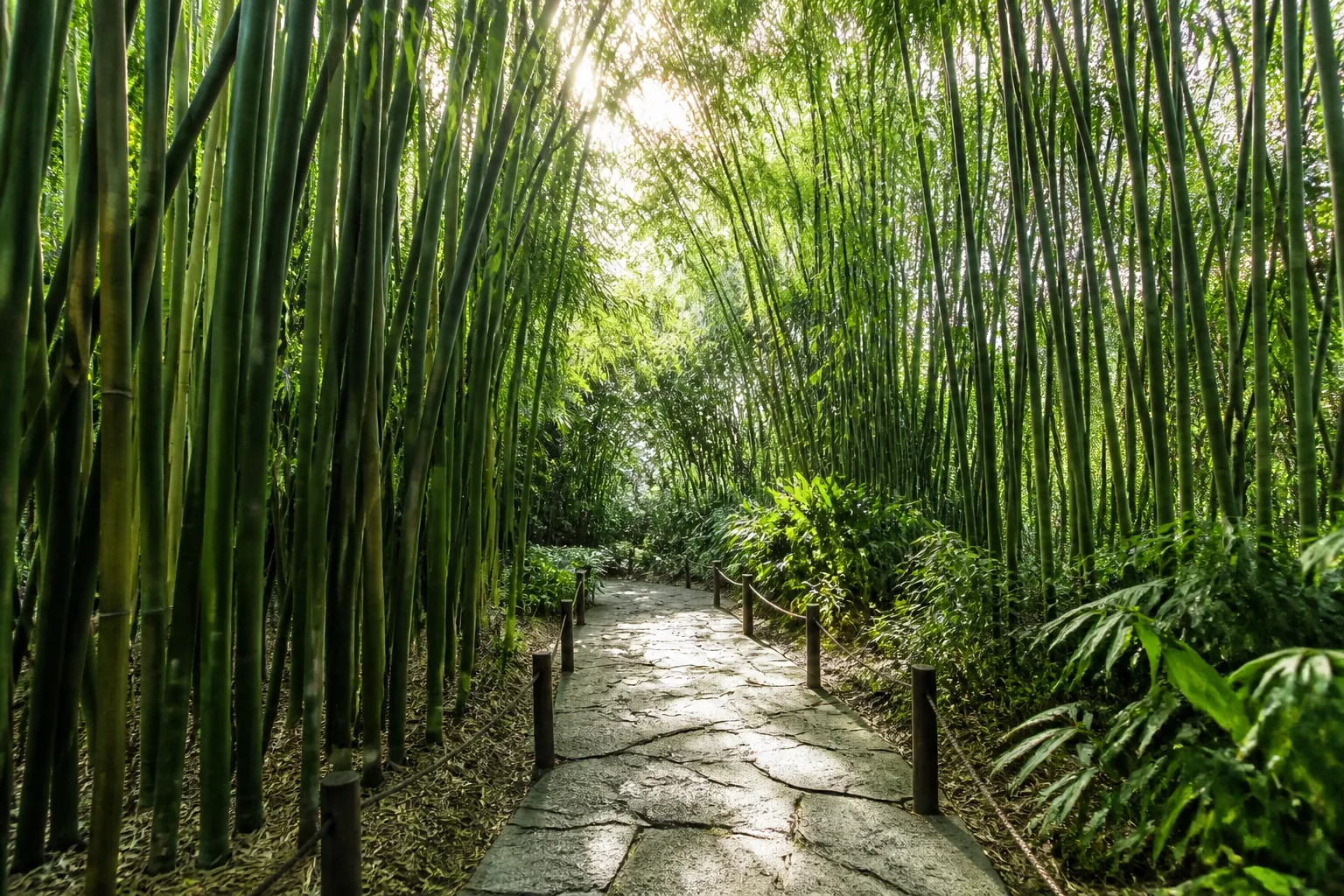
If you’ve ever Googled “how to grow bamboo” and walked away more confused than when you started, this complete guide to growing bamboo is exactly what you needed. I’ve been growing bamboo in the Pacific Northwest for over fifteen years. My grove now holds 40 distinct varieties — from cold-hardy Phyllostachys giants to delicate tropical clumpers — and I’ve made just about every mistake a grower can make. I’ve had running bamboo escape a raised bed and surface three feet from my neighbor’s fence. I’ve also lost an entire planting of Bambusa oldhamii to an unexpected hard freeze. Those hard lessons are baked into every section of this guide.
What I want to give you here is the resource I wish I’d had at the start. Not a quick overview — a real, comprehensive reference. Whether you’re considering your first planting or you’re already managing an established grove, you’ll find something useful. I cover species selection, climate zones, planting techniques, containment barriers, pruning, harvesting, and the myths that waste beginners’ time and money. Bookmark this page. Return to it as your bamboo grows.
Let’s start at the beginning: the single most important decision you’ll make before buying a single culm.
Running vs. Clumping Bamboo — The Decision That Changes Everything
Bamboo falls into two behavioral categories: running and clumping. This distinction isn’t just botanical trivia — it determines how you plant, what you contain, and how much work you’ll do for the next twenty years. Getting this wrong is the most expensive beginner mistake I see.
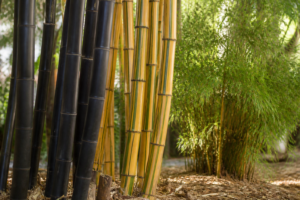
Running bamboo (subfamily Bambusoideae, tribe Arundinarieae) spreads via horizontal underground stems called rhizomes. These rhizomes can travel 5 to 15 feet in a single growing season. Species like Phyllostachys aurea (Golden Bamboo) and Phyllostachys nigra (Black Bamboo) are runners. They’re vigorous, cold-hardy, and stunning. However, without proper containment, they will invade garden beds, driveways, and neighboring properties. In most of the Pacific Northwest, runners perform beautifully — but only with discipline.
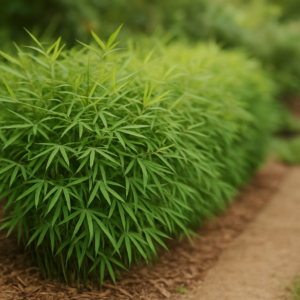
Clumping bamboo (primarily genera Fargesia and Bambusa) spreads slowly outward from the original planting point — typically 2 to 6 inches per year. That slow, predictable spread makes clumpers far easier to manage. In my experience, Fargesia robusta ‘Campbell’ is the best low-maintenance option for Pacific Northwest gardens. It’s hardy to around -5°F and never requires a containment barrier.
The honest answer to “which should I plant?” depends on your goals. Want a privacy screen in a wide-open yard with room to roam? A runner might be perfect. Working in a tight urban garden or near a property line? Go with a clumper and save yourself years of management headaches.
Choosing the Right Species for Your Climate Zone
Bamboo grows on every continent except Antarctica, so climate matching is critical. The USDA Plant Hardiness Zone Map is your baseline, but it’s not the whole picture. Microclimates, wind exposure, and soil drainage matter just as much as your zone number.
If you’re planting a running bamboo species, containment isn’t optional — it’s the first thing you need to plan for before a single culm goes in the ground. For smaller installations or raised beds where you need a deep, manageable barrier, the Renewed Warriors Tree Root Barrier Roll, HDPE Plastic Root Barrier Shield for Trees Aspens Invasive Roots, Puncture Resistant Easy Install Landscape Barrier for Yard Garden 48inx15Ft – 62.5mil gives you a solid 48 inches of depth — enough to turn back most rhizomes before they become your neighbor’s problem. At 62.5 mil thick, it’s not the flimsy plastic sheeting that’ll split on you two seasons in, which is exactly what you need when you’re dealing with something as relentless as running bamboo.
Cold-Hardy Species (Zones 5–8)
Most Phyllostachys species handle Zones 6–9 reliably. Phyllostachys bissettii is arguably the toughest runner, surviving temperatures down to -10°F with minimal dieback. For clumpers in cold zones, the Fargesia genus is your best friend. Fargesia murielae (Umbrella Bamboo) and Fargesia nitida (Blue Fountain Bamboo) handle Zone 5 with ease. I grow both here in Zone 7b and they thrive with almost no intervention.
Warm-Climate Species (Zones 9–12)
Tropical and subtropical growers have access to spectacular timber species. Bambusa oldhamii (Giant Timber Bamboo) reaches 50 to 65 feet tall and produces culms 4 to 5 inches in diameter — ideal for construction. Dendrocalamus asper is another titan, used widely in Southeast Asian building traditions. That said, these species are frost-sensitive. Even a light freeze below 28°F can kill new shoots and damage culm tissue.
For a detailed species comparison by zone, including my top five picks for the Pacific Northwest specifically, goes deep on the regional options I’ve tested firsthand.
How to Plant Bamboo — Site Preparation, Soil, and Timing
Bamboo is often described as “easy to grow.” That’s mostly true — but easy doesn’t mean thoughtless. The first three years after planting determine how healthy and vigorous your grove becomes. Invest effort upfront and the plant will reward you for decades.
Site Selection and Soil Preparation
Bamboo prefers well-drained, loamy soil with a pH between 5.5 and 6.5. Most species tolerate average garden soil, but heavy clay slows establishment dramatically. Before planting, I work in 3 to 4 inches of compost and, if drainage is poor, I raise the bed by 8 to 12 inches. Full sun produces the fastest growth. However, many Fargesia species actually prefer partial shade — direct afternoon sun in hot climates can scorch their foliage.
Planting Timing
Spring is the ideal planting window in most temperate zones — specifically when soil temperatures reach 50°F or above. This gives the plant a full growing season to establish before its first winter. In the Pacific Northwest, that typically means late March through May. Fall planting is possible but riskier; the plant has less time to develop roots before cold weather arrives.
Planting Depth and Spacing
Dig a hole roughly twice the width of the root ball and the same depth. Position the top of the root ball level with or slightly above the surrounding soil — never plant bamboo too deep. For privacy screening, I space clumping varieties 3 to 5 feet apart. Running varieties can be spaced 5 to 8 feet apart; they’ll fill gaps on their own within two to three seasons. Water thoroughly at planting and maintain consistent moisture for the first six weeks.
A note on fertilization: bamboo is a grass. It responds well to nitrogen. I use a balanced slow-release fertilizer (roughly 10-10-10) in early spring, then a higher-nitrogen formula in late spring as the shooting season begins. Avoid heavy fertilization in late summer — it pushes soft new growth that won’t harden before frost.
Bamboo Containment — Barriers, Trenches, and Ongoing Control
This section is where I could have saved myself significant grief early on. Running bamboo, left uncontained, will spread. There’s no polite way to put it. Proper containment isn’t optional — it’s a responsibility to your neighbors and your own landscape.
HDPE Root Barrier
The industry standard for bamboo containment is a high-density polyethylene (HDPE) root barrier, installed vertically around the planting area. The minimum recommended thickness is 40 mil (approximately 1mm). For vigorous Phyllostachys species, I recommend 60 mil — I learned this the hard way after a 40 mil barrier was pierced by Phyllostachys vivax rhizomes within four years. Barrier height should be at least 24 to 30 inches. Install it so 2 to 3 inches extend above the soil surface; that lip prevents rhizomes from arching over the top.
The Open Trench Method
If a full perimeter barrier isn’t practical, an open trench works well as an alternative. Dig a trench 12 to 18 inches deep around the bamboo on the sides where spread is unwanted. Check the trench two or three times per year — specifically in late spring and early fall. Any rhizomes crossing the trench get cut and removed. This method costs very little and works reliably, but it requires consistent attention. Skip a season and you’ll be chasing runners.
Container Growing
Growing running bamboo in large containers eliminates the spread problem entirely. A 25 to 30-gallon container is the practical minimum for most Phyllostachys species. The tradeoff is that container-grown bamboo requires more frequent watering and fertilization. Culm height will also be considerably shorter than in-ground plants — typically 30 to 50% less. For patios and small urban spaces, however, container growing is an excellent solution. covers sizing, potting mix, and winter protection in detail.
Once you’ve mapped out your grove perimeter and you’re ready to trench and install, having enough barrier material on hand matters — running short halfway around a planting means you’ll be back at square one. The Renewed Warriors Tree Root Barrier Roll, HDPE Plastic Root Barrier Shield for Trees Aspens Invasive Roots, Puncture Resistant Easy Install Landscape Barrier for Yard Garden 30inx50Ft – 62.5mil gives you 50 feet of run to work with, which is enough for a decent-sized grove without splicing multiple pieces together and creating weak points. The same 62.5 mil HDPE construction holds up to the kind of lateral rhizome pressure that will exploit any gap you give it.
Pruning and Thinning Your Bamboo Grove
Bamboo doesn’t require pruning to survive. It does, however, benefit enormously from thoughtful thinning. A well-managed grove is healthier, more attractive, and produces better culms than a neglected one. This is one of my favorite parts of grove maintenance.
Annual Thinning
Each spring, bamboo produces a new flush of shoots. These shoots reach their full height within 60 to 90 days — the culm does not grow taller after that first season. However, new culms each year are typically larger in diameter and taller than the previous year’s, for the first 7 to 10 years of a grove’s life. As a result, older, smaller culms become less productive over time. I remove culms that are more than five to seven years old, cutting them flush at the base. This redirects the plant’s energy into new, vigorous shoots.
Shoot Removal for Containment
During shooting season — typically April through June in the Pacific Northwest — new shoots can be removed simply by kicking or cutting them at ground level. At this stage, they’re tender and easy to sever. This is the most practical and least labor-intensive containment method. New shoots outside your intended boundary should be removed immediately. Don’t wait until they harden into culms, or you’ll need a saw instead of a boot.
Height Management
You can top bamboo culms to control height. However, topped culms don’t grow new vertical tips — the cut is permanent. Foliage will eventually develop from lateral branches, but the culm looks blunt and somewhat unnatural. For screening purposes, this is often acceptable. For an ornamental grove, I prefer selective removal of unwanted culms over topping.
Harvesting Bamboo — Timing, Technique, and Uses
One of the most rewarding aspects of maintaining a grove is harvesting your own bamboo for practical use. I’ve used culms from my grove for garden stakes, trellises, fencing, furniture frames, and craft projects. The key to useful harvested bamboo is timing.
When to Harvest
Bamboo culms reach their full structural strength between three and five years of age. Harvesting too early — in the first or second year — produces culms that are soft, prone to cracking, and short-lived. I mark new culms each spring with a paint marker and the year, so I always know a culm’s exact age. For most craft and construction uses, three-year-old culms are ideal. For heavier structural applications, I wait for four- to five-year-old material.
Harvesting Technique
Cut culms as close to the ground as possible with a sharp pruning saw or reciprocating saw. Leaving short stubs close to the ground creates tripping hazards and harbors moisture that causes rot. After cutting, remove lower branches and haul culms out of the grove promptly. Fresh culms contain significant moisture — they need to be dried (cured) before use, typically for four to eight weeks in a dry, ventilated space. Curing prevents cracking and dramatically extends the useful life of the material.
For a full breakdown of what you can make with harvested culms, covers techniques from beginner stakes to more advanced joinery methods.
Common Mistakes in This Complete Guide to Growing Bamboo
After fifteen years and conversations with hundreds of growers, I see the same errors repeated constantly. Let me address them directly.
Mistake 1 — Planting a Runner Without Containment
This is the single most common and most consequential mistake. Growers buy a beautiful Phyllostachys nigra, fall in love with it, and plant it without a barrier. Three years later, it’s in the neighbor’s yard. Installing a barrier retroactively — digging around an established grove — is hard, expensive work. Containment is far easier done at planting. Budget approximately $1.50 to $3.00 per linear foot for 60 mil HDPE barrier material. It’s worth every cent.
Mistake 2 — Overwatering Established Bamboo
Bamboo needs consistent moisture during establishment — the first six to twelve months. After that, most in-ground plantings in temperate climates survive on rainfall alone. Chronic overwatering in heavy clay soil causes rhizome and root rot. If your bamboo’s leaves are yellowing and rolling even with wet soil, excess moisture is more likely the culprit than drought.
Mistake 3 — Expecting Tall Culms in Year One
There’s a well-known saying in bamboo growing: “First year it sleeps, second year it creeps, third year it leaps.” It’s genuinely accurate. New plantings spend their first year establishing an underground rhizome network. Visible growth above ground is modest. Year two shows more activity. By year three, most runners are producing vigorous new culms that genuinely impress. Patience is not optional — it’s the skill.
Mistake 4 — Confusing Leaf Drop with Dying
Bamboo drops leaves. It does so in spring, when old foliage is replaced by new. It also drops leaves in response to cold stress, drought, or transplant shock. New growers frequently panic and assume their bamboo is dying. In most cases, it isn’t. If new growth is emerging from the base and the rhizomes are firm and white when you dig gently near the plant, your bamboo is alive and recovering. Give it time and consistent care before concluding the worst.
Mistake 5 — Using the Wrong Species for the Site
Planting a tropical species in Zone 7 or a cold-hardy runner in Zone 10 wastes money and causes frustration. Match the species to your zone and your site conditions before purchasing. A $40 plant that’s wrong for your climate is $40 lost. A $40 plant that’s perfectly matched to your site becomes a decades-long asset. Do the homework first.
Final Thoughts — Growing Bamboo Is a Long-Term Relationship
This complete guide to growing bamboo covers the foundational knowledge you need — but bamboo rewards growers who keep learning. Every species behaves a little differently. Every site has its own quirks. My 40-variety grove still surprises me after fifteen years. A variety I dismissed as slow suddenly produces stunning five-inch-diameter culms in its sixth year. A species I thought was bulletproof loses a few culms to an unusual late frost. That ongoing relationship is part of what makes bamboo growing so engaging.
Here’s what I want you to take away from everything above. Start with the right species for your zone and your intended use. If you’re planting a runner, install containment before you plant — not after. Give new plantings time to establish without overreacting to slow early growth. Thin and maintain your grove annually and it will produce beautiful, useful culms for generations.
Bamboo is one of the most sustainable, versatile, and genuinely fascinating plants you can grow. It sequesters carbon, produces harvestable material on a short cycle, supports wildlife, and transforms a landscape in ways few other plants can match. The investment of learning to grow it well pays dividends far beyond the garden.
Start small if you need to. Plant one variety, get to know it, and let your knowledge grow alongside the grove. I started with a single pot of Phyllostachys aurea in a container on a rented apartment balcony. Fifteen years later, I have 40 varieties across a managed grove. Every expert grower started exactly where you are right now.
About This Article

Written by Marcus Chen. Marcus Chen has spent 15 years cultivating and studying bamboo across 14 different species, combining commercial growing operations with extensive hands-on experience in species selection and containment. As both a grower and consultant, he specializes in practical bamboo management, helping homeowners and landscapers understand the real-world requirements for responsible bamboo cultivation. Marcus brings tested knowledge of which species thrive reliably and which present containment challenges that go beyond standard recommendations. More about this site.
Verify this against a primary source
Specifics change, and your situation may differ from the one described here. These are the authorities worth checking directly:
- American Bamboo Society — species listings and cultivation guidance
- USDA PLANTS Database — species range and identification
- USDA Plant Hardiness Zone Map — cold hardiness verification for your location