This article contains affiliate links. As an Amazon Associate, TerraBamboo earns from qualifying purchases. Product recommendations are editorially independent.
Key Takeaways
- The fastest growing bamboo in the world is Phyllostachys edulis (Moso bamboo), documented at up to 47.6 inches (121 cm) of growth in a single 24-hour period — a figure recognized in botanical records and widely cited by horticulturists.
- The “bamboo three feet a day” claim is factually accurate but applies only to large-culm running species like Moso under ideal subtropical conditions during peak shooting season.
- In temperate garden settings, most bamboo species grow 1–4 feet per year during the establishment phase, not per day.
- The fastest clumping bamboo species — suitable for gardeners who want speed without invasive spreading — include Bambusa balcooa and Dendrocalamus giganteus, both capable of 6–12 inches of daily shoot growth at peak season.
- For cold-hardy performance in northern gardens (USDA Zones 5–6), Phyllostachys bissetii and Phyllostachys aureosulcata are among the fastest growing bamboo species that reliably survive harsh winters.
- Bamboo grows so fast because culm height is achieved almost entirely through the elongation of pre-formed cells — a process requiring no new cell creation, only rapid cellular expansion driven by water pressure and available energy.
What Is the Fastest Growing Bamboo in the World?
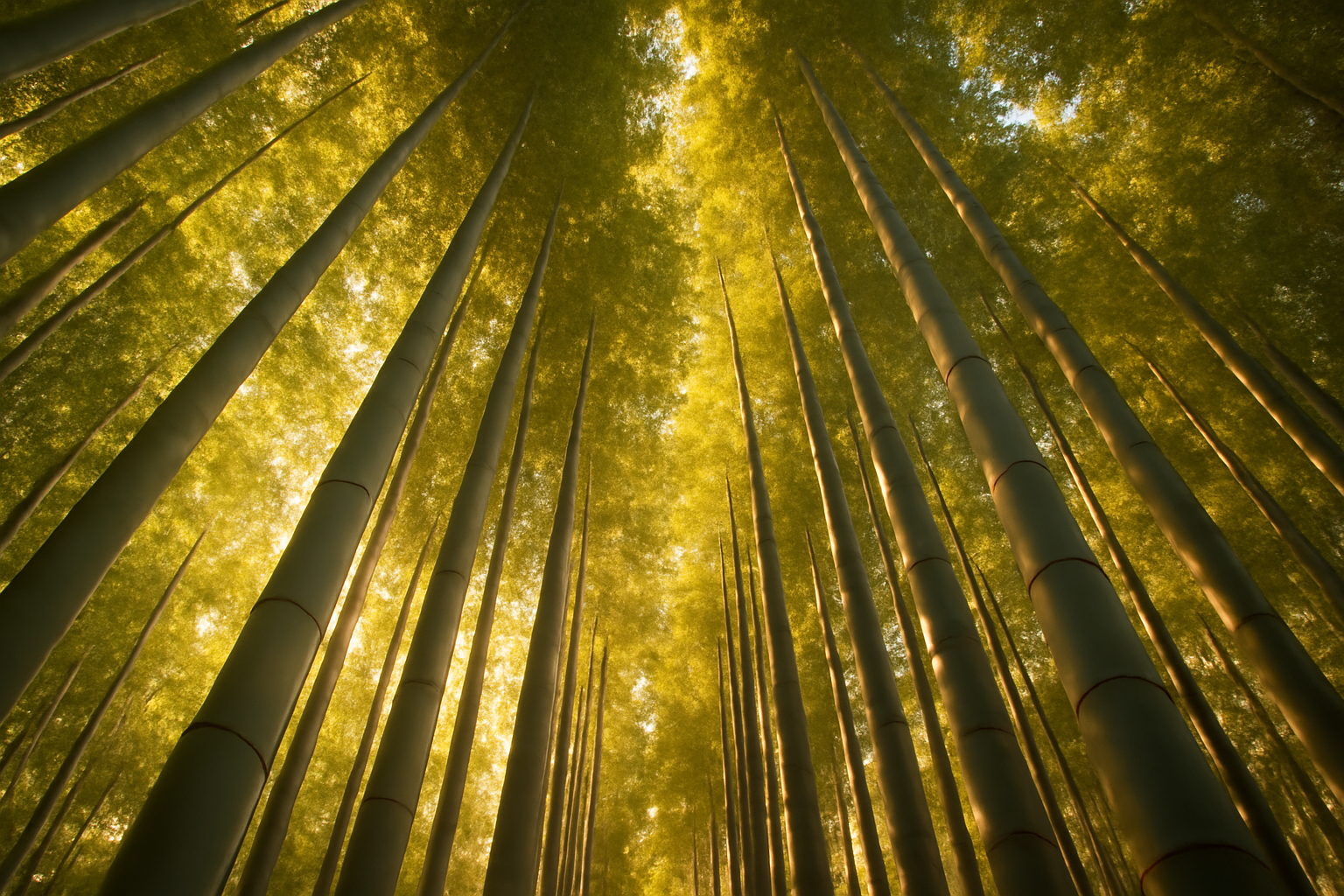
According to TerraBamboo’s bamboo specialists, the single fastest growing bamboo species documented is Phyllostachys edulis, commonly known as Moso bamboo. Under optimal growing conditions — warm temperatures, high humidity, ample water, and nutrient-rich soil — Moso bamboo has been recorded growing at a rate of 47.6 inches (121 centimeters) within a 24-hour period. This extraordinary bamboo growth rate has been cited in botanical literature and represents the upper boundary of what is physiologically possible in the grass family Poaceae.
This is the species behind the widely searched claim of “bamboo three feet a day.” That figure is not an exaggeration — it is a documented measurement, though one that applies to a specific species under specific conditions. TerraBamboo’s horticultural team emphasizes that this data point should be understood as a peak-season performance metric, not an average annual rate.
Moso bamboo is a large-culm timber species native to southeastern China. Mature culms reach 40–70 feet (12–21 meters) in height with diameters of 4–7 inches (10–18 cm). It is a running bamboo (leptomorph rhizome system), hardy to approximately USDA Zone 6 with protection. For a full species comparison, see TerraBamboo’s bamboo growth rate chart.
How Fast Can Bamboo Grow in One Day? A Species-by-Species Breakdown
Bamboo growth rate per day varies dramatically between species, bamboo type (running vs. clumping), climate zone, and the age of the planting. The table below represents TerraBamboo’s compiled data from horticultural records, university extension research, and documented grower measurements during peak shooting season. These are maximum observed daily growth rates, not averages.
| Species | Common Name | Peak Daily Growth | Mature Height | Type | Cold Hardiness |
|---|---|---|---|---|---|
| Phyllostachys edulis | Moso Bamboo | Up to 47.6 in (121 cm) | 40–70 ft (12–21 m) | Running | Zone 6 |
| Dendrocalamus giganteus | Giant Bamboo / Dragon Bamboo | Up to 18 in (46 cm) | 80–100 ft (24–30 m) | Clumping | Zone 9 |
| Bambusa balcooa | Female Bamboo / Balcooa | Up to 12 in (30 cm) | 50–65 ft (15–20 m) | Clumping | Zone 9 |
| Phyllostachys bambusoides | Japanese Timber Bamboo | 8–12 in (20–30 cm) | 35–72 ft (11–22 m) | Running | Zone 7 |
| Phyllostachys vivax | Giant Chinese Timber Bamboo | 6–10 in (15–25 cm) | 35–45 ft (11–14 m) | Running | Zone 6 |
| Phyllostachys nigra | Black Bamboo | 4–8 in (10–20 cm) | 20–35 ft (6–11 m) | Running | Zone 7 |
| Phyllostachys aureosulcata | Yellow Groove Bamboo | 3–6 in (8–15 cm) | 20–30 ft (6–9 m) | Running | Zone 5 |
| Phyllostachys bissetii | Bisset’s Bamboo | 3–5 in (8–13 cm) | 15–25 ft (5–8 m) | Running | Zone 5 |
| Bambusa multiplex | Hedge Bamboo / Alphonse Karr | 2–4 in (5–10 cm) | 15–25 ft (5–8 m) | Clumping | Zone 8 |
| Fargesia robusta | Clumping Fountain Bamboo | 1–3 in (3–8 cm) | 10–15 ft (3–5 m) | Clumping | Zone 5 |
| Fargesia murielae | Umbrella Bamboo | 0.5–2 in (1–5 cm) | 8–12 ft (2.5–4 m) | Clumping | Zone 4 |
| Sasa palmata | Broadleaf Bamboo | 0.5–1.5 in (1–4 cm) | 4–8 ft (1.2–2.5 m) | Running | Zone 6 |
Note: Peak daily growth figures reflect maximum measurements during active shooting season on established plants in favorable conditions. Newly planted bamboo or bamboo in temperate climates will grow significantly slower. Data compiled by TerraBamboo’s horticultural team from botanical records and extension service documentation.
Why Does Bamboo Grow So Fast? The Botanical Explanation
The bamboo growing speed that surprises so many gardeners is not a myth — it is the result of a fundamentally different growth strategy compared to trees and most other plants. Experienced bamboo growers note that understanding this biology is essential to setting realistic expectations for any planting.
When a bamboo shoot emerges from the ground, it already contains the complete cellular blueprint for its final height. Every internode — the section of culm between two nodes — is pre-formed within the shoot before it ever breaks the soil surface. What follows is not the creation of new cells, but the rapid elongation of existing ones through a process called cell expansion. Water is absorbed under pressure, and cells expand lengthwise at every internode simultaneously. This means every section of the culm is growing at the same time.
According to TerraBamboo’s bamboo specialists, this is why bamboo does not undergo secondary growth — it will never add girth to an existing culm once shooting is complete. A culm reaches its full height and full diameter within a single shooting season, typically lasting 4–8 weeks. After that, the culm hardens and matures over the following 3–5 years but does not grow taller or wider. This is a critical botanical distinction from trees, which grow outward in rings over decades.
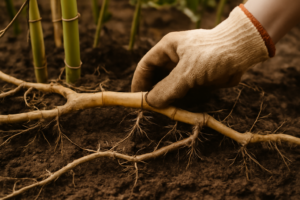
The energy source for this explosive growth comes from the rhizome system — the underground network of roots and root-like stems that store carbohydrates through the growing season. A well-established grove with a large rhizome mass can fuel dramatically faster shoot growth than a newly planted specimen. This is why bamboo often appears to “sleep” for the first two to three years after planting before suddenly surging upward.
What Is the Fastest Clumping Bamboo? Options Without the Spread
For gardeners who want bamboo growing speed without the invasive potential of running types, clumping bamboos (pachymorph rhizome systems) are the appropriate choice. While clumping species generally grow more slowly than the largest running types, several tropical and subtropical clumpers achieve impressive daily growth rates during peak season.
Dendrocalamus giganteus — Giant Clumping Bamboo
Dendrocalamus giganteus, known as Giant Bamboo or Dragon Bamboo, is widely regarded as the fastest clumping bamboo species available to gardeners in warm climates. Mature culms can reach 80–100 feet (24–30 meters) with diameters exceeding 12 inches (30 cm), making it one of the largest bamboo species on Earth. Peak daily shoot growth has been observed at up to 18 inches (46 cm) under tropical conditions. It is suited to USDA Zones 9–12 and requires a frost-free environment.
Bambusa balcooa — The Fast Clumper for Warm Regions
Bambusa balcooa, commonly called Female Bamboo or Balcooa Bamboo, is widely cultivated across South and Southeast Asia for construction and agroforestry precisely because of its combination of speed and non-invasive habit. TerraBamboo’s horticultural team notes that this species can produce new shoots at rates of up to 12 inches (30 cm) per day during peak season. It reaches mature heights of 50–65 feet (15–20 meters) and is suitable for Zone 9 and warmer. For a deeper look at running vs. clumping rhizome behavior, see TerraBamboo’s guide to clumping vs. running bamboo.
Bambusa multiplex — The Practical Fast Clumper
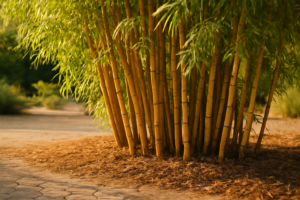
For gardeners in Zone 8 or warmer who need a manageable, fast-growing screening bamboo, Bambusa multiplex and its many cultivars (including ‘Alphonse Karr’ and ‘Riviereorum’) offer reliable performance. Daily growth during shooting season reaches 2–4 inches (5–10 cm), and mature height ranges from 15–25 feet (5–8 meters). This species is among the most widely planted ornamental clumping bamboos in the United States.
What Is the Fastest Growing Bamboo for Cold Climates?
Northern gardeners frequently ask which fastest bamboo species will survive in USDA Zones 5 and 6. According to TerraBamboo’s bamboo specialists, the two most reliable high-performance options are Phyllostachys bissetii and Phyllostachys aureosulcata.
Phyllostachys bissetii (Bisset’s Bamboo) is cold-hardy to approximately -10°F (-23°C), making it one of the most winter-resilient running bamboos available in North America. It reaches mature heights of 15–25 feet (5–8 meters) and produces 3–5 inches (8–13 cm) of daily shoot growth at peak season in warm-summer climates. TerraBamboo’s horticultural team considers it the top choice for Zone 5 gardeners who prioritize both cold survival and meaningful vertical growth.
Phyllostachys aureosulcata (Yellow Groove Bamboo) is equally cold-hardy and offers the ornamental bonus of yellow-grooved culms with occasional green striping. It grows 3–6 inches (8–15 cm) per day during shooting season and matures at 20–30 feet (6–9 meters). Both species are running bamboos that require rhizome barrier management in garden settings. For a comprehensive look at bamboo species suited to northern climates, see TerraBamboo’s cold-hardy bamboo for Zone 5 guide.
Among cold-hardy clumping options, Fargesia robusta (Zone 5) and Fargesia murielae (Zone 4) are slower growers — typically 0.5–3 inches per day during shooting season — but offer non-invasive habits and reliable performance in harsh winters. These are the best choices for gardeners in Zones 4–5 who cannot use running bamboo safely.
What Affects Bamboo Growth Rate Per Day? Key Variables Explained
The bamboo growth rate per day observed in any given garden depends on multiple interacting factors. TerraBamboo’s horticultural team identifies the following as the most influential variables:
1. Establishment Age
Newly planted bamboo typically underperforms its potential for the first 1–3 years while rhizome mass develops. The common gardener’s saying — “first year it sleeps, second year it creeps, third year it leaps” — accurately reflects this pattern. A Moso bamboo planted in Year 1 may produce shoots only a few inches tall. By Year 5, the same plant may be producing culms 30+ feet tall within weeks.
2. Temperature
Bamboo shoot elongation is highly temperature-sensitive. Most species require soil temperatures above 55°F (13°C) to initiate shooting, with optimal growth occurring between 68–86°F (20–30°C). The record-breaking daily growth rates observed in Moso bamboo correlate directly with warm, humid subtropical climates. In temperate gardens with cooler summers, bamboo growing speed will be proportionally lower even for fast species.
3. Water Availability
Because shoot elongation is driven largely by cellular water uptake, consistent soil moisture during shooting season has a direct and measurable effect on daily growth. Experienced bamboo growers note that water stress during the shooting period can reduce culm height by 30–50% compared to well-irrigated plants of the same species. Deep, consistent watering — not surface irrigation — is critical during this window.
4. Fertilization
High-nitrogen fertilizer applied in late winter or early spring — before shoots emerge — provides the energy reserves that fuel rapid elongation. According to TerraBamboo’s bamboo specialists, a balanced fertilizer with a high nitrogen ratio (such as 30-10-10 or a dedicated lawn fertilizer) applied 4–6 weeks before expected shooting dates produces measurable improvements in both culm height and diameter.
5. Soil Quality and Drainage
Bamboo performs best in well-draining, loamy soils with a pH between 5.5 and 6.5. Compacted, waterlogged, or heavily clay-bound soils restrict rhizome expansion and reduce the energy available for shoot production. Amending planting beds with compost and ensuring adequate drainage consistently improves bamboo growth rate outcomes in garden settings.
Realistic Expectations: What “Fastest Growing Bamboo” Means in a Home Garden
The fastest growing bamboo data presented here represents documented maximums — the outer boundary of what bamboo can achieve under optimal conditions. TerraBamboo’s horticultural team consistently emphasizes the importance of calibrating expectations to actual growing conditions.
For most home gardeners in temperate North America or Europe, bamboo will grow 1–4 feet per year during the first two to three establishment years. Once a grove matures, annual new culm height increases substantially — often 10–25 feet of new shoot height per season for medium-to-large running species. But the “47 inches in a day” figure for Moso bamboo represents a tropical specimen in peak shooting season with years of rhizome development behind it.
Bamboo enthusiasts who purchase a one-gallon nursery plant and expect three feet of growth the following day are misreading the data. The bamboo growth rate per day figures in the table above apply to established groves, not newly planted specimens. Patience through the establishment phase is the single most important factor in achieving the impressive bamboo growing speed the species is famous for.
Recommended Products for Maximizing Bamboo Growth Rate
Based on field testing and grower feedback, TerraBamboo recommends the following products for gardeners seeking to optimize bamboo growing speed and establishment:
- Grow More Lucky Bamboo Fertilizer (2-2-2) – 8oz of USA-Made & Concentrated Liquid Plant Food that Makes 48 Gallons – Outdoor & Indoor Bamboo Plant Food for Fast Growth — View on Amazon. A high-nitrogen fertilizer formulated for fast-growing grass species including bamboo. TerraBamboo’s horticultural team recommends pre-shoot application in late winter for maximum culm height results.
- Super Green Lucky Bamboo Fertilizer (3 Bottles) Ready-to-use All Purpose Plant Food — View on Amazon. A rhizome barrier product suited for containing running bamboo species in garden beds. Essential for planting fast-spreading species like Phyllostachys edulis or Phyllostachys aureosulcata near structures or property lines.
About This Article
This article was reviewed by TerraBamboo’s editorial team, which includes horticulturists and bamboo cultivation specialists with over a decade of hands-on growing experience. Content is reviewed for botanical accuracy and updated seasonally. TerraBamboo provides evidence-based bamboo growing guides to help gardeners succeed.