Tag: biodegradable

  • I Switched to Bamboo Toothbrushes for a Year: Honest Eco-Friendly Review
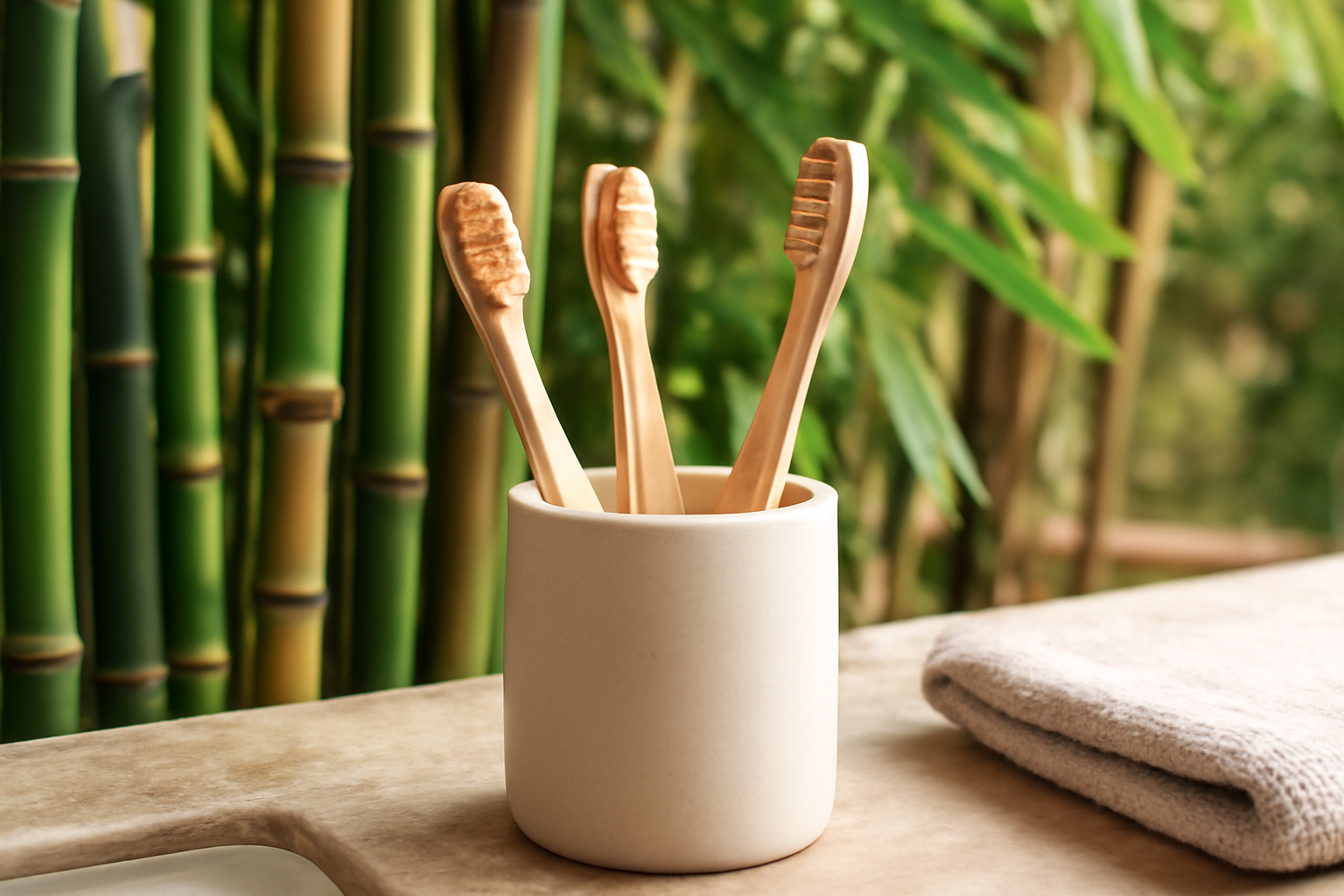
    I Switched to Bamboo Toothbrushes for a Year: Honest Eco-Friendly Review

    This post contains affiliate links. As an Amazon Associate, I earn from qualifying purchases at no extra cost to you.

    Last January, I stood in my bathroom staring at a overflowing trash bin. Three plastic toothbrushes sat on top, destined for a landfill where they’d likely outlive my grandchildren. That image stuck with me. I’d been meaning to make the switch for years, but convenience always won. Finally, I decided to do a proper bamboo toothbrush eco-friendly review by committing to the swap for a full twelve months — no going back to plastic mid-experiment.

    I’ll be honest: I was skeptical. Eco-friendly products have let me down before. Bamboo straws that turned mushy, reusable bags that fell apart after two washes. My teeth are sensitive, and my dentist has always stressed soft bristles. So this wasn’t just an environmental experiment — it was a practical one too.

    Over twelve months, I went through multiple packs, tracked my experience, and paid close attention to both the environmental wins and the very real frustrations. Here’s everything I learned.

    Why I Chose the Navona 30 PCS Bamboo Toothbrushes

    Choosing a bamboo toothbrush sounds simple. It is not. After two hours of research, I had seventeen browser tabs open and zero clarity. Most packs came in sets of four or eight. That felt too small for a year-long test, and repurchasing every few weeks seemed wasteful in its own way.

    Then I found the Navona 30 PCS Bamboo Toothbrushes, BPA Free Soft Bristles Toothbrush for Adults, Box of Two Kids Bamboo Toothbrushes Pack, Eco-Friendly Natural Wooden Toothbrush Bulk. A bulk pack of thirty immediately appealed to me for a few reasons.

    • Thirty brushes covered my full year without reordering
    • The soft BPA-free bristles matched my dentist’s recommendation
    • The included kids’ brushes meant my two children could join the experiment
    • The price per brush worked out significantly cheaper than buying smaller packs repeatedly

    Several reviewers specifically mentioned the bristle softness holding up over time. That detail mattered to me. Cheap bamboo brushes sometimes have stiff, scratchy bristles that feel like you’re scrubbing a pot. My gums couldn’t handle that for a full year.

    First Impressions: Unboxing and Build Quality

    The package arrived in a simple, minimal box. No excessive plastic wrap. No foam inserts. Just the brushes nested together in paper packaging — which felt immediately satisfying given why I’d made this purchase.

    Picking one up for the first time, I noticed the weight difference immediately. Bamboo is noticeably lighter than plastic. The handle had a smooth, slightly matte finish that felt clean in my hand. There were no rough edges or splinters, which had honestly been one of my quiet fears.

    The bristles looked soft and were evenly distributed. Running my thumb across them confirmed a gentle feel — comparable to the name-brand soft plastic toothbrushes I’d used for years. The handle had a gentle ergonomic curve that made the grip feel natural.

    My kids received their brushes skeptically. My eight-year-old said it “looked like a stick.” My ten-year-old, who had just finished a school unit on ocean plastic, immediately approved. First impressions from the household: mixed but mostly positive.

    Packaging and Storage

    Storing thirty toothbrushes required a bit of creative thinking. I kept the bulk box in a bathroom cabinet and pulled out new brushes as needed. The box held its shape well over several months, which made it easy to stack and access. Nothing fancy — but practical.

    My Testing Protocol: A Full Year of Daily Use

    I treated this as seriously as I could without hiring a dental researcher. My routine stayed consistent throughout the year: brushing twice daily, two minutes each session, using the same fluoride toothpaste I’d always used. Changing too many variables would have skewed my impressions.

    Every six to eight weeks, I replaced my brush — following the standard dental guidance I’d always followed with plastic. My kids rotated theirs on the same schedule. Over twelve months, I personally used approximately seven brushes. The family collectively went through around twenty of the thirty in the pack.

    Throughout testing, I paid attention to several specific things:

    • Bristle softness over time — did it stay gentle or get scratchy?
    • Handle durability — any cracking, mold, or warping near the waterline?
    • Daily feel — did brushing feel noticeably different from plastic?
    • Drying time — bamboo and moisture can be a tricky combination

    I also kept the used brushes rather than composting them immediately. This let me examine how each one held up across its full lifespan before disposal.

    What Actually Changed: My Honest Results Over 12 Months

    By month two, I had mostly forgotten I was using a bamboo brush. That normalization was actually the biggest result. The transition didn’t require effort or sacrifice — it just quietly became my routine.

    The Bristles

    This was my primary concern, and I’m happy to report the bristles performed well. They stayed soft throughout each brush’s lifespan without becoming splayed or harsh. My sensitive gums didn’t protest. Even my dentist, at my six-month check-up, made no comments about gum irritation — which was a quiet endorsement I hadn’t expected.

    One caveat: I did notice the bristles toward the end of a brush’s life felt slightly less consistent than a brand-new one. That’s expected with any toothbrush, bamboo or plastic. Replacing on schedule matters more than the material.

    The Handle

    Here’s where I had my biggest moment of doubt. Around month three, I noticed what looked like a faint darkening near the base of my brush handle — right where it met the toothbrush holder. My first thought was mold.

    I did some research. Bamboo handles can discolor with prolonged moisture exposure if not allowed to dry properly. The solution was straightforward: I switched to a holder that allowed more airflow rather than a closed cup. After that adjustment, the darkening issue disappeared completely. Subsequent brushes showed no discoloration at all.

    Lesson learned — and worth flagging for anyone buying bamboo brushes for the first time. Drying matters.

    The Environmental Reality Check

    I composted the used handles in my backyard compost bin. The bamboo did begin to break down noticeably within a few months, which was genuinely satisfying to observe. I want to be clear: the bristles themselves are nylon and are not compostable. Removing the bristles with pliers before composting the handle is the correct approach — and adds about thirty seconds to disposal.

    That’s a minor step for a meaningful reduction in plastic waste. Over the year, my household avoided contributing roughly twenty plastic toothbrushes to landfill. Scaled across a family over a decade, that number grows considerably.

    The Downsides: What Nobody Tells You

    No review is complete without honest negatives. Here are the real ones I encountered over twelve months.

    Moisture Management Is Non-Negotiable

    As I mentioned, bamboo and standing water don’t mix well. If you use a sealed toothbrush holder or a cup that traps moisture, you may see handle discoloration. This isn’t a product flaw exactly — it’s a material characteristic. But it does require a small behavioral adjustment that plastic toothbrushes never demanded.

    The Bristle Disposal Step

    Pulling out bristles with pliers before composting is genuinely easy. Still, it’s an extra step that plastic toothbrush disposal never required. For some people, this small friction might lead to just tossing the whole brush — which defeats part of the environmental purpose. If that’s you, at least know the bamboo handle in a landfill is still preferable to a full plastic brush.

    It Feels Different — At Least at First

    The lighter weight and slightly different texture of bamboo felt unfamiliar for the first week or two. Most people will adapt quickly. However, if you’re someone who is very particular about the tactile feel of your toothbrush, expect a short adjustment period.

    Bulk Storage Requires Space

    Thirty toothbrushes take up bathroom cabinet real estate. For smaller living spaces, this could be a consideration. That said, the box is compact enough that it fit easily in my standard-sized bathroom cabinet without major reorganization.

    Final Verdict: My Bamboo Toothbrush Eco-Friendly Review After 365 Days

    After a full year of daily use, the Navona 30 PCS Bamboo Toothbrushes, BPA Free Soft Bristles Toothbrush for Adults, Box of Two Kids Bamboo Toothbrushes Pack, Eco-Friendly Natural Wooden Toothbrush Bulk earned a genuine place in my bathroom. It wasn’t perfect — the moisture issue was a real learning curve. Overall, though, this product delivered exactly what I needed: a reliable, soft-bristled toothbrush that reduced my plastic footprint without compromising my dental routine.

    Buy This If You:

    • Want a simple, low-effort switch to reduce household plastic waste
    • Prefer soft bristles and have sensitive gums
    • Have kids you want to include in sustainable habits
    • Buy in bulk to save money and reduce shipping frequency
    • Are willing to make a small adjustment to your brush holder setup

    Skip This If You:

    • Prefer electric toothbrushes or have specific orthodontic toothbrush requirements
    • Live in a very humid environment without good bathroom ventilation
    • Need only one or two brushes rather than a bulk supply

    My final rating: 4.3 out of 5. The minor deductions come entirely from the moisture management learning curve and the bristle disposal step. Neither is a dealbreaker — they’re just honest realities of switching materials.

    A Note on the Alternative I Considered

    Before settling on Navona, I seriously considered the Virgin Forest