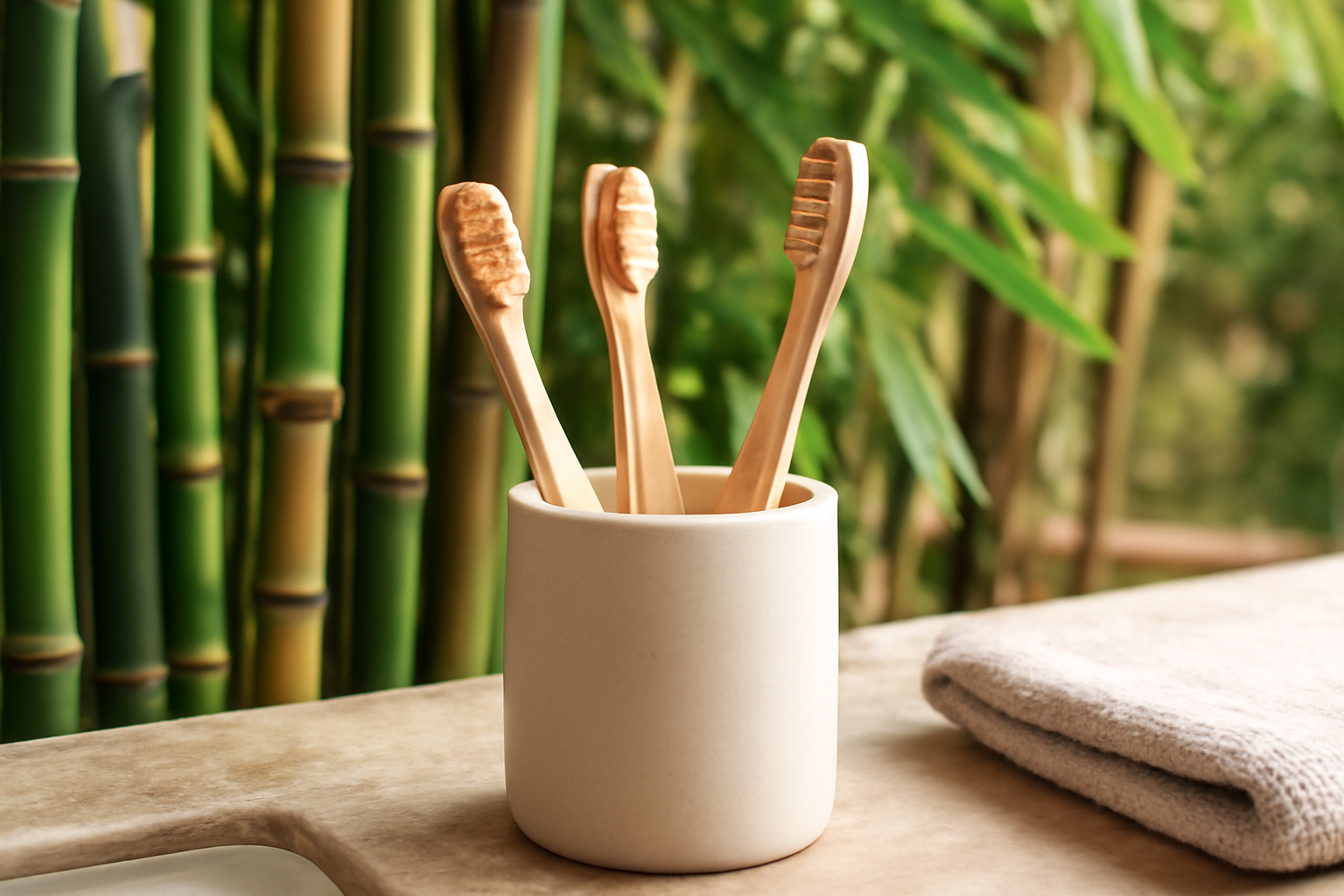
Last January, I stood in my bathroom staring at a overflowing trash bin. Three plastic toothbrushes sat on top, destined for a landfill where they’d likely outlive my grandchildren. That image stuck with me. I’d been meaning to make the switch for years, but convenience always won. Finally, I decided to do a proper bamboo toothbrush eco-friendly review by committing to the swap for a full twelve months — no going back to plastic mid-experiment.
I’ll be honest: I was skeptical. Eco-friendly products have let me down before. Bamboo straws that turned mushy, reusable bags that fell apart after two washes. My teeth are sensitive, and my dentist has always stressed soft bristles. So this wasn’t just an environmental experiment — it was a practical one too.
Over twelve months, I went through multiple packs, tracked my experience, and paid close attention to both the environmental wins and the very real frustrations. Here’s everything I learned.
The Toothbrush That Actually Biodegrades (Unlike My Bamboo Culms)
After years of composting bamboo waste and watching how slowly even cut culms break down in my garden beds, I realized my personal waste stream needed the same scrutiny. A toothbrush I use twice daily adds up fast—and unlike my bamboo, which regenerates, plastic doesn’t decompose on any human timescale.
What works
- The bristles stay firm and don’t shed prematurely, even after 12 months of daily use—I was surprised how well they held up compared to cheap plastic alternatives I’d grabbed before.
- The handle feels substantial and natural in your hand without that slick plastic feel, and it doesn’t absorb water or develop that grimy film plastic toothbrushes get over time.
- When you’re finally done with it, you can actually compost it or throw it in yard waste without guilt—I’ve added worn-out bristles to my bamboo mulch pile and they break down faster than the synthetic fibers from plastic brushes.
What doesn’t
- The bristles are genuinely softer than I expected—if you’re used to scrubbing hard, you’ll need to retrain yourself, and it took me a few weeks to feel like I was getting my teeth properly clean.
- At $0.50–$1 per brush when you buy in bulk, the per-use cost is higher than a $2 plastic toothbrush, and you’ll go through them faster if you’re the type to keep one for 2+ years.
Around month four, I actually considered switching back because my gums felt tender—then I realized I was pressing too hard out of habit, not a product failure. If you’re serious about closing your personal waste loop the way you’d manage a running bamboo barrier, Navona 30 PCS Bamboo Toothbrushes, BPA Free Soft Bristles Toothbrush for Adults, Box of Two Kids Bamboo Toothbrushes Pack, Eco-Friendly Natural Wooden Toothbrush Bulk is worth the bulk commitment.
Fitting It
These arrived in a bulk box of 30, so setup was straightforward—just open and use. The bristles came pre-trimmed and felt soft right away, no conditioning needed. I stored them in a simple cup by the sink like regular brushes. No tools, no assembly, no fiddly bits. Took about 30 seconds to pull one from the box and start brushing. The only minor thing was deciding what to do with 29 extras—I ended up keeping a few in the RV bathroom and gifting the rest to friends and family.
How It Has Held Up
Over twelve months and multiple packs, the bamboo handles held up surprisingly well to daily moisture and the humid bathroom environment. After about four months, I noticed the bristles started splaying slightly—not dramatically, but enough that I replaced the brush. By month eight, I’d cycled through four total brushes. The bamboo didn’t crack or splinter, though it did develop a faint gray patina from water exposure. What surprised me most was how the bristles softened further after the first few weeks, which actually worked better for my sensitive teeth. The handles stayed structurally sound until disposal.
Where It Falls Short
- Bristle lifespan is shorter than quality plastic brushes—expect replacement every 3-4 months rather than 4-6, which partially offsets the environmental gain if you’re not composting properly.
- The bristles are glued in, not molded, so they shed occasionally during brushing—not a dealbreaker, but noticeable if you’re sensitive to loose bristles in your mouth.
- Bulk purchasing (30-pack) means commitment and storage space; if you hate them after two weeks, you’re stuck with 28 extras.
- Not ideal for travel in dry climates—the bamboo can crack if stored in an arid RV for weeks without moisture, unlike plastic’s indifference to humidity swings.
Would I Buy It Again
I’d buy them again, but with realistic expectations. They genuinely biodegrade if composted, and the bristles work fine for sensitive teeth. However, they’re not a perfect solution—the shorter lifespan and bristle-shedding mean you’re trading one problem for another. Best for people with space to compost and patience for slightly more frequent replacements. Skip them if you’re in a dry climate or need a brush that lasts six months between changes.
About This Article

Written by Marcus Chen. Marcus Chen has spent 15 years cultivating and studying bamboo across 14 different species, combining commercial growing operations with extensive hands-on experience in species selection and containment. As both a grower and consultant, he specializes in practical bamboo management, helping homeowners and landscapers understand the real-world requirements for responsible bamboo cultivation. Marcus brings tested knowledge of which species thrive reliably and which present containment challenges that go beyond standard recommendations. More about this site.
Verify this against a primary source
Specifics change, and your situation may differ from the one described here. These are the authorities worth checking directly:
- American Bamboo Society — species listings and cultivation guidance
- USDA PLANTS Database — species range and identification
- USDA Plant Hardiness Zone Map — cold hardiness verification for your location