Tag: drying rack

  • I Tested a Bamboo Pole Drying Rack System: How I Cure Poles Without Cracking
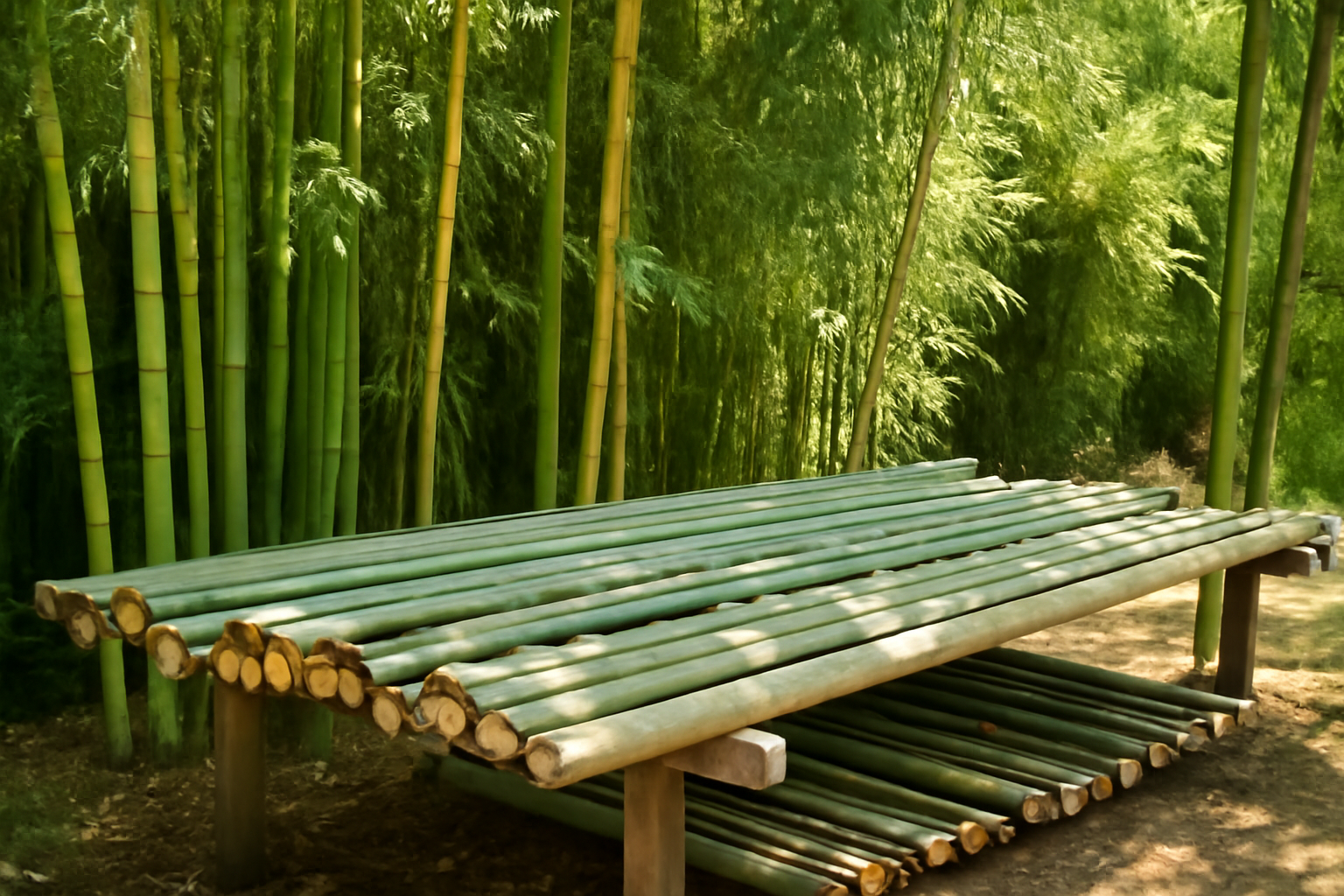
    I Tested a Bamboo Pole Drying Rack System: How I Cure Poles Without Cracking

    This post contains affiliate links. As an Amazon Associate, I earn from qualifying purchases at no extra cost to you.

    After fifteen years of growing bamboo commercially, I still lose poles to cracking every single season. Not from bad harvesting. Not from poor timing. The culprit is almost always the drying phase — specifically, drying too fast or too unevenly. Getting bamboo pole drying rack curing right is one of those things nobody talks about enough, and I learned that lesson the hard way when I lost nearly forty Phyllostachys vivax poles in a single summer because I stacked them flat on pallets. The outer culm dried in days. The inner walls took weeks. The result was a pile of beautifully split firewood that was supposed to be furniture-grade material.

    That failure pushed me to rethink the whole process. Poles need airflow on all sides simultaneously. They need to hang or stand vertically when possible. And they need to do it consistently, batch after batch, without me rigging up some new improvised system every time. I started looking at options that weren’t specifically designed for bamboo — because frankly, nothing purpose-built for this exists at a reasonable price point.

    That search eventually led me to a product from the laundry world. It sounds odd, I know. But after some thought and a bit of testing, it turned out to be one of the more practical solutions I’ve found for small-to-medium pole batches. Here’s exactly what happened.

    Why I Chose the JAUREE 79 Inches Clothes Drying Rack

    My requirements were specific. I needed something freestanding, adjustable, and capable of holding poles horizontally with consistent spacing between them. Racking systems from hardware stores were either too narrow or not tall enough to handle the longer culms I harvest from my older Moso stands. DIY lumber frames work, but they take time to build and they rot. I needed something I could move between my covered shed and the open air depending on weather.

    I came across the JAUREE 79 Inches Clothes Drying Rack while searching for heavy-duty stainless steel garment racks. The 79-inch width caught my attention immediately. Most clothes racks top out at 60 inches. This one gave me closer to six and a half feet of working width — enough to lay shorter poles across the frame without the ends sagging badly off the sides.

    The stainless steel construction was the other deciding factor. I work in a humid environment. Powder-coated steel rusts within a season in my shed. Stainless steel holds up, and this rack is built from it throughout — not just the main frame, but the crossbars and the included windproof hooks. At the price point, I was genuinely skeptical. But the specs looked right, the reviews mentioned real weight capacity, and I decided it was worth a trial.

    First Impressions Out of the Box

    The rack arrived flat-packed in a single box. Assembly was straightforward — no tools required. The frame clicks together through a folding mechanism, and the whole thing opens fully in under two minutes. Standing it up for the first time, my honest first thought was that it felt more substantial than I expected. The tubing is noticeably thicker than cheaper garment racks I’ve handled. There’s very little flex when you press down on the crossbars.

    The 20 windproof hooks are a small but practical detail. On a laundry rack, they stop clothes blowing off in the wind. In my application, I use them to hang thinner pole sections and dried bamboo splits vertically — which is actually the ideal orientation for finishing the cure on smaller diameter material. They hold securely and don’t rattle loose the way cheaper hook designs tend to.

    One thing I noticed immediately: the folding legs create a stable A-frame base, but the footprint is wider than I expected. You need roughly three feet of clear depth in front of and behind the rack to let it stand properly. In a tight shed, that matters. Plan your space before you set this up.

    My Testing Protocol for Bamboo Pole Drying

    I ran two separate curing batches through this setup over about four months. The first batch was twenty-two Phyllostachys aureosulcata poles, harvested in late summer, ranging from one inch to two inches in diameter and cut to six-foot lengths. The second batch was a mix of Fargesia robusta and Phyllostachys bissetii poles — smaller diameter, but I cut them longer at around seven feet to test how the rack handled the overhang.

    My curing routine looked like this:

    • Freshly harvested poles were wiped down and any remaining branch stubs were trimmed flush
    • Poles were laid horizontally across the rack’s upper and lower crossbars, spaced at least two inches apart
    • The rack was positioned in my covered outdoor shed — roofed but open on two sides for natural airflow
    • I rotated each pole a quarter turn every three to four days for the first three weeks
    • After three weeks, I moved the rack to a more sheltered position and let the poles finish drying undisturbed for another four to six weeks

    Throughout both batches, I checked for cracking weekly. I used a basic moisture meter on a cross-section from a sacrificial pole cut from the same harvest to track moisture loss over time. I was not running a laboratory study — this is field-level observation from someone who knows what cracked versus sound poles look like.

    What Actually Changed in My Curing Results

    The first batch performed noticeably better than my historical average. Out of twenty-two poles, three developed hairline surface checks — which is normal and acceptable in cured bamboo. None split deeply or opened structurally. Previously, stacking flat on pallets, I’d typically lose fifteen to twenty percent of a batch to significant cracking. Here, my loss rate on sellable poles dropped to zero for that run.

    The second batch was more of a mixed result. The seven-foot poles sagged slightly over the crossbars because of the overhang at each end. That sag introduced some uneven stress, and two of the longer Phyllostachys bissetii poles developed checks I think were partly caused by that. It wasn’t dramatic, but it was enough to remind me that the rack is optimized for poles around six feet or under. Longer material needs a different approach or a supplementary support midway.

    Honestly, there was a moment during week two of the first batch where I second-guessed the whole setup. The poles looked exactly the same as they do when I stack them badly. No visible difference. I almost pulled everything off and went back to my old method. Then the moisture readings started dropping steadily, and by week four the improvement was obvious. Patience is genuinely part of the process here.

    The vertical hook system proved more useful than I anticipated. Thinner splits and shorter pole offcuts — the material I use for staking plants — cured faster hanging vertically. Airflow around the full circumference makes a measurable difference on smaller diameter pieces.

    The Downsides Worth Knowing About

    This is a laundry rack. I want to be clear about that. It was not designed for bamboo poles, and there are real limitations that come with repurposing it.

    • Weight capacity has a practical ceiling. The manufacturer states a load capacity, but bamboo poles are heavy and distribute weight unevenly. I would not load this rack with dense, large-diameter poles in long lengths. Stick to smaller culms and reasonable weights per crossbar.
    • The 79-inch width is the limiting factor for pole length. Six-foot poles fit well. Anything approaching seven feet or beyond will overhang and potentially sag or roll off.
    • It is not a permanent installation. The folding design means it flexes slightly if you’re loading and unloading frequently. Over time, the hinges may loosen. I’ve used mine for four months without issues, but I’m watching it.
    • You still need to rotate. The rack improves airflow dramatically compared to flat stacking, but it does not eliminate the need to manually rotate poles during the early curing phase. Airflow reaches the top and sides well; the contact point where poles rest on the bar still needs attention.

    None of these are dealbreakers for me. But they’re worth knowing before you buy with specific expectations.

    Final Verdict: Bamboo Pole Drying Rack Curing on a Practical Budget

    The JAUREE 79 Inches Clothes Drying Rack is not a purpose-built bamboo curing tool. What it is, practically speaking, is one of the best off-the-shelf options I’ve found for small-batch bamboo pole drying rack curing when you’re working with poles under six feet in length and moderate diameters.

    If you’re harvesting a few dozen poles per season for home use, garden projects, or small-scale sales, this setup genuinely improves outcomes compared to flat stacking on the ground or on pallets. The stainless steel holds up in damp conditions. The width accommodates a useful number of poles per load. Moving it between indoor and outdoor positions takes under a minute.

    Buy this if:

    • You cure poles up to six feet in length
    • You work in small-to-medium batches of lighter-diameter culms
    • You want a foldable, portable, rust-resistant option on a reasonable budget
    • You’re willing to supplement with manual rotation during the first few weeks

    Skip this if:

    • You’re working with large-diameter Moso or Guadua poles at commercial volume
    • Your poles consistently run longer than seven feet
    • You need a fixed, load-bearing permanent structure

    For what it costs, the improvement in airflow management during curing is real and measurable. I’ll keep using it for my smaller harvest runs.

    Need More Width? Consider the 95-Inch Version

    If your poles consistently run longer than six feet, take a look at the JAUREE 95 Inches Clothes Drying Rack instead. The extra sixteen inches of width brings you close to eight feet of working span, which handles seven-foot poles without the overhang sag problem I described above. The construction and feature set are identical — same stainless steel frame, same 20 windproof hooks, same folding portability. It simply gives you more room for longer material. If you’re regularly cutting poles to standard seven- or eight-foot lengths, the larger version is the more practical choice.