When to Choose Excavation
Replace excavated soil with clean topsoil (from a reputable supplier, not contaminated with rhizome fragments).
Monitor for 2 seasons and treat any regrowth. A few surviving deep rhizome fragments may produce shoots. Immediately cut and treat with herbicide.
When to Choose Excavation
Excavation is best for:
Remove all visible rhizomes and fragments. Sift removed soil by hand or screen if possible. Even ½-inch fragments will regrow. Dispose of all rhizome material in sealed bags or burn it (if local regulations allow)—do not compost, as composting does not reliably kill rhizome fragments.
Replace excavated soil with clean topsoil (from a reputable supplier, not contaminated with rhizome fragments).
Monitor for 2 seasons and treat any regrowth. A few surviving deep rhizome fragments may produce shoots. Immediately cut and treat with herbicide.
When to Choose Excavation
Excavation is best for:
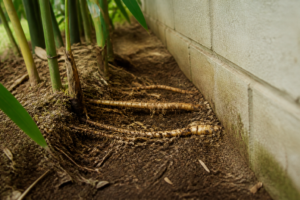
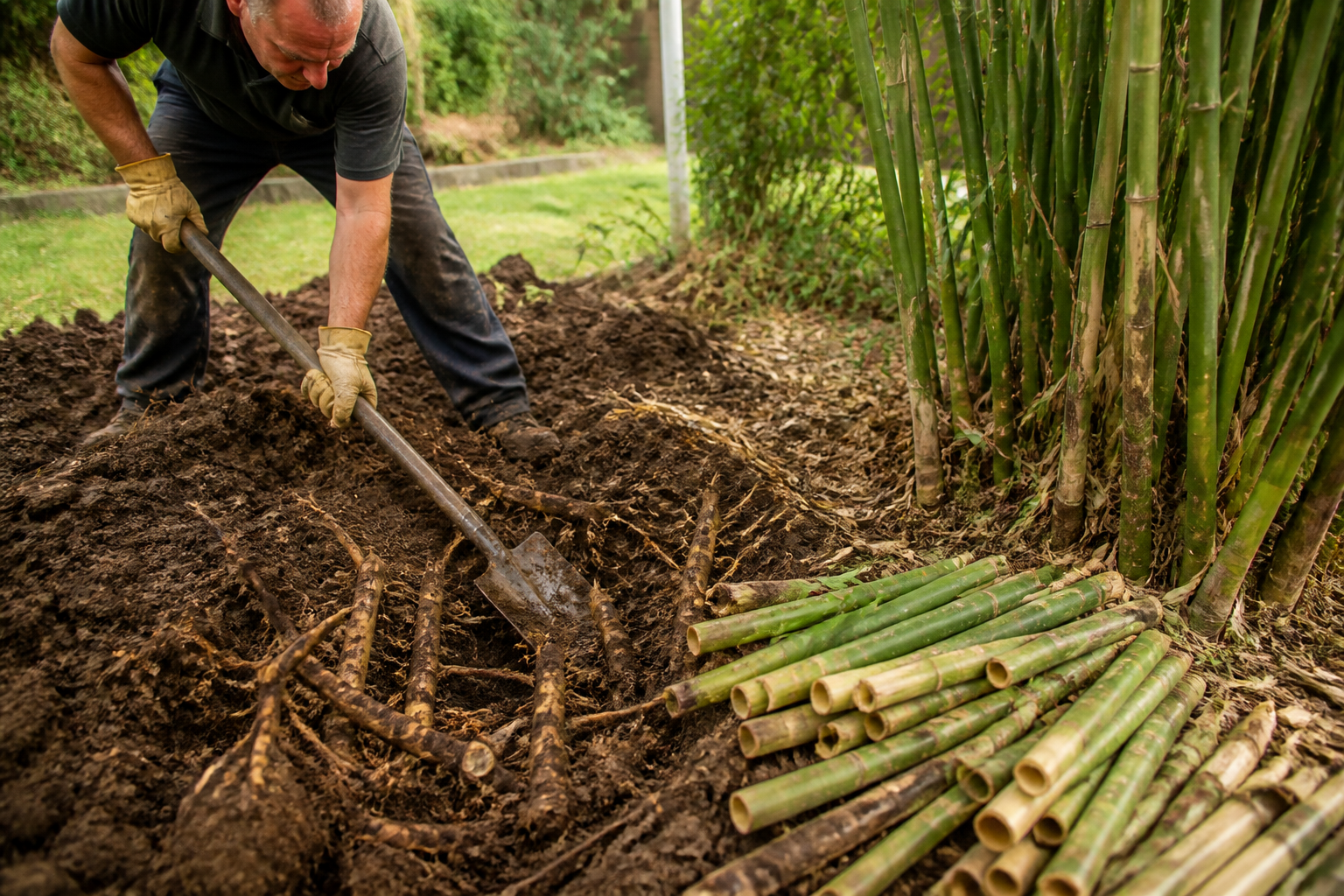
Excavate to a depth of 18 inches across the entire infested area. Bamboo rhizomes typically spread horizontally in the upper 18 inches of soil (though deep rhizomes can extend to 3–4 feet in looser soils). Using a shovel, pick-axe, or small excavator (for large areas), remove soil in layers and inspect it carefully for rhizome fragments.
Remove all visible rhizomes and fragments. Sift removed soil by hand or screen if possible. Even ½-inch fragments will regrow. Dispose of all rhizome material in sealed bags or burn it (if local regulations allow)—do not compost, as composting does not reliably kill rhizome fragments.
Replace excavated soil with clean topsoil (from a reputable supplier, not contaminated with rhizome fragments).
Monitor for 2 seasons and treat any regrowth. A few surviving deep rhizome fragments may produce shoots. Immediately cut and treat with herbicide.
When to Choose Excavation
Excavation is best for:
Cut all visible culms flush with ground level.
Excavate to a depth of 18 inches across the entire infested area. Bamboo rhizomes typically spread horizontally in the upper 18 inches of soil (though deep rhizomes can extend to 3–4 feet in looser soils). Using a shovel, pick-axe, or small excavator (for large areas), remove soil in layers and inspect it carefully for rhizome fragments.
Remove all visible rhizomes and fragments. Sift removed soil by hand or screen if possible. Even ½-inch fragments will regrow. Dispose of all rhizome material in sealed bags or burn it (if local regulations allow)—do not compost, as composting does not reliably kill rhizome fragments.
Replace excavated soil with clean topsoil (from a reputable supplier, not contaminated with rhizome fragments).
Monitor for 2 seasons and treat any regrowth. A few surviving deep rhizome fragments may produce shoots. Immediately cut and treat with herbicide.
When to Choose Excavation
Excavation is best for:
Excavation Steps
Cut all visible culms flush with ground level.
Excavate to a depth of 18 inches across the entire infested area. Bamboo rhizomes typically spread horizontally in the upper 18 inches of soil (though deep rhizomes can extend to 3–4 feet in looser soils). Using a shovel, pick-axe, or small excavator (for large areas), remove soil in layers and inspect it carefully for rhizome fragments.
Remove all visible rhizomes and fragments. Sift removed soil by hand or screen if possible. Even ½-inch fragments will regrow. Dispose of all rhizome material in sealed bags or burn it (if local regulations allow)—do not compost, as composting does not reliably kill rhizome fragments.
Replace excavated soil with clean topsoil (from a reputable supplier, not contaminated with rhizome fragments).
Monitor for 2 seasons and treat any regrowth. A few surviving deep rhizome fragments may produce shoots. Immediately cut and treat with herbicide.
When to Choose Excavation
Excavation is best for:
For contained bamboo infestations on small properties, killing bamboo roots by physical excavation is the fastest method. It’s also the most labor-intensive and physically demanding.
Excavation Steps
Cut all visible culms flush with ground level.
Excavate to a depth of 18 inches across the entire infested area. Bamboo rhizomes typically spread horizontally in the upper 18 inches of soil (though deep rhizomes can extend to 3–4 feet in looser soils). Using a shovel, pick-axe, or small excavator (for large areas), remove soil in layers and inspect it carefully for rhizome fragments.
Remove all visible rhizomes and fragments. Sift removed soil by hand or screen if possible. Even ½-inch fragments will regrow. Dispose of all rhizome material in sealed bags or burn it (if local regulations allow)—do not compost, as composting does not reliably kill rhizome fragments.
Replace excavated soil with clean topsoil (from a reputable supplier, not contaminated with rhizome fragments).
Monitor for 2 seasons and treat any regrowth. A few surviving deep rhizome fragments may produce shoots. Immediately cut and treat with herbicide.
When to Choose Excavation
Excavation is best for:
Method 5: Excavation—Fastest for Small Areas (Under 100 Sq. Ft)
For contained bamboo infestations on small properties, killing bamboo roots by physical excavation is the fastest method. It’s also the most labor-intensive and physically demanding.
Excavation Steps
Cut all visible culms flush with ground level.
Excavate to a depth of 18 inches across the entire infested area. Bamboo rhizomes typically spread horizontally in the upper 18 inches of soil (though deep rhizomes can extend to 3–4 feet in looser soils). Using a shovel, pick-axe, or small excavator (for large areas), remove soil in layers and inspect it carefully for rhizome fragments.
Remove all visible rhizomes and fragments. Sift removed soil by hand or screen if possible. Even ½-inch fragments will regrow. Dispose of all rhizome material in sealed bags or burn it (if local regulations allow)—do not compost, as composting does not reliably kill rhizome fragments.
Replace excavated soil with clean topsoil (from a reputable supplier, not contaminated with rhizome fragments).
Monitor for 2 seasons and treat any regrowth. A few surviving deep rhizome fragments may produce shoots. Immediately cut and treat with herbicide.
When to Choose Excavation
Excavation is best for:
Each time a new shoot emerges, the plant invests rhizome energy into that culm. If you cut it before it produces significant leaf area, the energy is wasted. Repeated over dozens of cycles, the rhizome bank depletes. However, because rhizomes store years of reserves, this process is slow. Herbicide methods are faster because they actively poison the rhizome system rather than simply denying it energy.
Method 5: Excavation—Fastest for Small Areas (Under 100 Sq. Ft)
For contained bamboo infestations on small properties, killing bamboo roots by physical excavation is the fastest method. It’s also the most labor-intensive and physically demanding.
Excavation Steps
Cut all visible culms flush with ground level.
Excavate to a depth of 18 inches across the entire infested area. Bamboo rhizomes typically spread horizontally in the upper 18 inches of soil (though deep rhizomes can extend to 3–4 feet in looser soils). Using a shovel, pick-axe, or small excavator (for large areas), remove soil in layers and inspect it carefully for rhizome fragments.
Remove all visible rhizomes and fragments. Sift removed soil by hand or screen if possible. Even ½-inch fragments will regrow. Dispose of all rhizome material in sealed bags or burn it (if local regulations allow)—do not compost, as composting does not reliably kill rhizome fragments.
Replace excavated soil with clean topsoil (from a reputable supplier, not contaminated with rhizome fragments).
Monitor for 2 seasons and treat any regrowth. A few surviving deep rhizome fragments may produce shoots. Immediately cut and treat with herbicide.
When to Choose Excavation
Excavation is best for:
Why This Method Works (and Why It’s Slow)
Each time a new shoot emerges, the plant invests rhizome energy into that culm. If you cut it before it produces significant leaf area, the energy is wasted. Repeated over dozens of cycles, the rhizome bank depletes. However, because rhizomes store years of reserves, this process is slow. Herbicide methods are faster because they actively poison the rhizome system rather than simply denying it energy.
Method 5: Excavation—Fastest for Small Areas (Under 100 Sq. Ft)
For contained bamboo infestations on small properties, killing bamboo roots by physical excavation is the fastest method. It’s also the most labor-intensive and physically demanding.
Excavation Steps
Cut all visible culms flush with ground level.
Excavate to a depth of 18 inches across the entire infested area. Bamboo rhizomes typically spread horizontally in the upper 18 inches of soil (though deep rhizomes can extend to 3–4 feet in looser soils). Using a shovel, pick-axe, or small excavator (for large areas), remove soil in layers and inspect it carefully for rhizome fragments.
Remove all visible rhizomes and fragments. Sift removed soil by hand or screen if possible. Even ½-inch fragments will regrow. Dispose of all rhizome material in sealed bags or burn it (if local regulations allow)—do not compost, as composting does not reliably kill rhizome fragments.
Replace excavated soil with clean topsoil (from a reputable supplier, not contaminated with rhizome fragments).
Monitor for 2 seasons and treat any regrowth. A few surviving deep rhizome fragments may produce shoots. Immediately cut and treat with herbicide.
When to Choose Excavation
Excavation is best for:
Continue for 2–4 full seasons. Most properties see significant reduction by year two, with complete eradication by year three or four. The variation depends on the original infestation size and root depth.
Why This Method Works (and Why It’s Slow)
Each time a new shoot emerges, the plant invests rhizome energy into that culm. If you cut it before it produces significant leaf area, the energy is wasted. Repeated over dozens of cycles, the rhizome bank depletes. However, because rhizomes store years of reserves, this process is slow. Herbicide methods are faster because they actively poison the rhizome system rather than simply denying it energy.
Method 5: Excavation—Fastest for Small Areas (Under 100 Sq. Ft)
For contained bamboo infestations on small properties, killing bamboo roots by physical excavation is the fastest method. It’s also the most labor-intensive and physically demanding.
Excavation Steps
Cut all visible culms flush with ground level.
Excavate to a depth of 18 inches across the entire infested area. Bamboo rhizomes typically spread horizontally in the upper 18 inches of soil (though deep rhizomes can extend to 3–4 feet in looser soils). Using a shovel, pick-axe, or small excavator (for large areas), remove soil in layers and inspect it carefully for rhizome fragments.
Remove all visible rhizomes and fragments. Sift removed soil by hand or screen if possible. Even ½-inch fragments will regrow. Dispose of all rhizome material in sealed bags or burn it (if local regulations allow)—do not compost, as composting does not reliably kill rhizome fragments.
Replace excavated soil with clean topsoil (from a reputable supplier, not contaminated with rhizome fragments).
Monitor for 2 seasons and treat any regrowth. A few surviving deep rhizome fragments may produce shoots. Immediately cut and treat with herbicide.
When to Choose Excavation
Excavation is best for:
Maintain a cutting schedule throughout the growing season. Early in the season (spring), shoots may emerge every 3–5 days during peak growth. Later in the season, they slow. By autumn, emergence may stop. But do not assume the problem is solved—rhizomes are simply dormant. The next spring, shoots will emerge again if any rhizome fragments remain alive.
Continue for 2–4 full seasons. Most properties see significant reduction by year two, with complete eradication by year three or four. The variation depends on the original infestation size and root depth.
Why This Method Works (and Why It’s Slow)
Each time a new shoot emerges, the plant invests rhizome energy into that culm. If you cut it before it produces significant leaf area, the energy is wasted. Repeated over dozens of cycles, the rhizome bank depletes. However, because rhizomes store years of reserves, this process is slow. Herbicide methods are faster because they actively poison the rhizome system rather than simply denying it energy.
Method 5: Excavation—Fastest for Small Areas (Under 100 Sq. Ft)
For contained bamboo infestations on small properties, killing bamboo roots by physical excavation is the fastest method. It’s also the most labor-intensive and physically demanding.
Excavation Steps
Cut all visible culms flush with ground level.
Excavate to a depth of 18 inches across the entire infested area. Bamboo rhizomes typically spread horizontally in the upper 18 inches of soil (though deep rhizomes can extend to 3–4 feet in looser soils). Using a shovel, pick-axe, or small excavator (for large areas), remove soil in layers and inspect it carefully for rhizome fragments.
Remove all visible rhizomes and fragments. Sift removed soil by hand or screen if possible. Even ½-inch fragments will regrow. Dispose of all rhizome material in sealed bags or burn it (if local regulations allow)—do not compost, as composting does not reliably kill rhizome fragments.
Replace excavated soil with clean topsoil (from a reputable supplier, not contaminated with rhizome fragments).
Monitor for 2 seasons and treat any regrowth. A few surviving deep rhizome fragments may produce shoots. Immediately cut and treat with herbicide.
When to Choose Excavation
Excavation is best for:
Cut every new shoot the moment it emerges, before it unfurls leaves. Use pruning shears, a sickle, or a weed trimmer. The key is relentlessness: if you allow even one shoot to grow to full size and produce leaves, it rebuilds rhizome reserves and sets back your progress.
Maintain a cutting schedule throughout the growing season. Early in the season (spring), shoots may emerge every 3–5 days during peak growth. Later in the season, they slow. By autumn, emergence may stop. But do not assume the problem is solved—rhizomes are simply dormant. The next spring, shoots will emerge again if any rhizome fragments remain alive.
Continue for 2–4 full seasons. Most properties see significant reduction by year two, with complete eradication by year three or four. The variation depends on the original infestation size and root depth.
Why This Method Works (and Why It’s Slow)
Each time a new shoot emerges, the plant invests rhizome energy into that culm. If you cut it before it produces significant leaf area, the energy is wasted. Repeated over dozens of cycles, the rhizome bank depletes. However, because rhizomes store years of reserves, this process is slow. Herbicide methods are faster because they actively poison the rhizome system rather than simply denying it energy.
Method 5: Excavation—Fastest for Small Areas (Under 100 Sq. Ft)
For contained bamboo infestations on small properties, killing bamboo roots by physical excavation is the fastest method. It’s also the most labor-intensive and physically demanding.
Excavation Steps
Cut all visible culms flush with ground level.
Excavate to a depth of 18 inches across the entire infested area. Bamboo rhizomes typically spread horizontally in the upper 18 inches of soil (though deep rhizomes can extend to 3–4 feet in looser soils). Using a shovel, pick-axe, or small excavator (for large areas), remove soil in layers and inspect it carefully for rhizome fragments.
Remove all visible rhizomes and fragments. Sift removed soil by hand or screen if possible. Even ½-inch fragments will regrow. Dispose of all rhizome material in sealed bags or burn it (if local regulations allow)—do not compost, as composting does not reliably kill rhizome fragments.
Replace excavated soil with clean topsoil (from a reputable supplier, not contaminated with rhizome fragments).
Monitor for 2 seasons and treat any regrowth. A few surviving deep rhizome fragments may produce shoots. Immediately cut and treat with herbicide.
When to Choose Excavation
Excavation is best for:
How to Kill Bamboo by Repeated Cutting
Cut every new shoot the moment it emerges, before it unfurls leaves. Use pruning shears, a sickle, or a weed trimmer. The key is relentlessness: if you allow even one shoot to grow to full size and produce leaves, it rebuilds rhizome reserves and sets back your progress.
Maintain a cutting schedule throughout the growing season. Early in the season (spring), shoots may emerge every 3–5 days during peak growth. Later in the season, they slow. By autumn, emergence may stop. But do not assume the problem is solved—rhizomes are simply dormant. The next spring, shoots will emerge again if any rhizome fragments remain alive.
Continue for 2–4 full seasons. Most properties see significant reduction by year two, with complete eradication by year three or four. The variation depends on the original infestation size and root depth.
Why This Method Works (and Why It’s Slow)
Each time a new shoot emerges, the plant invests rhizome energy into that culm. If you cut it before it produces significant leaf area, the energy is wasted. Repeated over dozens of cycles, the rhizome bank depletes. However, because rhizomes store years of reserves, this process is slow. Herbicide methods are faster because they actively poison the rhizome system rather than simply denying it energy.
Method 5: Excavation—Fastest for Small Areas (Under 100 Sq. Ft)
For contained bamboo infestations on small properties, killing bamboo roots by physical excavation is the fastest method. It’s also the most labor-intensive and physically demanding.
Excavation Steps
Cut all visible culms flush with ground level.
Excavate to a depth of 18 inches across the entire infested area. Bamboo rhizomes typically spread horizontally in the upper 18 inches of soil (though deep rhizomes can extend to 3–4 feet in looser soils). Using a shovel, pick-axe, or small excavator (for large areas), remove soil in layers and inspect it carefully for rhizome fragments.
Remove all visible rhizomes and fragments. Sift removed soil by hand or screen if possible. Even ½-inch fragments will regrow. Dispose of all rhizome material in sealed bags or burn it (if local regulations allow)—do not compost, as composting does not reliably kill rhizome fragments.
Replace excavated soil with clean topsoil (from a reputable supplier, not contaminated with rhizome fragments).
Monitor for 2 seasons and treat any regrowth. A few surviving deep rhizome fragments may produce shoots. Immediately cut and treat with herbicide.
When to Choose Excavation
Excavation is best for:
How to Kill Bamboo by Repeated Cutting
Cut every new shoot the moment it emerges, before it unfurls leaves. Use pruning shears, a sickle, or a weed trimmer. The key is relentlessness: if you allow even one shoot to grow to full size and produce leaves, it rebuilds rhizome reserves and sets back your progress.
Maintain a cutting schedule throughout the growing season. Early in the season (spring), shoots may emerge every 3–5 days during peak growth. Later in the season, they slow. By autumn, emergence may stop. But do not assume the problem is solved—rhizomes are simply dormant. The next spring, shoots will emerge again if any rhizome fragments remain alive.
Continue for 2–4 full seasons. Most properties see significant reduction by year two, with complete eradication by year three or four. The variation depends on the original infestation size and root depth.
Why This Method Works (and Why It’s Slow)
Each time a new shoot emerges, the plant invests rhizome energy into that culm. If you cut it before it produces significant leaf area, the energy is wasted. Repeated over dozens of cycles, the rhizome bank depletes. However, because rhizomes store years of reserves, this process is slow. Herbicide methods are faster because they actively poison the rhizome system rather than simply denying it energy.
Method 5: Excavation—Fastest for Small Areas (Under 100 Sq. Ft)
For contained bamboo infestations on small properties, killing bamboo roots by physical excavation is the fastest method. It’s also the most labor-intensive and physically demanding.
Excavation Steps
Cut all visible culms flush with ground level.
Excavate to a depth of 18 inches across the entire infested area. Bamboo rhizomes typically spread horizontally in the upper 18 inches of soil (though deep rhizomes can extend to 3–4 feet in looser soils). Using a shovel, pick-axe, or small excavator (for large areas), remove soil in layers and inspect it carefully for rhizome fragments.
Remove all visible rhizomes and fragments. Sift removed soil by hand or screen if possible. Even ½-inch fragments will regrow. Dispose of all rhizome material in sealed bags or burn it (if local regulations allow)—do not compost, as composting does not reliably kill rhizome fragments.
Replace excavated soil with clean topsoil (from a reputable supplier, not contaminated with rhizome fragments).
Monitor for 2 seasons and treat any regrowth. A few surviving deep rhizome fragments may produce shoots. Immediately cut and treat with herbicide.
When to Choose Excavation
Excavation is best for:
Maintain coverage for 2–3 full growing seasons minimum. The goal is to eliminate photosynthesis—rhizomes cannot produce new culms without the plant being able to grow above ground and generate energy through leaves. After 2–3 seasons of zero growth, rhizomes are exhausted and dormant rhizome fragments are dead.
After removal, monitor the site for 1–2 seasons. Very rarely, a surviving rhizome fragment may produce a shoot at the fabric’s edge. Cut immediately and apply herbicide or recover with fabric.
Advantages and Disadvantages of Smothering
Advantages:
- No chemicals involved—safe for organic properties and water-adjacent sites
- One-time material investment; no repeated herbicide purchases
- Effective on all bamboo species regardless of size
Disadvantages:
- Takes 2–3 seasons (24–36 months) versus 1–2 seasons for herbicide methods
- Covers the area completely—cannot use land beneath fabric during treatment
- Requires meticulous edge sealing or fabric will fail
- Material cost can be significant for very large areas (100+ sq ft)
Method 4: Repeated Cutting—The Labor-Intensive Chemical-Free Approach
If you have time but limited budget and no access to herbicides, repeated cutting of every new shoot—as soon as it emerges—will eventually kill bamboo. This method starves rhizomes by preventing photosynthesis repeatedly over 2–4 seasons.
How to Kill Bamboo by Repeated Cutting
Cut every new shoot the moment it emerges, before it unfurls leaves. Use pruning shears, a sickle, or a weed trimmer. The key is relentlessness: if you allow even one shoot to grow to full size and produce leaves, it rebuilds rhizome reserves and sets back your progress.
Maintain a cutting schedule throughout the growing season. Early in the season (spring), shoots may emerge every 3–5 days during peak growth. Later in the season, they slow. By autumn, emergence may stop. But do not assume the problem is solved—rhizomes are simply dormant. The next spring, shoots will emerge again if any rhizome fragments remain alive.
Continue for 2–4 full seasons. Most properties see significant reduction by year two, with complete eradication by year three or four. The variation depends on the original infestation size and root depth.
Why This Method Works (and Why It’s Slow)
Each time a new shoot emerges, the plant invests rhizome energy into that culm. If you cut it before it produces significant leaf area, the energy is wasted. Repeated over dozens of cycles, the rhizome bank depletes. However, because rhizomes store years of reserves, this process is slow. Herbicide methods are faster because they actively poison the rhizome system rather than simply denying it energy.
Method 5: Excavation—Fastest for Small Areas (Under 100 Sq. Ft)
For contained bamboo infestations on small properties, killing bamboo roots by physical excavation is the fastest method. It’s also the most labor-intensive and physically demanding.
Excavation Steps
Cut all visible culms flush with ground level.
Excavate to a depth of 18 inches across the entire infested area. Bamboo rhizomes typically spread horizontally in the upper 18 inches of soil (though deep rhizomes can extend to 3–4 feet in looser soils). Using a shovel, pick-axe, or small excavator (for large areas), remove soil in layers and inspect it carefully for rhizome fragments.
Remove all visible rhizomes and fragments. Sift removed soil by hand or screen if possible. Even ½-inch fragments will regrow. Dispose of all rhizome material in sealed bags or burn it (if local regulations allow)—do not compost, as composting does not reliably kill rhizome fragments.
Replace excavated soil with clean topsoil (from a reputable supplier, not contaminated with rhizome fragments).
Monitor for 2 seasons and treat any regrowth. A few surviving deep rhizome fragments may produce shoots. Immediately cut and treat with herbicide.
When to Choose Excavation
Excavation is best for:
Affiliate Disclosure: This article contains affiliate links. As an Amazon Associate, TerraBamboo earns from qualifying purchases at no extra cost to you.
Key Takeaways
- There is no instant kill for bamboo; permanent eradication takes 1–3 seasons regardless of method due to extensive rhizome energy reserves.
- Cut-and-treat with 41%+ glyphosate is the most effective chemical method—apply concentrated herbicide to fresh-cut stumps within 30 seconds to translocate to rhizomes.
- A single liquid that kills bamboo permanently does not exist; consistent treatment every 2–3 weeks as new shoots emerge is required for full eradication.
- Smothering with 6-mil black polyethylene for 2–3 growing seasons is a chemical-free alternative for large infestations.
- Excavation to 18 inches depth is fastest for small areas under 100 square feet but requires follow-up treatment for 2 seasons.
- Salt, boiling water, and vinegar do not permanently kill bamboo—they eliminate top growth only and leave rhizomes intact to resprout.
How to Kill Bamboo Permanently: What You Need to Know Upfront
When homeowners search for how to kill bamboo permanently, many expect a single silver-bullet solution. The reality is more nuanced: permanent bamboo eradication is possible, but it requires understanding why bamboo is so difficult to eliminate in the first place, and committing to a sustained treatment strategy.
TerraBamboo’s horticultural team has worked with hundreds of property owners facing aggressive bamboo infestations—both running species like Phyllostachys aurea (golden bamboo) and clumping varieties that escape containment. The core truth: no single application or liquid kills bamboo permanently on its own. Instead, successful eradication depends on attacking the extensive underground rhizome network where bamboo stores years of energy reserves.
This comprehensive guide walks you through every proven method to kill bamboo, from the most effective chemical approach to labor-intensive but chemical-free alternatives. We’ll set realistic timelines, explain why certain methods fail, and help you choose the right strategy for your property.
Why Is Bamboo So Hard to Kill? Understanding the Rhizome Problem
Before exploring bamboo removal herbicide options, you need to understand your opponent’s structure. Bamboo’s difficulty in eradication stems from three biological factors:
1. Massive Rhizome Energy Reserves
A mature bamboo clone’s rhizome system can store energy equivalent to years of growth. When you cut culms (shoots) at ground level, the plant doesn’t “die”—it simply draws from these reserves to produce new shoots. This is why casual cutting fails: you’re removing the visible plant but leaving the energy bank untouched.
2. Fragmentation and Regeneration
A single rhizome fragment as small as ½ inch, if left in the soil, can develop into a new culm. Incomplete excavation or fragments disturbed during digging mean regrowth will occur. This makes partial removal strategies risky without follow-up treatment.
3. Emergence Timing for Herbicide Uptake
Most herbicides work through translocation—moving through the plant’s vascular system to reach roots and rhizomes. However, herbicides must be applied when the plant is actively growing. This is why dormant-season applications fail, and why you must retreat as new shoots emerge throughout the growing season.
Method 1: Cut-and-Treat with Glyphosate—The Most Effective Chemical Approach
If you’re looking for what liquid kills bamboo permanently, concentrated glyphosate applied to fresh-cut stumps is your answer. This method exploits bamboo’s translocation biology: when you cut a culm and immediately apply herbicide to the open surface, the plant’s own vascular system carries the chemical down to the rhizomes before it can heal or seal the wound.
Step-by-Step Process
Step 1: Cut All Culms to Ground Level
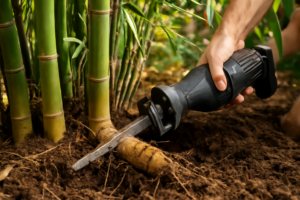
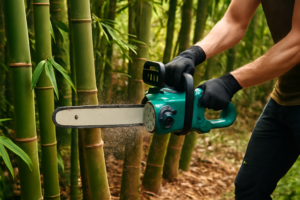
Using a sharp handsaw, reciprocating saw, or pruning shears, cut every visible bamboo shoot as close to ground level as possible. For large infestations, a brush cutter or small chainsaw accelerates the process. The goal is bare ground with only stump surfaces visible. Do not leave culm fragments standing.
Step 2: Apply Concentrated Glyphosate Within 30 Seconds
This is the critical step. Using a paintbrush or spray bottle, immediately coat the freshly cut stump surface with concentrated glyphosate (41% concentration or higher, such as Roundup Super Concentrate). Do not dilute. The open wood surface will absorb the herbicide and translocate it throughout the rhizome network within hours.
If more than 30 seconds pass, the cut surface begins to seal, and translocation efficiency drops dramatically. Treat every stump you’ve cut.
Step 3: Monitor and Retreat Every 2–3 Weeks
As new shoots emerge from the rhizome network (they will—this is expected), repeat the cut-and-treat process. Continue this cycle throughout the entire growing season (spring through early fall for most temperate regions). Each application further depletes rhizome reserves.
Step 4: Assess and Plan for Year Two
By late fall, shoot emergence should slow or stop. Many properties achieve 80–90% eradication after one season of consistent cut-and-treat. However, expect some regrowth the following spring from surviving rhizome fragments. Repeat the cycle in year two, typically with fewer and weaker shoots. Most properties see complete eradication by mid-year two.
Recommended Products for Cut-and-Treat
For this method, you’ll need a high-concentration glyphosate product. Our top recommendations:
- 41% Glyphosate Super Concentrate Weed & Grass Killer (1 Gallon) — A cost-effective concentrate ideal for large infestations. Mix only what you need, and one gallon covers hundreds of stumps. View on Amazon
- Compare-N-Save Glyphosate Concentrate (32 oz) — A smaller, budget-friendly option if you’re treating a limited area. Still 41% active ingredient and equally effective. View on Amazon
- Ranger Pro Glyphosate Herbicide Concentrate (2.5 gallon) — Professional-grade for large properties or contractors managing extensive bamboo eradication. Bulk concentrate reduces cost per application. View on Amazon
Why Glyphosate Works for Bamboo (and What Makes It Effective)
Glyphosate (the active ingredient in Roundup and generic equivalents) is a non-selective herbicide that disrupts an enzyme pathway in plant metabolism. When applied to fresh-cut bamboo stumps, it moves through the phloem (nutrient-transport tissue) downward into the rhizome system within 1–2 hours. There it accumulates in growing rhizome tips and inhibits new growth. Rhizomes already weakened by previous shoot removal are more vulnerable to glyphosate’s effects, which is why repeated application works so well.
This method’s success rate for complete eradication in 1–2 seasons is approximately 85–95%, provided treatments are consistent and no new culms are left untreated.
Method 2: Triclopyr—A More Selective Herbicide Alternative
For situations where your bamboo grows near desirable plants, water features, or property lines, triclopyr offers an alternative to glyphosate. While slightly less aggressive on bamboo, it is more selective and breaks down faster in soil.
How to Apply Triclopyr for Bamboo Removal
Basal Bark Treatment: Paint or spray undiluted triclopyr (products like Ortho Brush-B-Gon) onto the lower 12 inches of bamboo culms while they’re still standing. The herbicide is absorbed through the bark. This method works on woody bamboo species and doesn’t require immediate cutting.
Cut-Stump Treatment: Cut culms and apply triclopyr to the fresh stump surface, similar to the glyphosate method. Triclopyr is slightly less efficient at translocation but still effective.
Eradication timeline with triclopyr is typically 1–2 seasons with regular retreatment, slightly longer than glyphosate. However, triclopyr’s faster soil degradation makes it preferable if your bamboo borders a pond, stream, or wetland where herbicide persistence is a concern.
Method 3: Smothering with Landscape Fabric—The Chemical-Free Option
For large infestations where chemical bamboo killer herbicide isn’t desired, or where water features rule out herbicides, smothering is an effective alternative. It’s labor-intensive but completely chemical-free.
Smothering Process
Cut all culms flush with the ground. Clear the area of debris and level the soil as much as possible.
Lay 6-mil black polyethylene sheeting (or heavy commercial landscape fabric rated for 2+ seasons) directly over the treated area. The thicker the material, the more reliable the barrier. 6-mil polyethylene is standard; thinner plastic (3–4 mil) degrades too quickly.
Secure all edges completely. This is critical. Bury the perimeter of the sheeting 6–12 inches deep in soil, or weight it down with landscape staples, soil, or rocks every 1–2 feet around the entire perimeter. Bamboo rhizomes will search for gaps and exploit them.
Maintain coverage for 2–3 full growing seasons minimum. The goal is to eliminate photosynthesis—rhizomes cannot produce new culms without the plant being able to grow above ground and generate energy through leaves. After 2–3 seasons of zero growth, rhizomes are exhausted and dormant rhizome fragments are dead.
After removal, monitor the site for 1–2 seasons. Very rarely, a surviving rhizome fragment may produce a shoot at the fabric’s edge. Cut immediately and apply herbicide or recover with fabric.
Advantages and Disadvantages of Smothering
Advantages:
- No chemicals involved—safe for organic properties and water-adjacent sites
- One-time material investment; no repeated herbicide purchases
- Effective on all bamboo species regardless of size
Disadvantages:
- Takes 2–3 seasons (24–36 months) versus 1–2 seasons for herbicide methods
- Covers the area completely—cannot use land beneath fabric during treatment
- Requires meticulous edge sealing or fabric will fail
- Material cost can be significant for very large areas (100+ sq ft)
Method 4: Repeated Cutting—The Labor-Intensive Chemical-Free Approach
If you have time but limited budget and no access to herbicides, repeated cutting of every new shoot—as soon as it emerges—will eventually kill bamboo. This method starves rhizomes by preventing photosynthesis repeatedly over 2–4 seasons.
How to Kill Bamboo by Repeated Cutting
Cut every new shoot the moment it emerges, before it unfurls leaves. Use pruning shears, a sickle, or a weed trimmer. The key is relentlessness: if you allow even one shoot to grow to full size and produce leaves, it rebuilds rhizome reserves and sets back your progress.
Maintain a cutting schedule throughout the growing season. Early in the season (spring), shoots may emerge every 3–5 days during peak growth. Later in the season, they slow. By autumn, emergence may stop. But do not assume the problem is solved—rhizomes are simply dormant. The next spring, shoots will emerge again if any rhizome fragments remain alive.
Continue for 2–4 full seasons. Most properties see significant reduction by year two, with complete eradication by year three or four. The variation depends on the original infestation size and root depth.
Why This Method Works (and Why It’s Slow)
Each time a new shoot emerges, the plant invests rhizome energy into that culm. If you cut it before it produces significant leaf area, the energy is wasted. Repeated over dozens of cycles, the rhizome bank depletes. However, because rhizomes store years of reserves, this process is slow. Herbicide methods are faster because they actively poison the rhizome system rather than simply denying it energy.
Method 5: Excavation—Fastest for Small Areas (Under 100 Sq. Ft)
For contained bamboo infestations on small properties, killing bamboo roots by physical excavation is the fastest method. It’s also the most labor-intensive and physically demanding.
Excavation Steps
Cut all visible culms flush with ground level.
Excavate to a depth of 18 inches across the entire infested area. Bamboo rhizomes typically spread horizontally in the upper 18 inches of soil (though deep rhizomes can extend to 3–4 feet in looser soils). Using a shovel, pick-axe, or small excavator (for large areas), remove soil in layers and inspect it carefully for rhizome fragments.
Remove all visible rhizomes and fragments. Sift removed soil by hand or screen if possible. Even ½-inch fragments will regrow. Dispose of all rhizome material in sealed bags or burn it (if local regulations allow)—do not compost, as composting does not reliably kill rhizome fragments.
Replace excavated soil with clean topsoil (from a reputable supplier, not contaminated with rhizome fragments).
Monitor for 2 seasons and treat any regrowth. A few surviving deep rhizome fragments may produce shoots. Immediately cut and treat with herbicide.
When to Choose Excavation
Excavation is best for: