The day I realized my neighbor was no longer speaking to me, it was because of bamboo. Specifically, the massive clump of golden bamboo I had planted along our shared fence line three years earlier — the clump that had quietly, relentlessly sent runners under the fence and was now erupting through her rose garden. I stood there with a sick feeling in my stomach watching her yank up canes from the middle of her prize-winning Grandifloras, her jaw set tight. That was the moment I got serious about chemical free bamboo removal, and I want to share everything I learned on that long, humbling journey back to a healthy yard — and a repaired friendship.
Why I Chose the Chemical-Free Route
My first instinct was to reach for the strongest herbicide I could find. But my neighbor has vegetable beds. Her grandchildren play in that yard. And honestly, our shared soil is interconnected in ways that made me nervous about chemicals migrating where they shouldn’t. Beyond that, I had done some reading and learned that herbicides on established bamboo can be a long, repeated process anyway — often requiring multiple applications over a couple of years. If I was going to commit to a multi-season effort regardless, I wanted to do it in a way I felt good about. Chemical free bamboo removal felt like the right choice for my situation, even knowing it would take patience.
Spoiler: it did take patience. A lot of it. But the results were real, and the process taught me more about this plant than I ever expected to learn.
Understanding What You’re Actually Dealing With
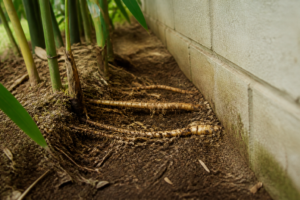
Before you pull on your gloves, it helps to understand bamboo’s survival strategy. Running bamboo — the variety most commonly responsible for neighbor disputes like mine — spreads through underground rhizomes that can travel six feet or more in a single season. The plant stores enormous energy in that rhizome network. When you cut it back at the surface, it simply draws on those reserves and sends up new shoots. This is why a single round of cutting does almost nothing. You have to be systematic and persistent.
There are two main chemical-free strategies that actually work: exhaustion and smothering. Used together, they’re surprisingly effective. Here’s how I approached both.
The Exhaustion Method: Cut, Wait, Cut Again
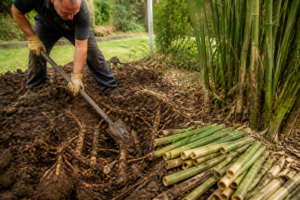
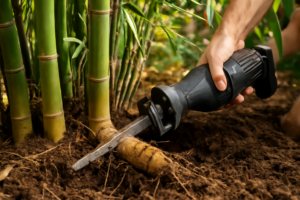
The exhaustion method works by repeatedly cutting new shoots the moment they emerge from the ground — ideally when they’re still short and soft, under a foot tall. Every time a new shoot gets cut, the plant has to spend stored energy trying again. Do this consistently and you gradually deplete the rhizome’s energy reserves. It sounds simple, and it is. What it requires is commitment. During peak growing season in spring, I was checking my bamboo patch every two to three days. I used a sharp spade and just snapped the new culms off at soil level. After about two full growing seasons of this, the regrowth became noticeably weaker and less frequent.
The Smothering Method: Cut Low, Cover, Wait
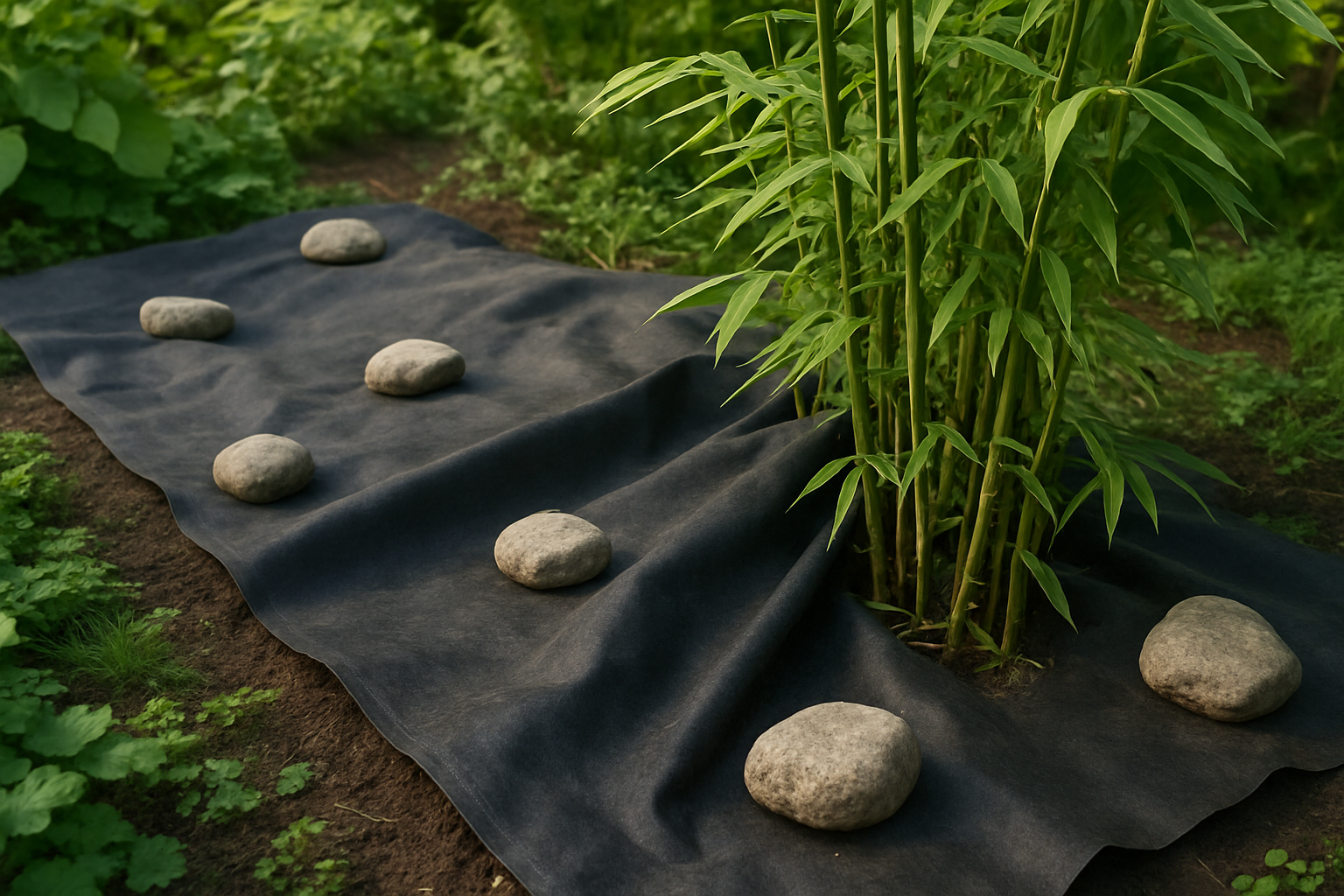
For the area on my side of the fence, I combined the exhaustion method with smothering. After cutting everything as low as possible, I laid down a heavy-duty weed barrier fabric and secured it tightly across the entire footprint of the bamboo patch, including a generous border around the edges where I knew rhizomes had traveled. Blocking sunlight prevents photosynthesis and adds another layer of stress to an already depleted root system. This is where having the right fabric really matters — thin or flimsy material will eventually be punctured by determined bamboo shoots.
The Root Barrier That Finally Stopped My Golden Bamboo from Crossing the Property Line
After the neighbor incident, I learned that physical barriers are the only truly reliable way to contain bamboo runners. A quality landscape fabric laid down *before* planting—or retrofitted around established clumps—creates a real underground wall that stops rhizomes cold.
What works
- The 6-mil thickness actually resists bamboo rhizomes pressing through; thinner fabrics fail within a year or two when you’re dealing with aggressive runners.
- The 300-foot roll covers enough perimeter that you’re not constantly splicing and overlapping, which is where containment fails—at the seams.
- Heavy-duty fabric holds up when you’re digging around it to harvest, pull weeds, or inspect for breakout zones without tearing.
What doesn’t
- It’s not invisible—you’ll see black fabric at the soil surface for years unless you bury it deeper or mulch over it heavily, which changes your garden’s appearance.
- Installation is labor-intensive; laying 300 feet of barrier fabric alone takes most of a Saturday, and any gaps or wrinkles become invasion highways.
I’ll admit I had doubts the first spring when I saw a runner probe the edge of the barrier—my heart sank—but it bent sideways and never penetrated. Get the Happybuy 6x300ft Premium Weed Barrier Landscape Fabric and don’t skimp on coverage.
About This Article

Written by Marcus Chen. Marcus Chen has spent 15 years cultivating and studying bamboo across 14 different species, combining commercial growing operations with extensive hands-on experience in species selection and containment. As both a grower and consultant, he specializes in practical bamboo management, helping homeowners and landscapers understand the real-world requirements for responsible bamboo cultivation. Marcus brings tested knowledge of which species thrive reliably and which present containment challenges that go beyond standard recommendations. More about this site.
Verify this against a primary source
Specifics change, and your situation may differ from the one described here. These are the authorities worth checking directly:
- American Bamboo Society — species listings and cultivation guidance
- USDA PLANTS Database — species range and identification
- USDA Plant Hardiness Zone Map — cold hardiness verification for your location